

Scalability of blockchain
The underlying structure of blockchain's decentralized networks is currently facing a unique challenge called the Blockchain Trilemma: the balancing act between decentralization, security, and scalability in blockchain infrastructure .
Blockchain decentralization refers to the meaningful distribution of computing power and consensus throughout the network. While security reflects the blockchain protocol's defenses against malicious actors and cyber attacks. Both are considered indispensable to the functioning of a blockchain network.
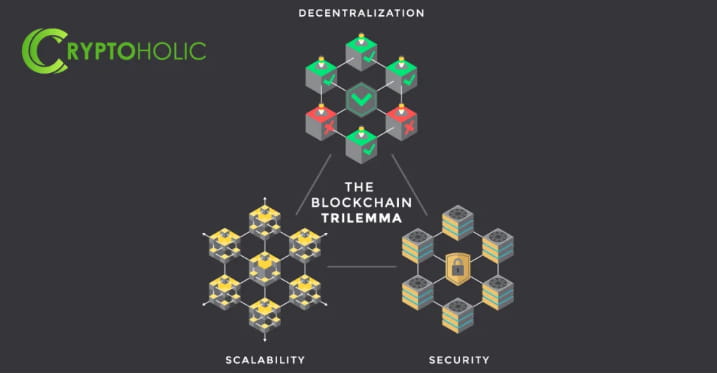
Scalability, refers to the ability of a blockchain network to support high transaction throughput and future growth. Scalability is important because it represents the only way for blockchain networks to reasonably compete with centralized platforms, with fast settlement times.
A commonly used comparison to point out gaps in scalability is that Bitcoin processes between 4-7 transactions per second (TPS). On the other hand, Visa processes thousands of TPS. To compete with these existing systems, blockchain technology must match or surpass this high level of scalability.
The Layer-1 and Layer-2 scaling solutions were born to overcome these problems.
Basic concepts of Layer 1 and Layer 2
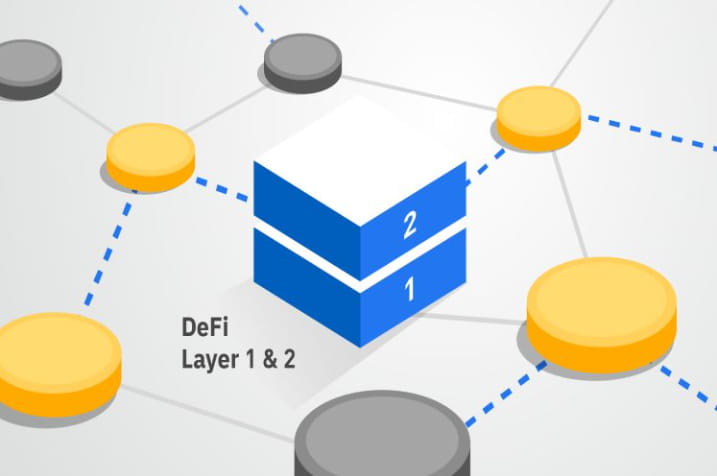
Layer-1 (Layer 1) refers to an underlying blockchain such as Bitcoin, Ethereum.
Layer 2 (Layer 2) is an overlay network layer on top of platform blockchains such as Lightning Network, Polygon... that can be used with layer-1 blockchain.
Layer-1 extension solution
Layer-1 scaling solutions enhance the base layer of the blockchain protocol itself to improve scalability.
Here's how layer-1 works: Layer-1 solutions directly change protocol rules to increase transaction capacity and speed, while accommodating more users and data.
Layer-1 scaling solutions may entail requirements such as increasing the amount of data contained in each block or increasing the speed at which blocks are confirmed, to increase overall network throughput.
Two popular layer-1 solutions are:
Change the consensus protocol
Sharding
Change the consensus protocol
Proof of Work (PoW) is a consensus protocol currently used on popular blockchains like Bitcoin. Although PoW is secure, it is slow. That's why many new blockchains favor a Proof of Stake (PoS) consensus mechanism.
Instead of requiring miners to solve cryptographic algorithms using computing power as in PoW, PoS systems process and validate new blocks of transaction data based on participants staking assets In-network mortgage.
Ethereum 2.0 will transition to PoS, which is expected to significantly increase network capacity, while increasing decentralization and protecting network security.
Sharding
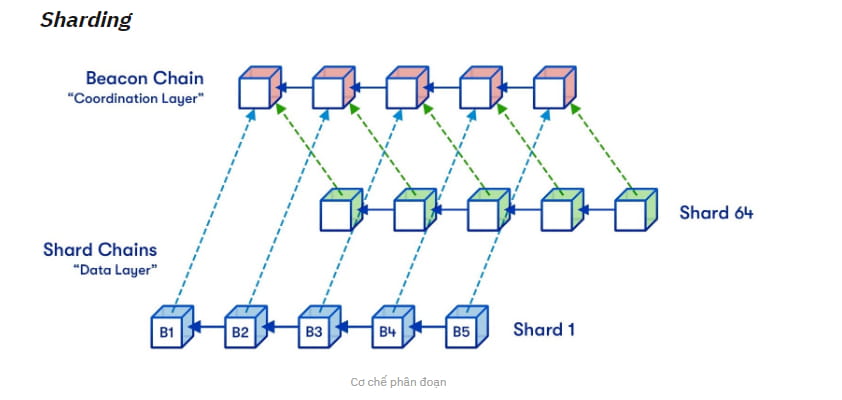
Sharding is a mechanism adapted from distributed databases that has become one of the most popular layer-1 scaling solutions.
Sharding entails breaking the state of the entire blockchain network into separate data sets called “shards.” These segments are simultaneously processed in parallel by the network, allowing sequential work to be performed on multiple transactions.
Furthermore, each node is assigned to a specific shard, instead of maintaining an entire copy of the blockchain. Individual shards provide proof to the main chain and interact with each other to share addresses, balances, and common state using inter-shard communication protocols.
Ethereum 2.0 is a high-end blockchain protocol that is exploring shards, along with Zilliqa, Tezos and Qtum.
Layer-2 expansion solution
Layer-2 refers to a network or technology that operates on top of an underlying blockchain protocol, to improve the scalability and efficiency of blockchain.
A layer-2 scaling solution entails shifting a portion of the blockchain protocol's transaction burden to an adjacent system architecture, which then processes and reports back to the main blockchain. Thereby, the base layer blockchain is less congested – and ultimately more scalable.
Layer-2 solutions include:
Nested blockchain
State channel.
Sidechain.
Nested blockchains
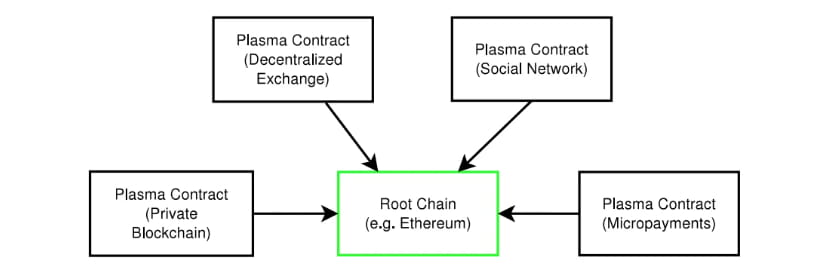
A nested blockchain is essentially a blockchain within, or rather, on another blockchain. Nested blockchain architecture typically involves a main blockchain, which sets the parameters for a broader network. While execution takes place on an interconnected web of secondary chains.
Multiple levels of blockchain can be built on top of a main chain, with each level using a parent-child connection. The parent thread delegates processing to the child threads, and returns the results to the parent thread upon completion. The underlying blockchain does not participate in the network functions of the secondary chain, unless dispute resolution is needed.
Distributing work according to this model reduces the processing burden on the main chain to improve scalability exponentially. The OMG Plasma project is an example of a layer-2 nested blockchain infrastructure, used on top of the layer-1 Ethereum protocol to facilitate faster and cheaper transactions.
State channel
State channels facilitate two-way communication between the blockchain and off-chain transaction channels and improve overall transaction capacity and speed.
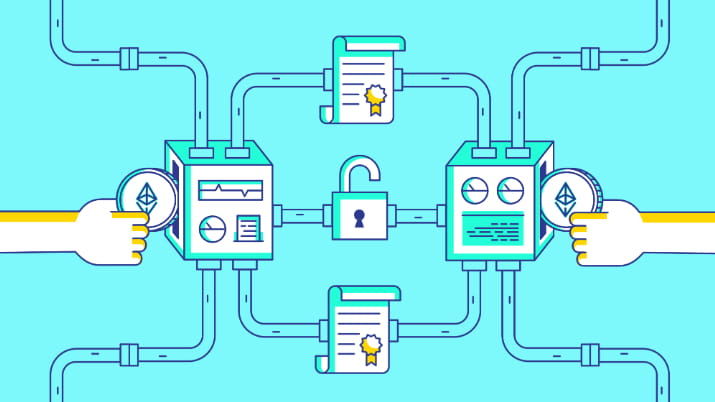
A state channel does not require confirmation by layer-1 network nodes. Instead, it is a network-adjacent resource that is blockaded using a multisig mechanism or smart contract.
When a transaction or series of transactions is completed on a state channel, the final “state” of the “channel” and all of its inherent transitions are recorded to the underlying blockchain. Liquid network, Celer, Bitcoin Lightning, and Ethereum's Raiden Network are examples of state channels.
In the balance between the Blockchain trio, the sacrifice state channel must sacrifice some degree of decentralization to achieve greater scalability.
Sidechain
A sidechain is a chain of transactions adjacent to the blockchain that is often used for large batch transactions. Sidechains use an independent consensus mechanism – that is, separate from the original chain – that can be optimized for speed and scalability.
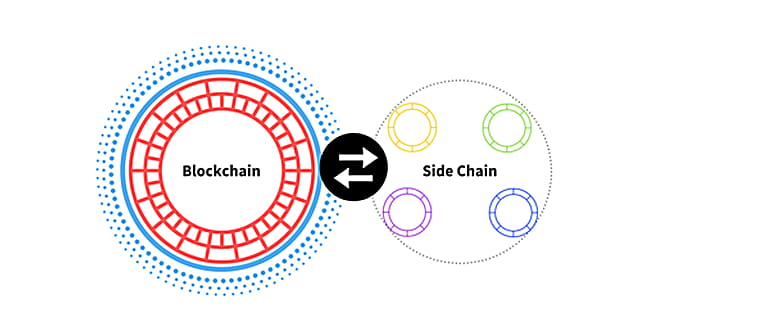
With sidechain architecture, the main role of the main chain is to maintain overall security, confirm transaction records in batches, and resolve disputes. Sidechains are distinguished from state channels in a number of integrated ways.
First, sidechain transactions are not secret, they are recorded publicly in the ledger. Furthermore, a sidechain security breach does not affect the main chain or other sidechains. Setting up a sidechain can require significant effort, as the infrastructure is often built from scratch.
Advantages of 2 solutions
Layer-1 does not need to add anything on top of the existing architecture.
Layer-2 does not mess with the underlying blockchain protocol. Layer-2 solutions like state channels and especially the Lightning Network, to make multiple microtransactions possible without wasting time verifying miners and paying unnecessary transaction fees.
The problem exists for both solutions
There are two important problems with layer-1 and layer-2 scalability solutions.
First, there are difficulties in adding these solutions to existing protocols.
Ethereum and Bitcoin both have billion-dollar market capitalizations. Millions of dollars are traded every day. This is why it doesn't make sense to add unnecessary code, and complications, to experimenting with these protocols, experimenting with a lot of money.
Second, even if you create a protocol from scratch that incorporates these techniques, they still may not solve the scalability dilemma.
The term “scalability triad” was coined by Ethereum founder Vitalik Buterin. That's the trade-off that blockchain projects must make when deciding how to optimize their architecture, by balancing the following three properties – decentralization, security and scalability.
For example: Bitcoin wants to optimize security and decentralization, which is why they have to compromise on scalability.
Solution to resolve
The solution is to build a protocol from scratch with these solutions built in. Plus, it can also solve the scalability dilemma.
Turing Award winner Silvio Micali is building a project called “Algorand,” which is trying to do exactly that. Algorand uses a consensus protocol called pure proof of stake (PPoS).
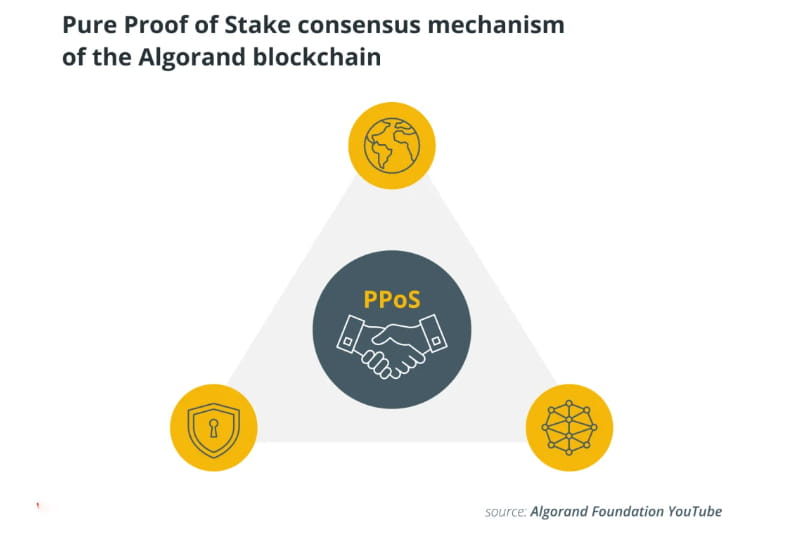
In PPoS:
Leaders and selected verifiers (SVs) are chosen from each step of the Byzantine Agreement.
The computational cost a user faces is only related to signature generation and verification as well as simple counting operations.
The cost does not depend on the number of users selected for each block. This number is constant and is not affected by the size of the entire network.
Increasing computing power directly improves performance, making Algorand perfectly scalable. This means that as the network increases in size, it will maintain high transaction speeds without incurring additional costs.
Conclude
Scalability is the biggest reason preventing mainstream adoption of cryptocurrencies. To ensure that cryptocurrencies are scalable and fast enough for everyday transactions, we need protocols specifically built to solve this problem.
Layer-1 and layer-2 scaling solutions are two sides of the same cryptocurrency coin. They are strategies designed to make blockchain networks faster and more responsive to a rapidly growing user base.
These strategies are also not mutually exclusive. Many blockchain networks are exploring a combination of layer-1 and layer-2 scaling solutions to achieve increased scalability, without sacrificing security or full decentralization.
Source: Compiled (Gemini-Cryptopedia, Petro Wallace)