One thing I've noticed is that almost every conversation about Bitcoin infrastructure eventually comes back to TVL. I'm starting to think that metric is useful, but incomplete.
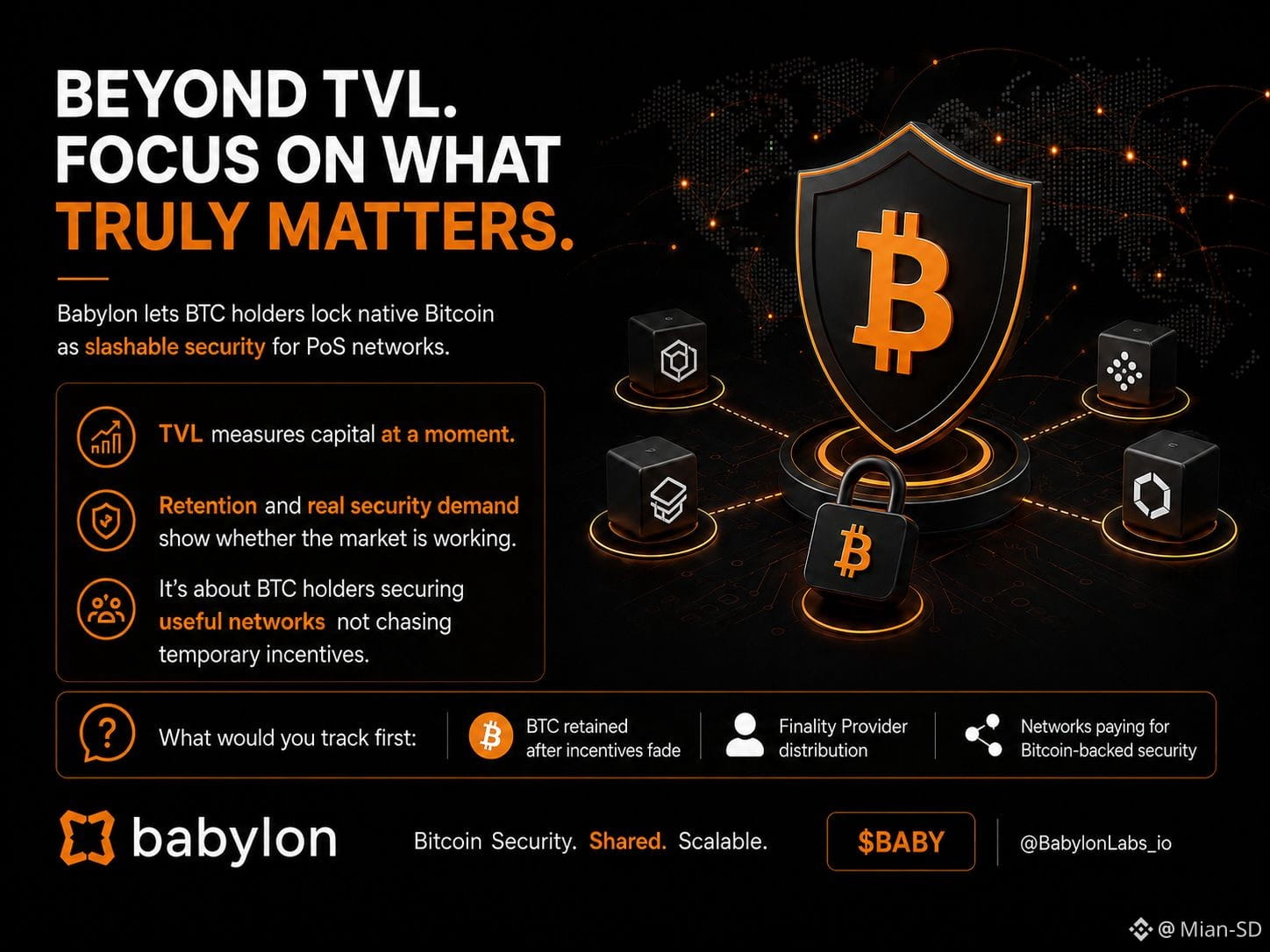
@BabylonLabs_io lets BTC holders lock native Bitcoin as slashable security for PoS networks. The goal isn't simply to accumulate deposits; it's to connect Bitcoin holders supplying security with networks willing to pay for it. That's what makes me question what success should actually look like here.
A rising TVL only tells us how much capital is present. It doesn't tell us whether stake is broadly distributed across Finality Providers, whether networks are creating sustainable demand for that security, or whether BTC stays committed once short-term incentives fade. Even USD-denominated TVL can climb purely because Bitcoin's price went up without a single additional BTC being staked. The number looks stronger while actual behavior hasn't changed at all.
To me, the more meaningful milestone would be BTC holders repeatedly choosing to secure useful networks because the risk, reward, and utility genuinely make sense, rather than a temporary campaign pulling capital in.
TVL measures capital at a moment. Retention and real security demand show whether the market is actually working.
What would you track first: BTC retained after incentives fade, Finality Provider distribution, or the number of networks actually paying for Bitcoin-backed security?
#baby $BABY
@BabylonLabs_io lets BTC holders lock native Bitcoin as slashable security for PoS networks. The goal isn't simply to accumulate deposits; it's to connect Bitcoin holders supplying security with networks willing to pay for it. That's what makes me question what success should actually look like here.
A rising TVL only tells us how much capital is present. It doesn't tell us whether stake is broadly distributed across Finality Providers, whether networks are creating sustainable demand for that security, or whether BTC stays committed once short-term incentives fade. Even USD-denominated TVL can climb purely because Bitcoin's price went up without a single additional BTC being staked. The number looks stronger while actual behavior hasn't changed at all.
To me, the more meaningful milestone would be BTC holders repeatedly choosing to secure useful networks because the risk, reward, and utility genuinely make sense, rather than a temporary campaign pulling capital in.
TVL measures capital at a moment. Retention and real security demand show whether the market is actually working.
What would you track first: BTC retained after incentives fade, Finality Provider distribution, or the number of networks actually paying for Bitcoin-backed security?
#baby $BABY