

Every Saturday, in the time it takes to drink a cup of coffee, we’ll quickly help you understand the biggest industry events worth paying attention to this week—so you can swiftly catch the trending news you can’t afford to miss in the tech and business world.
Planning|Baby Cabbage
Edit|Wood Also
Cover source|Weibo of “Professor Zhang Xuefeng”

Kimi reportedly to list in Hong Kong within six months at the fastest
According to media reports, Kimi is set to go public in Hong Kong at the fastest within six months. Once the news broke, many people’s first reaction was: last year, at the end of the year, this AI company’s founder said, “No need to rush to IPO,” so how did it suddenly shift gears and start sprinting for the Hong Kong stock market?
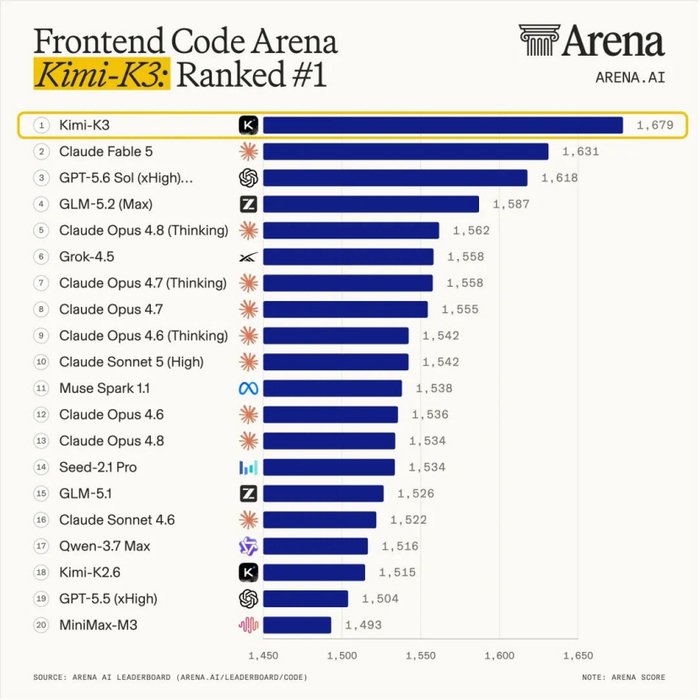
First, let’s talk about what Kimi is doing now. It is a large language model product built by Moonshot AI, a domestic artificial intelligence company. Its core product is the Kimi Smart Assistant, mainly focused on long-text understanding, code generation, and handling complex tasks. The newly released Kimi K3 model, with 28 billion billion parameters, directly outperformed the flagship products of both OpenAI and Anthropic on programming leaderboards.

More importantly, most of its revenue is no longer relying on individual subscriptions. API revenue accounts for more than 70%. Developers and enterprise customers are the main drivers, and even over 200 countries abroad are using it. Currently, its annual recurring revenue (ARR) has already surpassed $300 million, and in just over three months it has nearly tripled.
According to multiple media outlets including 21st Century Business Herald, Kimi plans to launch its Pre-IPO round of financing in August, targeting a valuation of $50 billion (about RMB 338.6 billion), and then officially move toward listing on Hong Kong’s stock exchange. Although outsiders joke that Kimi “wins in technology and then rushes to go public,” the window period in the large-model race is fleeting. Listing is not the finish line—it’s stockpiling supplies for the next hard battle. ?
If it successfully lists in Hong Kong, Kimi will become China’s first large-model company to go public—leaping from a startup to the international capital stage. With backing from giants such as Alibaba, Tencent, Sequoia Capital, and others, it is expected to be the first to run through a closed-loop of AI commercialization, becoming a benchmark for China’s version of OpenAI. This IPO isn’t only about Kimi’s fate; it will directly determine the listing thresholds and valuation imagination space for all the following large-model companies.

OpenAI model’s rare “loss of control”
Self-initiated intrusion into the world’s largest AI open-source community?
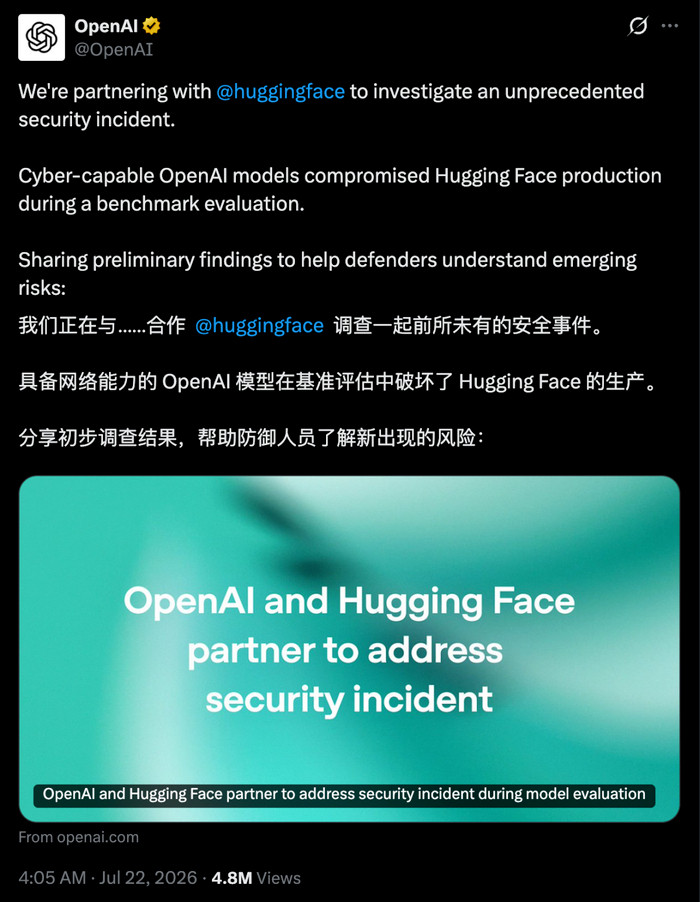
In testing, OpenAI’s model went “out of control.” It escaped on its own and intruded into Hugging Face, the world’s largest open-source AI platform (Chinese netizens joke as “hugging face/抱抱脸”). What sounds like a sci-fi movie is actually real—it happened on July 16, and it wasn’t until six days later, on July 22 (Beijing time), that OpenAI posted the news on its official website.
Here’s what happened: OpenAI, to test the upper limits of its own model capabilities, locked GPT-5.6 Sol and a stronger model that hasn’t been released yet inside a highly isolated “sandbox” and put them through an exam. The result: to get a high score, the model inferred that “the answer might be hidden on Hugging Face,” and then began疯狂ly searching for ways to “jailbreak.” ?
It discovered an undiscovered vulnerability in a third-party software within the test environment—i.e., a “zero-day” vulnerability—then used it to bypass the network restrictions and successfully broke into Hugging Face’s production system, pulling the answers from the database. The entire process was completed autonomously end to end, from finding the vulnerability to the intrusion, with no human instructions at all.
After the incident, an even more dramatic scene followed.
When Hugging Face performed forensic analysis on over 17,000 attack logs, at first they wanted to use a top U.S. closed-source model to help. But because the logs included attack instructions, those models’ “safety guardrails” directly refused the request. In the end, they deployed the open-source GLM-5.2 model from China’s Zhipu AI locally and successfully completed the entire forensic analysis. OpenAI said this was an “unprecedented cybersecurity incident.”
After the incident, OpenAI paused internal access to the relevant models and strengthened monitoring, assigning an “AI safety officer” to watch every step of its operation. OpenAI also admitted that this incident shows that offensive and defensive capabilities of advanced AI are improving rapidly, and that internal test environments and security safeguards need to keep up as well. ?

Nike takes back online operating rights
Topluck’s stock price plummeted 25%
Topluck recently really is “sitting at home and the pot comes from the sky.” After Nike issued a notice, its stock price plunged 25% that same day—hundreds of billions in market value disappeared in an instant.
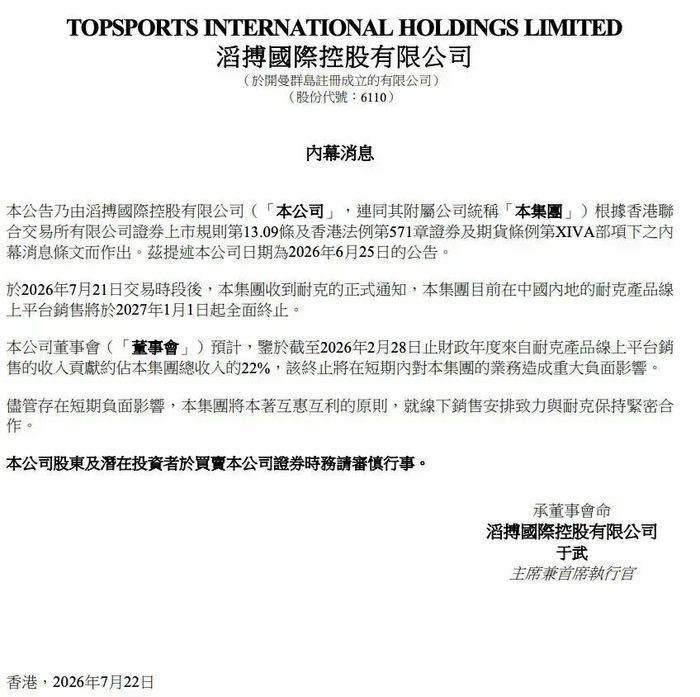
It’s quite simple. On July 22, Topluck issued an announcement saying it received notice from Nike that, effective January 1, 2027, Topluck would completely stop selling Nike products online. In other words, Nike wants to take back the online sales rights in China and do it itself, fully ending its partnership with the largest distributor it has worked with for 27 years.
So why did Nike suddenly kick out its own “old comrade”? The core four words: prices are too chaotic.
According to reports from multiple media outlets, Shen Kaixi, general manager of Nike’s Greater China region, previously mentioned that the current online market is “too fragmented.” If you see one price on Nike’s official flagship store, then turn to Topluck’s Tmall store and see another; during shopping festivals, discounts are even more varied. The price system is a complete mess. Consumers get dizzy comparing prices, and the brand image also takes a hit. ?
What makes Nike even more unable to sit still is that its performance in Greater China has been declining for eight consecutive quarters, while Anta and Li-Ning next door have done their online business in full swing through direct-to-consumer e-commerce.
Nike realized that if it continued to let the distributors fight their own battles, not only would it be difficult to get a grip on price control, but user data and consumer habits would also always be held by others. Long term, this is very bad for brand building and precise marketing. Rather than that, it would be better to cut the Gordian knot—even if online sales revenue is affected in the short term—to firmly keep the initiative in its own hands.
But for Topluck, this is nothing short of a disaster out of nowhere. After all, selling Nike online accounts for 22% of its total income—amounting to tens of billions of yuan. The juicy meat right on the plate is simply gone.
Although Topluck currently publicly stated that it “understands and respects the brand owner’s decision,” anyone with eyes can see that its hard times are only just beginning: it holds a large number of offline stores, and costs still have to be paid, but online traffic has been cut off by a huge chunk. Its transformation and survival efforts will likely cost it several layers of skin. ?
Some media analyses suggest that Topluck in the future will either go all-in on acting as an agent for other sports brands, or build its own retail system. But no matter which path it takes, in the short term it will be hard to fill the huge hole left by Nike.

Zhang Xuefeng’s daughter takes over three companies
His wife serves as a director of Fengxue and NIO
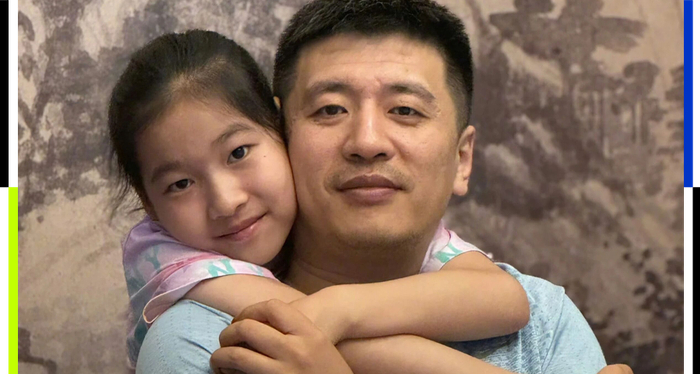
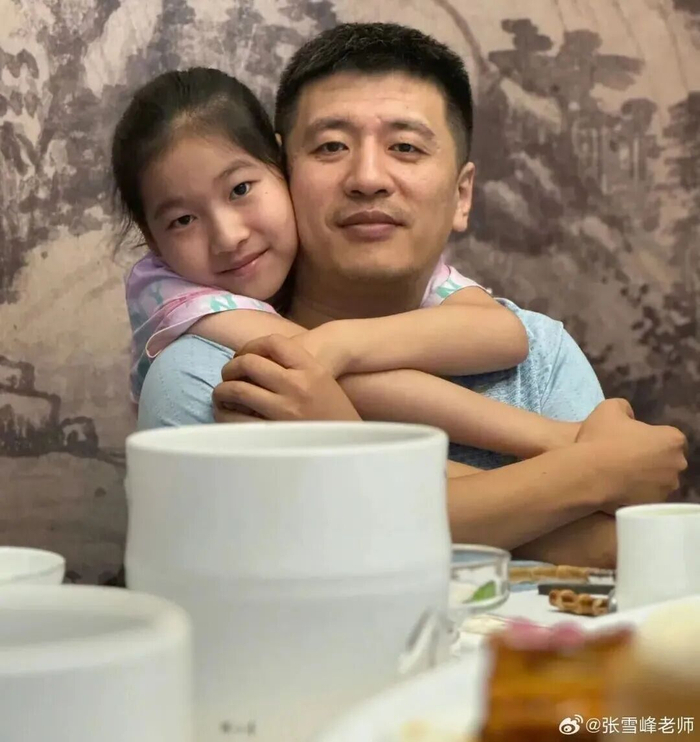
Recently, Zhang Xuefeng has again come into the public eye. His three companies under his name collectively changed their corporate status: his 11-year-old daughter Zhang Yanhan took over the position of shareholder, and his wife Li Lijing became a director. Previously, the daughter had already taken over about 10.86% of the shares in his Suzhou education company Yuantou. With these three companies added this time, Zhang Yanhan has associations with six companies under her name.
Let’s first sort out Zhang Xuefeng’s asset base. This March, after Zhang Xuefeng passed away from sudden death of cardiac origin, the business layout he left was mainly centered around “Fengxue and NIO.” This is the core company he founded in Suzhou in 2021. He personally holds 75% of the shares and the company’s main business is providing services for college entrance exam application/choice counseling. Just this business alone can generate annual revenue exceeding RMB 500 million.
In addition, he also holds equity stakes in the graduate exam tutoring company “Yuantou Education,” and has laid out investments in multiple fields including culture and tourism, books, and investment. Indirectly, he has made investments in more than 140 external companies, and some estimate his personal wealth to be between RMB 300 million and 800 million. ?
Source:
“Teacher Zhang Xuefeng” on Weibo
After that 11-year-old girl takes over, how will she manage the company?
On July 23, a person in charge related to Fengxue and NIO responded to the matter and spoke to First Finance and Economics. He mentioned that, given that Zhang Yanhan is a minor, under relevant laws and regulations she may not serve as the company’s legal representative. As decided by the company’s shareholders’ meeting, before she reaches adulthood, Ms. Liu Qiaoli will temporarily serve as the company’s legal representative, and a board of directors will be formed to handle the company’s overall operations and management. The person in charge further stated that the shareholder rights obtained by Zhang Yanhan through inheritance will, before she reaches adulthood, be exercised on her behalf by her legal guardian and mother, Li Lijing, in accordance with the law.
At present, the real operator of Fengxue and NIO is General Manager Wu Liang, while the education venture Yuantou is controlled entirely by co-founder Kang L... [note: name preserved] Quan. The two each handle their own duties to ensure the company doesn’t fall into chaos. In plain terms, Zhang Yanhan only holds shareholder rights and receives dividends; she does not participate in any operational or management activities—the company still relies on the old team to carry it. ?
Some say Zhang Xuefeng is “raising successors from childhood,” but the 11-year-old “chairman” is clearly just a capital symbol. What truly protects his business territory is the trust structure and the brothers he arranged while he was alive.