


Summary
• The Bitcoin whitepaper established the essence of wallets: they are private keys and signing tools, not account systems. Your private key is your control, forming the fundamental consensus in the crypto industry — Not your keys, not your coins.
• The DeFi Summer propelled wallets from infrequent asset management tools to essential gateways for on-chain DeFi.
• The bear market did not halt wallet evolution; on the contrary, it fostered the rise of All-In-One as the dominant trend, validated in real-world high-frequency scenarios during the inscription and Meme waves.
• CEXs extend the boundaries of CEXs through embedded wallets, leveraging the existing advantages of exchanges and integrating them into the blockchain ecosystem, enabling exchange users to seamlessly enter Web3 with one click.
I. The Starting Point of a Wallet
The origins of cryptocurrency wallets can be traced back to the birth of the Bitcoin network.
1.1 The original definition of a wallet: a private key management tool
On October 31, 2008, an anonymous developer (or team) using the pseudonym Satoshi Nakamoto released the white paper (Bitcoin: A Peer-to-Peer Electronic Cash System), which laid the foundation for the core logic of modern crypto wallets: a wallet is essentially a tool for generating, managing, and signing private keys, rather than a "repository of funds" in the traditional sense.
Bitcoin was created with its genesis block on January 3, 2009, and Bitcoin Core (early versions were called Bitcoin-Qt), released that same year, was the first complete reference implementation. Its built-in wallet functionality was designed from the beginning as a manager of private key sets.
According to the Bitcoin developer documentation, the earliest Bitcoin Core wallets used a Loose-Key or JBOK (Just a Bunch Of Keys) model: the software automatically created a batch of private/public key pairs (initially 100 by default) using a pseudo-random number generator (PRNG), and these key pairs were stored in the local file wallet.dat. The core responsibilities of the wallet were: generating private keys, deriving corresponding public keys and addresses, monitoring unspent outputs (UTXOs) associated with these public key addresses on the blockchain, locally signing transactions using the private keys, and broadcasting signed transactions.
A user's BTC is not stored in the wallet software or on the user's device, but always resides on the distributed ledger of the blockchain. The wallet software is only responsible for holding the private key that proves ownership and authorizes the movement of assets. Losing the private key means permanently losing control of the corresponding UTXO, which laid the early foundation for the industry ironclad rule "Not your keys, not your coins".
It's important to note that unlike traditional bank accounts, the Bitcoin network does not have a centralized concept of account balances. Each UTXO exists independently and is locked to a specific public key hash via a script (the early mainstream P2PKH). To "spend" these UTXOs, users must provide a signature that unlocks the script, and this signature can only be generated by the corresponding private key. Therefore, the wallet software acts more like a signer and monitor than a custodian or bookkeeper. However, Satoshi did not directly use the term "wallet" to define the software in the white paper, but repeatedly mentioned the use of private keys for signing transactions, implicitly emphasizing the necessity of local key management. Subsequent Bitcoin Core implementations explicitly solidified this logic as the default behavior of wallets.
At this stage, the wallet's function was extremely pure: it was merely an "entry key" for on-chain assets. The user experience and technical barriers were very high, with almost no user education, interface enhancements, or additional services. There was no profit model whatsoever; Bitcoin Core is open-source and free software, and developers do not charge any fees.
II. Wallets: From Transfer Tools to DeFi Gateways
The summer of 2020 was dubbed the "DeFi Summer" by the crypto industry. This was the most brilliant period of financial innovation in crypto history, directly driving users to make their first leap to non-custodial wallets and laying the foundation for the modern DeFi ecosystem.
2.1 The Impact of DeFi Summer on Wallets
The DeFi Summer marks the period when DeFi transitioned from its experimental phase to explosive growth. During this time, the innovation of multiple core protocols within the Ethereum ecosystem, coupled with liquidity incentive mechanisms, led to a surge in on-chain financial activity. Total Value Added (TVL) soared from approximately $600 million at the beginning of 2020 to over $10 billion for the first time in October, and then broke through the $1,000 mark for the first time in April of the following year.
The catalysts for DeFi Summer mainly came from the successive maturation and incentive mechanism innovations of the three major protocols Compound, Uniswap and Aave.
(1)Compound
In mid-June 2020, Compound launched its governance token COMP and introduced a liquidity mining mechanism—users could earn COMP token rewards in real time by depositing assets for lending. This design, for the first time, deeply bound protocol governance rights with economic incentives, quickly attracting a large amount of liquidity. After the launch of COMP, Compound's TVL jumped from less than $100 million to over $1 billion in four months, becoming the direct trigger for the DeFi Summer, and surpassed $10 billion for the first time in April 2021.
(2)Uniswap
Uniswap v1 launched as early as November 2018, but v2, launched in May 2020, significantly improved capital efficiency and user experience, introducing ERC-20/ERC-20 trading pair liquidity pools. Then, in mid-September 2020, Uniswap airdropped UNI tokens to all its historical users and launched its own liquidity mining program, further amplifying its traffic. In September of that year, Uniswap's monthly trading volume exceeded $10 billion for the first time in its history, leading the community to proclaim that DEXs had the potential to challenge centralized exchanges.
(3)Ghost
Aave completed its V1 upgrade in early 2020, introducing innovative features such as flash loans. During the DeFi Summer, Aave's TVL grew from tens of millions of dollars in early June to over $1 billion for the first time in August, making it a leading player in the lending sector.
These protocols share a common characteristic: they shift liquidity from fragmented to scalable through token incentives, leading to a sharp increase in the frequency of on-chain user interactions and the complexity of strategies.
2.2 Wallets become an essential entry point for dApps
Before the DeFi Summer, wallets were mainly used for simple transfers, asset viewing, and a limited number of dApp interactions, resulting in a limited user base. In the summer of 2020, with the explosion of DeFi protocols, users were required to interact directly with smart contracts through wallets (signing transactions, authorizing limits, depositing and withdrawing liquidity, etc.). Wallets transformed from "optional tools" into mandatory gateways to DeFi. The most typical example of this is the explosive growth in MetaMask's usage data.
In October 2020, Metamask celebrated surpassing 1 million monthly users for the first time in its history, representing a growth of over 400% compared to the same period in 2019. The growth curve of the Metamask wallet is similar to the trend of DeFi adoption, indicating that new users are participating in the DeFi revolution through MetaMask, primarily drawn by protocols such as Uniswap, Compound, Aave, Curve, and Yearn.
Wallets have evolved from an on-chain asset management portal into the prototype of a DeFi operating system. For the first time, users experienced the browser plugin wallet paradigm on a large scale—directly connecting dApps and signing complex transactions within the wallet. This not only lowered the barrier to entry for DeFi but also allowed wallets to capture a large amount of on-chain traffic, laying the foundation for user mindshare for subsequent built-in Swap, cross-chain, and other functions.
2.3 DeFi Summer Opens Traffic Gateways, But Wallets Are Still Exploring Business Models
While DeFi Summer significantly increased wallet usage frequency and traffic, transforming it from a simple asset management tool into an essential gateway for DeFi interaction, the commercialization dilemma of wallets has not been fundamentally resolved. The core problem lies in the fact that although wallets have gained considerable on-chain traffic, they struggle to effectively "intercept" and convert it into sustainable, high-percentage revenue. Value capture primarily resides at the underlying protocol level, rather than the wallet layer.
First, wallets do not control transaction pricing. In DeFi interactions, the core pricing power of transactions (slippage, price discovery, liquidity depth) is always determined by the underlying DEX or lending protocol. Wallets only act as signers and relay routers, facilitating the use of dApps. For example, when a user connects to Uniswap in MetaMask for a swap, the actual execution price, slippage, and gas costs are determined by Uniswap's AMM pool and the congestion level of the Ethereum network; MetaMask cannot interfere with or extract the core value.
Secondly, during this period, most non-custodial wallets still operated with a free tool mindset. Revenue either came solely from a very low commission as a channel provider, or no commission at all (relying on ecosystem influence or subsidies from the parent company). Metamask was the first wallet to launch built-in swap functionality, acting as an aggregator to obtain quotes from multiple sources such as 1inch, Paraswap, and 0x API. This was a monetization attempt by a few leading wallets at the time. MetaMask charged a 0.875% swap fee on each transaction, meaning users had to pay multiple fees if they traded through Metamask Swap, including LP fees, DEX protocol fees (if any), and Metamask's 0.875% fee. From today's perspective, built-in swap has become a standard feature and an important source of revenue for wallets, but at that time, not many people believed this model would succeed, and even a significant number of wallets did not offer similar built-in swap functionality in their early stages.
III. Wallets are evolving towards a "CEX-like" structure
The DeFi Summer established wallets as the gateway to on-chain finance, but as the bull market entered 2021, the market narrative shifted rapidly: the NFT boom (peak in Q1–Q3 2021) and the GameFi/P2E boom (Q3 2021–early 2022) took over, becoming the new engines driving traffic. While these two waves did not directly solve the problem of wallet profitability, they greatly enriched the functional requirements and user behavior patterns of wallets, laying a crucial foundation for the subsequent "All-In-One" CEX-like transformation.
3.1 The Development of All-In-One Wallets
After entering a bear market in 2022, overall trading activity in the crypto market declined, but the evolution of wallet products did not stop. Some wallet developers seized upon the strong user demand for convenience and high-frequency interaction exposed in the previous bull market, rapidly iterating their products. Wallets have gradually evolved into on-chain financial super applications integrating asset management, trading, cross-chain transactions, fiat currency deposits and withdrawals, and emerging assets.
Against this backdrop, the All-In-One wallet model has gradually taken shape. The wallet is reconstructed around the user's complete on-chain behavior path, embedding multiple functions into a unified interface, mainly including: unified management and automatic identification of multi-chain assets; embedded swap aggregation and cross-chain bridge services; NFT browsing, trading and asset display; fiat currency deposit and withdrawal interfaces; and retaining the ability to quickly access emerging assets and new protocols.
The one-stop model marks a commercial inflection point for wallets, shifting them from passive entry points to proactive platforms. On one hand, wallets begin to actively handle transactions and asset allocation, significantly extending user dwell time within a single application. On the other hand, wallets gradually gain control over transaction paths and traffic distribution, freeing them from complete reliance on underlying protocol incentives or fee sharing, and enabling them to build their own fee and service fee models. From a business perspective, this signifies a crucial inflection point for wallets, moving from a "passive entry point" to a "proactive platform."
3.2 The Development of Inscriptions and Memes
After continuous iterations from 2022 to early 2023, mainstream non-custodial wallets have reached near maturity in terms of functional completeness. At this point, what wallets lack is not product capabilities, but an external catalyst that can reactivate the user base and bring complex features to the public eye.
The emergence of inscriptions became the catalyst for the widespread adoption of all-in-one wallets. In December 2022, Casey Rodarmor launched the Bitcoin Ordinals protocol, which inscribes data (such as images, text, and videos) onto a single satoshi (the smallest unit in Bitcoin), thus giving the Bitcoin block space new expressive capabilities without introducing new consensus rules. Building on this, in March 2023, Domo proposed a set of asset issuance standards based on textual conventions, namely BRC-20. This standard did not modify the Ordinals protocol itself, but rather implemented a mechanism for issuing and transferring fungible tokens on the Bitcoin network by agreeing on the content of inscriptions in JSON format.
The emergence of BRC-20 quickly sparked community attention and speculative enthusiasm, resulting in significant on-chain transactions and minting activity in the first half of 2023. Users also placed new demands on wallets: visualization support for inscription assets; encapsulation and simplification of the minting and transfer process; and optimization of operations for high-frequency, small-amount on-chain transactions on the Bitcoin network.
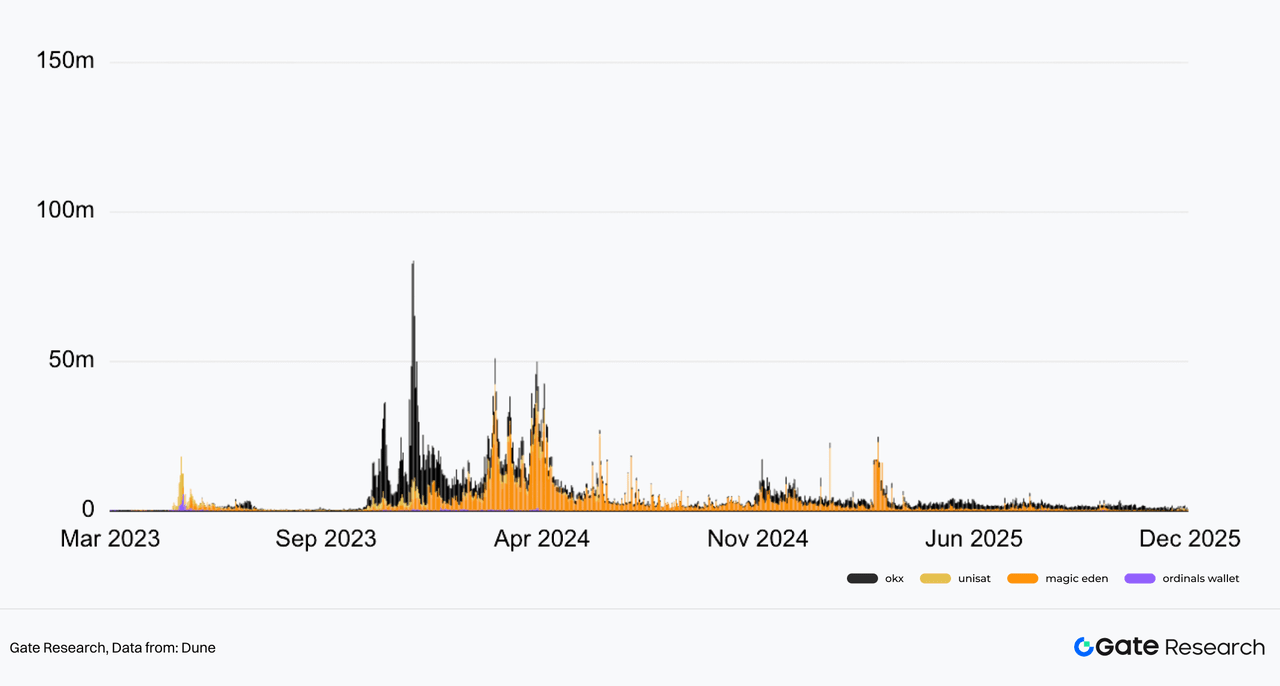
Wallets that quickly supported inscription functionality experienced significant user growth and transaction volume in a short period. Meanwhile, transaction fees and service charges related to inscription operations became one of the wallet's directly observable sources of monetization in 2023. Although inscription was not the starting point for a wallet's all-in-one capabilities, it was the first time in actual operation that the wallet's capabilities as a comprehensive on-chain platform were fully demonstrated and validated.
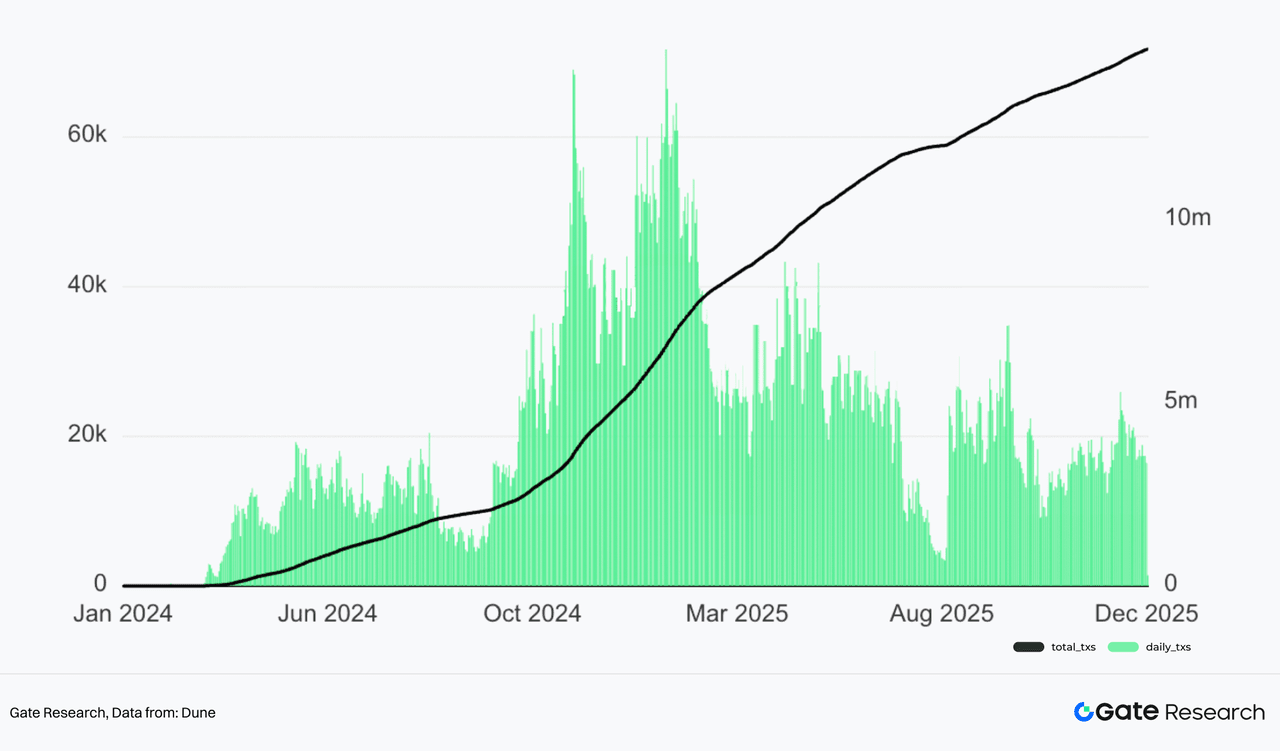
After the inscription craze subsided, the Meme craze in the Solana ecosystem took over in 2024, becoming a crucial testing ground for the further explosion of the All-In-One wallet model. This wave of Meme popularity, centered on Pump.fun as its core infrastructure, quickly exploded after its official launch in 2024: the platform lowered the barrier to Memecoin creation to a level where anyone could issue one in seconds through a minimalist Bonding Curve mechanism and extremely low token issuance costs. Pump.fun dominated the issuance of Solana Memes throughout 2024. This step demanded deep functional optimization from wallets, accelerating the integration of Meme-specific tools, such as one-click launch/monitoring, real-time Bonding Curve charts, lightning mode, stop-loss/take-profit, MEV protection, and social sharing buttons, as exemplified by Pump.fun's Launchpad.
In the high-frequency interactions and transactions related to inscriptions and memes, the asset issuance and management, transaction execution, and user guidance functions of wallets are amplified, leading to a clearer understanding of the commercialization and platform potential of wallets in the market: the crazy transaction volume has brought huge transaction volume and more aggressive fee extraction to wallet swaps; wallet routing has become an important interception point; advertising space/partnership revenue sharing, etc.
As these capabilities continue to manifest in real-world scenarios, wallets are gradually being viewed not only as entry points for transactions, but as comprehensive platforms capable of covering on-chain native assets and behavioral scenarios that are difficult for CEXs to access. This has laid the groundwork for CEXs to develop CEX-On-Chain and embedded wallets.
3.3 Derivatives Expand Wallet Boundaries
As a core category of crypto derivatives, perpetual contracts have long been considered a moat for centralized exchanges (CEXs)—high leverage, high-frequency trading, deep liquidity, and the resulting high ARPU (Average Revenue Per User) user base. Between late 2024 and 2025, with the explosive rise of high-performance Layer 1 derivatives protocols like Hyperliquid, and the deep integration of Builder Codes into mainstream non-custodial wallets, perpetual contracts officially penetrated from the exclusive battlefield of CEXs into the on-chain wallet system, marking another substantial expansion of the functional boundaries of all-in-one wallets.
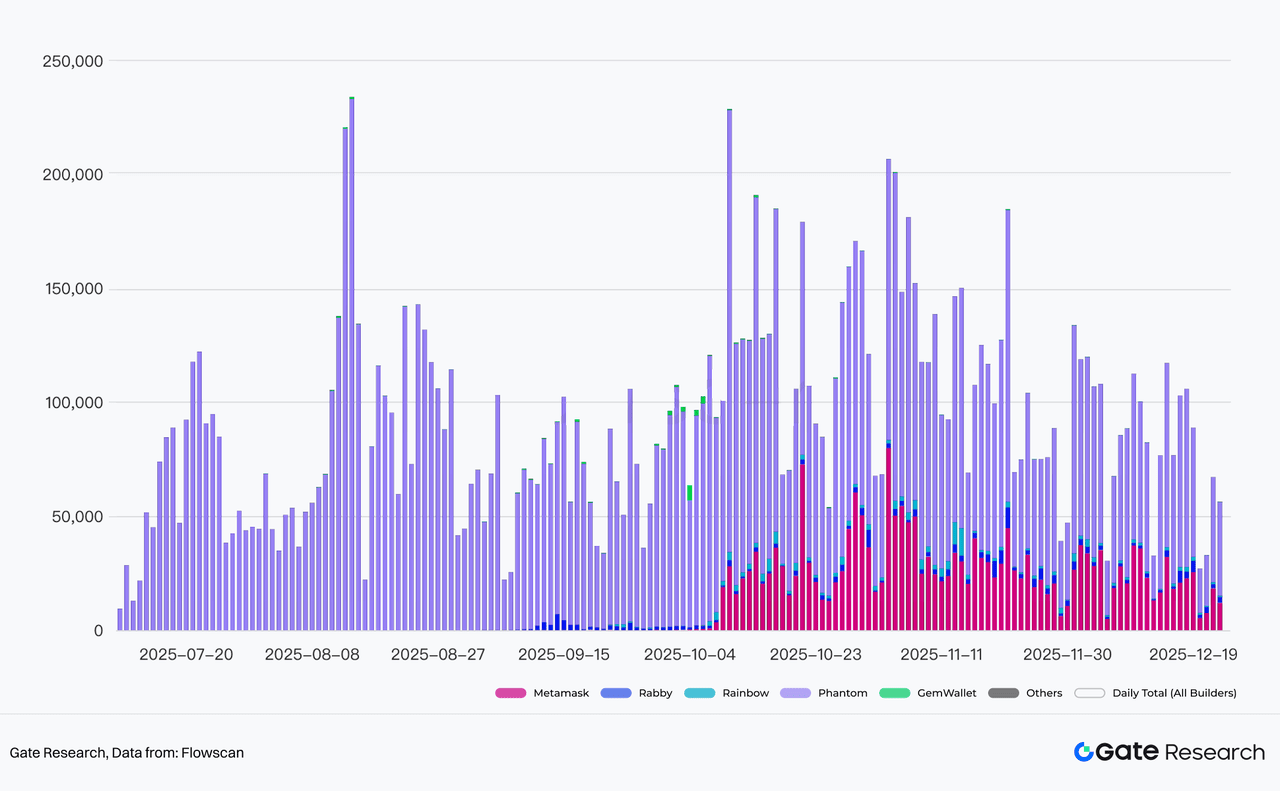
Hyperliquid's impact extends far beyond a simple technological upgrade; it has reshaped the entire on-chain ecosystem of derivatives trading, driving the widespread adoption of the "on-chain CEX experience": a fully on-chain order book (CLOB), sub-10ms execution, gas-free trading (achieved through optimized consensus), leverage up to 100x, and a diverse market supporting 100+ crypto assets and RWAs (such as the stock token market of HIP-3).
Hyperliquid Builder Codes are a key link in this two-way collaboration with wallets. They allow third-party applications (such as trading terminals and wallets) to relay transactions to Hyperliquid's HyperCore layer via custom code. Users can sign and execute transactions within their wallets without directly accessing the Hyperliquid interface. For Hyperliquid, Builders significantly enhance its distribution capabilities; for wallets, they also bring significant value, seamlessly integrating with all of Hyperliquid's marketplaces (including the new Perp pairs for HIP-3 permissionless deployment) without needing to build their own order books or liquidity. Wallets earn routing commissions/fee shares through Builder Codes while retaining their non-custodial cores, keeping funds in the user's wallet until settlement. Phantom directly accessed Hyperliquid through this model, quickly capturing derivatives traffic and becoming the Builder with the strongest fee-capturing ability—capturing over $12.6 million in fee revenue since its launch in early July of this year. Other wallets such as Rabby, Metamask, and Rainbow have integrated Hyperliquid Builders, allowing users to trade perpetual contracts directly within their wallet applications.
The rise of high-performance Perp DEXs like Hyperliquid, along with the dual empowerment of the innovative distribution channel Builder Codes, is the decisive force driving the expansion of wallet boundaries in derivatives trading in 2025. It allows non-custodial wallets to truly possess CEX-level high-frequency, high-leverage trading capabilities, capturing a high ARPU professional user base, while simultaneously building a sustainable revenue model through revenue sharing. This not only breaks the long-term monopoly of CEXs in the derivatives field but also accelerates the CeDeFi convergence trend: wallets become the preferred entry point for on-chain native derivatives, while CEXs are forced to fight back through embedded/on-chain methods or even by creating their own on-chain Perp, forming the most intense competition and symbiotic landscape in 2025–2026.
IV. The Divergence of Wallet Evolution Paths: Non-Centered vs. Embedded
In late 2024 and early 2025, facing internal challenges such as VCcoins' high valuation and lack of wealth effect upon listing, and Solana Meme's explosive growth of hundreds or thousands of times without an early launch, CEX users remained within the exchange but were unable to participate in high-yield on-chain opportunities, leading to a continuous loss of assets and users. CEXs were forced to accelerate their on-chain transformation. However, some CEXs' on-chain transformation did not solely pursue complete user self-custody, but instead shifted to a more pragmatic hybrid/embedded wallet strategy. The wallet was no longer a standalone tool, but rather an on-chain extension of the CEX account.
4.1 Advantages and Disadvantages of Native Web3 Wallets
Native Web3 wallets, also known as non-custodial or self-custodial wallets, are typified by MetaMask and Phantom, adhering to the core principle of "Not your keys, not your coins" from their inception. Users of these wallets have complete control over their private keys and do not need to trust a third-party custodian. By 2025, non-custodial wallets had fully evolved into all-in-one on-chain super applications: supporting unified management of assets across multiple chains, embedded Swap/cross-chain bridges/Fiat On/Off Ramp, rapid support for new assets, Meme launch and monitoring, Perp derivatives trading, and other functions. Their commercialization path is also increasingly clear, primarily achieving sustainable revenue through Swap and Perp fee sharing, routing fees, MEV protection value-added services, and application promotion.
The core advantage of native Web3 wallets is that users have exclusive control over their private keys, avoiding common custody risks associated with centralized exchanges (CEXs), such as platform hacking, bankruptcy freezes, and regulatory asset seizures or forced freezes. This advantage was repeatedly validated after the FTX collapse in 2022; non-custodial wallet users' assets were unaffected by the platform incident, while CEX users are still struggling to protect their rights and face partial or permanent losses. As crypto increasingly aligns with traditional finance, global regulators are paying increasing attention to centralized platforms and even DeFi protocols, making self-custody paramount.
Of course, the user education cost for self-custodied wallets is very high. Looking at the history of wallet development, many large-scale wallet adoptions have stemmed from the emergence of new assets and narratives, such as DeFi, inscriptions, and memes. Under the overwhelming wealth effect of these new assets and narratives, users often exhibit self-learning abilities several times stronger than usual. However, being able to use a wallet for transactions does not equate to fully understanding and managing a wallet. Basic concepts such as mnemonic phrase backup, private key/signature security, understanding gas fees, and phishing risk prevention still have a high barrier to entry. New users, especially those migrating from Web2, are prone to making fatal mistakes, such as authorizing malicious contracts or losing their mnemonic phrases, leading to the permanent loss of funds.
Furthermore, in a purely non-custodial model, the wallet's fiat on/off ramp relies heavily on third-party aggregators (such as MoonPay), requiring users to complete KYC/AML verification themselves. This process suffers from uneven regional coverage, with many countries/regions experiencing restrictions or high costs, leading to significant integration friction. Under regulatory pressure, aggregators may suddenly adjust their policies or increase fees, resulting in an unstable user experience.
4.2 CEX Embedded Wallet Roadmap
CEX embedded wallets, such as Gate Web3 Wallet, are seen as a natural extension of the CEX system. Their core goal is not to replace CEXs or completely shift to decentralization, but to expand the boundaries of CEXs: seamlessly integrating the existing advantages of CEXs (compliance, fiat currency channels, user scale, customer support, and liquidity depth) into the on-chain ecosystem, enabling CeFi users to enter the closed-loop experience of Web3 with one click.
Some CEX embedded wallets are no longer pursuing pure self-custody. Instead, they utilize MPC (Multi-Party Computation) or TEE (Trusted Execution Environment) technologies to build keyless wallets, achieving a "quasi-self-custody" experience—private keys are sharded/encrypted for storage, eliminating the need for users to manage mnemonic phrases. However, recovery and signing still require user authorization, while the platform retains some control for compliance, risk control, and customer service intervention. The wallet is deeply integrated with the CEX account, allowing users to transfer funds from the exchange to on-chain operations with a single click, and vice versa, creating a unified experience of "exchange account linked to on-chain address."
However, for another type of CEX, user self-custody remains the core principle. Gate Web3 Wallet emphasizes that users hold their private keys and asset sovereignty, which is different from traditional CEX custodial accounts; but its design is deeply embedded in the Gate CEX ecosystem, which is a typical CEX on-chain non-custodial route - while retaining the core of non-custodial, it maximizes the scale and convenience advantages of CEX.
4.3 Case Study: Deconstructing the Evolution Path of CEX Wallets Using Gate Web3 as an Example
4.3.1 Gate Web3's Strategic Positioning: All-In-Web3
Gate Web3 Wallet is positioned as a key entry point for Gate's core All-In-Web3 strategy. The All-In-Web3 strategy is a long-term plan that Gate has clearly been pushing forward since 2025, aiming to deeply integrate the advantages of traditional CEXs (user scale, compliance capabilities, liquidity depth, and security experience) with the decentralized potential of Web3 to build an open, scalable, and user-friendly full-chain ecosystem.
With Gate Web3 Wallet as the entry point, Gate is accelerating the construction of an integrated Web3 ecosystem, including the high-performance Layer2 network Gate Layer, which provides low-cost infrastructure; the decentralized perpetual contract platform Gate Perp DEX, which combines CEX performance with DeFi transparency; and the zero-code on-chain token launch platform Gate Fun, which supports rapid Memecoin issuance, real-time cross-chain Memecoin trading, and data analysis modules such as Meme Go.
4.3.2 Product Design and User Mindset
Gate Web3 Wallet's product design revolves around the core principle of non-custodial operation, giving users complete control over their private keys and assets. It is also deeply integrated into the Gate CEX ecosystem, achieving seamless integration between CEX and Web3. The design focuses on balancing security, convenience, multi-chain compatibility, and user-friendliness. The 2025 upgrade further strengthened its AI capabilities and modular functional layout. Gate Web3 Wallet's core design principles and technological foundation:
(1) Non-custodial architecture: Users hold the complete private key, and the Gate has no right to access or control the assets. This ensures the sovereignty of "Not your keys, not your coins" and supports private key export, mnemonic phrase backup, and hardware wallet connection (such as Ledger/Trezor), allowing users to manage and recover independently.
(2) Multi-platform and multi-chain support: Supports synchronization across Web, mobile App, and browser plugin (Chrome extension); covers 100+ public chains including Ethereum, BNB Chain, Polygon, Arbitrum, Optimism, Solana, Base and other mainstream EVM and non-EVM chains, with unified asset management, automatic identification and cross-chain transfer.
(3) Security protection model: In 2025, the upgrade will introduce hardware-level security + AI-driven protection, including chip-level mnemonic phrase protection, biometrics (fingerprint/face) + cloud encrypted backup, AI risk scanning, such as abnormal transaction alerts, smart contract audit prompts, phishing detection, etc.
(4) User experience-oriented interface and interaction: The new user creation process adopts a guided design, simplifies the interface layout, and completes the initialization in a few steps; it supports Gate account/email/Google login, without the need for forced mnemonic phrase memorization (but retains the full self-hosting option).
(5) Seamless integration with the Gate ecosystem: One-click transfer of funds from CEX accounts to Wallet (and vice versa), shared KYC/compliance channels, direct access to Gate Layer, Gate Perp DEX, Gate Fun, Meme Go, etc. DApp connection supports thousands of protocols, and one-click marking of high-risk applications.
Gate Web3 Wallet's product layer design embodies the typical paradigm of CEX on-chain non-custodial: with non-custodial as the bottom line, it achieves a balance of convenience without sacrificing sovereignty through multi-terminal unification, multi-chain compatibility, three-layer security, AI empowerment, and deep integration with the CEX ecosystem.
4.3.3 Business Logic
Gate Web3 Wallet is not an appendage to the Gate ecosystem or simply an on-chain tool, but rather a growth engine for the next stage. Its business logic is closely built around the overall revenue of the CEX platform, extending user behavior from centralized exchanges to on-chain, thereby achieving multi-channel incremental monetization, extending user lifecycle, and improving asset retention. The core principle is: on-chain traffic is not lost, but rather transformed into value that the platform can capture.
Gate Web3 Wallet directly captures a share of on-chain transaction fees through built-in features such as Swap, cross-chain bridges, and Perp DEX. Among these features, Gate Perp DEX has seen the fastest growth and is expected to become an important supplement to the overall revenue of CEXs in the future. Since its launch at the end of September, Gate Perp DEX has accumulated a trading volume of over $21 billion in less than three months, setting a new record of over $800 million in single-day trading volume on December 24.
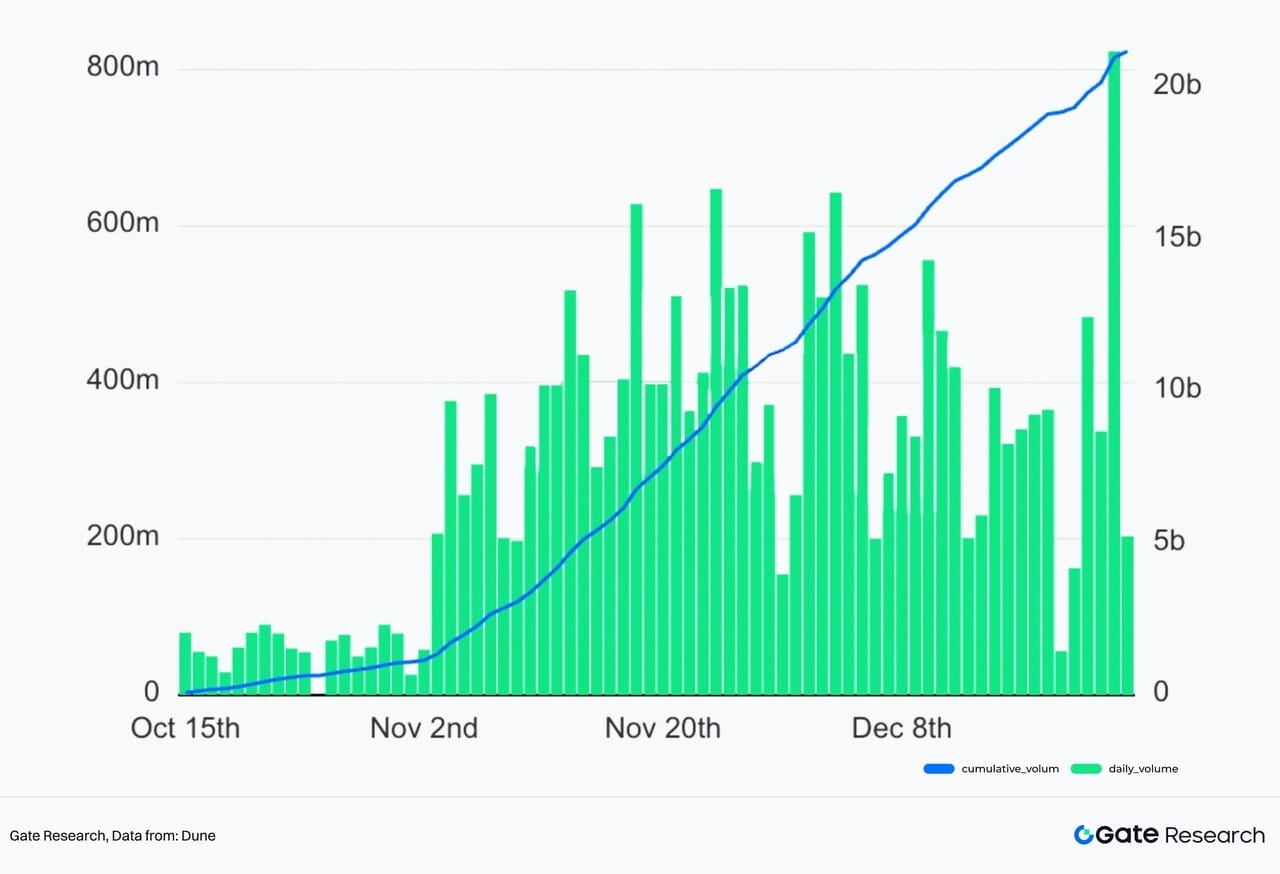
With Gate Web3 Wallet, users can quickly expand from exchange accounts to all on-chain scenarios, effectively extending user activity cycles while keeping user assets within the Gate ecosystem.
V. Future Outlook: The Next Stage of Competition in the Wallet Market
Wallets are not the end point, but the starting point for a new round of on-chain financial competition.
5.1 Key Competitive Dimensions
With wallets having completed their structural migration from tools to platforms, the next stage of competition will no longer focus on who has more features, but on who can build sustainable barriers in four dimensions: transaction quality, user experience, compliance and risk control, and intelligent execution, and steadily convert these capabilities into user retention and revenue.
(1) Trading depth
The depth of competition in wallet transactions focuses on three things: deeper available liquidity, composable depth across chains, protocols, and assets; stronger routing and execution mechanisms, with smart order routing becoming a fundamental capability of aggregators and increasing intent-based execution to improve efficiency and MEV resistance; and more systematic MEV protection, moving from "prompting users to increase slippage" to "default user protection," such as reducing the risk of being squeezed out and preempted through intent matching/solver competition and batch/atomic execution. Overall, competitive metrics will more closely resemble CEX trading metrics (effective spread, slippage distribution, failure rate, and execution time), and brand perception will be built around more certain trading results.
(2) UX abstraction ability
The upper limit of wallet experience lies not in the UI, but in abstracting on-chain complexity to a level invisible to the user. Account abstraction (EC-4337) may be the real differentiator. Through programmable accounts, gas payment/bulk transactions/social recovery capabilities, it is more suitable for mass-market productization, integrating fragmented experiences such as gas, cross-chain, signature pop-ups, authorization management, and failure retries into a default path that requires no explanation.
(3) Risk control and compliance
When a wallet offers services such as aggregated trading, deposits and withdrawals, custody/semi-custody, yield, and access to derivatives, it may be considered a service provider in different jurisdictions and required to meet corresponding compliance and consumer protection requirements. Compliance and risk management capabilities may directly determine the wallet's scalability. Future wallets may not just be a department of a centralized exchange (CEX), but will increasingly resemble regulated fintech companies, with KYC/AML, transaction monitoring, blacklists, and risk warning systems becoming standard features.
(4) AI + Wallet
The impact of AI on wallets is not about AI-generated customer service, but rather about capabilities closer to trading and execution—an intent-driven paradigm. For example, if a user says they want a financial product with an annualized return of x%, AI can provide customized DeFi strategies based on the user's historical behavior and automatically complete these complex operations with the user's permission, as well as automatically manage the user's holdings.
5.2 Speculation on the End of Wallets
(1) All-In-One Wallet vs Vertical Wallet
It is foreseeable that All-In-One will continue to be the mainstream evolutionary path for wallet products for a considerable period of time, whether it is a non-custodial wallet or a CEX embedded wallet. Wallets can continuously expand their service boundaries in different on-chain scenarios and asset types, systematically exploring commercialization opportunities. As functional modules are continuously added, wallets no longer rely on a single narrative or short-term opportunities, but gradually form a comprehensive service capability covering multiple assets and protocols.
Correspondingly, there are phased opportunities for vertical wallets in specific niche areas. These wallets typically focus on a clear vertical market, providing a highly professional experience through a deep understanding of asset standards, interaction methods, and user needs. For example, UniSat, which focuses on Bitcoin network native assets (Ordinals and Runes), was the first to support these new asset forms before mainstream wallets fully covered these needs, and has gathered a group of highly active early users.
The advantage of vertical wallets often stems from the flexibility of their teams and product structures. Compared to larger mainstream wallets, smaller teams can quickly complete integration and iteration in the early stages of new assets and standards, thus serving user groups that are not yet fully covered. The "first-mover advantage—verification—aggregation" path has repeatedly appeared in many sub-sectors of crypto assets.
However, in the longer term, the advantages established by vertical wallets are not inherently stable. As mainstream all-in-one wallets continue to accumulate product completeness and technological stack, their speed in identifying, evaluating, and integrating new assets is significantly improving. Once a mainstream wallet chooses to enter a gradually validated niche market, its large user base and mature distribution capabilities often rapidly amplify market awareness of that asset, objectively creating competitive pressure on vertical wallets. Therefore, the timing of a new asset's integration by a mainstream wallet is gradually becoming a crucial variable influencing narrative diffusion and market landscape.
(2) Wallet replaces some CEX functions
For a long time, CEXs have had five core advantages over DEXs or wallets: serving as the gateway for fiat currency deposits and withdrawals; aggregating trading and liquidity of multi-chain tokens onto a single platform; providing a perpetual contract experience; a large customer service team; and compliance guarantees. These advantages constitute the moat of CEXs. However, with the continuous evolution of wallet products, some of these advantages are gradually being weakened.
In terms of fiat currency deposits and withdrawals, traditionally, centralized exchanges (CEXs) have been the sole fiat currency gateway for the vast majority of users entering the crypto world. This dominance stemmed from the centralized integration of banking channels, compliance qualifications, and localized operations by CEXs. However, third-party fiat service providers such as MoonPay have been widely integrated into mainstream wallets, gradually transforming fiat currency deposit and withdrawal capabilities into modularly accessible services. While CEXs remain important nodes for deposits and withdrawals, their monopolistic access is crumbling.
In terms of multi-chain asset trading and liquidity aggregation, CEXs were long the only venues capable of providing users with cross-chain asset trading and deep liquidity within a single interface. Now, DEX aggregators and wallet-built-in routing engines have enabled cross-chain liquidity aggregation.
In the perpetual contract space, centralized exchanges (CEXs) have long monopolized the perpetual contract experience, offering high leverage, sub-second execution, unified margin, and real-time risk control. However, on-chain derivatives protocols, such as Hyperliquid, have significantly narrowed the gap with CEXs in terms of transaction ordering, execution latency, and user experience through dedicated execution environments and on-chain matching mechanisms. Simultaneously, deep integration methods like Builder Codes allow wallets to directly access Hyperliquid on-chain perpetual contract liquidity without needing to build their own derivatives exchanges. Users can perform operations such as opening and closing positions, adjusting leverage, and monitoring funding rates within their wallet environment, while maintaining a non-custodial asset status at all times.
In contrast, CEXs still hold a significant advantage in customer service support and compliance safeguards, an advantage that is difficult to replicate fully in the short term. Most leading CEXs offer 24/7 human customer service, a robust ticketing system, and cross-language support, enabling rapid responses to account anomalies, operational errors, or system problems. Even Hyperliquid, which puts pressure on CEXs, has a team of only a dozen or so members, a far cry from the thousands of global teams typically found in CEXs. Compliance also constitutes one of the most solid moats currently protecting CEXs. Through mechanisms such as KYC/AML, regulatory licenses, reserve verification, and insurance funds, CEXs can provide a degree of institutional safeguards for users in the event of hacker attacks, platform risks, or regulatory incidents.
In summary, while the core advantages of CEXs haven't disappeared in the short term, their competitive moat is undergoing structural changes: traditional advantages such as fiat currency channels, liquidity aggregation, and some derivatives capabilities are being broken down into integrable modules and gradually migrating to wallets and on-chain infrastructure layers. Therefore, the industry landscape isn't a one-way replacement of CEXs by wallets, but rather a deeper functional restructuring—wallets continue to absorb financial capabilities that can be on-chain, productized, and standardized, becoming the default interface for users participating in on-chain assets and high-frequency trading. Simultaneously, CEXs are also addressing the pressure of boundary erosion through embedded wallets, on-chain trading, and tighter ecosystem integration, extending their advantages in compliance, fiat currency, and institutional services to on-chain scenarios. The key to future competition isn't about who eliminates whom, but about who can establish a more stable combination of security, user experience, liquidity, and compliance, and cultivate user relationships and trading paths within their own systems in the long term.
VI. References
• bitcoindeveloper, https://developer.bitcoin.org
• Metamask, https://medium.com/@JS_MetaMask/metamask-exceeds-1-million-monthly-active-users-9da72a1e915d
• Dune, https://dune.com/gateresearch/gate-perp-dex
• Dune, https://dune.com/domo/ordinals-marketplaces
• Flowscan, https://www.flowscan.xyz/builders?builder=all
• Dune, https://dune.com/hashed_official/pumpdotfun
• DeFiLlama, https://defillama.com/
Gate Research is a comprehensive blockchain and cryptocurrency research platform that provides readers with in-depth content, including technical analysis, insights into hot topics, market reviews, industry research, trend forecasts, and macroeconomic policy analysis.
Disclaimer
Investing in the cryptocurrency market involves high risks. Users are advised to conduct independent research and fully understand the nature of any assets and products they wish to purchase before making any investment decisions. Gate assumes no responsibility for any loss or damage arising from such investment decisions.