

The 'institutional cycle' for Bitcoin in 2026 might be coming
The panic in 2025 not only shook risk assets but also severely impacted cryptocurrency stocks. The expansion of the DAT ecosystem proved to be a double-edged sword during market volatility: investors were forced to sell stocks, further intensifying pressure on risk assets.
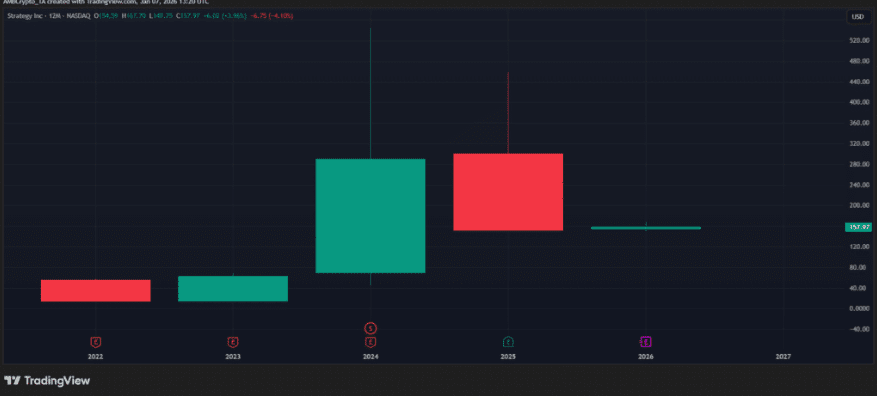
MSTR stock is a typical example. In 2025, the stock dropped 45%, recording its worst annual performance since the 2022 bear market. Its ripple effect was also significant — Bitcoin plunged in October, triggering $2 billion in liquidations.
So, will 2026 be any different? The answer is worth the wait.
Highlights in the bear market: capital is still flowing in
Even in the bear market of 2025, some key sectors still attracted significant capital. RWA (tokenized real assets), stablecoins, and DeFi saw notable growth, indicating that after experiencing panic, rational funds are still seeking long-term value.
This momentum is driving the adoption of these sectors and laying the groundwork for returns in 2026. Analysts expect institutional investment to become the main force driving the market, which is why some are calling 2026 the 'institutional cycle'.
Institutional demand will be a key driving force
Experience from 2025 suggests a clear differentiation in the crypto market. Take the RWA tokenization market as an example; according to RWAxyz data, this market's market cap is expected to reach $18 billion by year-end, up 210% year-over-year, showing strong growth trends. The supply of stablecoins has also increased by over 50%.
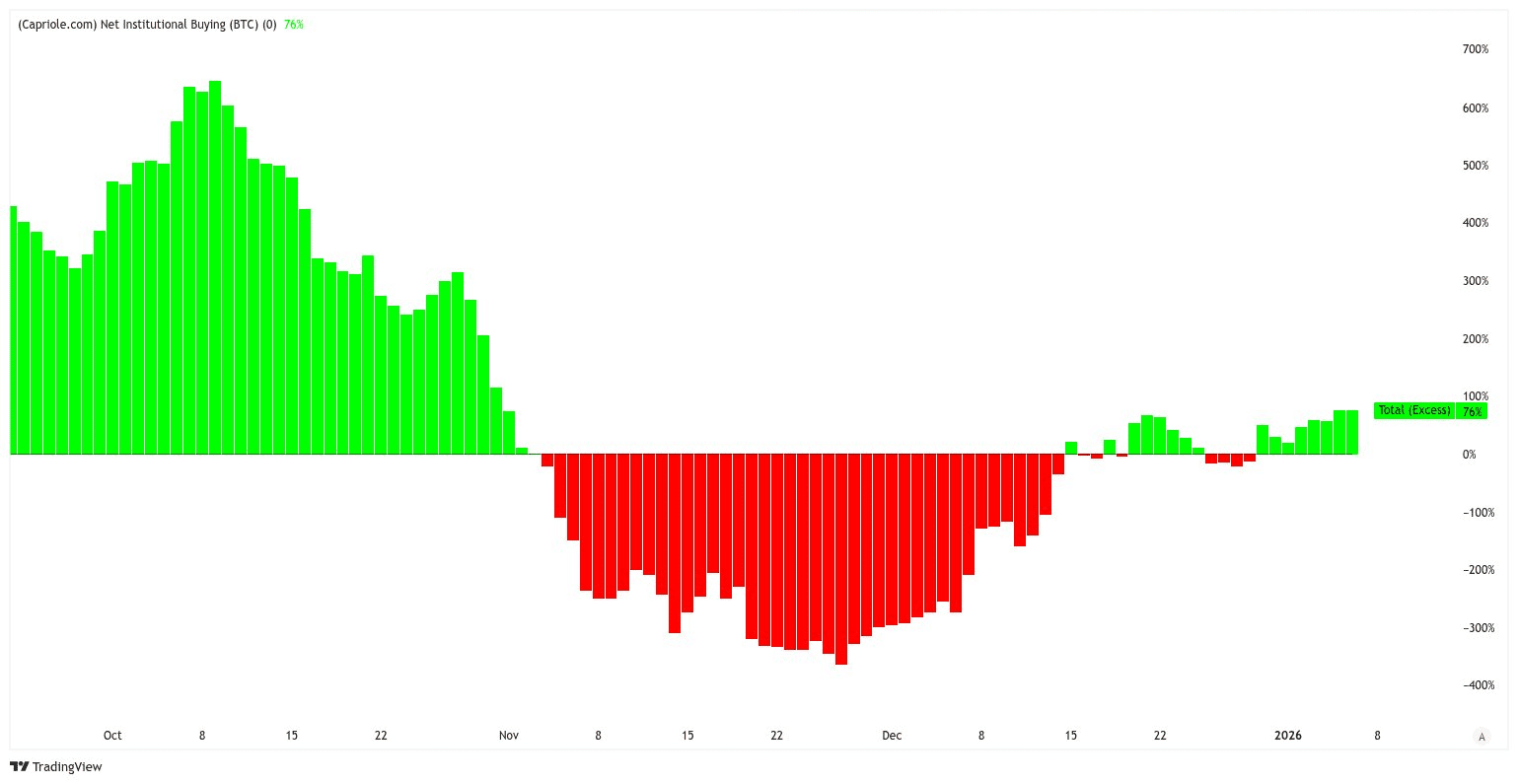
These fundamental factors are shaping the outlook for Bitcoin in 2026, and on-chain data also supports this trend. The amount of Bitcoin purchased by institutions is 76% higher than miner output, resulting in a supply gap.
In other words, 2026 is likely to be the 'institutional cycle', dominated by institutions, as the market gradually differentiates itself from speculative behavior, forming a more robust upward foundation.
The positive effects of the 2025 bear market
From another perspective, the 2025 bear market actually provided the market with a breather. During the panic and adjustments, funds gradually flowed into long-term investment sectors, helping to distinguish speculative behavior from fundamental factors. This provides clearer signals for market movements in 2026.
Take MSTR as an example; it has already recorded a 4% increase in early 2026, showing that institutional demand is driving the market recovery.
Looking ahead to 2026: Bitcoin DAT may see a breakthrough
Overall, the influx of funds into RWA, stablecoins, and DeFi is strengthening the market fundamentals, while institutional purchases of Bitcoin exceed miner output, further supporting price increases.

With this momentum, 2026 is likely to be a breakout year for Bitcoin and related DAT. Analysts predict Bitcoin could reach $150,000 by the end of the year, with the core driving force behind this surge likely being the 'institutional cycle'.
Summary
While the 2025 bear market brought panic, it also facilitated the flow of funds into long-term investment sectors.
With the push from RWA, stablecoins, and DeFi, along with continuous institutional accumulation of Bitcoin, the market is likely to welcome a more robust, institutionalized upward cycle in 2026.
For investors, this means opportunities are forming, and a patient positioning strategy could yield substantial returns.