
最佳第6人
1.8k Posts

最佳第6人
 Square Verified+
以市场为师,与趋势为友。尊重常识,尊重规律,尊重市场,尊重人性,遵守纪律。我相信我就是万中无一的交易天才,币圈气运之子,Web3天命第六人。
Open Trade
Frequent Trader
5.3 Years
2.5K+ Following
60.5K+ Followers
35.8K+ Liked
Posts
Portfolio
All
Quotes
Videos
Live
PINNED
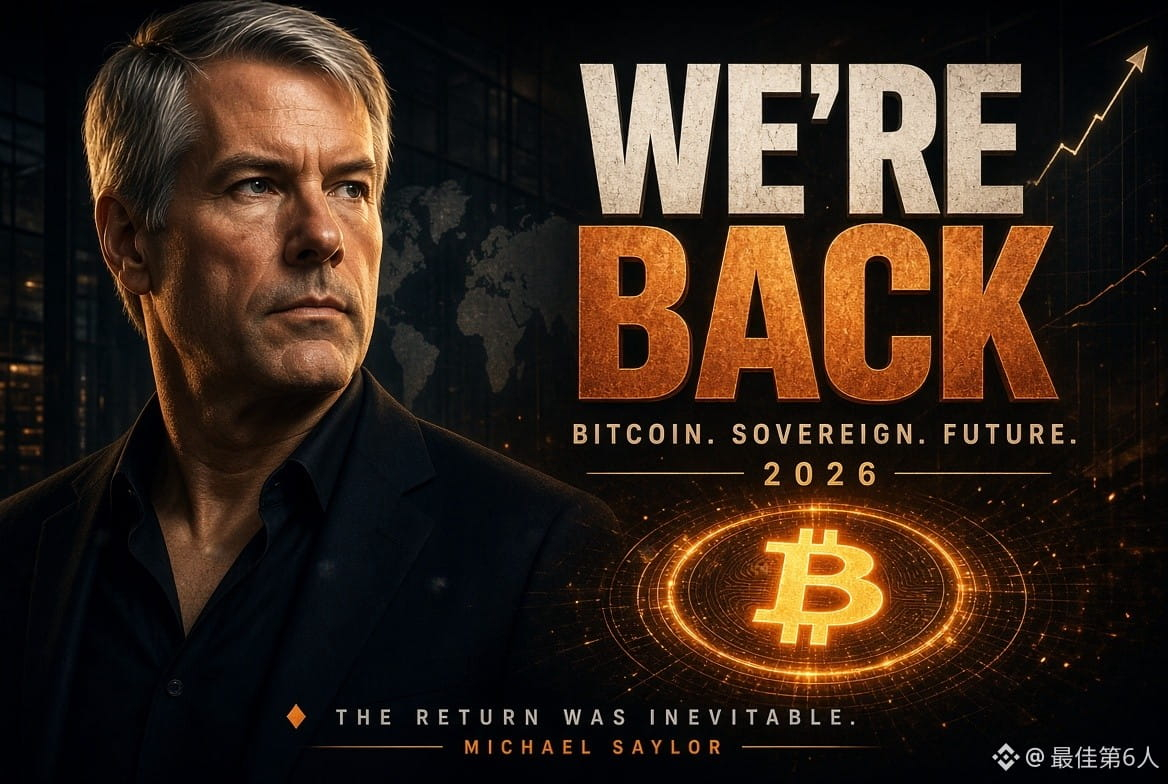
Can September be a bit kinder to me!
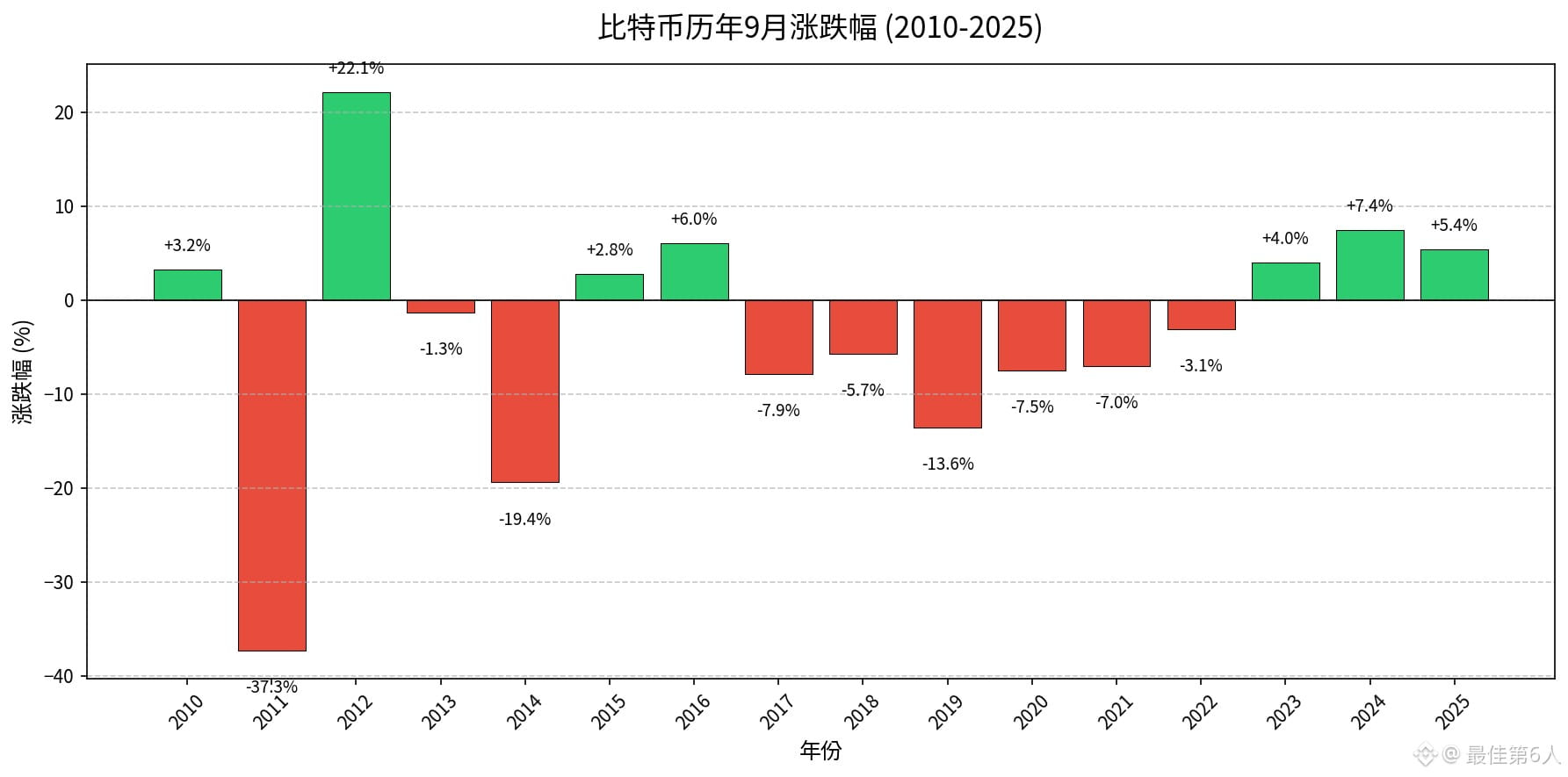
Bitcoin’s performance in September over the years has long been relatively weak, and the market often jokes about it as “Rektember.” Based on publicly available data from 2010 to 2025, the average monthly return in September has mostly fallen in the range of -3% to -4.5%, making it one of the weaker months of the year.
Among the 13 Septembers from 2013 to 2025, roughly 8 years ended lower—down more than 60% of the time. Looking more closely, early on the volatility was more extreme: September 2011 saw a drop of over 37%, 2014 fell by about 19%, and 2019 was also down more than 13%. From 2017 to 2022, it was even worse—six consecutive years ended lower. But it’s not always a guaranteed decline: September 2012 rose about 22%, while 2015 and 2016 saw modest gains of roughly 3% and 6%, respectively. In recent years, the trend appears to be shifting: September 2023 rose about 4%, 2024 rose about 7.4%, and 2025 rose about 5.4%. With three consecutive years turning positive, this suggests seasonality may be weakening.
There are also patterns within September itself: early in the month tends to be relatively stable, mid-month (especially the third week) often brings deeper pullbacks, and late-month sometimes sees partial recoveries. Historically, after a weak September, October has often been stronger—dubbed “Uptober,” with a significantly higher average increase, and the fourth quarter overall tends to be more positive.
It’s important to emphasize that these are just statistical tendencies, not hard rules. In the early years, the market was smaller and more volatile; in recent years, multiple factors—such as ETF inflows, institutional participation, and macro conditions—have influenced the outcomes.
Seasonality can only serve as a reference. The actual price action still depends on liquidity, policy, and market sentiment. Investors should view historical data rationally and never apply it mechanically. $BTC
Bitcoin’s performance in September over the years has long been relatively weak, and the market often jokes about it as “Rektember.” Based on publicly available data from 2010 to 2025, the average monthly return in September has mostly fallen in the range of -3% to -4.5%, making it one of the weaker months of the year.
Among the 13 Septembers from 2013 to 2025, roughly 8 years ended lower—down more than 60% of the time. Looking more closely, early on the volatility was more extreme: September 2011 saw a drop of over 37%, 2014 fell by about 19%, and 2019 was also down more than 13%. From 2017 to 2022, it was even worse—six consecutive years ended lower. But it’s not always a guaranteed decline: September 2012 rose about 22%, while 2015 and 2016 saw modest gains of roughly 3% and 6%, respectively. In recent years, the trend appears to be shifting: September 2023 rose about 4%, 2024 rose about 7.4%, and 2025 rose about 5.4%. With three consecutive years turning positive, this suggests seasonality may be weakening.
There are also patterns within September itself: early in the month tends to be relatively stable, mid-month (especially the third week) often brings deeper pullbacks, and late-month sometimes sees partial recoveries. Historically, after a weak September, October has often been stronger—dubbed “Uptober,” with a significantly higher average increase, and the fourth quarter overall tends to be more positive.
It’s important to emphasize that these are just statistical tendencies, not hard rules. In the early years, the market was smaller and more volatile; in recent years, multiple factors—such as ETF inflows, institutional participation, and macro conditions—have influenced the outcomes.
Seasonality can only serve as a reference. The actual price action still depends on liquidity, policy, and market sentiment. Investors should view historical data rationally and never apply it mechanically. $BTC



Verified
In my view, Dusk Network has managed to stand out among numerous privacy public chains primarily because it precisely addresses the most difficult contradiction in real-world asset (RWA) tokenization: how to meet stringent regulatory compliance requirements while ensuring commercial privacy. After taking a deep dive into its underlying architecture, I’ve found that this isn’t a simple stacking of features, but a deep native integration from the consensus layer all the way to the application layer.
First, Dusk’s Succinct Attestation (SA) consensus mechanism lays the foundation for enterprise-grade applications. Unlike the probabilistic finality of traditional public chains, SA provides deterministic finality—meaning once a transaction is confirmed, it becomes irreversible. This perfectly matches the strict need for settlement certainty in traditional finance. Even better, its introduced “blind attestation” mechanism uses zero-knowledge proofs to verify the eligibility of validators. While safeguarding network security, it also completely hides validators’ staked amounts and identities, preventing leakage of commercial intent at the foundational level.
On the execution layer, Dusk, through the combination of the Zedger architecture and the Piecrust virtual machine, achieves truly confidential smart contracts. Zedger is designed specifically for regulated assets, with transfer restrictions, corporate actions such as profit distributions, and other behaviors directly encoded on-chain. Meanwhile, the Piecrust virtual machine—by optimizing cryptographic primitives—significantly reduces the verification cost of zero-knowledge proofs. With this design, complex financial logic can run inside a “black box”; the network only verifies the correctness of results without exposing sensitive holdings or strategy data.
However, what truly sets Dusk apart from other privacy chains is its brilliant real-world capability for “selective disclosure.” Relying on the Citadel identity protocol and the Phoenix privacy model, Dusk builds a complete zero-knowledge compliance system. In RWA trading scenarios, institutions don’t need to publicly disclose trade details to the entire network. They only need to provide zero-knowledge proofs to regulators or auditors, thereby proving compliance with regulatory requirements such as KYC/AML and MiCA without revealing specific amounts and identities. This mechanism of “confidentiality to the public, transparency to regulators” is precisely the key that enables Dusk to carry trillion-level compliant financial assets.
#dusk $DUSK @Dusk
First, Dusk’s Succinct Attestation (SA) consensus mechanism lays the foundation for enterprise-grade applications. Unlike the probabilistic finality of traditional public chains, SA provides deterministic finality—meaning once a transaction is confirmed, it becomes irreversible. This perfectly matches the strict need for settlement certainty in traditional finance. Even better, its introduced “blind attestation” mechanism uses zero-knowledge proofs to verify the eligibility of validators. While safeguarding network security, it also completely hides validators’ staked amounts and identities, preventing leakage of commercial intent at the foundational level.
On the execution layer, Dusk, through the combination of the Zedger architecture and the Piecrust virtual machine, achieves truly confidential smart contracts. Zedger is designed specifically for regulated assets, with transfer restrictions, corporate actions such as profit distributions, and other behaviors directly encoded on-chain. Meanwhile, the Piecrust virtual machine—by optimizing cryptographic primitives—significantly reduces the verification cost of zero-knowledge proofs. With this design, complex financial logic can run inside a “black box”; the network only verifies the correctness of results without exposing sensitive holdings or strategy data.
However, what truly sets Dusk apart from other privacy chains is its brilliant real-world capability for “selective disclosure.” Relying on the Citadel identity protocol and the Phoenix privacy model, Dusk builds a complete zero-knowledge compliance system. In RWA trading scenarios, institutions don’t need to publicly disclose trade details to the entire network. They only need to provide zero-knowledge proofs to regulators or auditors, thereby proving compliance with regulatory requirements such as KYC/AML and MiCA without revealing specific amounts and identities. This mechanism of “confidentiality to the public, transparency to regulators” is precisely the key that enables Dusk to carry trillion-level compliant financial assets.
#dusk $DUSK @Dusk
·
--
🎙️ Superman 100U fixed investment in BTC on day 12, DUSK long or short

End
02 h 23 m 12 s
7.5k
15
Today, as the public-chain track grows increasingly crowded, Dusk Network has chosen an exceptionally difficult path: trying to completely solve the zero-sum game of “compliance and privacy” at the very base of Layer 1. This is not a simple technical upgrade, but a full-scale rearchitecture of traditional public-chain design.
Dusk’s core ambition is “auditable privacy.” Unlike Oasis, which isolates privacy within ParaTime, Dusk embeds zero-knowledge proofs into the protocol layer, enabling default-confidential financial logic through confidential smart contracts (XSC). This means regulators can verify the legitimacy of transactions via cryptography without peeking into commercial secrets. This “do hard privacy first, then talk compliance” approach precisely targets the pain points of RWA (real-world asset) tokenization, offering what is, in theory, a perfect solution for regulated on-chain finance.
However, ideals are full and reality is harsh. This kind of underlying rework brings extremely high engineering friction. By abandoning the EVM state model and switching to the UTXO-based Rusk virtual machine, developers must relearn an entirely new programming paradigm—debugging can feel like “groping for an elephant in a dark box.” Even more fatal are the performance bottlenecks: the high computational cost of zero-knowledge proofs rapidly inflates the ledger, makes node synchronization difficult, and still leaves a significant gap from institutional-grade high-frequency clearing.
Looking back at token value, $DUSK faces a severe test. Its long, 36-year token release schedule creates persistent inflation pressure. Without sufficient real RWA settlement volume to generate enough Gas burn, the token is all too likely to become merely a PoS staking tool. Although the team is working to reduce friction—by collaborating with the Dutch exchange NPEX and launching DuskEVM to bring in real business—the high concentration of the stakes remains the ever-hanging sword of Damocles.
Dusk isn’t just racing for throughput; it is seriously answering a fundamental question: can on-chain finance be both verifiable and hideable? Can it become “basic, boring infrastructure” in the eyes of regulated institutions? In the end, it doesn’t depend on the technical whitepaper—it depends on whether it can make financial institutions willing to pay for this “compliant privacy” and truly run massive settlement volumes. Until real clearing volume arrives, maintaining due reverence may be the best strategy for investors.
#dusk $DUSK @Dusk
Dusk’s core ambition is “auditable privacy.” Unlike Oasis, which isolates privacy within ParaTime, Dusk embeds zero-knowledge proofs into the protocol layer, enabling default-confidential financial logic through confidential smart contracts (XSC). This means regulators can verify the legitimacy of transactions via cryptography without peeking into commercial secrets. This “do hard privacy first, then talk compliance” approach precisely targets the pain points of RWA (real-world asset) tokenization, offering what is, in theory, a perfect solution for regulated on-chain finance.
However, ideals are full and reality is harsh. This kind of underlying rework brings extremely high engineering friction. By abandoning the EVM state model and switching to the UTXO-based Rusk virtual machine, developers must relearn an entirely new programming paradigm—debugging can feel like “groping for an elephant in a dark box.” Even more fatal are the performance bottlenecks: the high computational cost of zero-knowledge proofs rapidly inflates the ledger, makes node synchronization difficult, and still leaves a significant gap from institutional-grade high-frequency clearing.
Looking back at token value, $DUSK faces a severe test. Its long, 36-year token release schedule creates persistent inflation pressure. Without sufficient real RWA settlement volume to generate enough Gas burn, the token is all too likely to become merely a PoS staking tool. Although the team is working to reduce friction—by collaborating with the Dutch exchange NPEX and launching DuskEVM to bring in real business—the high concentration of the stakes remains the ever-hanging sword of Damocles.
Dusk isn’t just racing for throughput; it is seriously answering a fundamental question: can on-chain finance be both verifiable and hideable? Can it become “basic, boring infrastructure” in the eyes of regulated institutions? In the end, it doesn’t depend on the technical whitepaper—it depends on whether it can make financial institutions willing to pay for this “compliant privacy” and truly run massive settlement volumes. Until real clearing volume arrives, maintaining due reverence may be the best strategy for investors.
#dusk $DUSK @Dusk
Partly True
I reran Dusk’s testnet—not to look at the prices, but to confirm one thing: when compliance and privacy are hard-coded into Layer 1, has the ledger structure really changed?
In the past, we always treated confidentiality and compliance as mortal enemies. But Dusk is trying to sort out this relationship from the ground up. Traditional public chains rely on “full transparency” to reduce verification costs; however, real-world financial markets simply can’t afford the cost of having order flow and positions exposed. Dusk’s Confidential Security Contracts (XSC) provide the answer: using zero-knowledge proofs, automatic enforcement of compliance rules such as eligibility and limits without exposing sensitive data.
But privacy isn’t magic—it brings very high engineering hurdles. Dusk’s Rusk virtual machine completely abandons EVM’s state model. Writing transfer contracts now requires rethinking the underlying note structure. When debugging confidential transfers, event logs automatically hide amounts—great for audits, but troubleshooting feels like trying to find your way in a black box.
I compared Oasis and Concordium as well. Oasis isolates confidential state within the ParaTime layer; the main chain remains transparent and it is EVM-compatible, so migration costs are low. Concordium, on the other hand, handles on-chain identity first and only then discusses privacy. Dusk goes the opposite way: it insists that the entire settlement layer runs in encrypted state. This path—“hard privacy first, then compliance interfaces”—does fit the settlement logic of security tokens, but the trade-off is heavy: during node synchronization, the ledger grows extremely fast, and the zero-knowledge proof delay is on the order of seconds even on standard machines, still far from institutional-grade high-frequency settlement.
So Dusk’s real test isn’t benchmark scores. It’s whether it can become “basic, boring infrastructure” in the eyes of regulated institutions—not some exotic frontier technology. And how much friction cost are financial users actually willing to pay for this kind of privacy?
Coming back to the token itself, the logic behind $DUSK doesn’t deviate. If there isn’t real institutional settlement volume to back it up, it can only be a staking-yield instrument. I won’t ignore that risk just because the technical approach looks clean. Dusk isn’t racing to maximize throughput—it’s seriously answering this question: can on-chain finance be both verifiable and private? As for the answer, we’ll have to wait for real settlement volume to verify.
#dusk $DUSK @Dusk
In the past, we always treated confidentiality and compliance as mortal enemies. But Dusk is trying to sort out this relationship from the ground up. Traditional public chains rely on “full transparency” to reduce verification costs; however, real-world financial markets simply can’t afford the cost of having order flow and positions exposed. Dusk’s Confidential Security Contracts (XSC) provide the answer: using zero-knowledge proofs, automatic enforcement of compliance rules such as eligibility and limits without exposing sensitive data.
But privacy isn’t magic—it brings very high engineering hurdles. Dusk’s Rusk virtual machine completely abandons EVM’s state model. Writing transfer contracts now requires rethinking the underlying note structure. When debugging confidential transfers, event logs automatically hide amounts—great for audits, but troubleshooting feels like trying to find your way in a black box.
I compared Oasis and Concordium as well. Oasis isolates confidential state within the ParaTime layer; the main chain remains transparent and it is EVM-compatible, so migration costs are low. Concordium, on the other hand, handles on-chain identity first and only then discusses privacy. Dusk goes the opposite way: it insists that the entire settlement layer runs in encrypted state. This path—“hard privacy first, then compliance interfaces”—does fit the settlement logic of security tokens, but the trade-off is heavy: during node synchronization, the ledger grows extremely fast, and the zero-knowledge proof delay is on the order of seconds even on standard machines, still far from institutional-grade high-frequency settlement.
So Dusk’s real test isn’t benchmark scores. It’s whether it can become “basic, boring infrastructure” in the eyes of regulated institutions—not some exotic frontier technology. And how much friction cost are financial users actually willing to pay for this kind of privacy?
Coming back to the token itself, the logic behind $DUSK doesn’t deviate. If there isn’t real institutional settlement volume to back it up, it can only be a staking-yield instrument. I won’t ignore that risk just because the technical approach looks clean. Dusk isn’t racing to maximize throughput—it’s seriously answering this question: can on-chain finance be both verifiable and private? As for the answer, we’ll have to wait for real settlement volume to verify.
#dusk $DUSK @Dusk
Over the past few days, I went through privacy chains and RWA-related projects again, and the more I looked, the more I felt that Dusk’s approach is quite distinctive. Most projects either push privacy to the extreme (like Monero, Zcash—nearly completely anonymous), or scale up size and liquidity (like Ondo, Centrifuge). But the bottleneck that institutions often run into is this: they don’t want their holdings and trading details fully exposed, yet they must still be able to work with regulatory audits. With pure privacy coins, the privacy is strong, but there’s basically no smart contracts or compliance tooling—so it’s hard for institutions to use.
General-purpose privacy platforms are more flexible for computation and DeFi, but they don’t offer enough support for financial scenarios like securities issuance and admission control.
Mainstream RWA projects are ahead in scale, yet most on-chain data is still transparent, with limited protection for sensitive information. Dusk gives me the impression that it’s deliberately taking the middle path. It uses zero-knowledge proofs so transactions can be confidential by default, while still preserving the ability to disclose when needed. Add an identity system and a finance-grade settlement design, and it looks like it’s aiming straight at “making it truly usable by institutions.” Of course, we should also be clear that its current ecosystem size and real usage data aren’t that big yet, and the rollout pace still needs further observation. But its positioning is very clear—especially in a European compliance environment, I think this “can be hidden and still governed” direction is more targeted than simply trying to outdo others on privacy strength or on TVL. Have you been paying attention to projects in this privacy-compliance direction recently? Do you like the ones that already have scale, or the ones with a more precise positioning? Let’s discuss in the comments.
Which kind of privacy/RWA projects do you like more?
#dusk $DUSK @Dusk
General-purpose privacy platforms are more flexible for computation and DeFi, but they don’t offer enough support for financial scenarios like securities issuance and admission control.
Mainstream RWA projects are ahead in scale, yet most on-chain data is still transparent, with limited protection for sensitive information. Dusk gives me the impression that it’s deliberately taking the middle path. It uses zero-knowledge proofs so transactions can be confidential by default, while still preserving the ability to disclose when needed. Add an identity system and a finance-grade settlement design, and it looks like it’s aiming straight at “making it truly usable by institutions.” Of course, we should also be clear that its current ecosystem size and real usage data aren’t that big yet, and the rollout pace still needs further observation. But its positioning is very clear—especially in a European compliance environment, I think this “can be hidden and still governed” direction is more targeted than simply trying to outdo others on privacy strength or on TVL. Have you been paying attention to projects in this privacy-compliance direction recently? Do you like the ones that already have scale, or the ones with a more precise positioning? Let’s discuss in the comments.
Which kind of privacy/RWA projects do you like more?
#dusk $DUSK @Dusk
定位精准、强调隐私+合规的(如 Dusk 类)
100%
规模和流动性已经起来的(如 Ondo 类)
0%
还在观望,看落地再说
0%
4 votes • Voting closed
Scumbags in Wall Street suits, stop drooling over my PPT—take a look at the four “trump cards” in my pocket first.
I’m Dusk Network. In this industry where everyone keeps shouting “compliance” while secretly playing cat-and-mouse, I’ve become a paradox: too transparent—privacy is meaningless; too black-box—then you say I’m making money out of thin air. Now you’re coming at me with magnifying glasses, even with sniper scopes, looking for flaws on my body. Fine. If you don’t believe “code is law,” then I’ll put the ledgers under a full spotlight for you to see.
First card: I flip the table. The source code of the Phoenix privacy contract and the Hedger trading module—along with Trail of Bits’s audit report—is now posted on-chain. Don’t tell me “zero-knowledge proofs are too elegant.” I just know this: without backing from top-tier security institutions, your eyes see my PlonK algorithm as a black box that could blow up at any moment. Now the box is dismantled. You verify it yourselves.
Second card: a money-counter test. Don’t bring up that €300 million paper subscription—that’s a mirage in the slides. Look on-chain: the asset hash from the very first mint via the Quantoz channel is already sitting in the Vault. Real on-chain transfers—those are the steel needles that pop the bubbles. The money isn’t just being painted into your PPT; it’s already on-chain, the channel is connected. Don’t believe me? Check the hash yourself.
Third card: a lie detector. No matter how big the plate is, if nobody’s playing, it’s stagnant water. I’m publishing the deduplicated independent wallet addresses and Hedger’s actual turnover rate. If only a few institutional addresses are standing still and pretending, then I’m just a joke. But right now, the real number of trade records is ticking—liquidity isn’t “blown up”; it’s being slammed in one trade at a time.
Finally, the last card—the one you want most: the “back door.” I’ve prepared a selective-disclosure API and regulatory nodes. I won’t hand over private keys or plaintext ledgers, but I will use cryptography to prove to the regulator: this money is clean. Privacy is the bottom line, compliance is the passport—I want both.
Now my trump cards are on the table. Whether they’re a black box or gold—judge for yourselves.
Vote: For Dusk taking down Wall Street, which of these four trump cards is the most lethal?
#dusk $DUSK @Dusk
I’m Dusk Network. In this industry where everyone keeps shouting “compliance” while secretly playing cat-and-mouse, I’ve become a paradox: too transparent—privacy is meaningless; too black-box—then you say I’m making money out of thin air. Now you’re coming at me with magnifying glasses, even with sniper scopes, looking for flaws on my body. Fine. If you don’t believe “code is law,” then I’ll put the ledgers under a full spotlight for you to see.
First card: I flip the table. The source code of the Phoenix privacy contract and the Hedger trading module—along with Trail of Bits’s audit report—is now posted on-chain. Don’t tell me “zero-knowledge proofs are too elegant.” I just know this: without backing from top-tier security institutions, your eyes see my PlonK algorithm as a black box that could blow up at any moment. Now the box is dismantled. You verify it yourselves.
Second card: a money-counter test. Don’t bring up that €300 million paper subscription—that’s a mirage in the slides. Look on-chain: the asset hash from the very first mint via the Quantoz channel is already sitting in the Vault. Real on-chain transfers—those are the steel needles that pop the bubbles. The money isn’t just being painted into your PPT; it’s already on-chain, the channel is connected. Don’t believe me? Check the hash yourself.
Third card: a lie detector. No matter how big the plate is, if nobody’s playing, it’s stagnant water. I’m publishing the deduplicated independent wallet addresses and Hedger’s actual turnover rate. If only a few institutional addresses are standing still and pretending, then I’m just a joke. But right now, the real number of trade records is ticking—liquidity isn’t “blown up”; it’s being slammed in one trade at a time.
Finally, the last card—the one you want most: the “back door.” I’ve prepared a selective-disclosure API and regulatory nodes. I won’t hand over private keys or plaintext ledgers, but I will use cryptography to prove to the regulator: this money is clean. Privacy is the bottom line, compliance is the passport—I want both.
Now my trump cards are on the table. Whether they’re a black box or gold—judge for yourselves.
Vote: For Dusk taking down Wall Street, which of these four trump cards is the most lethal?
#dusk $DUSK @Dusk
A. 掀桌子(开源代码与顶级审计)
50%
B. 验钞机(链上真实哈希与余额)
50%
C. 测谎仪(独立地址与真实换手率)
0%
D. 通行证(选择性披露合规接口)
0%
2 votes • Voting closed
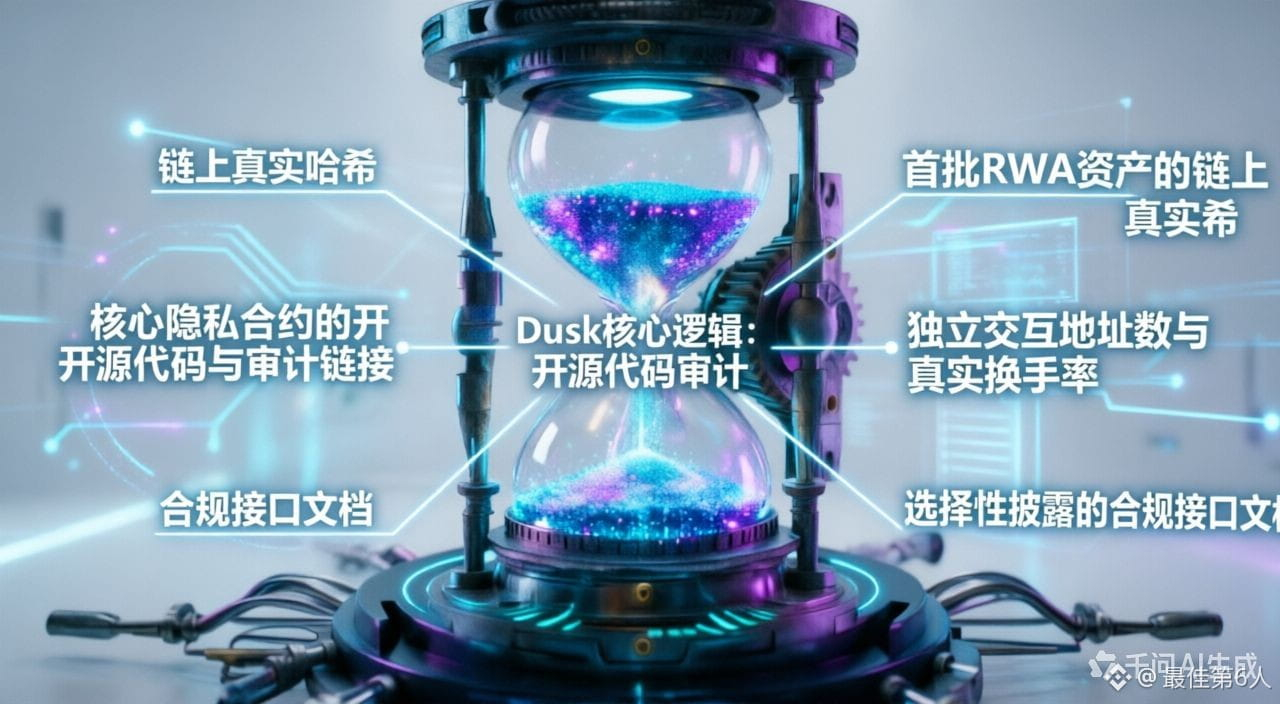
Don’t use that so-called paper subscription of €300 million to blow smoke about being the privacy-track leader. In the eyes of institutions, any intent-to-sign that isn’t supported by a real hash is nothing but a watered-down story. If Dusk wants to break the accusations of “building wealth with PPTs,” stop talking about how elegant zero-knowledge proofs are and slam these four back-pocket cards onto the table—right now.
First card: publish the open-source code and audit links for the core privacy contracts. During due diligence, what institutions fear most is “invisibility.” Dusk must disclose the code address for the Phoenix privacy accounts and the Hedger transaction module, and produce audit reports from top-tier security firms. This is a “confidence booster” for compliance officers—proof that your PlonK proving system doesn’t hide any logical loopholes. It’s the first step from a “mathematical black box” to “verifiable trust.”
Second card: reveal the real on-chain hashes of the first batch of RWA assets. No matter how high the paper chips are, they’re still fake. Dusk must publish the hash of the assets genuinely minted and sent into the on-chain Vault for the first time—either via the Quantoz stablecoin channel or through trades on the NPEX exchange. This is the “cash verifier” for funding parties: a real on-chain transaction record in gold and silver form that directly punctures the claim that “the pipeline isn’t connected,” proving that the funds no longer just sit in PPT form.
Third card: report the count of independent interaction addresses and the actual turnover rate. If that €300 million pool only has a few institutional addresses parked in place, that’s dead water. Only the number of de-duplicated independent wallet addresses and the real transaction count in the Hedger module can prove that this privacy settlement system has at least basic liquidity-carrying capacity.
Final card: hand over the compliance interface documentation for selective disclosure. Faced with the ultimate question of “whether there’s a backdoor,” Dusk must disclose the operating mechanism of the Regulator Node or its compliance review API. Proving to specific authorized parties that transactions comply with AML rules is the passport to untangle the deadlock between “privacy and regulation.”
What matters here was never whose voice is louder—it’s whose ledger gets washed so transparently. Once these four cards are fully on display, then we can talk about taking over traditional finance’s pricing power. Now? First, let the cash verifier start running. #dusk $DUSK @Dusk
First card: publish the open-source code and audit links for the core privacy contracts. During due diligence, what institutions fear most is “invisibility.” Dusk must disclose the code address for the Phoenix privacy accounts and the Hedger transaction module, and produce audit reports from top-tier security firms. This is a “confidence booster” for compliance officers—proof that your PlonK proving system doesn’t hide any logical loopholes. It’s the first step from a “mathematical black box” to “verifiable trust.”
Second card: reveal the real on-chain hashes of the first batch of RWA assets. No matter how high the paper chips are, they’re still fake. Dusk must publish the hash of the assets genuinely minted and sent into the on-chain Vault for the first time—either via the Quantoz stablecoin channel or through trades on the NPEX exchange. This is the “cash verifier” for funding parties: a real on-chain transaction record in gold and silver form that directly punctures the claim that “the pipeline isn’t connected,” proving that the funds no longer just sit in PPT form.
Third card: report the count of independent interaction addresses and the actual turnover rate. If that €300 million pool only has a few institutional addresses parked in place, that’s dead water. Only the number of de-duplicated independent wallet addresses and the real transaction count in the Hedger module can prove that this privacy settlement system has at least basic liquidity-carrying capacity.
Final card: hand over the compliance interface documentation for selective disclosure. Faced with the ultimate question of “whether there’s a backdoor,” Dusk must disclose the operating mechanism of the Regulator Node or its compliance review API. Proving to specific authorized parties that transactions comply with AML rules is the passport to untangle the deadlock between “privacy and regulation.”
What matters here was never whose voice is louder—it’s whose ledger gets washed so transparently. Once these four cards are fully on display, then we can talk about taking over traditional finance’s pricing power. Now? First, let the cash verifier start running. #dusk $DUSK @Dusk
Verified
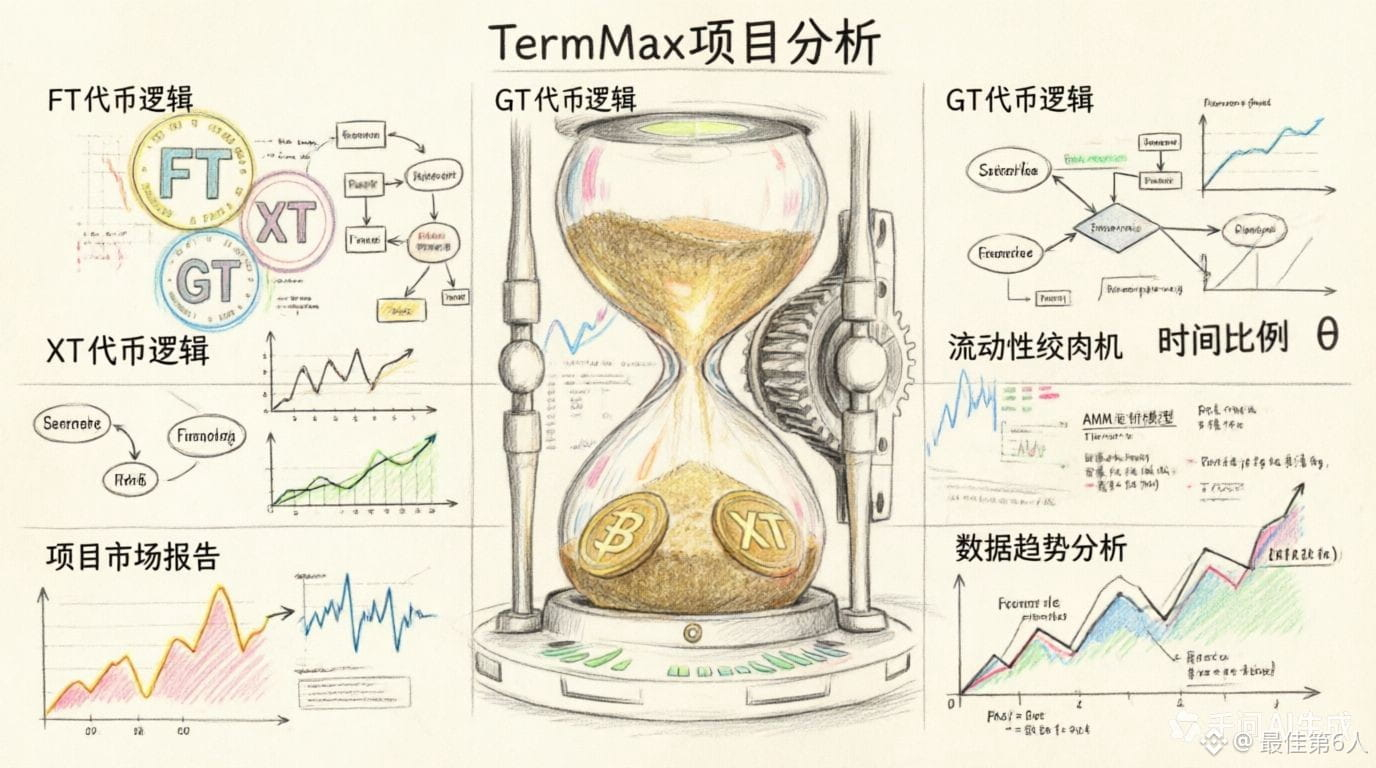
Everyone treats TermMax’s TGE like a celebration, but what I see is a brutal countdown meat grinder.
In this meat grinder, time isn’t there to wait for returns—it’s there to slaughter liquidity.
You think TermMax is doing fixed-rate lending? Wrong. It’s running a ruthless experiment about “time.” The three tokens—FT, XT, and GT—aren’t just simple loan instruments. Instead, they’re three scalpels, slicing a single debt into tradable components.
What is XT? It’s the conveyor belt in this meat grinder. When funds are locked inside the fixed-rate cage, XT is responsible for extracting the interest portion and throwing it into the secondary market to replace liquidity. The capital looks dead, but in reality it’s going crazy on XT’s conveyor belt.
The cruelest part is that TermMax directly writes the time proportion (θ) into the AMM pricing model. This means that as the maturity date approaches, the price curve isn’t static—it evolves in sync with the countdown. You’re racing the countdown; every passing second changes the exchange relationship between FT and XT.
So stop staring at those tiny instant subsidies through the eyes of “farmers.” After the TGE, the selling pressure is just the mandatory road where chips move from retail hands to institutional hands. What truly determines TermMax’s fate is its cross-cycle Rollover data—plus the real matching depth of XT in the secondary market.
While others are still panicking about that 3% sell pressure, you should be seeing this: a protocol that can keep liquidity alive during the countdown is quietly taking over the pricing power of traditional finance.
That’s TermMax’s true killing move.
#termmax @TermMax
In this meat grinder, time isn’t there to wait for returns—it’s there to slaughter liquidity.
You think TermMax is doing fixed-rate lending? Wrong. It’s running a ruthless experiment about “time.” The three tokens—FT, XT, and GT—aren’t just simple loan instruments. Instead, they’re three scalpels, slicing a single debt into tradable components.
What is XT? It’s the conveyor belt in this meat grinder. When funds are locked inside the fixed-rate cage, XT is responsible for extracting the interest portion and throwing it into the secondary market to replace liquidity. The capital looks dead, but in reality it’s going crazy on XT’s conveyor belt.
The cruelest part is that TermMax directly writes the time proportion (θ) into the AMM pricing model. This means that as the maturity date approaches, the price curve isn’t static—it evolves in sync with the countdown. You’re racing the countdown; every passing second changes the exchange relationship between FT and XT.
So stop staring at those tiny instant subsidies through the eyes of “farmers.” After the TGE, the selling pressure is just the mandatory road where chips move from retail hands to institutional hands. What truly determines TermMax’s fate is its cross-cycle Rollover data—plus the real matching depth of XT in the secondary market.
While others are still panicking about that 3% sell pressure, you should be seeing this: a protocol that can keep liquidity alive during the countdown is quietly taking over the pricing power of traditional finance.
That’s TermMax’s true killing move.
#termmax @TermMax


研究RWA赛道这么久,我发现大家都在死磕“资产怎么上链”,但我顺着Dusk的架构往下拆时,却被一个更棘手的问题吸引了:资产上链后,谁有资格合法转移它?
我原本以为Dusk只是条主打零知识证明的隐私公链,但它最让我惊艳的是“双轨制”交易模型。它没有把所有交易都藏起来,而是分成了强调匿名的Phoenix,和隐藏金额但保留身份关系的Moonlight。我觉得这才是金融资产的解法:机构既要隐私,监管又要查账。通过零知识证明,Moonlight能在不暴露底牌的情况下,向监管验证你是不是合格投资者。为了把权限和结算规则硬编码进协议,Dusk甚至牺牲了部分开发体验。
但把复杂的合规逻辑和隐私计算强行揉合,代价就是极高的系统脆弱性。看到主网上线后AEGIS安全分析集中爆出7个关键级漏洞时,我第一反应不是“修了多少Bug”,而是底层安全假设被重新检查了。比如Phoenix路径的费用语义没完全绑定,极易引发退款膨胀。这让我确信,复杂隐私系统的安全成熟度,永远需要持续验证。
在共识设计上,我也看到了不一样的东西。Dusk把质押从单纯的收益工具,变成了责任契约。成为Provisioner不仅要质押1000 DUSK,还得老老实实跑节点。不干活会触发soft penalty(质押锁定),作恶则触发hard penalty(直接销毁)。节点参与和经济惩罚之间的动态平衡,才是这套系统能长期运转的关键。
至于监管落地,Dusk的策略非常务实。面对欧盟的DLT试点体系,它选择和已获牌照的21X合作,作为“交易参与方”借道获取豁免。我给自己定了个观察指标:如果一年内Dusk拿不到独立的DLT-TSS牌照,这条合规叙事的成色就要打折。
说到底,我看好Dusk,是因为它正在做一场硬核实验:把隐私、安全、激励和合规拆解后重新咬合,这或许才是RWA真正走向成熟的必经之路。
#dusk $DUSK @Dusk
我原本以为Dusk只是条主打零知识证明的隐私公链,但它最让我惊艳的是“双轨制”交易模型。它没有把所有交易都藏起来,而是分成了强调匿名的Phoenix,和隐藏金额但保留身份关系的Moonlight。我觉得这才是金融资产的解法:机构既要隐私,监管又要查账。通过零知识证明,Moonlight能在不暴露底牌的情况下,向监管验证你是不是合格投资者。为了把权限和结算规则硬编码进协议,Dusk甚至牺牲了部分开发体验。
但把复杂的合规逻辑和隐私计算强行揉合,代价就是极高的系统脆弱性。看到主网上线后AEGIS安全分析集中爆出7个关键级漏洞时,我第一反应不是“修了多少Bug”,而是底层安全假设被重新检查了。比如Phoenix路径的费用语义没完全绑定,极易引发退款膨胀。这让我确信,复杂隐私系统的安全成熟度,永远需要持续验证。
在共识设计上,我也看到了不一样的东西。Dusk把质押从单纯的收益工具,变成了责任契约。成为Provisioner不仅要质押1000 DUSK,还得老老实实跑节点。不干活会触发soft penalty(质押锁定),作恶则触发hard penalty(直接销毁)。节点参与和经济惩罚之间的动态平衡,才是这套系统能长期运转的关键。
至于监管落地,Dusk的策略非常务实。面对欧盟的DLT试点体系,它选择和已获牌照的21X合作,作为“交易参与方”借道获取豁免。我给自己定了个观察指标:如果一年内Dusk拿不到独立的DLT-TSS牌照,这条合规叙事的成色就要打折。
说到底,我看好Dusk,是因为它正在做一场硬核实验:把隐私、安全、激励和合规拆解后重新咬合,这或许才是RWA真正走向成熟的必经之路。
#dusk $DUSK @Dusk
A. 看好
91%
B. 谨慎
9%
C. 观望
0%
D. 不看好
0%
11 votes • Voting closed
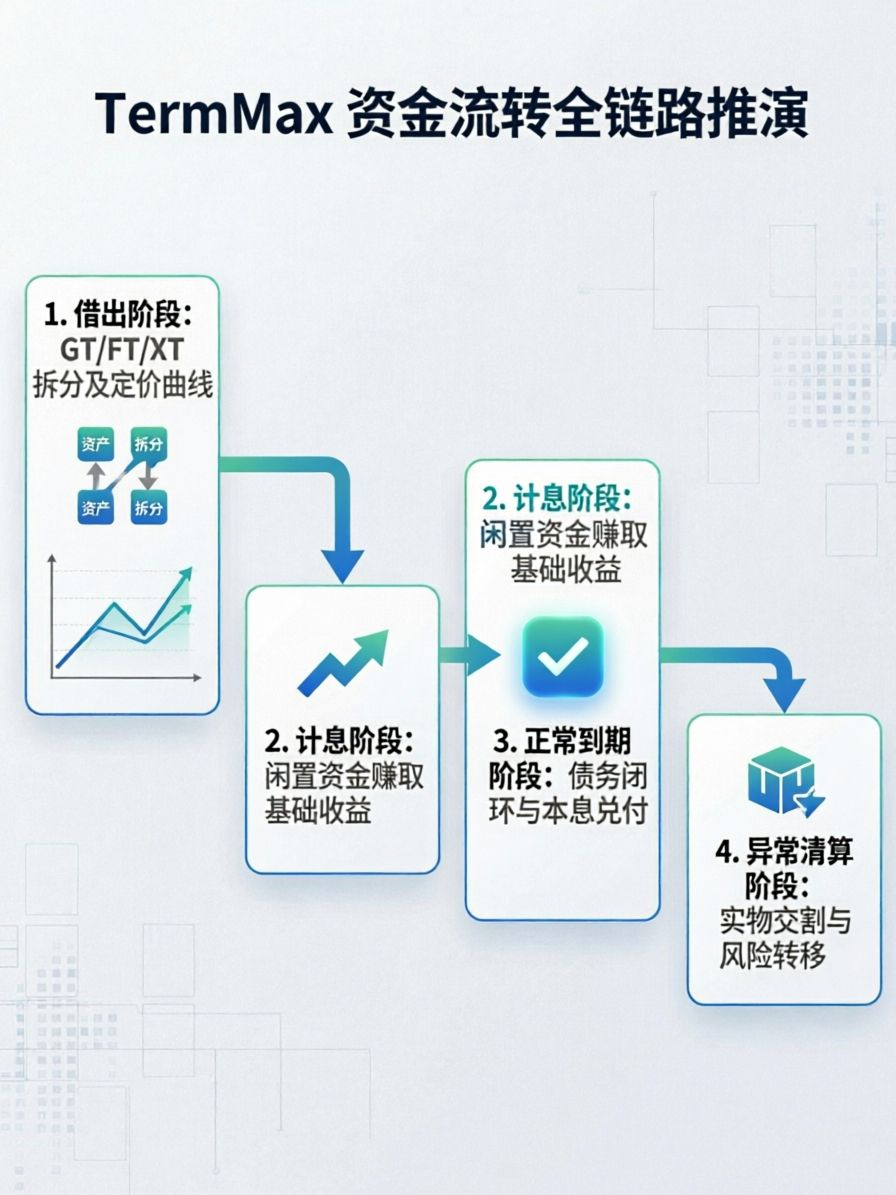
#termmax @TermMax Brothers, let’s go through the underlying logic of TermMax’s “fixed-rate lending/borrowing” setup in plain, straightforward terms. Essentially, it splits one piece of debt into three parts: GT, FT, and XT.
First, when borrowing. A borrower provides ETH as collateral, and the system generates a GT (an NFT position) to track the collateral and the total debt. Then this debt is divided into two components: one is FT (zero-coupon), which serves as the lender’s claim document; the other is XT (time value), which is the interest. If the borrower wants cash earlier, they sell off XT to convert it into liquidity. On the lender’s side, they place orders using Range Orders. The amount of funds and the interest rate are broken into multiple segments, forming a pricing curve. The more you borrow, the higher the matched rate becomes—ultimately, the executed rate is the weighted average.
Next comes interest accrual. In the V2 version, while lenders’ orders are waiting to be matched, the funds don’t just sit idle. They can be supplied into Aave or Morpho to earn an additional layer of floating base yield. Once the match happens, the lender starts earning the locked fixed return.
If everything goes smoothly, the borrower repays on time—then you have the normal maturity close-the-loop. The borrower repays the full debt into GT; the XT time value gradually goes to zero; and the lender holds FT, swapping 1:1 to receive back the principal and interest. Everyone’s happy.
But what if there’s an extreme market move? For example, if the collateral ETH crashes, it triggers the liquidation line, and after the window period passes without the borrower topping up, it enters an abnormal liquidation. That’s when TermMax’s harsh move kicks in—physical settlement. The system won’t liquidate at a discount internally. Instead, it transfers the underlying assets in the borrower’s GT (e.g., ETH) to the FT holders by share. This means your creditor relationship is effectively terminated, and you instead end up holding a bunch of spot ETH.
The upside is that the underlying assets provide a backstop, so you don’t worry as much about bad debt. The downside is that if the market is still falling during settlement, the ETH you receive might already have lost value by the time you can liquidate it.
In summary, TermMax is very meticulous about its accounting, but “fixed interest rates do not mean no risk of principal loss.” When you play, you must keep a close eye on order book depth and liquidation risk!
First, when borrowing. A borrower provides ETH as collateral, and the system generates a GT (an NFT position) to track the collateral and the total debt. Then this debt is divided into two components: one is FT (zero-coupon), which serves as the lender’s claim document; the other is XT (time value), which is the interest. If the borrower wants cash earlier, they sell off XT to convert it into liquidity. On the lender’s side, they place orders using Range Orders. The amount of funds and the interest rate are broken into multiple segments, forming a pricing curve. The more you borrow, the higher the matched rate becomes—ultimately, the executed rate is the weighted average.
Next comes interest accrual. In the V2 version, while lenders’ orders are waiting to be matched, the funds don’t just sit idle. They can be supplied into Aave or Morpho to earn an additional layer of floating base yield. Once the match happens, the lender starts earning the locked fixed return.
If everything goes smoothly, the borrower repays on time—then you have the normal maturity close-the-loop. The borrower repays the full debt into GT; the XT time value gradually goes to zero; and the lender holds FT, swapping 1:1 to receive back the principal and interest. Everyone’s happy.
But what if there’s an extreme market move? For example, if the collateral ETH crashes, it triggers the liquidation line, and after the window period passes without the borrower topping up, it enters an abnormal liquidation. That’s when TermMax’s harsh move kicks in—physical settlement. The system won’t liquidate at a discount internally. Instead, it transfers the underlying assets in the borrower’s GT (e.g., ETH) to the FT holders by share. This means your creditor relationship is effectively terminated, and you instead end up holding a bunch of spot ETH.
The upside is that the underlying assets provide a backstop, so you don’t worry as much about bad debt. The downside is that if the market is still falling during settlement, the ETH you receive might already have lost value by the time you can liquidate it.
In summary, TermMax is very meticulous about its accounting, but “fixed interest rates do not mean no risk of principal loss.” When you play, you must keep a close eye on order book depth and liquidation risk!
·
--
🎙️ The 6th day of superman 100U investing in BTC regularly—more DUSK or bearish?

End
03 h 53 m 18 s
14.9k
24
Slogging through Dusk’s whitepaper on the weekend—after reading it, my back is soaked in cold sweat. Everyone’s been dazzled by “dual-Vm architecture” and “staking abstraction,” but after I dug into the underlying logic, I realized this project is walking a tightrope.
First, let’s talk about cross-layer bridging. Many people think that because DuskEVM is compatible with Solidity, you can just play around. That’s completely wrong. What’s currently available is only the testnet, and withdrawals aren’t something you can do with a single button click. You have to wait for the system to prove maturity, pass the disputed checks, and then pay twice on L1 (submit the proof + final confirmation). Underneath, this is deep water in OP Stack’s asynchronous settlement. When the mainnet finally uses real money, the latency and fees for this kind of cross-layer confirmation will absolutely drive a bunch of impatient folks insane.
Next, the dual-VM architecture: it looks like it’s “grabbing privacy and compatibility at the same time,” but in reality it doubles the attack surface. Piecrust’s custom VM was directly found to have seven critical-severity vulnerabilities in the AEGIS audit in March. Memory safety in the sandbox layer simply didn’t hold up. And DuskEVM itself doesn’t natively include privacy—it only gets patched through a Hedger plug-in module. Two systems, each doing their own thing. If any one module slips up, the entire financial infrastructure could come to a standstill.
What’s most chilling is Hyperstaking (staking abstraction). Let smart contracts replace real people to handle staking—sounds like good news because it lowers the barrier—but it directly overturns the game-theory foundation of the consensus mechanism. In the past, the “let’s just do nothing” vulnerabilities in consensus that try to grab rewards were patched four times by the team—essentially betting that humans would hesitate to “cash out safely.” But code has no psychological cost. Once everything is fully taken over by automatic contracts, they’ll act like cold-blooded machines and always choose the strategy with the highest expected payoff. The economic balance that was barely maintained by human weaknesses is very likely to be completely broken through by absolutely rational code.
Dusk’s narrative is rich, but the engineering reality is extremely harsh. The above are only my personal views and do not constitute investment advice.
Dusk’s architecture—where do you think the biggest risk lies?
#dusk $DUSK @Dusk
First, let’s talk about cross-layer bridging. Many people think that because DuskEVM is compatible with Solidity, you can just play around. That’s completely wrong. What’s currently available is only the testnet, and withdrawals aren’t something you can do with a single button click. You have to wait for the system to prove maturity, pass the disputed checks, and then pay twice on L1 (submit the proof + final confirmation). Underneath, this is deep water in OP Stack’s asynchronous settlement. When the mainnet finally uses real money, the latency and fees for this kind of cross-layer confirmation will absolutely drive a bunch of impatient folks insane.
Next, the dual-VM architecture: it looks like it’s “grabbing privacy and compatibility at the same time,” but in reality it doubles the attack surface. Piecrust’s custom VM was directly found to have seven critical-severity vulnerabilities in the AEGIS audit in March. Memory safety in the sandbox layer simply didn’t hold up. And DuskEVM itself doesn’t natively include privacy—it only gets patched through a Hedger plug-in module. Two systems, each doing their own thing. If any one module slips up, the entire financial infrastructure could come to a standstill.
What’s most chilling is Hyperstaking (staking abstraction). Let smart contracts replace real people to handle staking—sounds like good news because it lowers the barrier—but it directly overturns the game-theory foundation of the consensus mechanism. In the past, the “let’s just do nothing” vulnerabilities in consensus that try to grab rewards were patched four times by the team—essentially betting that humans would hesitate to “cash out safely.” But code has no psychological cost. Once everything is fully taken over by automatic contracts, they’ll act like cold-blooded machines and always choose the strategy with the highest expected payoff. The economic balance that was barely maintained by human weaknesses is very likely to be completely broken through by absolutely rational code.
Dusk’s narrative is rich, but the engineering reality is extremely harsh. The above are only my personal views and do not constitute investment advice.
Dusk’s architecture—where do you think the biggest risk lies?
#dusk $DUSK @Dusk
A. 跨层桥接太复杂,主网提现和结算延迟会劝退用户
0%
B. 双VM攻击面翻倍,Piecrust沙箱漏洞让人捏把汗
0%
C. Hyperstaking太理性,容易把共识博弈论玩穿
0%
D. 都是小问题,看好它的隐私金融叙事,长期格局
0%
0 votes • Voting closed
Log in to explore more content