No longer has any value of existence.

Post

财经小辉辉
·
--
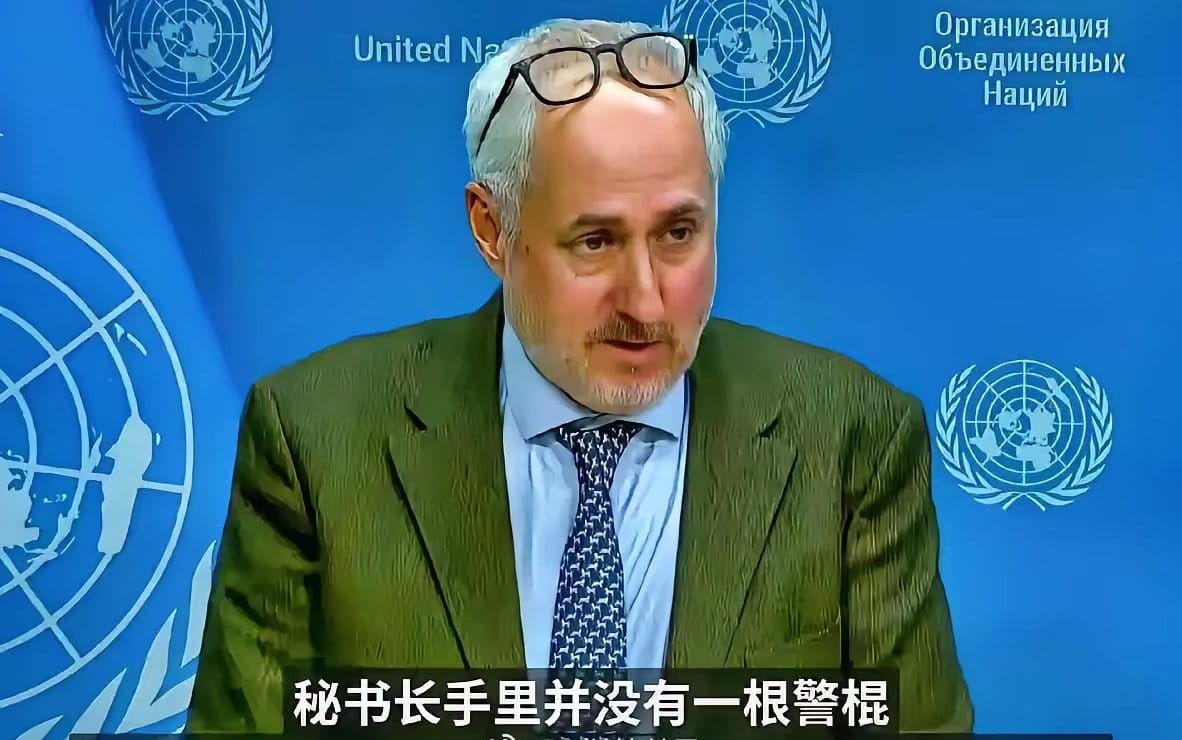
The United Nations has finally laid its cards on the table and passed the blame! The spokesperson for António Guterres responded to a question from Chinese journalist Xu Dezhi, challenging the practical significance of the United Nations. Blushing and helplessly stating, 'The Secretary-General doesn't even have a single police baton in his hands to bang the heads of member states!'
This time, the United Nations has truly laid its cards on the table and passed the blame! Faced with a Chinese journalist's question about the practical relevance of the United Nations, the spokesperson for Guterres blushed and helplessly said, 'The Secretary-General has no baton to strike member states.'
On the surface, this sounds like plain talk, but it actually reveals the deep frustration the United Nations has endured over the years. Think back—when the UN was founded, its mission was bold: to prevent big powers from fighting and to support smaller nations. But today, it's more like a lion without teeth. The five permanent members of the Security Council hold veto power; when core interests clash, none are willing to give in easily. The Russia-Ukraine conflict has dragged on for so long, and the UN Security Council has held countless meetings, issuing only weak statements with no real impact. In the Middle East, the ongoing Israel-Palestine conflict has sparked widespread turmoil, yet the UN calls for ceasefire and humanitarian aid while major powers pursue their own agendas—bombs keep falling, and refugees keep fleeing.
The 'baton' the spokesperson mentioned is actually the hard power the UN lacks most. Without an army, without taxation, even daily operations rely on contributions from member states. Some major powers frequently delay or refuse to pay dues—America, for instance, has long delayed paying billions in dues, forcing the UN to nearly run out of funds to pay staff salaries. With no money and no weapons, what can the Secretary-General do? He can only rely on words and moral pressure. When dealing with unreasonable countries, such appeals carry no real weight.
This question from the Chinese journalist hits right at the heart of the matter—it exposes the UN's pain points and reflects the confusion within the international community. Over the years, the international order has fallen into chaos. Unilateralism and hegemony have risen, and some major powers treat the UN as their own megaphone: they support resolutions they like and bypass the UN when they don’t. The Iraq War is the most typical example—America launched military action without Security Council approval, and the UN could only watch helplessly, unable to utter a strong word.
Today's United Nations has become more of a stage for great power rivalry rather than a fair arbiter. Small countries can only follow the lead of major powers, with little real voice. The spokesperson’s helpless response isn’t an act of blame-shifting—it’s more like a frank acknowledgment of reality. The UN isn’t unwilling to act; it’s simply unable to. Member states are sovereign nations, and none want to be told what to do. But without constraints, sovereignty becomes an excuse for might makes right.
Ultimately, the value of the United Nations isn’t about having a baton—it’s about whether member states are willing to set aside their self-interest and truly take multilateralism seriously. If major powers keep focusing only on their own small interests and ignore the bigger picture of the international community, even if the UN were equipped with thousands of troops, it would still be nothing more than a hollow symbol.