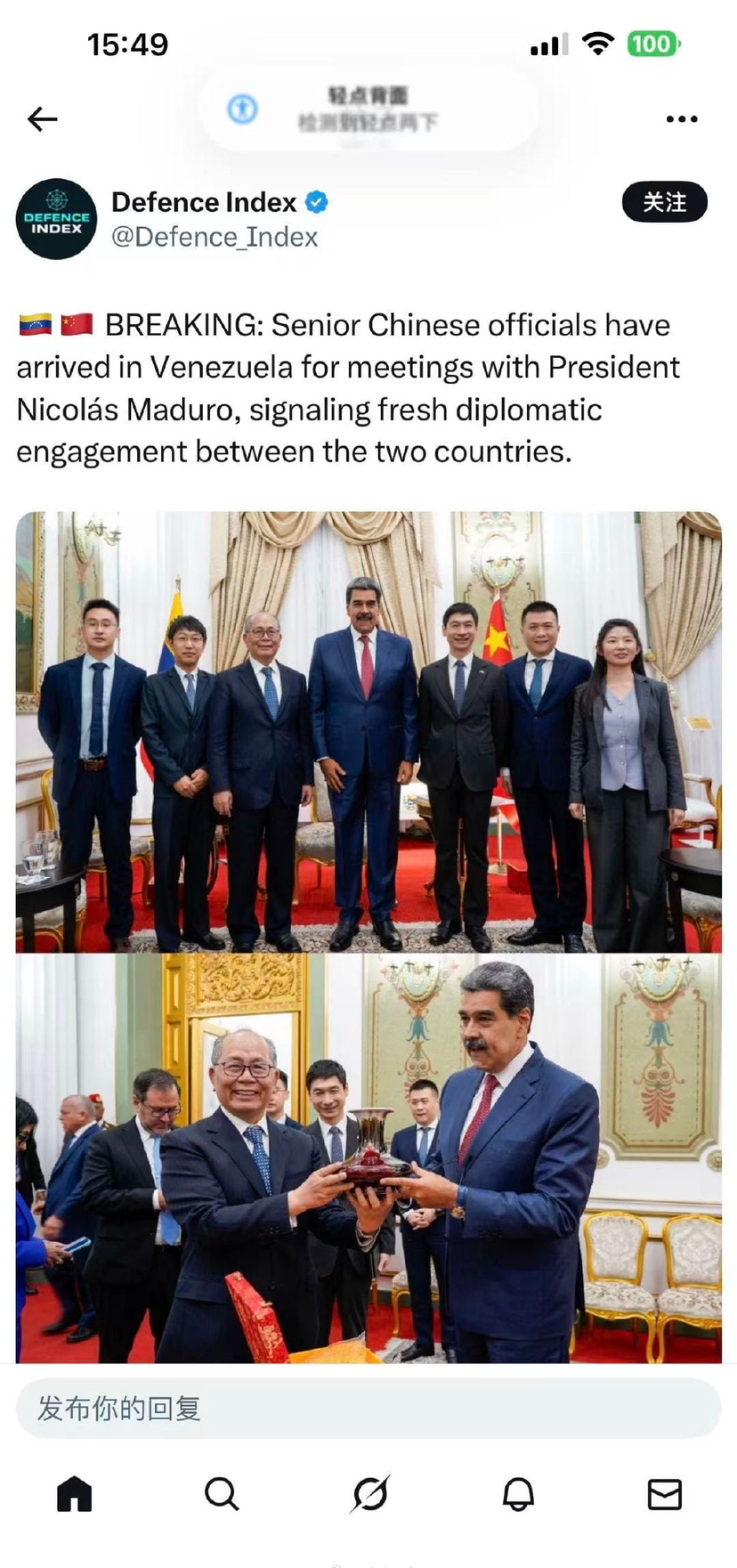
President Maduro has long been a friendly partner of China, and China and Venezuela have built deep cooperation through models such as "oil for loans." However, the current political turmoil and debt risks in Venezuela are now posing a severe challenge to over $70 billion in Chinese investments. This situation touches the hearts of every Chinese citizen.
As Venezuela's largest creditor and investor, China's cumulative lending and investment has surpassed $70 billion, including $60 billion in sovereign loans and $10 billion in direct investment, covering core sectors such as energy, infrastructure, and telecommunications. These funds are not merely loans but part of mutually beneficial cooperation centered on oil-backed debt repayment—Venezuela once delivered 300,000 to 460,000 barrels of crude oil daily to China as debt repayment, while China provided capital and technical support. From a per capita perspective, this investment equates to Venezuela owing nearly 350 yuan to each Chinese citizen, making the safe recovery of these funds crucial to national interests and public welfare.
However, the sudden U.S. military raid capturing Maduro in January 2026 dramatically escalated tensions. Although Venezuela quickly completed its power transition, interim President Rodríguez, leading the 'triumvirate,' managed to stabilize the situation and maintain an anti-U.S. stance. Nevertheless, U.S. military intervention and sanctions have directly impacted debt servicing. The U.S. pressured Venezuela to cut oil supplies to China, suspended payments for engineering projects, resulting in over $3 billion in cash flow losses for Chinese enterprises, and attempted to reduce China's equity stake in oilfield projects.
The core concern lies in debt sustainability: if there is a fundamental change in the future government, the new administration might refuse to recognize the existing debt on the grounds of being an 'illegal regime,' or demand a major restructuring. Although the outstanding debt has been reduced to between $100–200 billion, the ongoing geopolitical conflicts have caused transportation disruptions, safety risks to facilities, and difficulties in enforcing international arbitration rulings, casting uncertainty over the prospects of debt recovery.
Although China holds core technologies in heavy crude oil extraction and refining, creating a unique 'technological moat,' and the new Venezuelan government has expressed willingness to engage in dialogue and cooperation, debt recovery delays and reduced returns are now inevitable in the short term. This geopolitical storm, triggered by great power rivalry, is placing China-Venezuela cooperation under unprecedented pressure. The ultimate fate of the $70 billion in Chinese investments remains contingent on Venezuela's political stability and the evolution of international circumstances.