

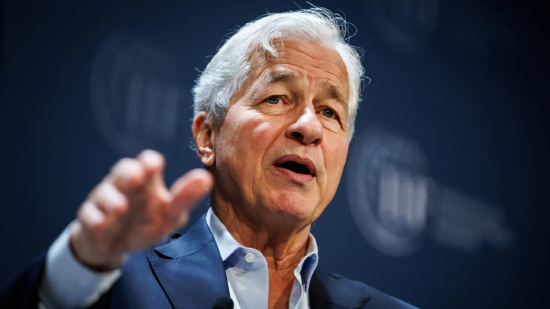
JPMorgan Chase CEO Jamie?Dimon said that investors generally underestimate the various risks that may be lurking in the global economy. At today’s price levels, he would neither buy stocks nor add to long-term U.S. Treasury bonds.
Late on Monday evening, Dimon said the market has not adequately priced in a series of intensifying geopolitical and fiscal crises.
“ I think these risks are likely bigger than most people imagine.” Dimon pointed to multiple hidden threats: fighting in Ukraine and the Middle East, geopolitical friction between China and the United States, and the continued expansion of military spending worldwide amid high government budget deficits.
When asked whether the market is underestimating the probability of a major crisis, Dimon said it is hard to judge how much risk expectations are already priced into asset prices. “The market may have already accounted for some risks, but it can never price in in advance the sudden shocks that will truly happen in the future.”
As the CEO of the bank with the largest market value in the world today, Dimon often warns the public about all kinds of hidden economic risks.
This statement stands in stark contrast to recent market sentiment: investors of late have been largely ignoring various disruptions such as wars and tariffs. Since the beginning of this year, the S&P 500 has risen by nearly 10%—consumer demand has remained strong, inflation has been cooling gradually, and large amounts of capital have flooded into the artificial intelligence sector, lifting U.S. stocks.
Last week, JPMorgan Chase and a host of its peers released quarterly earnings that beat expectations. Revenue in their trading and investment banking businesses surged, leading the market to believe that the U.S. economy’s ability to withstand shocks from geopolitical conflicts exceeds expectations.
Dimon acknowledged that compared with decades ago, many countries around the world have reduced their dependence on energy imports, and economic resilience has improved. However, that does not mean there won’t be a turning point where the economy suddenly turns for the worse.
“To crush the economy and trigger a tipping point, more negative events may need to pile up layer upon layer. But even if a fresh round of conflict erupts right now, it may still not be enough to break through the market.”
Dimon said that the long-standing issue of U.S. long-term fiscal deficits will eventually come to a reckoning, and may even force interest rates to stay elevated. “In my view, deficits will sooner or later evolve into a major problem.” He predicted that bond investors (what the market colloquially calls the “bond vigilantes”) will demand higher yields to compensate for risk, ultimately pushing overall interest rates up.
Views on the stock market and the AI investment cycle
When talking about U.S. Treasuries, a reporter asked whether he would buy long-term Treasuries. Dimon replied directly: “Personally, no.” He believes that even if inflation falls back to the Federal Reserve’s 2% target, the reasonable yield range on 10-year Treasuries should be between 4% and 4.5%, leaving virtually no upside room for Treasury prices.
He is similarly cautious about the stock market. Dimon said that if the fundamentals of a single stock are extremely strong, he might invest in it separately. But given overall valuations today, he would not make large-scale purchases of the broad market.
On the AI boom, Dimon was objective and measured, comparing the current AI capital spending frenzy to the early days of the internet in the last century. “The scale of industry investment today is unprecedented. In the long run, overall it will very likely deliver returns, just like the internet industry back then.”
He added that during the internet bubble era, early leading companies such as Yahoo and Netscape ultimately fell into decline, while true winners like Google and Facebook rose later on. “But the timing of when industry returns get realized, and the size of the gains, will absolutely not be as optimistic as the market currently expects.”