

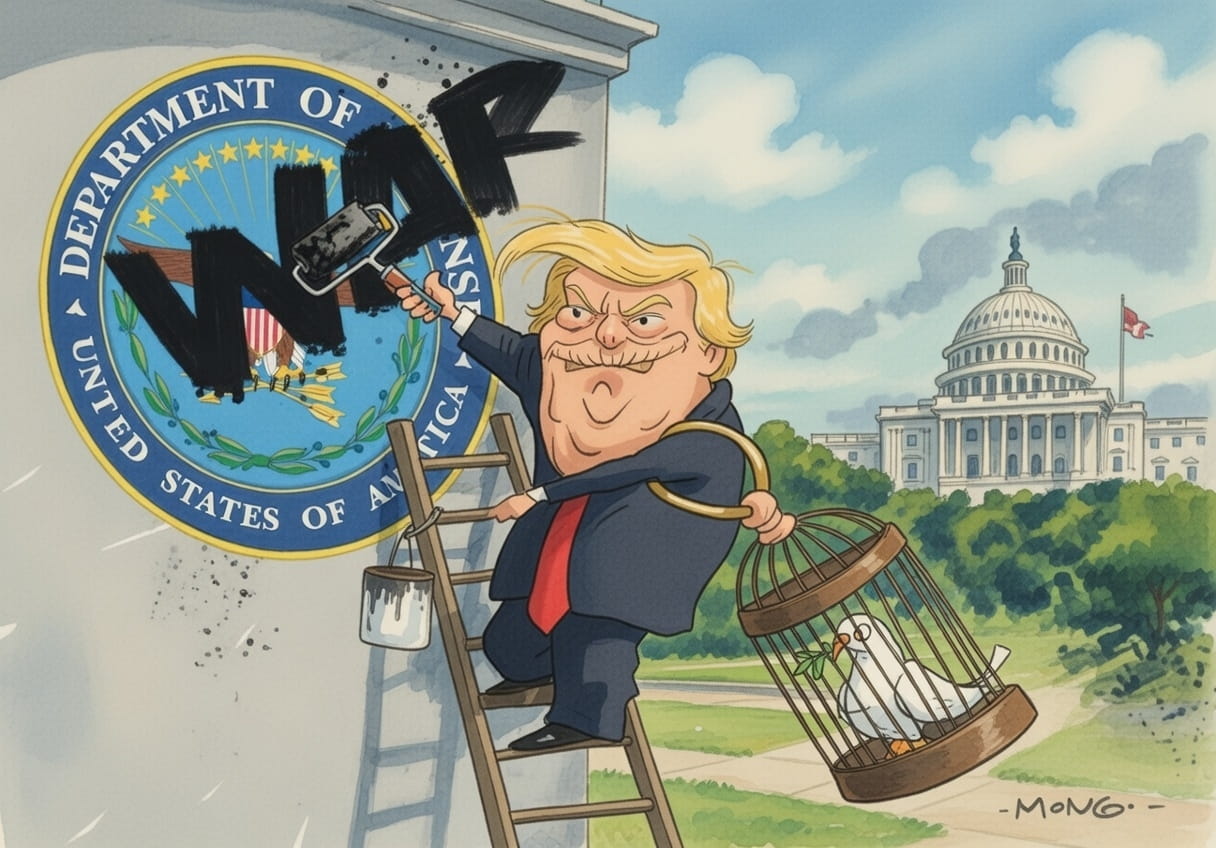
As the new year begins, global markets have opened a new chapter amid multiple intertwined events. The Venezuela oil revival plan led by Trump, the geopolitical turmoil triggered by Maduro's arrest, the accelerated capital outflow by Japanese investors, and the strong rebound of the Bitcoin ecosystem have collectively shaped the economic landscape at the start of the year. Political uncertainty amplifies demand for safe-haven assets, driving prices of digital assets like Bitcoin to rebound, while the reconstruction of oil infrastructure faces a long test.
Venezuela Crisis: A Distant Vision of Oil Revival and Geopolitical Risks
In the early hours of last Saturday, U.S. troops captured former Venezuelan President Nicolás Maduro, marking a direct intervention by the Trump administration in the country's oil industry. Trump hopes to restart production with the help of U.S. oil giants, but experts unanimously agree that this will not be achieved quickly or cheaply. According to Bloomberg, rebuilding the oil system will require over $100 billion in investment and take at least ten years—assuming everything goes smoothly.
For more than twenty years, the country's infrastructure has suffered severe damage, and during Maduro's twelve years in power, the collapse has accelerated: port operation inefficiencies (loading supertankers takes five days instead of one), the Orinoco basin has become a graveyard for abandoned drilling, pipeline damages and equipment theft are frequent, and fires and explosions destroy key facilities. The Paraguana refinery, once the largest in Latin America, now operates at low capacity, with four crude oil refining units offline, preventing the country from processing its own crude oil.
Francisco Monaldi, director of the Baker Institute at Rice University, emphasizes that to restore production to nearly 4 million barrels per day as in the 1970s, an investment of $10 billion per year for ten years is needed. Currently, production is only 1 million barrels, despite having the largest reserves in the world (nearly 500 billion barrels of recoverable oil), but real obstacles abound.
Neil Shearing, chief economist at Capital Economics, points out that there is a huge gap between 'theoretical reserves' and actual reserves, with political directions unclear. Even if production rises to 3 million barrels, it would only account for 2% of global supply. Goldman Sachs analyst Jan Stuart warns that production fluctuations could lead to Brent crude prices moving up or down by $2 per barrel; if production reaches 2 million barrels by 2030, oil prices could drop by $4 per barrel.
U.S. oil companies are cautious. Chevron, as the only large U.S. company still operating, contributes 25% of production and maintains operations under special licenses, prioritizing employee safety. ExxonMobil and ConocoPhillips choose to wait, with the former having withdrawn after assets were seized by Chavez in the 2000s, only stating they would consider re-entering 'when conditions are right'. RBC analyst Hailey Ma Croft states that expecting a rapid recovery is 'wishful thinking', requiring a comprehensive lifting of sanctions and a smooth transition of power.
This event has triggered a chain reaction in the market: oil prices have slightly decreased, while gold maintains around $4,400 per ounce, supported by safe-haven demand and expectations of Fed rate cuts. Geopolitical uncertainty may amplify global volatility but also inject momentum into the crypto market.
Japanese investors turn to: capital outflow and yen pressure
Alongside turmoil in Venezuela, Japanese retail investors are selling domestic stocks at the fastest pace in a decade and turning to overseas assets. According to data from the Japan Exchange Group, as of November 2025, there was a net sale of 38 trillion yen (about $24.3 billion) of domestic stocks, despite the Tokyo Stock Exchange index rising by 25%. The scale of purchasing foreign stocks through trust funds reached 94 trillion yen, nearing the 2024 record. This reflects confidence in the U.S. market during Trump's second term, despite stable earnings for Japanese companies, as Prime Minister Kishida Fumio promotes growth policies, and the Tokyo Stock Exchange index sees its largest increase since 2015, even surpassing the S&P 500. The depreciation of the yen raises the value of overseas assets, further attracting funds but intensifying yen pressure. The Bank of Japan's interest rate hikes and Kishida's government fiscal spending have failed to reverse the trend.
U.S. bank securities head Adarsh Sinha describes this trend as 'unprecedented', with tax-free accounts NISA accelerating foreign stock purchases, leading to yen weakness beyond expectations. JPMorgan and BNP Paribas predict that by the end of 2026, the yen will depreciate to 160 or lower against the dollar due to structural gaps.
This capital outflow trend is favorable for global assets, including the crypto market, and is expected to increase inflows into Bitcoin ETFs.
Bitcoin ecosystem: surge in developers and market recovery
In 2025, Bitcoin developer activity is unprecedentedly active, with 135 contributors to Bitcoin Core, up from over 100 in 2024; 285,000 lines of code modified, a year-on-year increase of 3%; 2,541 submissions, a year-on-year increase of 1%; mailing list volume increases by 60% year-on-year. This surge occurs during a booming year for Bitcoin, with prices peaking over $126,000 in October, driven by Trump’s crypto-friendly policies and institutional investments.
Bitcoin Core passes its first third-party audit with no high-risk vulnerabilities. Media coverage is leaning neutral: negative reports decrease, neutrality dominates, environmental issues fade, and crime reporting is sporadic. Attention shifts to durability and expansion, with AI replacing Bitcoin becoming a contentious focus.
The market welcomes the 'January Effect': on January 2, U.S. Bitcoin and Ethereum ETF net inflow reached $645.8 million, rekindling institutional demand. Bitcoin prices maintain above $92,000, breaking through resistance at $90,500 and $91,200, reaching a high of $93,333. On-chain data shows that after whales sold 50,000 BTC at the end of December, they accumulated 10,000 BTC (worth $912 million) in the past 24 hours, indicating confidence. Miners' sell-offs increased to 604 BTC, but the scale is limited, not reversing the trend. Technical resistance is at $93,500 and $94,000, support at $92,000 and $90,000.
The multiple impacts of political events on the crypto market
These events have a significant impact on the crypto market, primarily as the Venezuelan crisis reinforces Bitcoin's safe-haven properties. Maduro's arrest is seen as a 'black swan'; initially, crypto dropped briefly but quickly rebounded, with BTC and ETH rising by 1%. The event highlights the dominance of the dollar (the U.S. potentially controlling $17.3 trillion in oil resources), weakening trust in traditional finance and pushing the public towards Bitcoin. Venezuela may hold 600,000 BTC in 'shadow reserves', which, if consolidated, could reduce circulating supply by 3-3.5%, triggering a price increase.
If Bitcoin advocate María Corina Machado comes to power, it may promote the country's adoption of Bitcoin. Starlink's free internet further facilitates local transactions.
The indirect impact of Trump's oil revival plan: falling oil prices reduce inflation, enhancing expectations for Fed rate cuts, which benefits risk assets. However, long-term production increases may stabilize the economy and reduce safe-haven demand. In the short term, institutional ETF inflows provide support, with a low probability of significant corrections.
Japan's capital outflow trend is positive: shifting overseas enhances confidence in U.S. assets, including crypto funds. The depreciation of the yen and the 2026 tax reform (crypto tax reduced to 20%, allowing loss carryforward) stimulate investment, with potential inflows of over 50 trillion yen into Japanese assets.
Overall, these events are favorable for crypto: geopolitical uncertainty amplifies safe-haven demand, capital outflows inject liquidity, and developer vitality supports the ecosystem. Bitcoin's short-term target is $94,000-$95,000, but caution is needed regarding escalated conflicts and a collapse in oil prices that could trigger a correction. Institutional and on-chain signals show cautious optimism.
Finally
Balance in uncertainty: 2026 starts with geopolitical storms testing global resilience, opportunities and risks coexist, and the crypto market may become the biggest beneficiary.