


In the past week, market volatility has been especially intense. Take Micron as an example: between two key price levels of 880 and 1000, there were five instances of sharp, short-term moves—and each of these five swings of 10%+ was completed within one or two days, including testing and reversal.
When you despairingly think everything is about to collapse, the support holds steady and gives you a glimpse of hope; when you see a big-name trend-chaser like a “Heaven-Dragon” and believe a new primary surge is about to arrive, the following sell-off shatters that hope again.
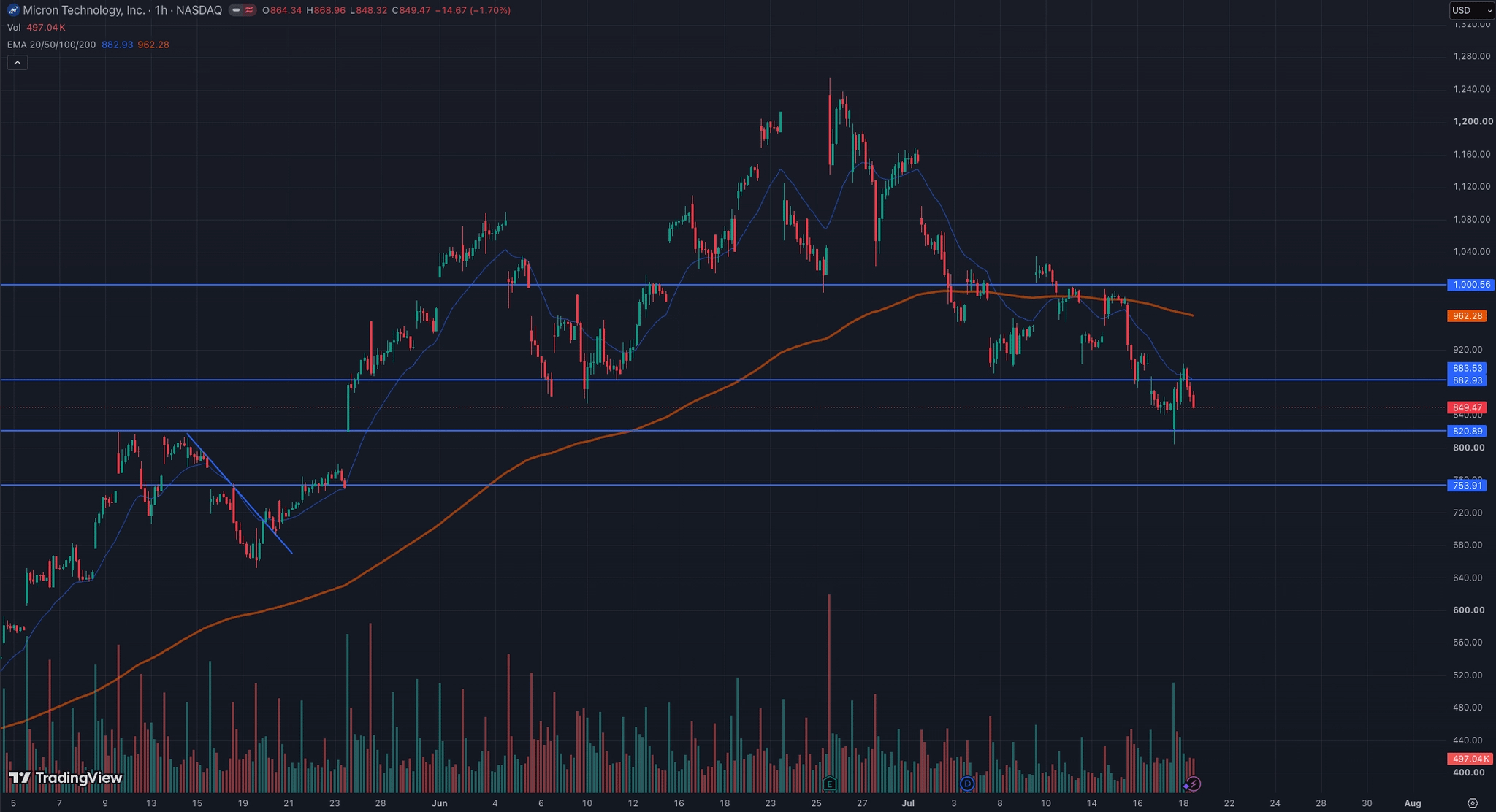
When the price breaks through the next support level of 820 (which is both the top resistance formed by multiple tests in mid-May and the gap created by the jump and gap-up on May 26), and when the pre-market price nearly breaks below 800, the market has no optimistic voices left in the short term.
Will semiconductors and memory enter a down cycle from this? I think the probability is very low. Even if the decline and pullback are severe, most steadfast holders of semiconductor positions have already endured a 30%+ drawdown; there has been no fundamental change in either the fundamentals or the technicals. This broad, wide-range consolidation is still within the short-term deleveraging downward channel predicted in the past few weeks.
A structural change in the big trend, at minimum, requires a “daily timeframe-level” top-confirmation signal to show that capital is no longer able to support the price pushing higher. This is true for gold as well as for Bitcoin.
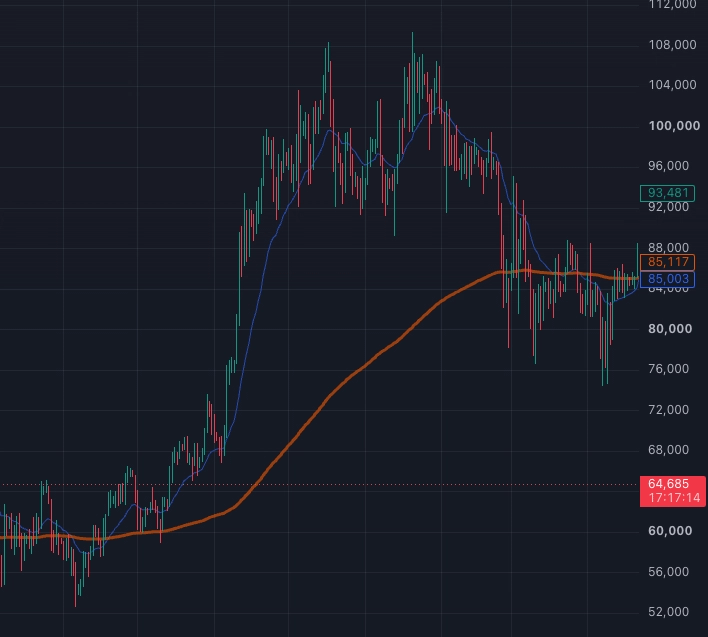
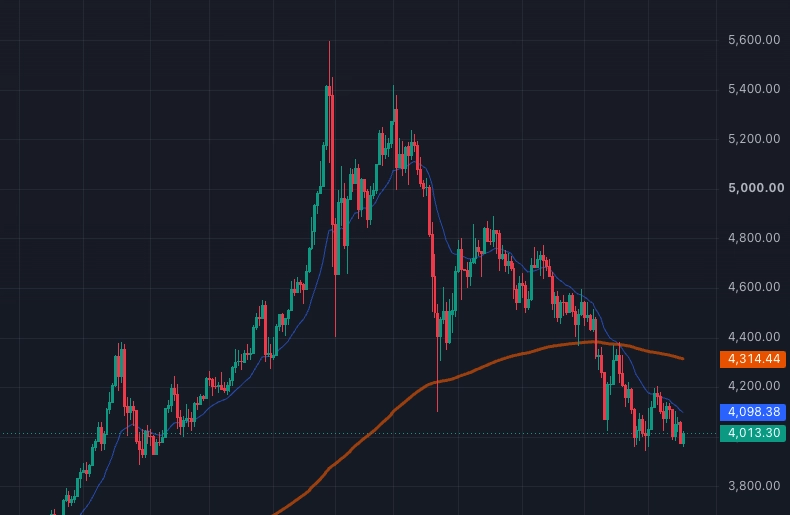
And at least for now, whether it’s SOXX or DRAM, or individual stocks like MU and Hynix, there is no daily timeframe-level top signal. Therefore, the current situation is more like a deeply oversold deleveraging in a range-bound period. The probability that QQQ breaking below 685 and MU breaking below 820 are downward false breakouts of the trading range is very high.
At the end of a bull market, both longs and shorts are very confused. Shorts are filled with anxiety amid repeated short-covering rallies, while longs worry about pullbacks happening again—so they’re unsure whether to close positions or wait for new highs. A true top signal (not an absolute highest point in price terms, but a trend turning point in the left-side/right-side sense) will most likely emerge in such a highly uncertain situation.
Although semiconductors today are no longer in the April-style uptrend, and many weak shorts who started shorting early have already been blown out, it is still a moment when right-side short sellers are very confident they can profit by shorting (for example, shorting right-side around 1,100 after Micron earnings). In top-tier narrative themes like AI, semiconductors, and memory, the probability that the very first large-scale right-side short opportunity directly leads to a complete bear market is low. (By contrast, for altcoins and meme coins—assets that rotate funds quickly—the first right-side shorting often leads straight to a collapse.)
We still need a hallmark “black swan” event before a true turning point in the trend. For example: geopolitics-related trade bans (such as U.S. actions against Samsung and Hynix for antitrust); the AI industry-chain flywheel stalling (a collapse occurs when an expansion chain that uses GPUs, compute capacity, and future profits as collateral blows up; a shift from “investment for revenue” being disproven, etc.). Before the “black swan” appears, semiconductor and memory stocks at the “current price” are very compelling.
Therefore, semiconductors and memory still have a relatively high probability of returning to the “vicinity” of the previous high. That “vicinity” could form new ATHs under short-covering and a squeeze scenario, or it could meet resistance near the previous high, forming an M-top and entering a longer period of value mean-reversion in a sideways range. Exactly how it gets there and to what height is hard to predict at this moment.
What trading opportunities are there in the current market?
Based on expectations for the bigger-picture trend, at the current time point, long gains still far outweigh short gains. Over the weekend, on-chain activity and the crypto market have already shown some optimistic sentiment in advance.
Taking into account next week’s start of the U.S. big cloud company earnings season, we very likely will enter a行情 (trading move) that repairs toward the top of the trading range, driven by continued strong earnings and optimistic capital expenditure. As early as Monday, and no later than Thursday, we should be able to confirm the bottom of this two-month deleveraging trading phase.
Taking Micron as an example: if you expect the big-cycle uptrend to still be in place, then there’s a high probability that it will break to new highs in the future. In that case, after Micron holds steady above 1,000, entering long on the right side (i.e., after confirmation) can keep risk to the lowest level. If instead you believe the absolute top has already appeared, short-covering repair may only run up to 1,150. Then 850 is a good entry price—but because you enter early, you must be ready to set a stop-loss to prevent a death spiral if earnings miss expectations. Personally, I also prefer to capture the returns from the 850–1,100 range, using 820 as the effective support level as the stop-loss.
Korea’s new regulations for leveraged ETFs and margin requirements have, at root, drained the “water” that could flow into Korean stock market memory stocks. Hynix and Samsung may face pressure due to the lack of new capital inflows (although Micron in the U.S. can absorb some liquidity). So my overall expectation for this round of repairs is that it can only return to the vicinity of the previous high; it is difficult to trigger another major upswing. Combined with concerns about uncertainty in Korea’s securities policy and U.S.–Korea trade policies, Micron’s price performance may be even better in the memory subsector going forward.