The geopolitical game between China, the United States, and Russia has reached a showdown moment, and all eyes are now on the Strait of Malacca—this waterway that carries the lifeblood of the global economy has become the ultimate test of U.S. hegemony! If the U.S. dares to substantively control and intercept, it would be a deadly provocation to China's energy security. China has nowhere to retreat and will surely retaliate firmly!
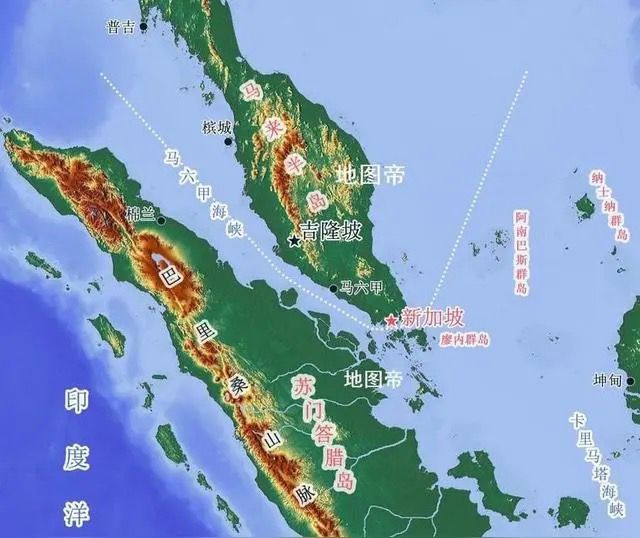
The Strait of Malacca is by no means an ordinary waterway, with a total length of about 1,080 kilometers and a narrowest point of only 5.4 kilometers. It carries 40% of the world's maritime trade and 30% of oil transportation, with over 200 cargo ships passing through each day, averaging one large vessel every five minutes. For China, this is even more of an 'energy lifeline': 70% of imported crude oil and over 80% of energy imports pass through this route each year, with about 8 million barrels of crude oil relying on its navigation daily, which means that a large part of the country's energy security is exposed to external risks.
The United States has a history of controlling strategic waterways. The Strait of Hormuz, as a transport route for nearly 40% of the world's oil, is listed by the U.S. as one of 16 crucial maritime chokepoints to control, with the Fifth Fleet and aircraft carriers stationed there year-round. During the most tense moments of the U.S.-Iran game, the U.S. military directly fired warning shots, and whenever Iran mentions blocking the Strait, international oil prices experience violent fluctuations. Some analyses estimate that if the Strait is blocked for 30 days, oil prices could soar to $300-500 per barrel, and the U.S. itself would suffer losses of hundreds of billions of dollars.
Now, it is highly likely that the U.S. will replicate its control model from the Strait of Hormuz to the Malacca Strait. If successful, China's industrial system will be directly impacted: oil shortages in refineries, cars running out of fuel, factories coming to a standstill, while the annual oil transport capacity of the China-Myanmar oil and gas pipeline is only 22 million tons, far from sufficient to replace the transport volume of the Malacca Strait, and cannot bear the heavy responsibility of substitution.
More importantly, this is by no means a bilateral game between China and the United States, but a blatant challenge to the global order. Japan and South Korea's energy imports, as well as the trade exchanges of Southeast Asian countries, are highly dependent on this 'maritime crossroads.' 90% of global trade relies on maritime transport; if there are issues in the Malacca Strait, the supply chain will be thrown into complete chaos, and the export of American agricultural products and the transportation of manufacturing components will also be hindered. Chinese vessels account for 60% of the traffic in the Strait, directly boosting the ports and shipping industries of neighboring countries like Singapore, and American control and interception would be akin to cutting off their own financial lifeline.
The Malacca Strait is currently jointly managed by Singapore, Malaysia, and Indonesia, and is a common wealth for all humanity, not a hegemonic tool that any country can monopolize. The situation between China, the United States, and Russia has already become clear; if the U.S. dares to cross the red line, it will undoubtedly face strong countermeasures from China, and will further provoke a collective resistance from countries that rely on this lifeline. This waterway, which is vital to the global lifeblood, has never been something that anyone can control at will; any hegemonic adventure will ultimately backfire!