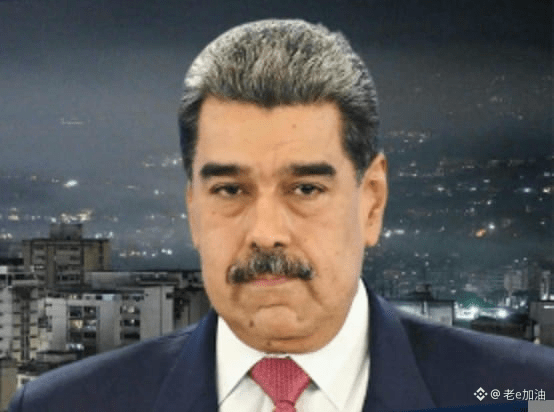
$60 billion in cryptocurrency assets at stake! If Maduro steps down, the crypto world will experience the craziest geopolitical storm
When the news of the U.S. military taking Maduro broke the market in the early morning, the focus of the crypto world was no longer on the fluctuations of Bitcoin, but on a staggering $60 billion in cryptocurrency "shadow reserves"—this is the most explosive financial puzzle behind this geopolitical upheaval.
Who would have thought that Venezuela, suffocated by sanctions, has long turned Bitcoin and USDT into the "lifeline" of its national economy? From 80% of oil trade settled in USDT to the populace using stablecoins to fight against 230% hyperinflation, cryptocurrency here is not a speculative tool, but a necessity for survival. The Maduro government built a cross-border network of cryptocurrency assets years ago through complex operations such as gold swaps and mixing services, and this massive wealth, comparable to MicroStrategy's holdings, has now become a mystery without an owner as the regime collapses.
Where is the private key? This has become the most pressing question in the global crypto community. The multi-signature mechanism reportedly designed by Swiss lawyers disperses the keys across different jurisdictions, while the "architect" Alex Saab, who holds the core clues, is both a trusted aide of Maduro and a former front-line informant for the U.S. Drug Enforcement Administration. His choice will directly determine whether this asset is permanently sealed or reclaimed by the U.S. Even more exciting is the market reaction: the local USDT to bolivar exchange rate in Venezuela once skyrocketed to 941, while Bitcoin remained unusually calm at the $91,000 mark. Behind this disconnection is either a precise hedging of geopolitical risk by institutional funds or a precursor to greater volatility?
This upheaval has already transcended a single event impact: it proves that cryptocurrency can become a "digital escape route" under sanctions, while also exposing the vulnerability of decentralized assets in the power struggle. When physical borders can be breached by force, the "de-sovereignization" attribute of digital assets is being revalued—this is no longer a simple market fluctuation, but the truest survival test of the Web3 era.
The next 72 hours are crucial: will the $60 billion in assets flow into the market? Will the risk-hedging logic of USDT be rewritten? Can Bitcoin maintain its resilient performance amid geopolitical conflicts? Every heartbeat in the crypto world is counting down to this game that spans guns and code.
$BTC