



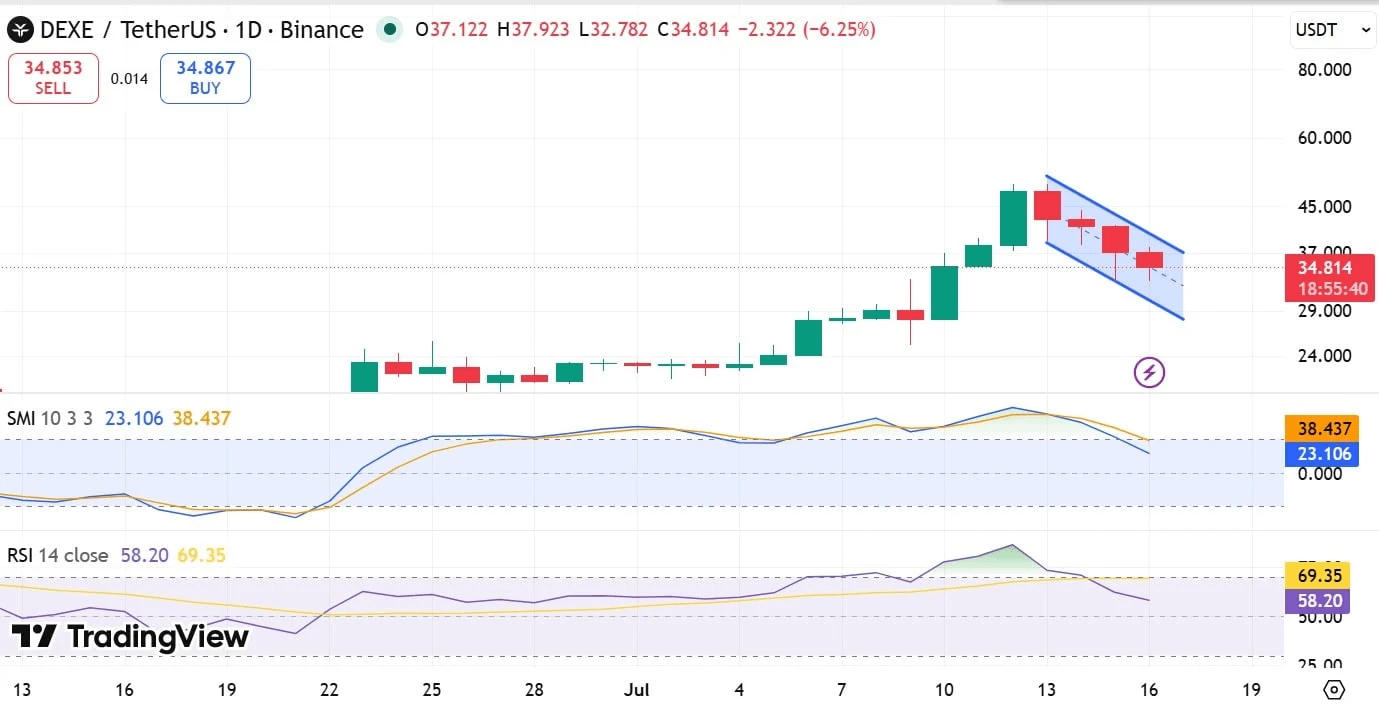
🔹 After a consolidation period within a narrow range in early July, DeXe ($DEXE ) surged strongly to set a new all-time high (ATH) level at $49.40. This growth momentum was driven by an upgrade and the integration of Dexelization AI technology, enabling specialized AI agents to coordinate with users in operating and governing the protocol. However, the excitement from this news quickly cooled off once DEXE hit its peak, triggering a wave of strong price rejection with four consecutive red candles. At the time of writing, DEXE is trading around the $34 mark, down 9.85% on the day. Notably, this altcoin’s trading volume jumped 58% to $158 million, reflecting extremely fierce selling pressure from the market.

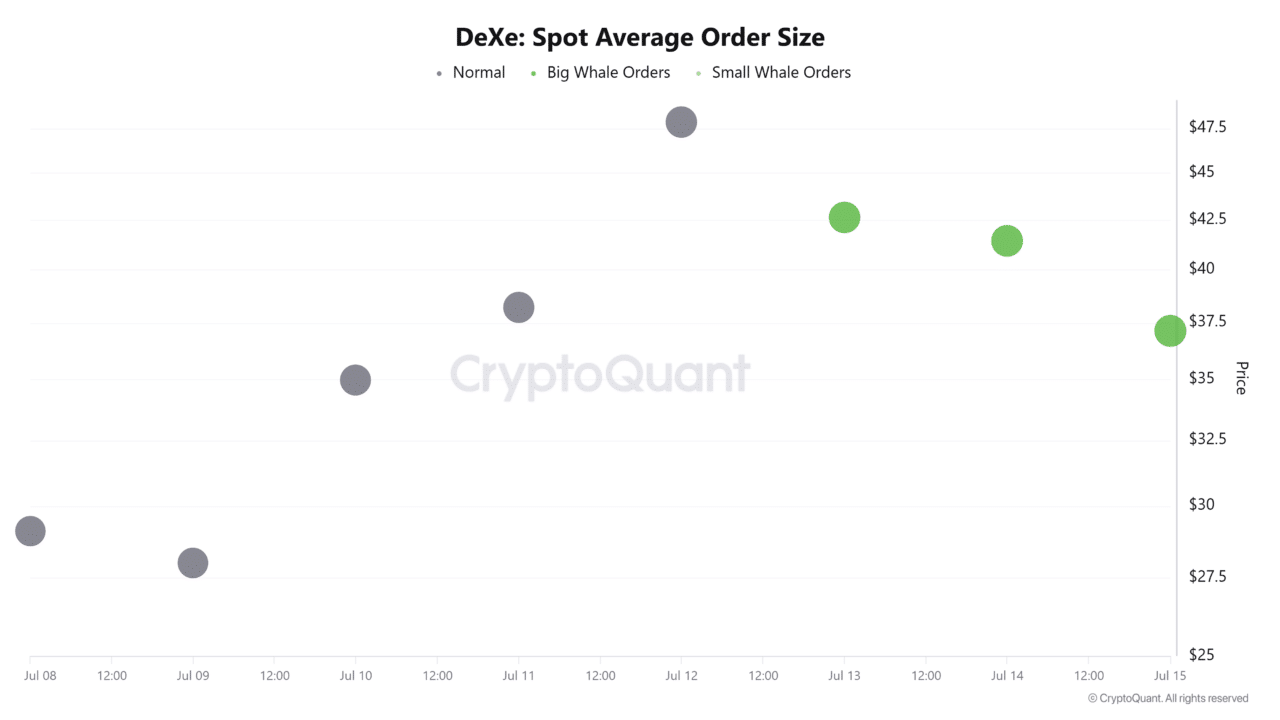
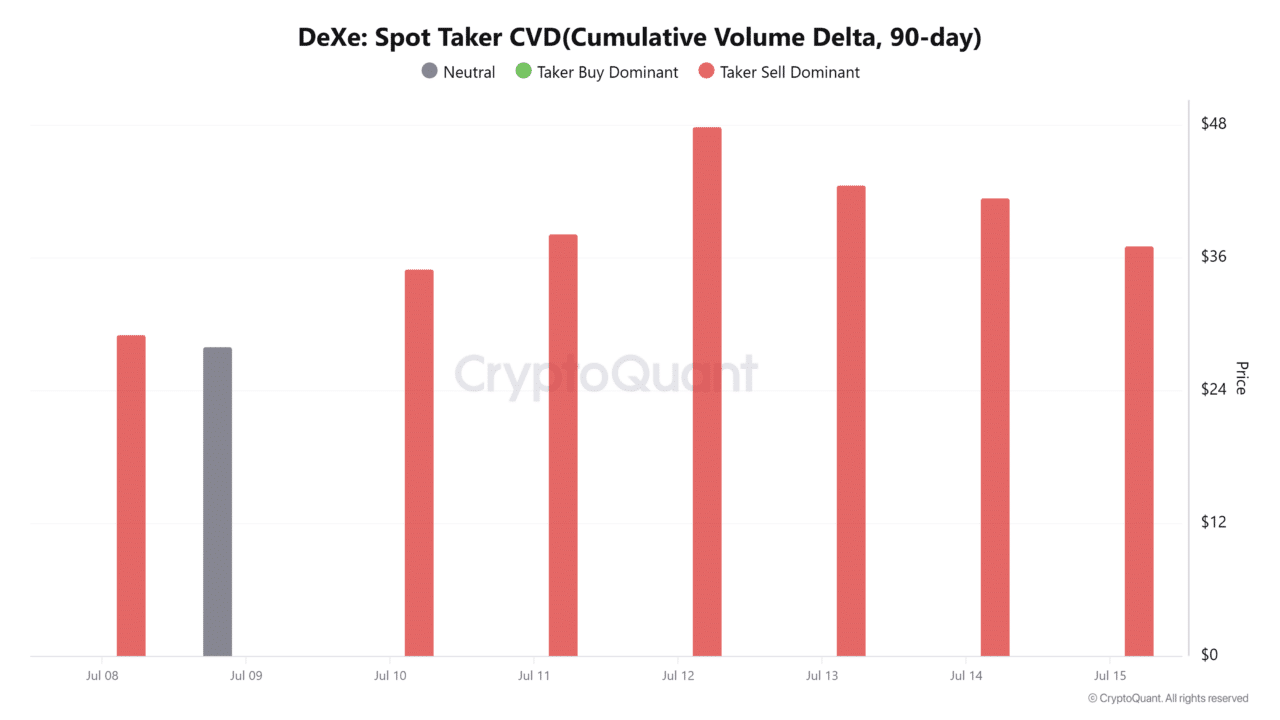
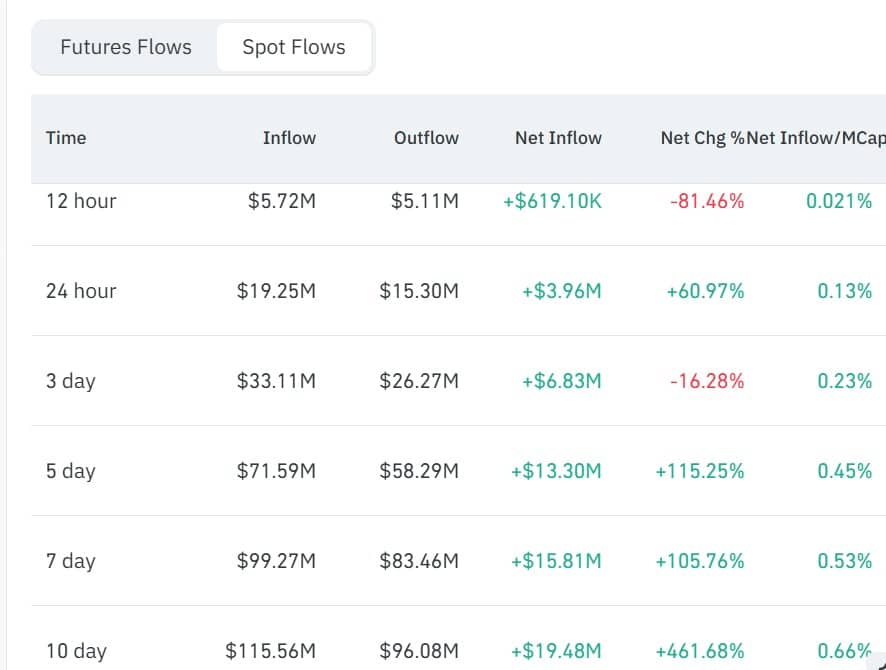
🔸 On-chain data confirming this price drop shows active participation from large whales. CryptoQuant’s Spot Average Order Size indicator has continuously recorded whale trading orders for three consecutive days. Going deeper, the Spot Taker CVD has stayed in the red for the past 5 days, proving that the proactive sell orders from whales are completely overwhelming buying pressure. At the same time, Spot Netflow also reinforces this sell-off trend. Over the past 3 days, the amount of DEXE deposited to exchanges reached $33.1 million, while only $26.27 million was withdrawn, pushing Netflow positive to $6.8 million. The steady pumping of coins onto exchanges suggests the selling side is preparing positions to exit—often a warning signal ahead of an extended period of weakness.
🔹 From a technical standpoint, DEXE’s downward momentum is receiving alignment from momentum indicators. The Stochastic Momentum Index (SMI) has sharply fallen from 77 to straight into the oversold zone at 27, signaling extremely strong short-term bearish pressure. In addition, the RSI has also formed a death cross after dropping from 70 to 58, confirming that the bear side has fully regained control of the market. If the sell-off wave from whales continues to persist, DEXE faces a high risk of losing the psychological support level and falling below $30. This bearish scenario will only be invalidated if the bulls can push the price back up and accumulate stably within the $37 to $40 range.
Faced with continuous net selling pressure from whale wallets and increasing exchange inflows after the ATH, would you choose to open a short position targeting below $30, or wait for a price reaction around the $37–$40 resistance zone to look for a reversal opportunity?
News and information are for reference only and not investment advice. Please read carefully before making any decisions.