
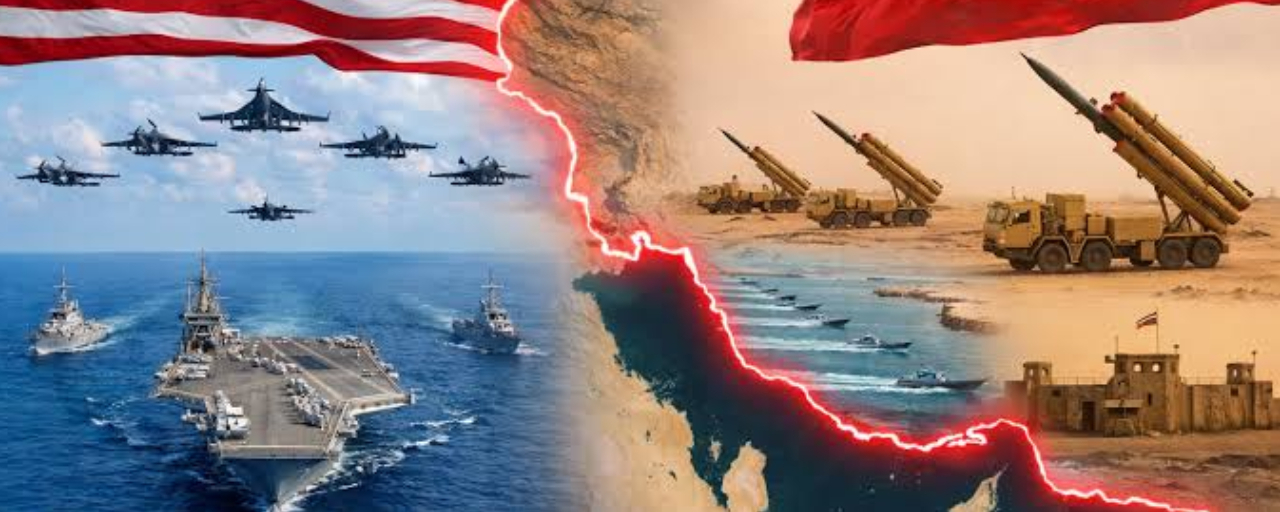
A U.S. strike found an oil tanker sitting near Iran's main export terminal this week — the first hit on a tanker since Washington reinstated its blockade on Iranian ports. In any other stretch of this conflict, that alone would have sent traders scrambling.
The Fifth Night
By Thursday afternoon, U.S. Central Command confirmed a new wave of strikes against Iranian military targets — the fifth consecutive night of bombing aimed at degrading Tehran's capabilities. Iran answered with fresh attacks on American facilities across the Gulf on Friday.
The Revolutionary Guard's response came as a warning: as long as American strikes continue, no oil or gas leaves the region. Not a barrel, not a cubic meter.
It's the kind of line that used to move markets on its own.
Prices Barely Flinch
Brent settled above $84 a barrel. West Texas Intermediate held under $79. Both are up roughly 11 percent for the week — a real move, but nowhere near what a shooting war over the Strait of Hormuz should produce. In early Thursday trading out of Asia, WTI ticked up close to one percent. Brent gained less.
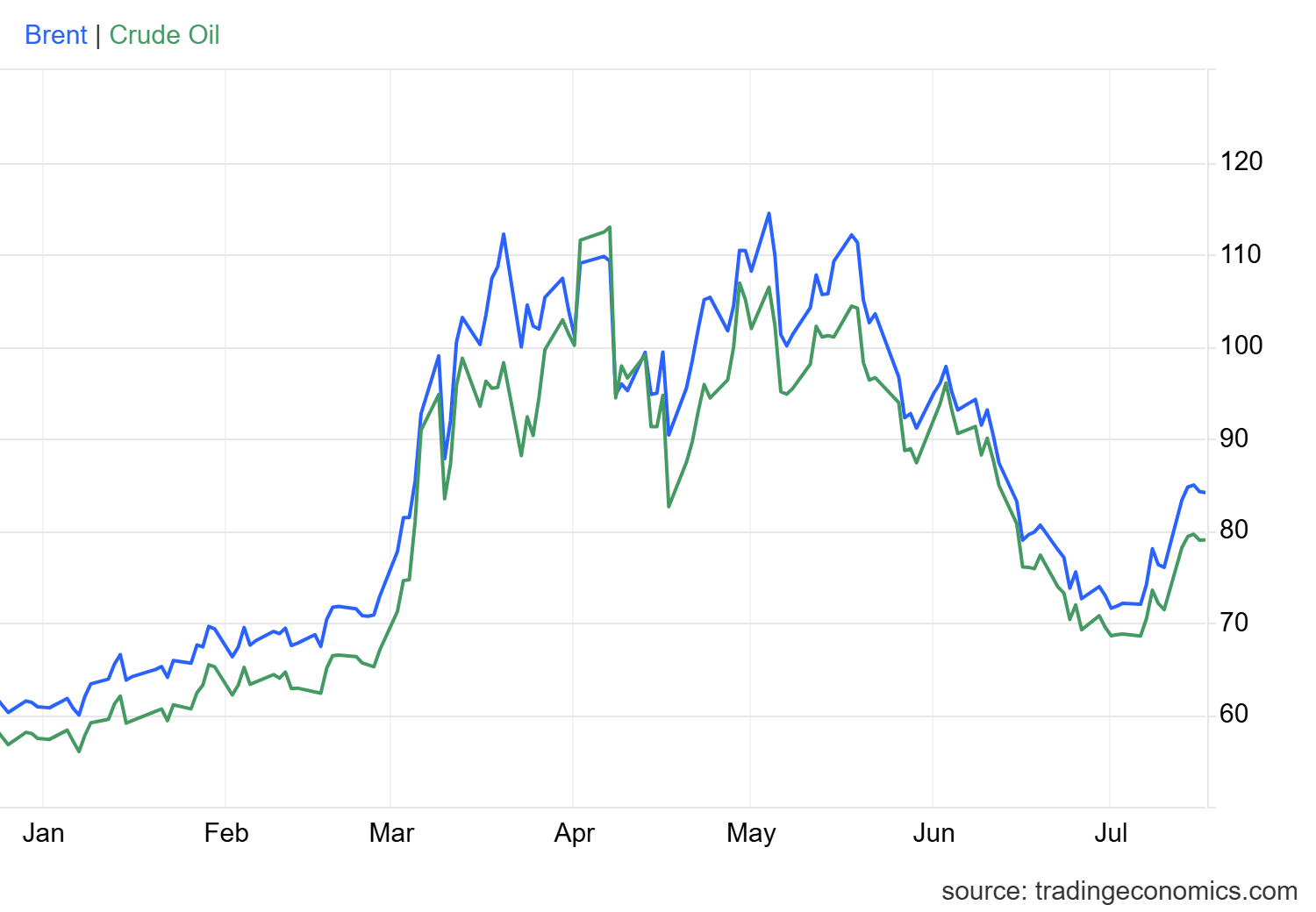
Compare that to what markets were bracing for. Hormuz carries a fifth of the world's oil. A serious, sustained closure was supposed to be the nightmare scenario. Instead, prices are creeping, not spiking.
Threats That Sound Bigger Than They Land
Iran's military command hasn't softened its language. A spokesperson for its top command said Tehran would "crush" key regional targets if Trump strikes Iranian infrastructure. Any American interference in the Strait, officials made clear, would not be tolerated from what they call a foreign, extra-regional power.
Behind the bombast, a quieter voice is making a different case. Parliament Speaker Mohammad Bagher Ghalibaf defended ongoing peace talks with Washington on state television, arguing negotiation "is not tantamount to compromise" but part of the same resistance strategy as military strength.
Two messages, aimed at two audiences — hardliners at home and everyone else watching the Gulf.
On the water, Iran's speedboats, mines, drones and missiles are still capable of real chaos, and they've proven it, defying near-daily U.S. Navy strikes in waters that past American presidents mostly avoided testing directly.
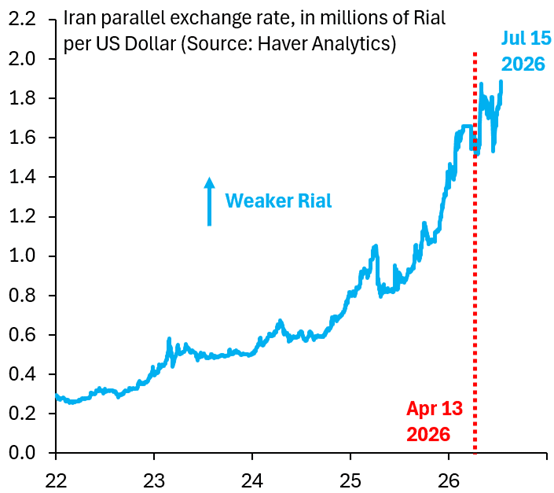
But capability isn't the same as leverage. The blockade Washington has built is grinding down both. American forces are disabling empty Iranian tankers before they can be used as floating storage, hitting oil infrastructure, and watching Iran's currency slide to fresh lows.
Why the Squeeze Isn't Working the Way Iran Hoped
Here's the part that should worry Tehran more than any single U.S. strike: the world stopped acting like Hormuz is irreplaceable. The U.S. and its allies have leaned on strategic reserves, releasing hundreds of millions of barrels to blunt supply shocks. American production is holding near 13.6 million barrels a day, giving buyers a reliable alternative that didn't exist at this scale a decade ago. Each disruption is quietly pushing countries further toward energy independence and faster electrification.
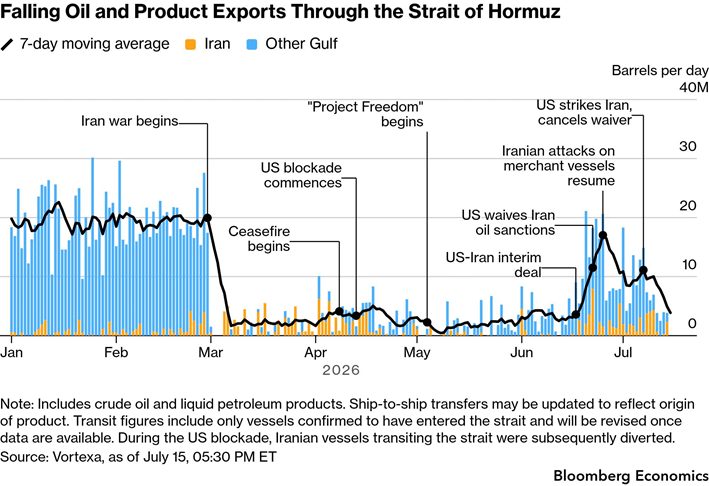
Then there's Iraq. Chevron is expected to sign an agreement with Baghdad this week, advancing talks on major oilfield investment — a signal, as Bloomberg's Javier Blas has argued, that Iran may be overplaying its hand. Every tanker Iran strikes off Oman's coast is one more argument for Gulf states, China, and Japan to spend billions building pipeline capacity that bypasses the Strait entirely. Blas puts the risk to Iran plainly: it stands to lose strategic leverage "over the next five years or so as its neighbors build more bypass routes."
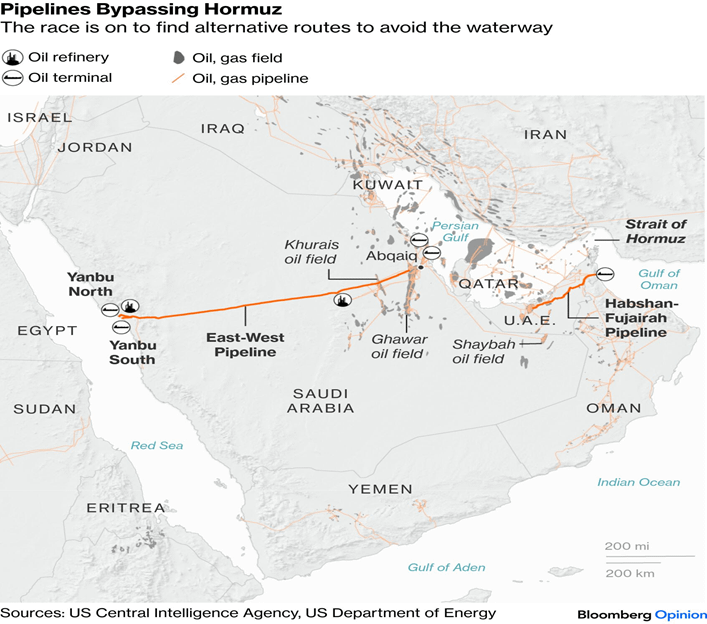
The squeeze that was meant to prove Iran's indispensability might end up erasing it.
A Second Front Opens
Iran isn't waiting to find out. It has reportedly instructed Yemen's Houthis to shut down the Bab el-Mandeb Strait to Red Sea shipping if the U.S. strikes Iran's power grid, with Revolutionary Guard representatives already positioned in Yemen to control the timing.
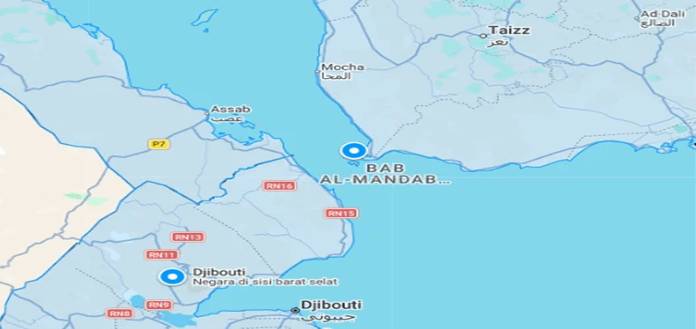
That would open a second energy chokepoint at the exact moment the first one is under strain — pressuring two of the world's most important oil corridors at once, and threatening Saudi Aramco's Red Sea exports out of Yanbu along the way.
Nobody in This Fight is Winning Cleanly.
None of this is free for the other side of the fight. Trump joined Israeli Prime Minister Benjamin Netanyahu's campaign against Iran without settling on one stable set of war aims — the goals have shifted more than once. That drift is starting to show up in the numbers. A new poll finds even parts of his own Republican base wavering, with his approval ratings sitting near historic lows.
Rising fuel costs. A war with no visible endpoint. The political math gets harder every week this runs.
Two fronts. A currency in freefall. A market that's stopped panicking. A White House bleeding domestic support.
The question worth watching isn't who strikes next. It's who runs out of leverage first — and whether the rest of the world keeps building routes around both of them.