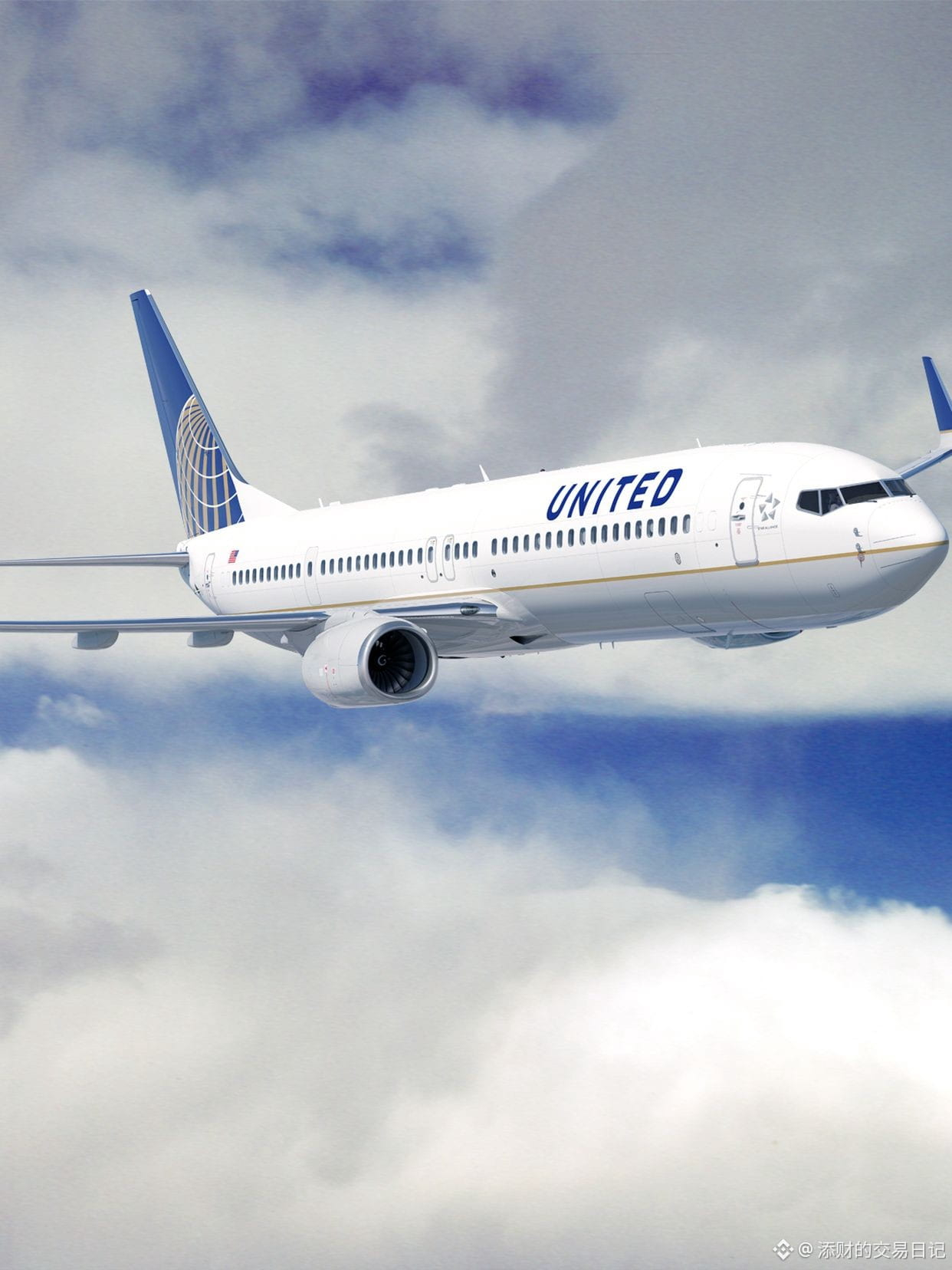
Fuel bills are up by nearly $6 billion—why is United still raising its full-year guidance?
United Airlines released its second-quarter earnings report: revenue of $17.7 billion, up 16% year over year; adjusted earnings per share (EPS) of $1.99, beating the market expectation of $1.88. The company also narrowed its 2026 adjusted EPS guidance range from $7–$11 to $9–$11.
On the surface, it looks like “earnings beat expectations + raised guidance.” But after the report was released, the stock price fell by about 2% at one point, largely due to fuel costs and the outlook for the third quarter.
【How big is the fuel shock?】
🔹 Based on the July 14 oil price, full-year fuel spending is expected to be nearly $6 billion higher than what was originally assumed at the start of the year
🔹 Q2 fuel spending rose by $2.3 billion year over year, an 84% increase
🔹 Adjusted EPS fell from $3.87 in the same period last year to $1.99
🔹 In the midpoint of the Q3 adjusted EPS guidance, $3 is below the market’s expectation of $3.60
【How does the company plan to absorb it?】
United relies on fare levels, product mix, and capacity adjustments to pass through costs. In Q2, unit passenger revenue rose 12.1% year over year; revenue in premium cabins increased 16%; and revenue from corporate customers grew 27%. The company said it had already recovered about half of the fuel price increase in Q2, expects to recover 80%–90% in Q3 and 100% in Q4. If oil prices stay high, it will further cut capacity.
【Investment takeaway】
This earnings report confirms that United still has pricing power, but it also shows there is a lag in cost pass-through. The guidance is raised only at the low end, while the upper end is not increased. The fact that third-quarter guidance is below market expectations indicates that the pressure from fuel prices hasn’t fully eased.
Going forward, key things to watch include oil prices, how sensitive demand is to higher prices, the fuel-cost recovery rate in Q3, and the scale of capacity cuts. If demand holds up despite higher fares, there may be room for profit improvement; if high ticket prices suppress passenger volumes, the current guidance may still face pressure.
The above content does not constitute investment advice.
#USStocks #UAL #UnitedAirlines #AviationStocks #EarningsSeason
United Airlines released its second-quarter earnings report: revenue of $17.7 billion, up 16% year over year; adjusted earnings per share (EPS) of $1.99, beating the market expectation of $1.88. The company also narrowed its 2026 adjusted EPS guidance range from $7–$11 to $9–$11.
On the surface, it looks like “earnings beat expectations + raised guidance.” But after the report was released, the stock price fell by about 2% at one point, largely due to fuel costs and the outlook for the third quarter.
【How big is the fuel shock?】
🔹 Based on the July 14 oil price, full-year fuel spending is expected to be nearly $6 billion higher than what was originally assumed at the start of the year
🔹 Q2 fuel spending rose by $2.3 billion year over year, an 84% increase
🔹 Adjusted EPS fell from $3.87 in the same period last year to $1.99
🔹 In the midpoint of the Q3 adjusted EPS guidance, $3 is below the market’s expectation of $3.60
【How does the company plan to absorb it?】
United relies on fare levels, product mix, and capacity adjustments to pass through costs. In Q2, unit passenger revenue rose 12.1% year over year; revenue in premium cabins increased 16%; and revenue from corporate customers grew 27%. The company said it had already recovered about half of the fuel price increase in Q2, expects to recover 80%–90% in Q3 and 100% in Q4. If oil prices stay high, it will further cut capacity.
【Investment takeaway】
This earnings report confirms that United still has pricing power, but it also shows there is a lag in cost pass-through. The guidance is raised only at the low end, while the upper end is not increased. The fact that third-quarter guidance is below market expectations indicates that the pressure from fuel prices hasn’t fully eased.
Going forward, key things to watch include oil prices, how sensitive demand is to higher prices, the fuel-cost recovery rate in Q3, and the scale of capacity cuts. If demand holds up despite higher fares, there may be room for profit improvement; if high ticket prices suppress passenger volumes, the current guidance may still face pressure.
The above content does not constitute investment advice.
#USStocks #UAL #UnitedAirlines #AviationStocks #EarningsSeason