

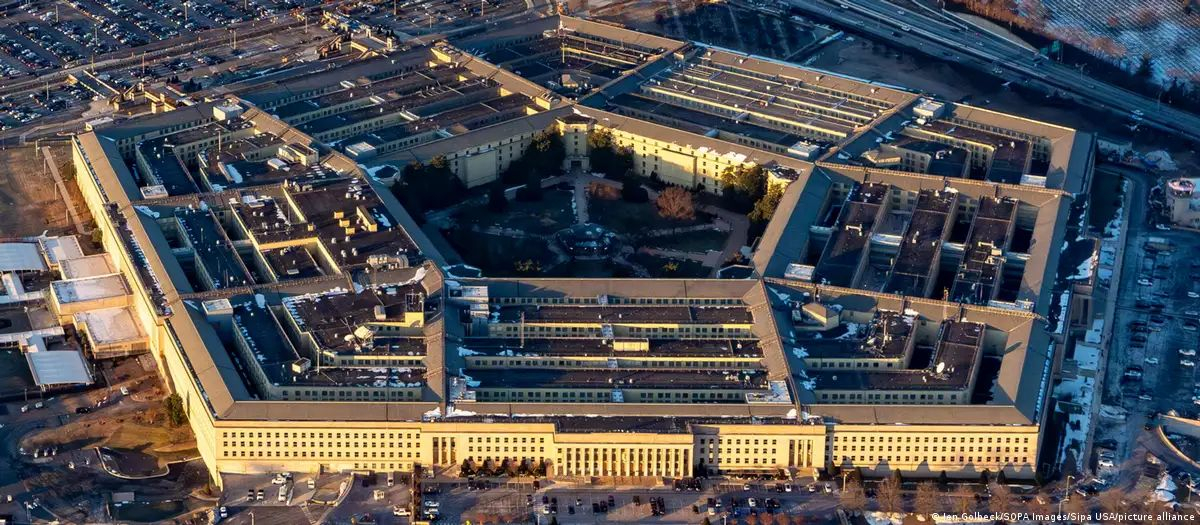
The Pentagon is considering several scenarios for military action against Cuba, including a landing on the island of "thousand" troops of the 101st Airborne Division, CBS News reported on Wednesday, July 15, citing several U.S. officials. According to them, discussions of such plans have been ongoing for the past few weeks, but the final decision has not yet been made by the defense department.
Earlier, the former war minister Pete Hegseth allowed for the possibility of a military solution to the Cuban issue. In June, he warned that any attempts by Havana to obtain weapons that threaten the United States would be grounds for confrontation. Intelligence data indicate that Cuba has purchased more than 300 drones for potential strikes on the base in Guantánamo, on U.S. Navy ships, and on Florida territory.
Iran is diverting Pentagon resources
At the same time, CBS News interviewees believe that an operation against Cuba in the near term is unlikely—too many Pentagon resources are being used in the renewed war against Iran. In addition, Donald Trump’s team prefers to achieve a change of power in Cuba through economic and diplomatic levers.
Secretary of State Marco Rubio has repeatedly said that Washington would prefer to see a technocratic government in Havana—one geared toward reforms. But on July 11, he acknowledged that the Cuban leadership and its “corrupt elite” are not changing course, remaining faithful to “morally bankrupt Marxist ideology” and maintaining “total control” over the state.
In May, the head of the CIA, John Ratcliffe, visited Cuba. He promised to expand cooperation in exchange for the island authorities carrying out deep reforms, and also reminded the Cuban side of the operation to seize Venezuelan leader Nicolás Maduro by showing one of the participants in that operation.
An energy blockade of the island
After Donald Trump’s return to the White House, Washington noticeably increased pressure on Havana by putting Cuba back on the list of state sponsors of terrorism. In January 2026, the American leader declared a state of emergency, citing a threat to national security posed by Cuba, and organized an energy blockade of the island. In May, Cuban authorities acknowledged the critical condition of the national power grid.
Trump has repeatedly spoken about the inevitable collapse of the Cuban regime, promising to seriously address the issue after he “deals with” Iran. The Wall Street Journal reported that Washington intends to achieve a change of power in Cuba by the end of 2026.
The President of Cuba, Miguel Díaz-Canel, said that the country is ready to resist in the event of a U.S. invasion. “We will fight, we will defend ourselves, and if it is destined for us to fall in battle, then to die for the homeland—means to live,” he said.