
William_George
18.4k Posts

William_George
 Square Verified+
Markets. Liquidity. Execution.I follow smart money.
Open Trade
High-Frequency Trader
11.6 Months
86 Following
39.2K+ Followers
28.0K+ Liked
Posts
Portfolio
All
Quotes
Videos
Live
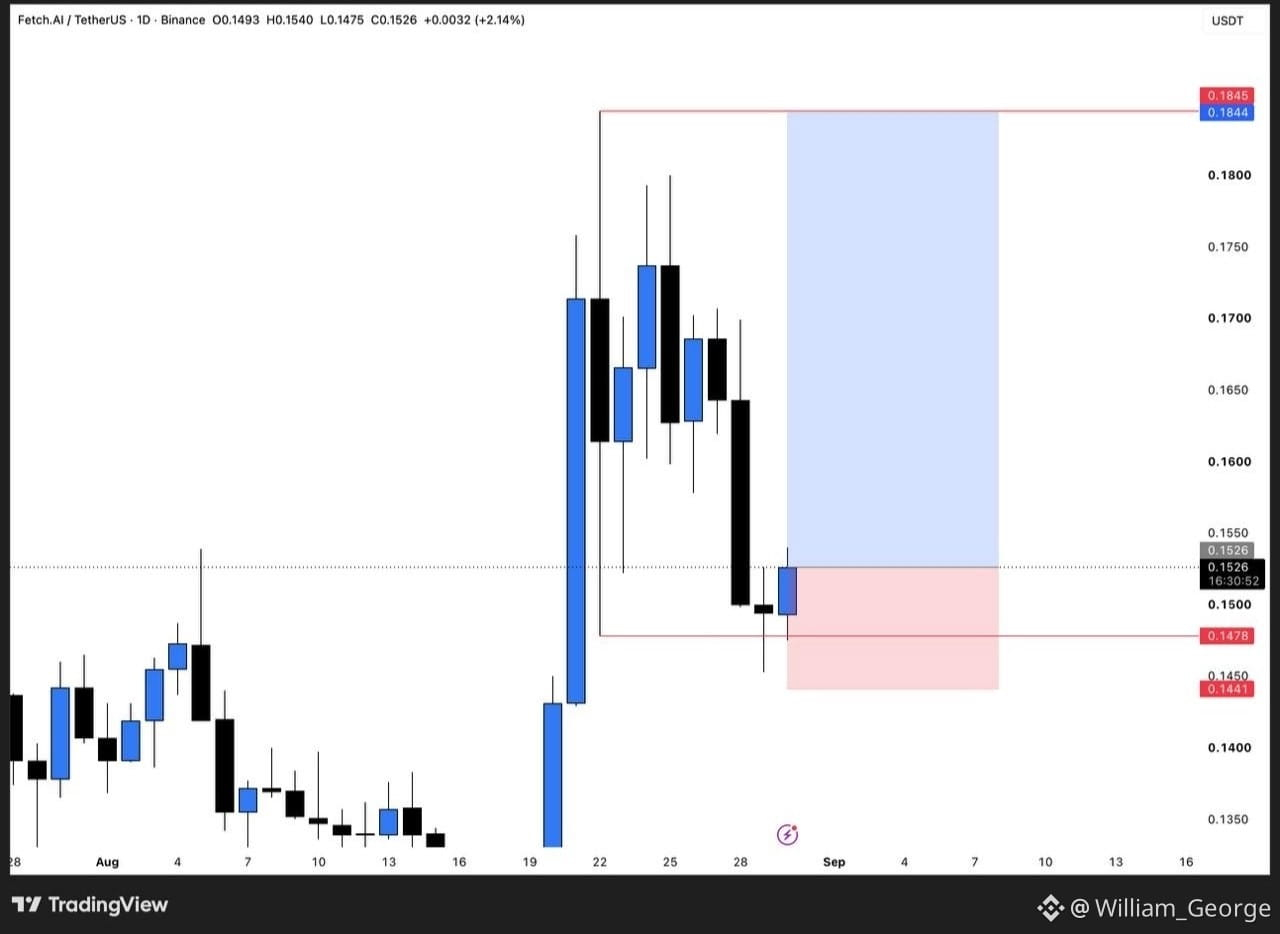
🚀 $FET LONG SETUP — WATCHING THIS ZONE 👀
$FET is showing a strong reaction around the $0.1478–$0.1500 support area after the recent pullback. The lower wick suggests buyers are defending the zone, but confirmation is still important before chasing the move.
🟢 LONG
EP: $0.1485
🎯 TP: $0.1844
🛑 SL: $0.1441
The setup offers a defined risk level while targeting a move back toward the previous resistance zone.
⚠️ Wait for confirmation and manage risk.
Let’s see what $FET does next. 🚀📈
Not financial advice. DYOR.
$FET is showing a strong reaction around the $0.1478–$0.1500 support area after the recent pullback. The lower wick suggests buyers are defending the zone, but confirmation is still important before chasing the move.
🟢 LONG
EP: $0.1485
🎯 TP: $0.1844
🛑 SL: $0.1441
The setup offers a defined risk level while targeting a move back toward the previous resistance zone.
⚠️ Wait for confirmation and manage risk.
Let’s see what $FET does next. 🚀📈
Not financial advice. DYOR.
30D trade $BTC 4.2K USDT
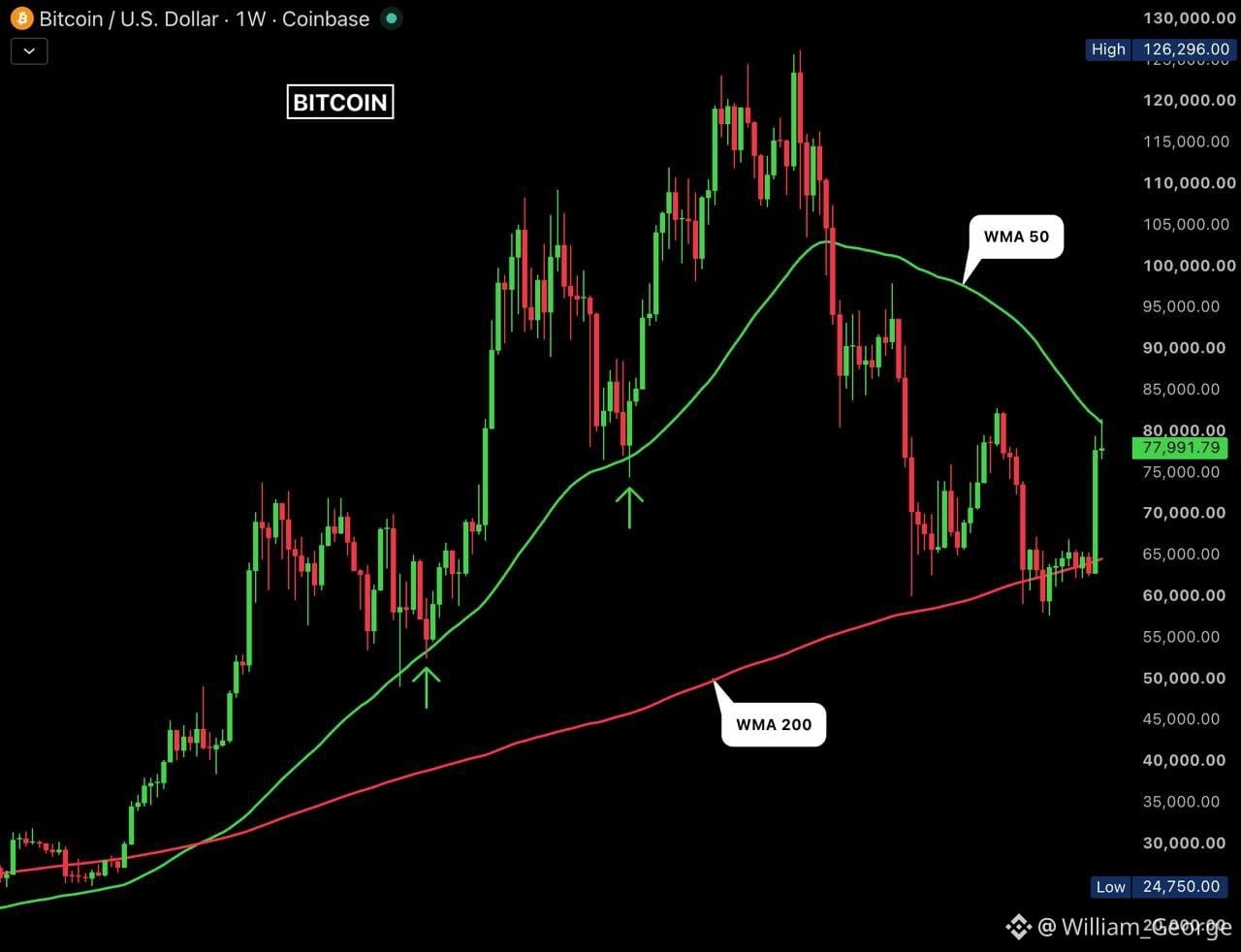
🚨Bitcoin just got rejected from the weekly MA 50 at $81,000.
This is the biggest resistance for $BTC right now, and we need to break and close above it for a new bull market to start.
This is the biggest resistance for $BTC right now, and we need to break and close above it for a new bull market to start.
🚨 THE FUTURES MARKET IS HEATING UP 🔥
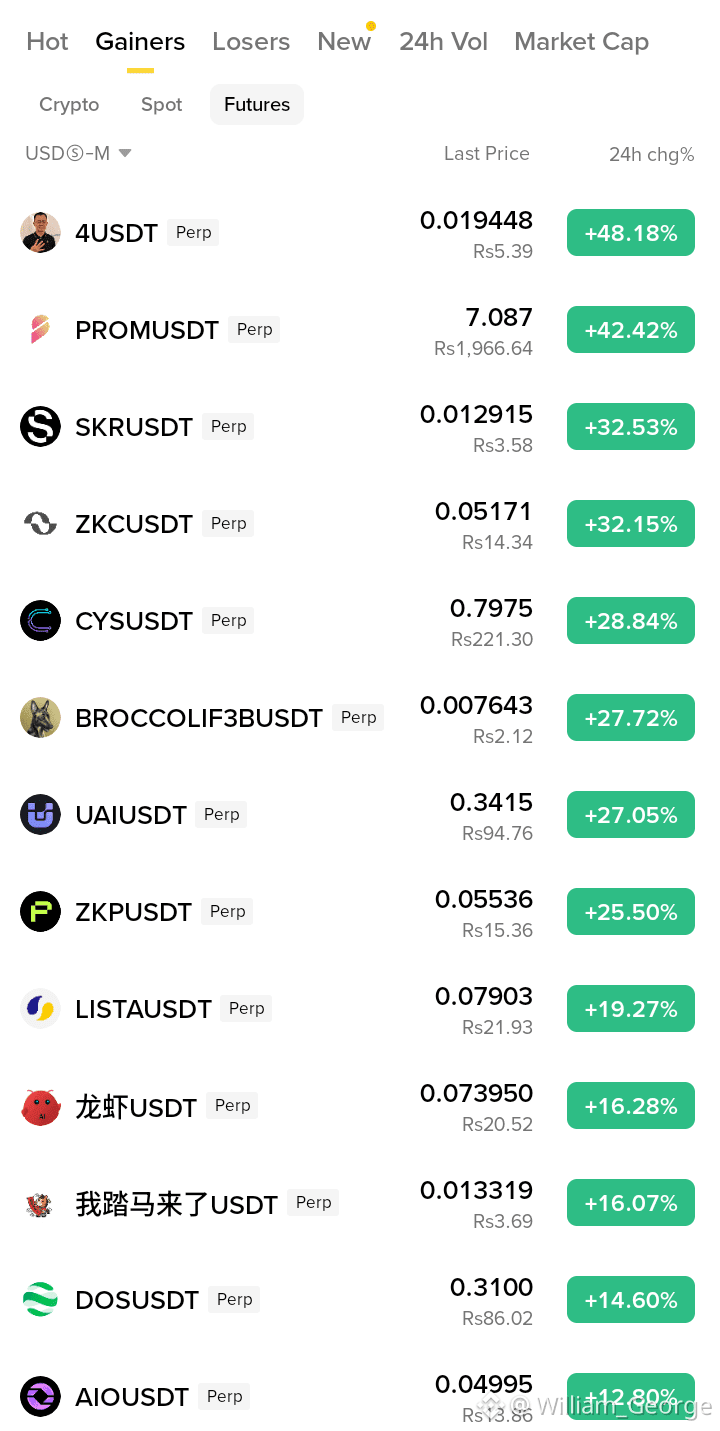
The Gainers board is showing some serious momentum today, with several altcoins posting 20%–48%+ moves.
🚀 Top movers right now: • $4 — +48.18% • $PROM — +42.42% • $SKR — +32.53% • $ZK — +32.15% • $CYS — +28.84% • $BROCCOLI — +27.72% • $UAI — +27.05%
But remember: big green candles can create big FOMO. 📊
When multiple coins are pumping this hard, chasing an extended move can be risky. Wait for structure, confirmation and a clear invalidation before entering.
Which $coin are you watching today? 👀👇
The Gainers board is showing some serious momentum today, with several altcoins posting 20%–48%+ moves.
🚀 Top movers right now: • $4 — +48.18% • $PROM — +42.42% • $SKR — +32.53% • $ZK — +32.15% • $CYS — +28.84% • $BROCCOLI — +27.72% • $UAI — +27.05%
But remember: big green candles can create big FOMO. 📊
When multiple coins are pumping this hard, chasing an extended move can be risky. Wait for structure, confirmation and a clear invalidation before entering.
Which $coin are you watching today? 👀👇
🚨 $BTC IS AT A KEY DECISION ZONE 👀
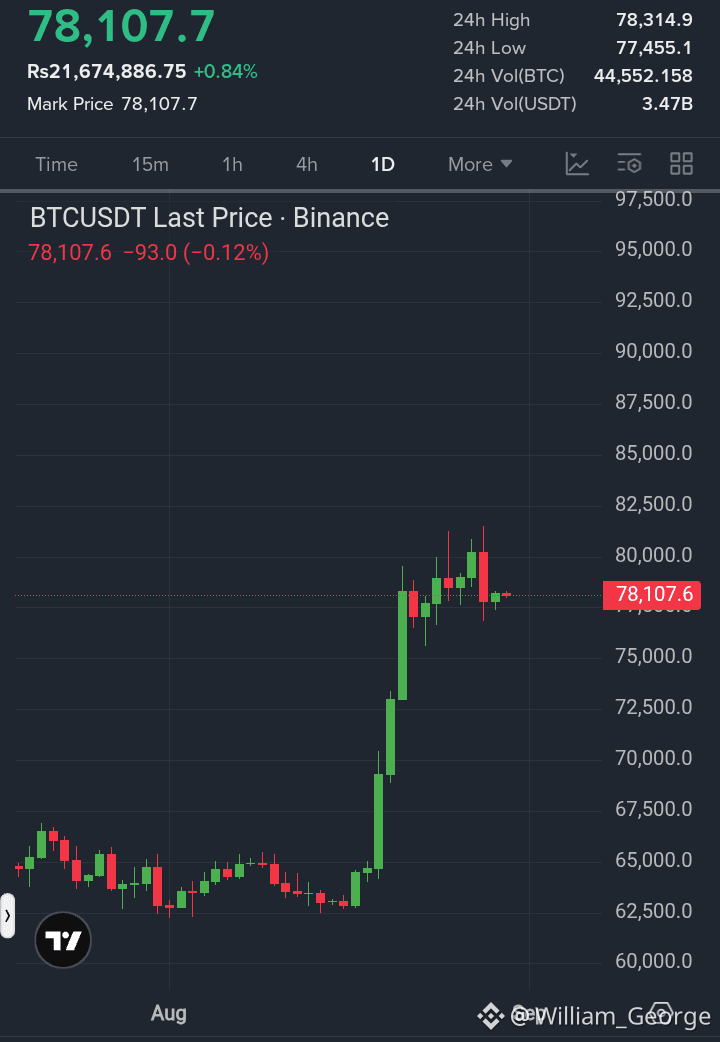
$BTC is trading around $78,100 after a strong move from the $62K area. Price is now consolidating below the $80K–$81K resistance zone, so confirmation is important before taking a position.
🟢 LONG SETUP
EP: $77,500–$78,000
SL: $75,800
TP1: $80,000
TP2: $81,500
TP3: $84,000
Leverage: 2x–3x max
🔴 SHORT SETUP
EP: $80,000–$81,000 rejection
SL: $82,200
TP1: $78,000
TP2: $75,500
TP3: $72,500
Leverage: 2x–3x max
⚠️ Wait for confirmation. Don’t chase the breakout or short blindly into support.
BTC traders — breakout above $81K or rejection first? 👇
Let’s see what $BTC does next. 🚀📊
$BTC is trading around $78,100 after a strong move from the $62K area. Price is now consolidating below the $80K–$81K resistance zone, so confirmation is important before taking a position.
🟢 LONG SETUP
EP: $77,500–$78,000
SL: $75,800
TP1: $80,000
TP2: $81,500
TP3: $84,000
Leverage: 2x–3x max
🔴 SHORT SETUP
EP: $80,000–$81,000 rejection
SL: $82,200
TP1: $78,000
TP2: $75,500
TP3: $72,500
Leverage: 2x–3x max
⚠️ Wait for confirmation. Don’t chase the breakout or short blindly into support.
BTC traders — breakout above $81K or rejection first? 👇
Let’s see what $BTC does next. 🚀📊
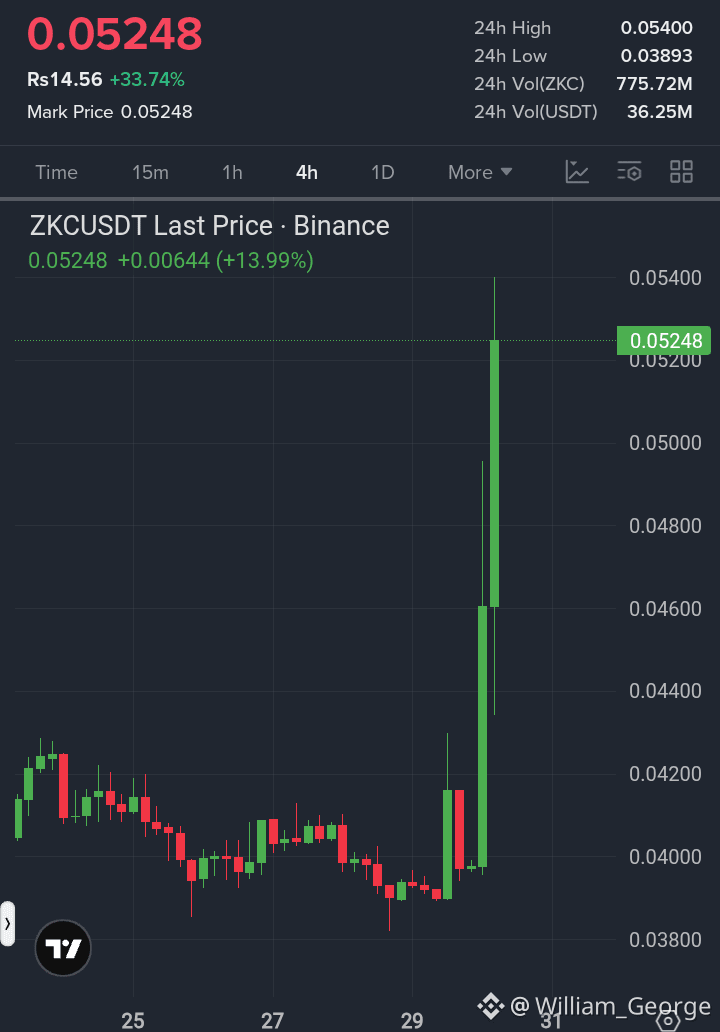
🚨 $ZKC IS AT A CRITICAL DECISION ZONE — DON’T CHASE THE PUMP. 👀
$ZKC is trading around $0.0525 after a strong breakout from the $0.039–$0.042 area. Momentum remains bullish, but after such a sharp move, I’d rather wait for a confirmed breakout or a clean pullback than chase the price. 📊
🟢 ZKC LONG SETUP
EP: $0.0465–$0.0475
SL: $0.0435
TP1: $0.0540
TP2: $0.0580
TP3: $0.0620
Leverage: 2x–3x max
🔴 ZKC SHORT SETUP
EP: $0.0535–$0.0540
SL: $0.0555
TP1: $0.0490
TP2: $0.0460
TP3: $0.0420
Leverage: 2x–3x max
⚠️ Wait for confirmation. Protect your capital.
Breakout or pullback, traders? 👇
Let’s see what $ZKC does next. 🚀📈
$ZKC is trading around $0.0525 after a strong breakout from the $0.039–$0.042 area. Momentum remains bullish, but after such a sharp move, I’d rather wait for a confirmed breakout or a clean pullback than chase the price. 📊
🟢 ZKC LONG SETUP
EP: $0.0465–$0.0475
SL: $0.0435
TP1: $0.0540
TP2: $0.0580
TP3: $0.0620
Leverage: 2x–3x max
🔴 ZKC SHORT SETUP
EP: $0.0535–$0.0540
SL: $0.0555
TP1: $0.0490
TP2: $0.0460
TP3: $0.0420
Leverage: 2x–3x max
⚠️ Wait for confirmation. Protect your capital.
Breakout or pullback, traders? 👇
Let’s see what $ZKC does next. 🚀📈
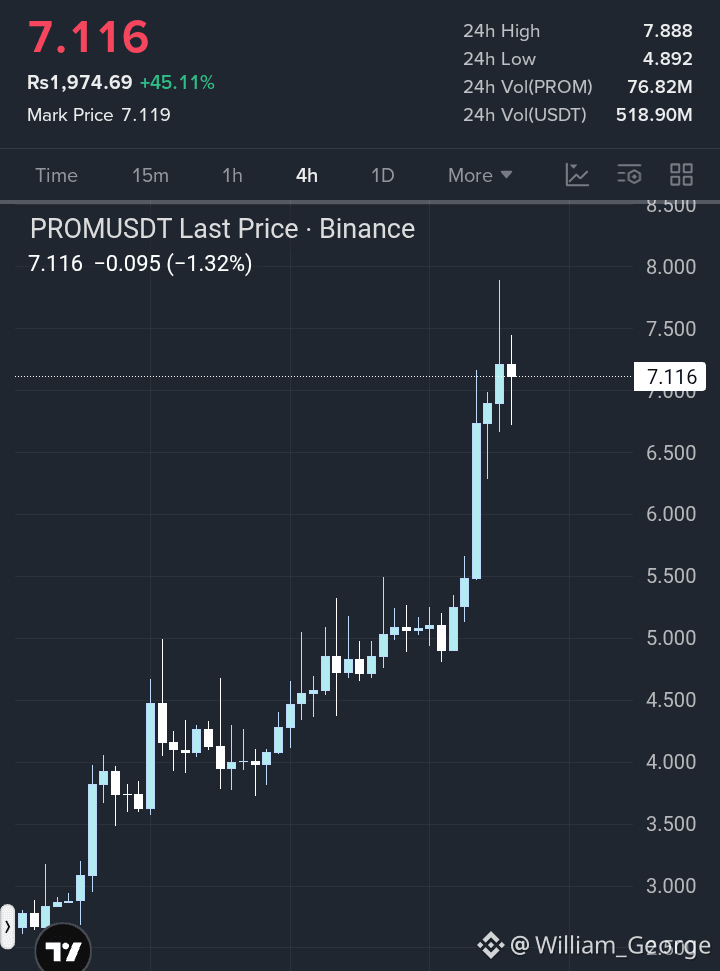
🚨 $PROM USDT 4H UPDATE 👀
$PROM is showing strong bullish momentum, currently around $7.12, up more than 45%.
After such a powerful move, the important thing now is confirmation—not FOMO.
🔴 Resistance: $7.50–$7.90
🟢 Support: $6.50–$7.00
🟡 Major Support: $5.50
🐂 If PROM breaks and holds above $7.90, bullish momentum could continue.
🔄 If it gets rejected, I’d watch the $6.50–$7.00 zone for a potential retest.
The chart is strong, but after a +45% move, chasing can be risky.
Breakout or pullback — which one are you watching? 👀👇
#PROM #Crypto #Altcoins #Trading $PROM
$PROM is showing strong bullish momentum, currently around $7.12, up more than 45%.
After such a powerful move, the important thing now is confirmation—not FOMO.
🔴 Resistance: $7.50–$7.90
🟢 Support: $6.50–$7.00
🟡 Major Support: $5.50
🐂 If PROM breaks and holds above $7.90, bullish momentum could continue.
🔄 If it gets rejected, I’d watch the $6.50–$7.00 zone for a potential retest.
The chart is strong, but after a +45% move, chasing can be risky.
Breakout or pullback — which one are you watching? 👀👇
#PROM #Crypto #Altcoins #Trading $PROM
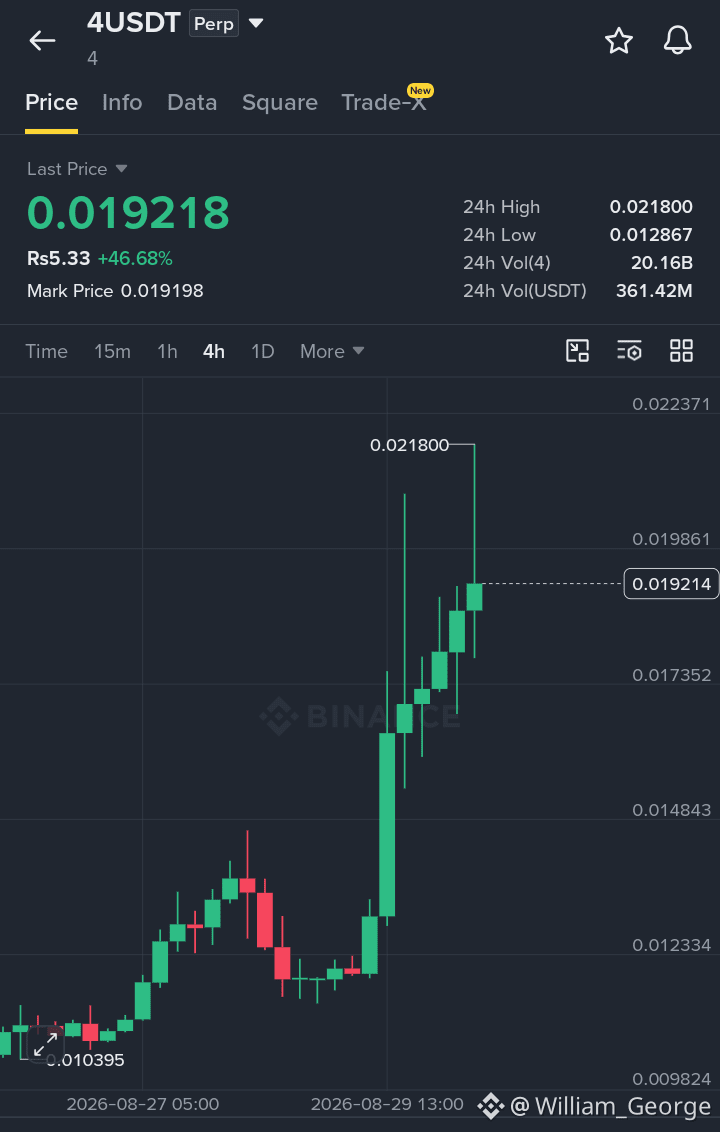
🚨 $4 USDT 4H MARKET UPDATE 👀
$4 USDT is showing strong bullish momentum, moving from around $0.012 to the $0.0192 area.
After such a strong move, the key question is not “How high can it go?” — it’s where can price confirm the next move?
🔴 Resistance: $0.0218–$0.0224
🟢 Support: $0.0173–$0.0180
🟡 Major Support: $0.0148–$0.0150
🐂 Bullish scenario: A clean break and hold above $0.0218 could open the door for further upside.
🧠 Pullback scenario: If price gets rejected near the highs, I’d rather watch the reaction around $0.0173–$0.0180 than chase the move.
🐻 Bearish scenario: Losing $0.0173 could bring the $0.015 area into focus.
After a move this strong, FOMO is dangerous. Good trading isn’t about catching every candle — it’s about waiting for a setup where the risk makes sense.
Breakout or pullback — what are you watching? 👇
#4USDT #Crypto #Trading #Altcoins
$4 USDT is showing strong bullish momentum, moving from around $0.012 to the $0.0192 area.
After such a strong move, the key question is not “How high can it go?” — it’s where can price confirm the next move?
🔴 Resistance: $0.0218–$0.0224
🟢 Support: $0.0173–$0.0180
🟡 Major Support: $0.0148–$0.0150
🐂 Bullish scenario: A clean break and hold above $0.0218 could open the door for further upside.
🧠 Pullback scenario: If price gets rejected near the highs, I’d rather watch the reaction around $0.0173–$0.0180 than chase the move.
🐻 Bearish scenario: Losing $0.0173 could bring the $0.015 area into focus.
After a move this strong, FOMO is dangerous. Good trading isn’t about catching every candle — it’s about waiting for a setup where the risk makes sense.
Breakout or pullback — what are you watching? 👇
#4USDT #Crypto #Trading #Altcoins
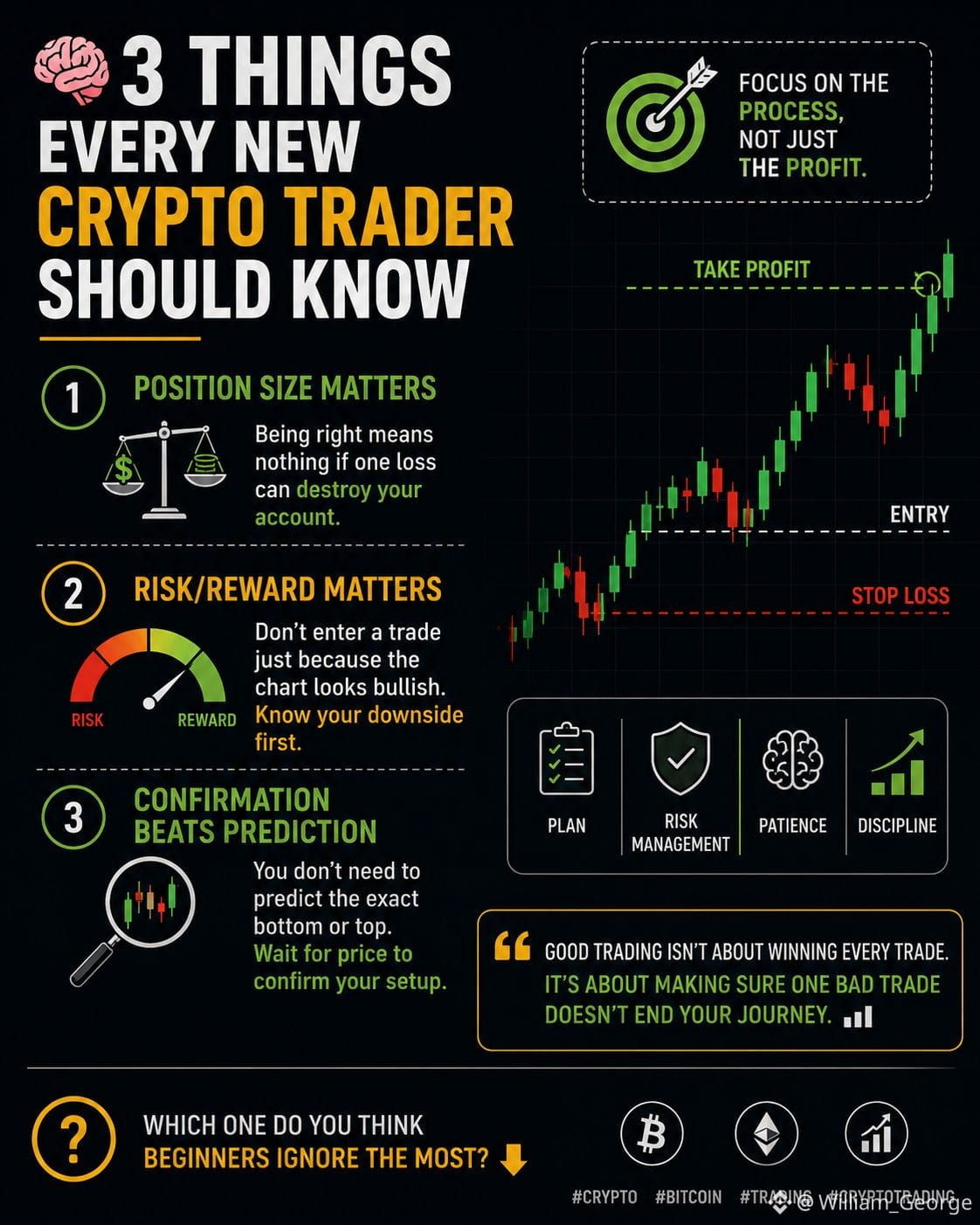
🧠 3 THINGS EVERY NEW CRYPTO TRADER SHOULD KNOW
1️⃣ Position size matters
Being right means nothing if one loss can destroy your account.
2️⃣ Risk/reward matters
Don’t enter a trade just because the chart looks bullish. Know your downside first.
3️⃣ Confirmation beats prediction
You don’t need to predict the exact bottom or top. Wait for price to confirm your setup.
Good trading isn’t about winning every trade.
It’s about making sure one bad trade doesn’t end your journey. 📊
Which one do you think beginners ignore the most? 👇
#Crypto #Bitcoin #Trading #cryptotrading
1️⃣ Position size matters
Being right means nothing if one loss can destroy your account.
2️⃣ Risk/reward matters
Don’t enter a trade just because the chart looks bullish. Know your downside first.
3️⃣ Confirmation beats prediction
You don’t need to predict the exact bottom or top. Wait for price to confirm your setup.
Good trading isn’t about winning every trade.
It’s about making sure one bad trade doesn’t end your journey. 📊
Which one do you think beginners ignore the most? 👇
#Crypto #Bitcoin #Trading #cryptotrading
GM GUYS THIS IS FEW TRADING EDUCATIONAL POST
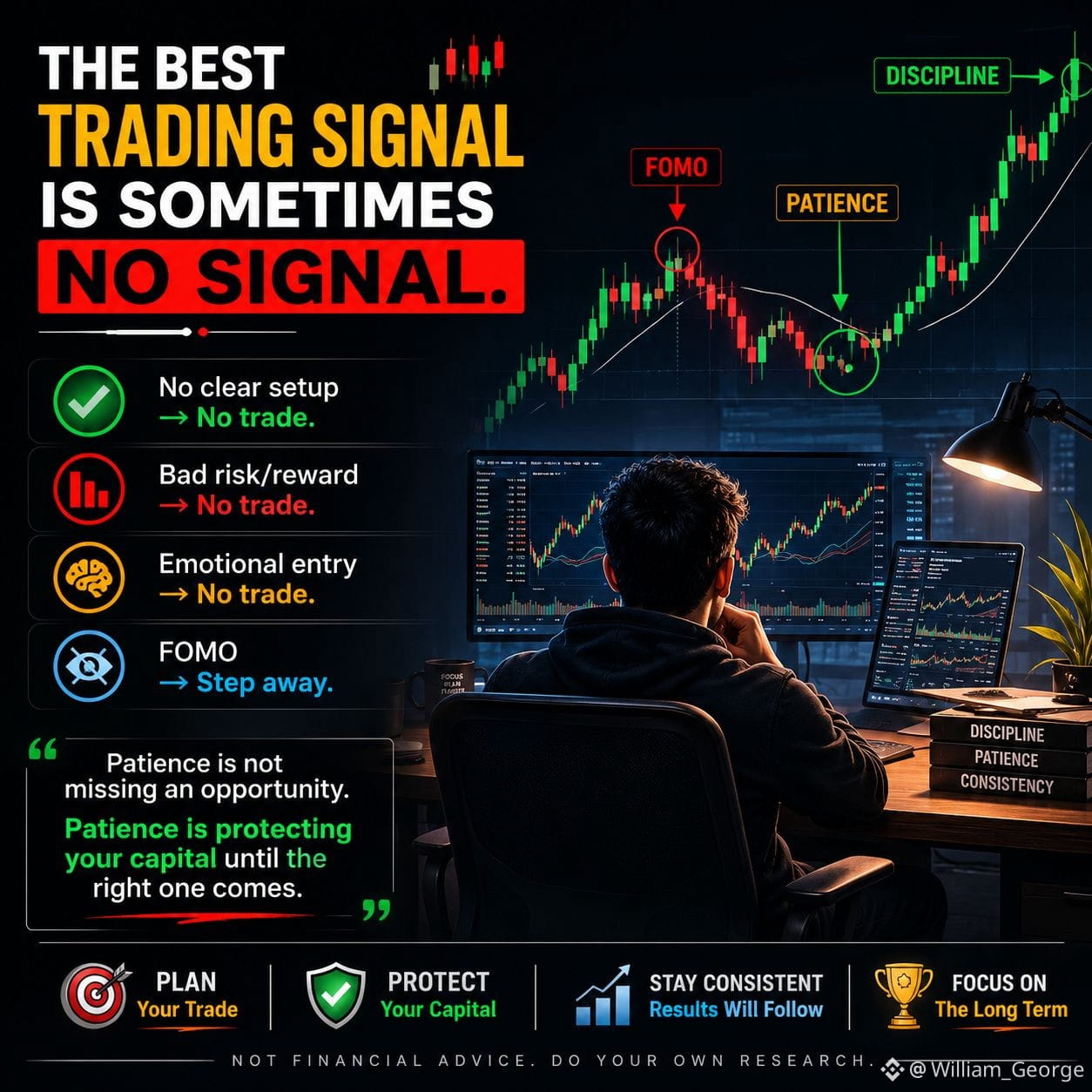
THE BEST TRADING SIGNAL IS SOMETIMES NO SIGNAL.
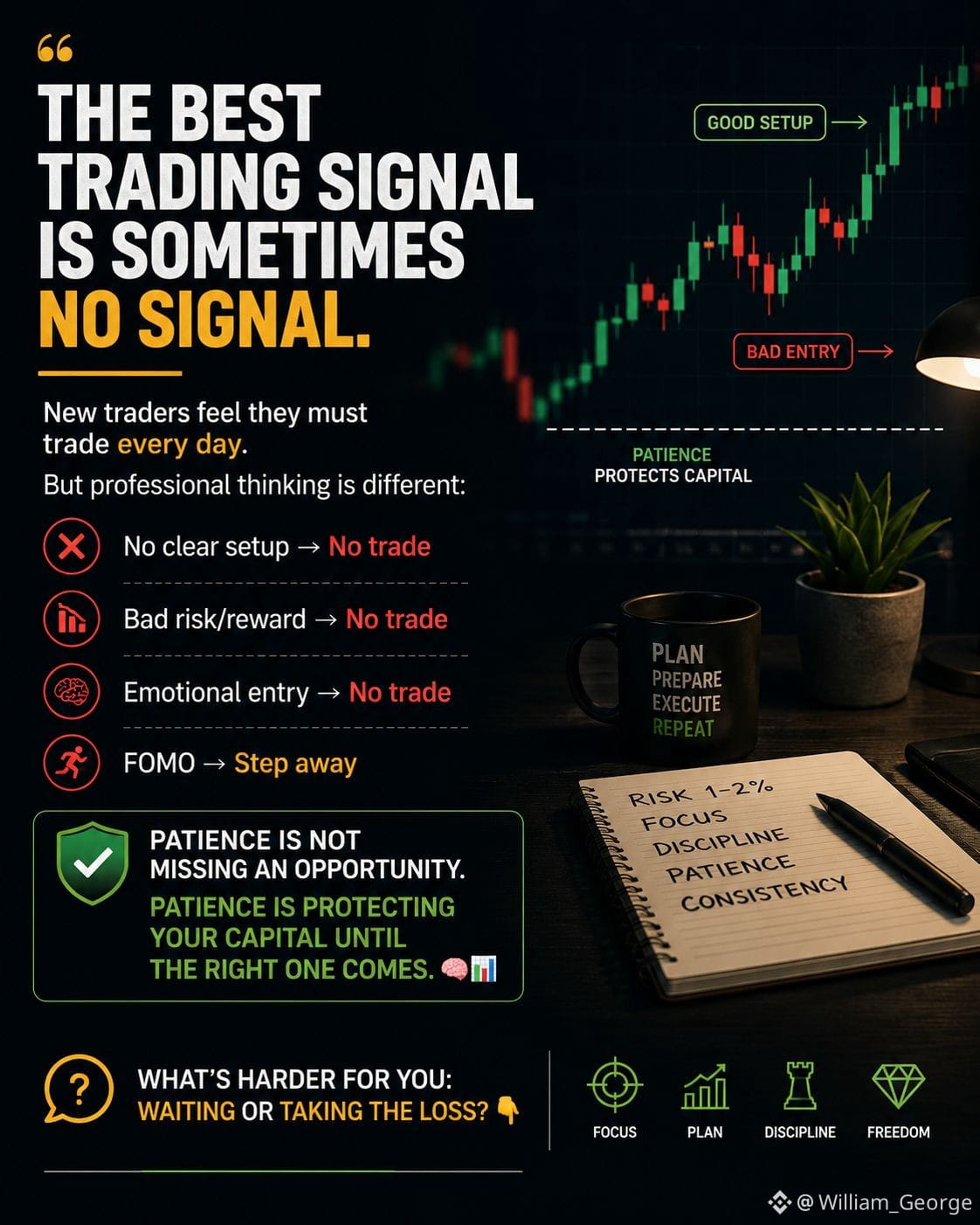
New traders feel they must trade every day.
But professional thinking is different:
• No clear setup → No trade
• Bad risk/reward → No trade
• Emotional entry → No trade
• FOMO → Step away
Patience is not missing an opportunity.
Patience is protecting your capital until the right one comes. 🧠📊
What’s harder for you: waiting or taking the loss? 👇
THE BEST TRADING SIGNAL IS SOMETIMES NO SIGNAL.
New traders feel they must trade every day.
But professional thinking is different:
• No clear setup → No trade
• Bad risk/reward → No trade
• Emotional entry → No trade
• FOMO → Step away
Patience is not missing an opportunity.
Patience is protecting your capital until the right one comes. 🧠📊
What’s harder for you: waiting or taking the loss? 👇
🔵 $ETH USDT 1H MARKET UPDATE 👀
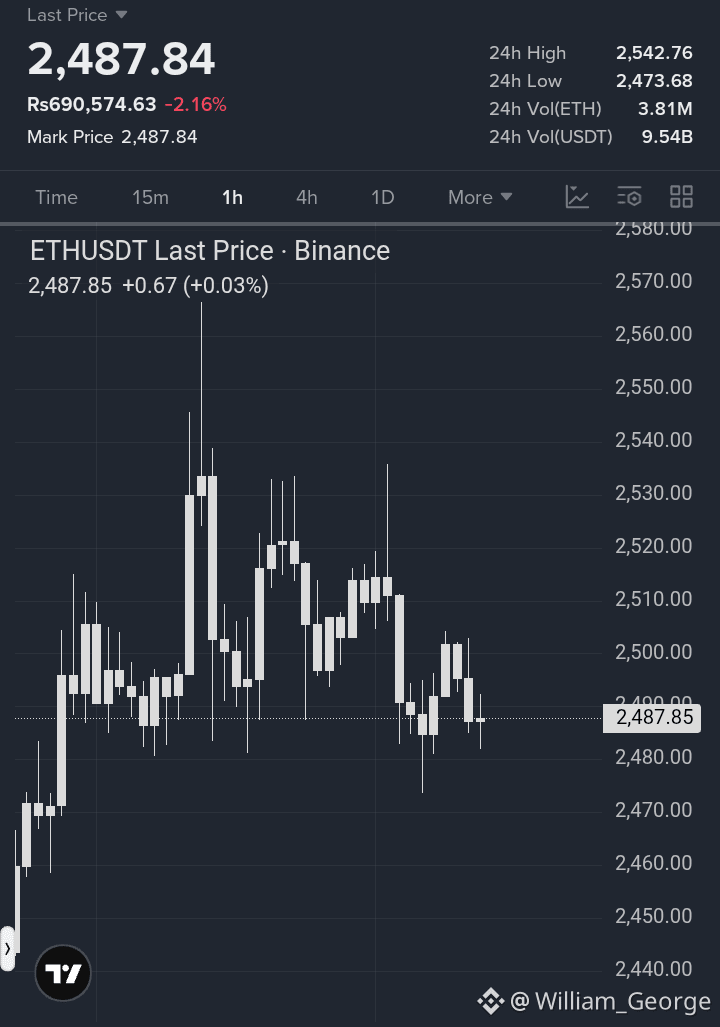
ETH is trading around $2,488 after failing to hold the $2,510–$2,520 area. The short-term structure looks cautious, with price consolidating near the $2,480–$2,490 zone.
📌 Key levels to watch:
🔴 Resistance: $2,510–$2,520
🔥 Major resistance: $2,540–$2,560
🟢 Immediate support: $2,480–$2,470
⚠️ Major support: $2,450
🐂 Bullish scenario:
If ETH reclaims $2,510 and gets a clean 1H close above $2,520, momentum could shift back toward $2,540–$2,560.
🐻 Bearish scenario:
If ETH loses $2,470, sellers could push price toward $2,450. A break below that level would weaken the short-term structure further.
👀 My focus: I’m watching whether buyers can defend $2,470–$2,480 or whether ETH gets another rejection from the $2,510+ area.
Breakout above $2,520 or breakdown below $2,470 — which comes first? 🐂🐻
#ETH #Ethereum #Crypto #ETHUSDT #Trading $ETH
ETH is trading around $2,488 after failing to hold the $2,510–$2,520 area. The short-term structure looks cautious, with price consolidating near the $2,480–$2,490 zone.
📌 Key levels to watch:
🔴 Resistance: $2,510–$2,520
🔥 Major resistance: $2,540–$2,560
🟢 Immediate support: $2,480–$2,470
⚠️ Major support: $2,450
🐂 Bullish scenario:
If ETH reclaims $2,510 and gets a clean 1H close above $2,520, momentum could shift back toward $2,540–$2,560.
🐻 Bearish scenario:
If ETH loses $2,470, sellers could push price toward $2,450. A break below that level would weaken the short-term structure further.
👀 My focus: I’m watching whether buyers can defend $2,470–$2,480 or whether ETH gets another rejection from the $2,510+ area.
Breakout above $2,520 or breakdown below $2,470 — which comes first? 🐂🐻
#ETH #Ethereum #Crypto #ETHUSDT #Trading $ETH
30D trade $BTC 4.2K USDT
🟠 $BTC UPDATE 👀
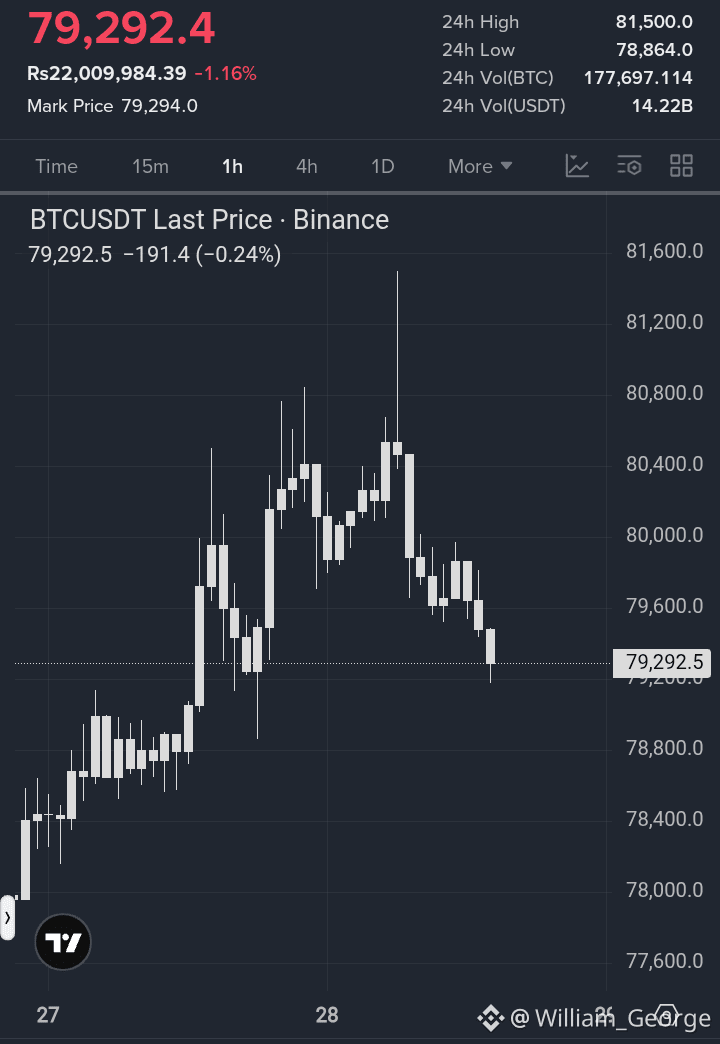
$BTC is now around $79.3K after getting rejected from the $80.4K–$81.5K area.
🔴 Resistance: $80.4K–$81.5K
🟢 Support: $79K → $78.8K
⚠️ Key level: $78K
If BTC reclaims $80K+, bullish momentum could return.
But if $79K breaks, I’d watch the $78.8K–$78K area next.
Breakout or deeper pullback? 🐂🐻
#Bitcoin #BTC #Crypto #Trading $BTC
$BTC is now around $79.3K after getting rejected from the $80.4K–$81.5K area.
🔴 Resistance: $80.4K–$81.5K
🟢 Support: $79K → $78.8K
⚠️ Key level: $78K
If BTC reclaims $80K+, bullish momentum could return.
But if $79K breaks, I’d watch the $78.8K–$78K area next.
Breakout or deeper pullback? 🐂🐻
#Bitcoin #BTC #Crypto #Trading $BTC
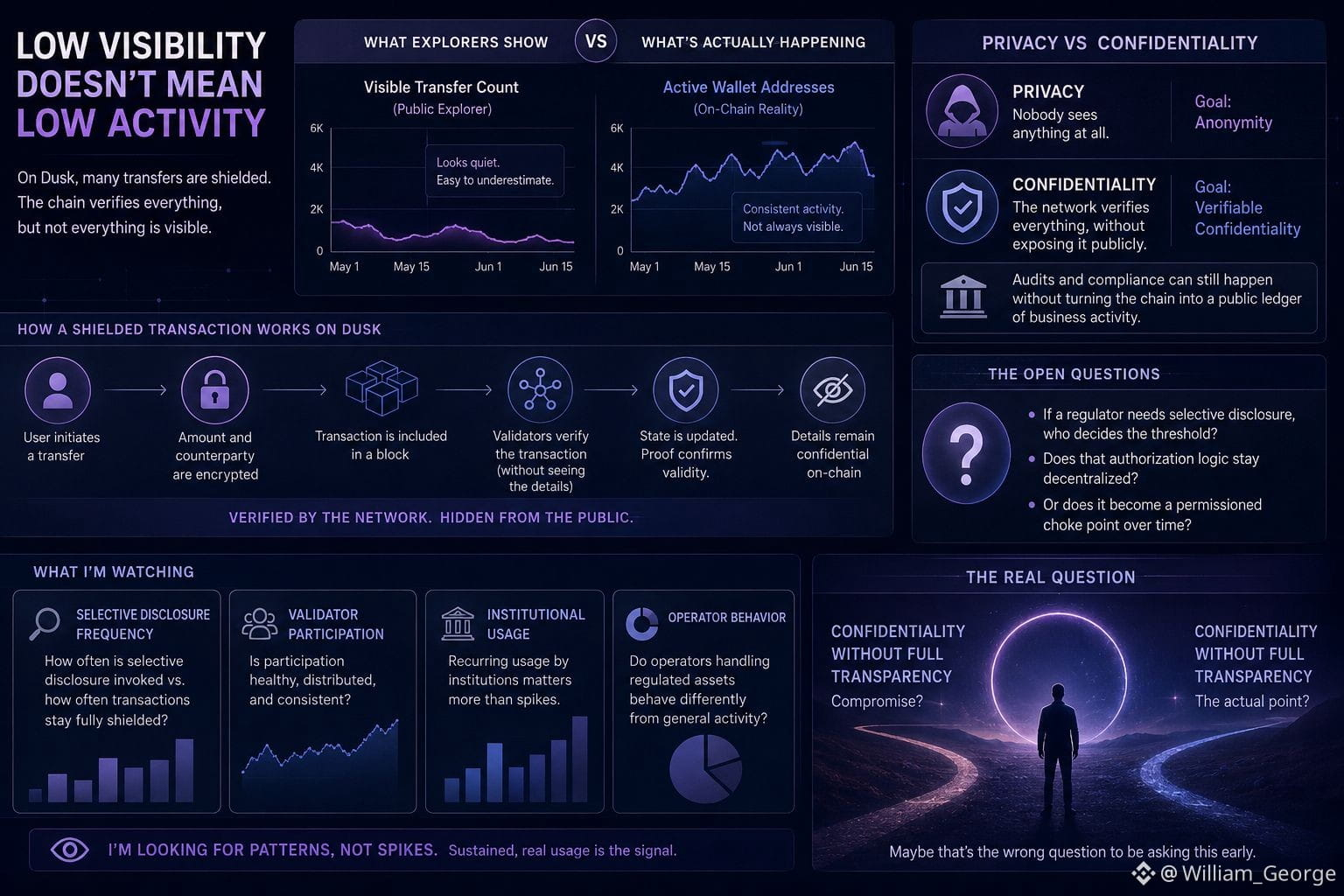
My uncle noticed something very well while comparing transfer counts on Dusk's explorer against active wallet addresses. I assumed low visible transfer volume meant low usage, the kind of quiet chart that gets dismissed too quickly.
Digging into the transaction structure showed why that count misleads. Many transfers on Dusk use shielded execution, where the amount and counterparty stay hidden even though the transaction is still fully verified on-chain through the network's confidential model. Activity wasn't absent, it was just unreadable the way I'd been reading it.
That's when I realized I had been treating privacy and confidentiality as the same word. Privacy usually implies nobody sees anything at all. Confidentiality here means the network still verifies everything internally, just without exposing it publicly. The second-order effect is that audits and compliance checks can still happen without turning the chain into a public ledger of business activity, which is a very different goal than pure anonymity.
What I can't resolve yet is how this holds up under pressure. If a regulator needs selective disclosure, who decides the threshold for revealing a transaction, and does that authorization logic stay decentralized or slowly become a permissioned choke point.
I'm watching how often selective disclosure gets invoked versus how often transactions stay fully shielded, plus validator participation and whether operators handling regulated assets behave differently from general network activity. Recurring institutional usage would tell me more than any single spike.
I still don't know if confidentiality without full transparency is a compromise or the actual point of this design. Maybe that's the wrong question to be asking this early.
$DUSK #dusk @Dusk $BTR
Digging into the transaction structure showed why that count misleads. Many transfers on Dusk use shielded execution, where the amount and counterparty stay hidden even though the transaction is still fully verified on-chain through the network's confidential model. Activity wasn't absent, it was just unreadable the way I'd been reading it.
That's when I realized I had been treating privacy and confidentiality as the same word. Privacy usually implies nobody sees anything at all. Confidentiality here means the network still verifies everything internally, just without exposing it publicly. The second-order effect is that audits and compliance checks can still happen without turning the chain into a public ledger of business activity, which is a very different goal than pure anonymity.
What I can't resolve yet is how this holds up under pressure. If a regulator needs selective disclosure, who decides the threshold for revealing a transaction, and does that authorization logic stay decentralized or slowly become a permissioned choke point.
I'm watching how often selective disclosure gets invoked versus how often transactions stay fully shielded, plus validator participation and whether operators handling regulated assets behave differently from general network activity. Recurring institutional usage would tell me more than any single spike.
I still don't know if confidentiality without full transparency is a compromise or the actual point of this design. Maybe that's the wrong question to be asking this early.
$DUSK #dusk @Dusk $BTR

🚨 THE TREASURY MOVE COULD HAVE A BIGGER IMPACT THAN EXPECTED.
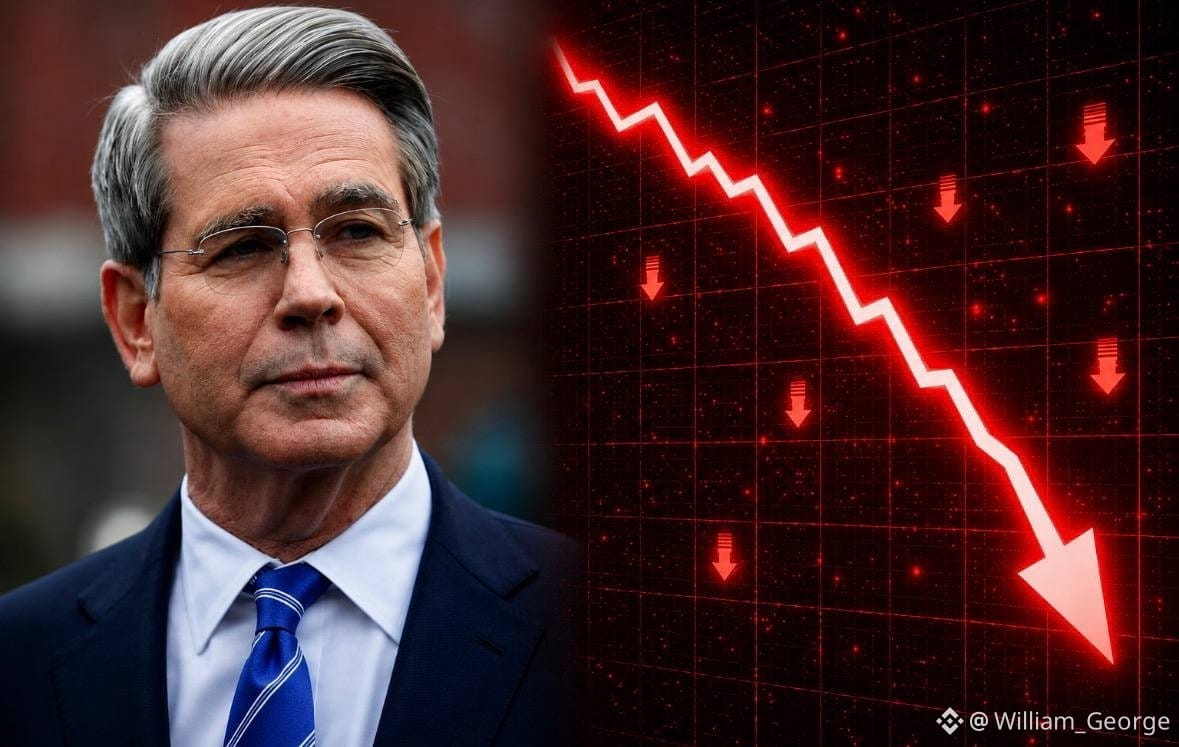
The U.S. Treasury could use nearly $1T in cash for long-term bond buybacks.
That may push yields lower short term. But there’s a bigger risk:
If investors feel the government is artificially supporting the bond market, confidence could weaken.
And when confidence moves, capital moves. 👀
Money leaving government bonds could flow into scarce assets like:
🟠 Bitcoin
🥇 Gold
⛏️ Commodities
🏠 Real assets
Bitcoin stands out because its supply can’t simply be increased to solve a financial problem.
The real question isn’t just whether the buybacks lower yields.
It’s whether they strengthen confidence—or make investors question it. 🚨
$TMX
$BTC
$VELVET
The U.S. Treasury could use nearly $1T in cash for long-term bond buybacks.
That may push yields lower short term. But there’s a bigger risk:
If investors feel the government is artificially supporting the bond market, confidence could weaken.
And when confidence moves, capital moves. 👀
Money leaving government bonds could flow into scarce assets like:
🟠 Bitcoin
🥇 Gold
⛏️ Commodities
🏠 Real assets
Bitcoin stands out because its supply can’t simply be increased to solve a financial problem.
The real question isn’t just whether the buybacks lower yields.
It’s whether they strengthen confidence—or make investors question it. 🚨
$TMX
$BTC
$VELVET
Verified
Dusk has a pretty unusual token emission schedule.
Emissions are designed to halve every 4 years, across a 36-year period.
Thirty-six years.
That’s an insane amount of time in crypto.
Most projects are focused on the next unlock, incentive program, narrative, or maybe the next quarter. Dusk is basically saying: let’s think about token supply dynamics for decades.
I find that interesting, but I’m still skeptical.
A long emission schedule doesn’t automatically create demand. Scarcity doesn’t magically make a token valuable. If nobody actually needs the asset, lower emissions don’t solve the problem.
That’s the part people often skip.
The real question is whether Dusk can build enough real usage for these tokenomics to actually matter.
Because trying to predict crypto 36 years from now is almost impossible. The technology, users, market structure, and even the reasons people value tokens could all be completely different.
So I don’t see the 36-year schedule as a guarantee.
I see it as a long-term bet on the importance of token economics.
Four years is already a lifetime in crypto.
Thirty-six years is almost absurd.
Maybe that’s exactly why it caught my attention.
Not because I know it will work.
I want to see whether the idea survives reality.
Just my 2am thoughts. Not shilling. Just tired of nonsense.
#dusk $DUSK @Dusk
What do you think of Dusk’s 36-year emissions?
Emissions are designed to halve every 4 years, across a 36-year period.
Thirty-six years.
That’s an insane amount of time in crypto.
Most projects are focused on the next unlock, incentive program, narrative, or maybe the next quarter. Dusk is basically saying: let’s think about token supply dynamics for decades.
I find that interesting, but I’m still skeptical.
A long emission schedule doesn’t automatically create demand. Scarcity doesn’t magically make a token valuable. If nobody actually needs the asset, lower emissions don’t solve the problem.
That’s the part people often skip.
The real question is whether Dusk can build enough real usage for these tokenomics to actually matter.
Because trying to predict crypto 36 years from now is almost impossible. The technology, users, market structure, and even the reasons people value tokens could all be completely different.
So I don’t see the 36-year schedule as a guarantee.
I see it as a long-term bet on the importance of token economics.
Four years is already a lifetime in crypto.
Thirty-six years is almost absurd.
Maybe that’s exactly why it caught my attention.
Not because I know it will work.
I want to see whether the idea survives reality.
Just my 2am thoughts. Not shilling. Just tired of nonsense.
#dusk $DUSK @Dusk
What do you think of Dusk’s 36-year emissions?
Smart long-term design
25%
Too ambitious
50%
Demand matters more
0%
Too early to tell
25%
4 votes • Voting closed
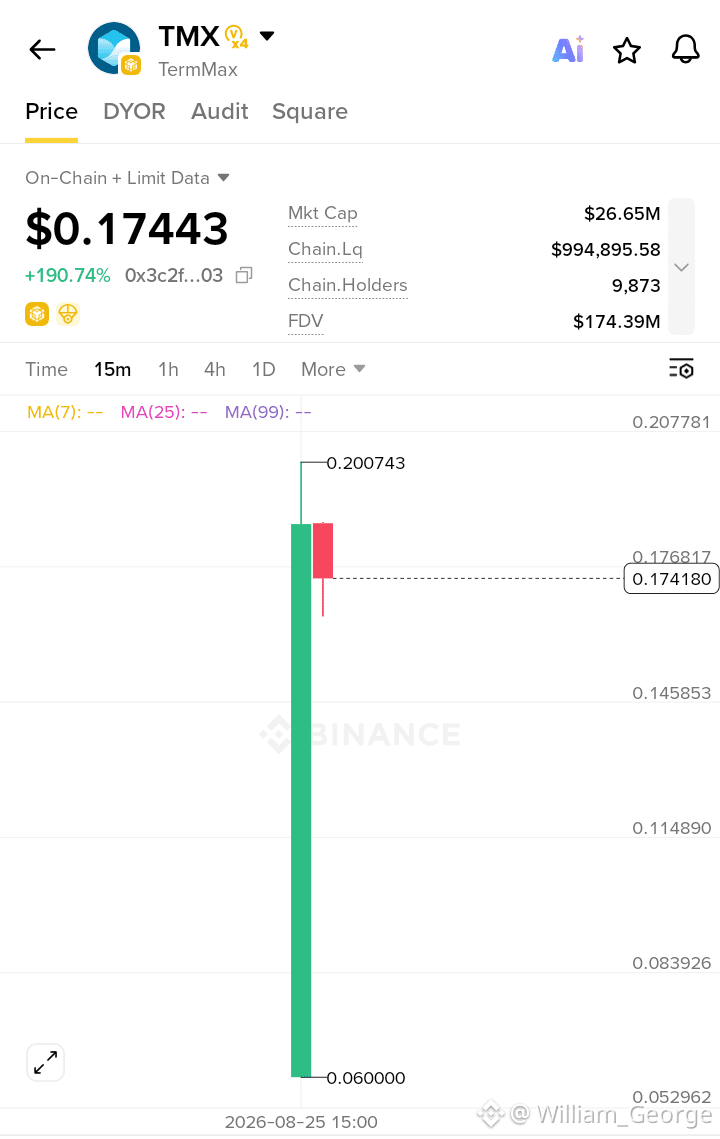
🚨 $TMX just ripped from $0.06 to $0.2007 — now the real test begins.
$TMX is trading around $0.1744 after printing a massive 15m expansion candle and tagging $0.2007. Price is now pulling back beneath the $0.1768 resistance zone.
This is no longer about chasing the green candle. The key is whether $0.1768 flips into support. A clean reclaim with volume would signal that buyers are still defending the breakout.
🎯 TRADE SETUP — LONG
📍 Entry: $0.1680–$0.1768
🎯 TP1: $0.2007
🎯 TP2: $0.2390
🎯 TP3: $0.2877
🛑 SL: $0.1590
⚡ Leverage: 2x Max
📊 Risk/Reward: ~1:2.4 / 1:6.1 / 1:10.8
The entry zone targets a controlled pullback into the breakout area rather than buying directly into the $0.20 supply/liquidity zone.
TP1 is the previous spike high. TP2 and TP3 are extension targets from the $0.06 → $0.2007 impulse. The setup needs price to hold the pullback and reclaim $0.1768 with convincing momentum.
📈 Bullish Scenario:
Hold the $0.1680–$0.1768 area, reclaim $0.1768, then attack $0.2007. A breakout above $0.2007 opens the extension targets.
📉 Bearish Scenario:
Failure to reclaim $0.1768 followed by a decisive loss of the pullback zone would weaken the breakout thesis and increase the odds of deeper retracement.
❌ Invalidation: $0.1590
A sustained move below $0.1590 would invalidate this long setup and show that the post-breakout pullback is becoming structural weakness.
🛡️ Keep risk controlled. TMX has already moved violently, so chasing candles and oversized leverage is exactly what this setup is designed to avoid.
The breakout made the move. Now the retest decides whether TMX can build the next leg. 👀
#TMX #Crypto #Binance #altcoins
$TMX
$TMX is trading around $0.1744 after printing a massive 15m expansion candle and tagging $0.2007. Price is now pulling back beneath the $0.1768 resistance zone.
This is no longer about chasing the green candle. The key is whether $0.1768 flips into support. A clean reclaim with volume would signal that buyers are still defending the breakout.
🎯 TRADE SETUP — LONG
📍 Entry: $0.1680–$0.1768
🎯 TP1: $0.2007
🎯 TP2: $0.2390
🎯 TP3: $0.2877
🛑 SL: $0.1590
⚡ Leverage: 2x Max
📊 Risk/Reward: ~1:2.4 / 1:6.1 / 1:10.8
The entry zone targets a controlled pullback into the breakout area rather than buying directly into the $0.20 supply/liquidity zone.
TP1 is the previous spike high. TP2 and TP3 are extension targets from the $0.06 → $0.2007 impulse. The setup needs price to hold the pullback and reclaim $0.1768 with convincing momentum.
📈 Bullish Scenario:
Hold the $0.1680–$0.1768 area, reclaim $0.1768, then attack $0.2007. A breakout above $0.2007 opens the extension targets.
📉 Bearish Scenario:
Failure to reclaim $0.1768 followed by a decisive loss of the pullback zone would weaken the breakout thesis and increase the odds of deeper retracement.
❌ Invalidation: $0.1590
A sustained move below $0.1590 would invalidate this long setup and show that the post-breakout pullback is becoming structural weakness.
🛡️ Keep risk controlled. TMX has already moved violently, so chasing candles and oversized leverage is exactly what this setup is designed to avoid.
The breakout made the move. Now the retest decides whether TMX can build the next leg. 👀
#TMX #Crypto #Binance #altcoins
$TMX
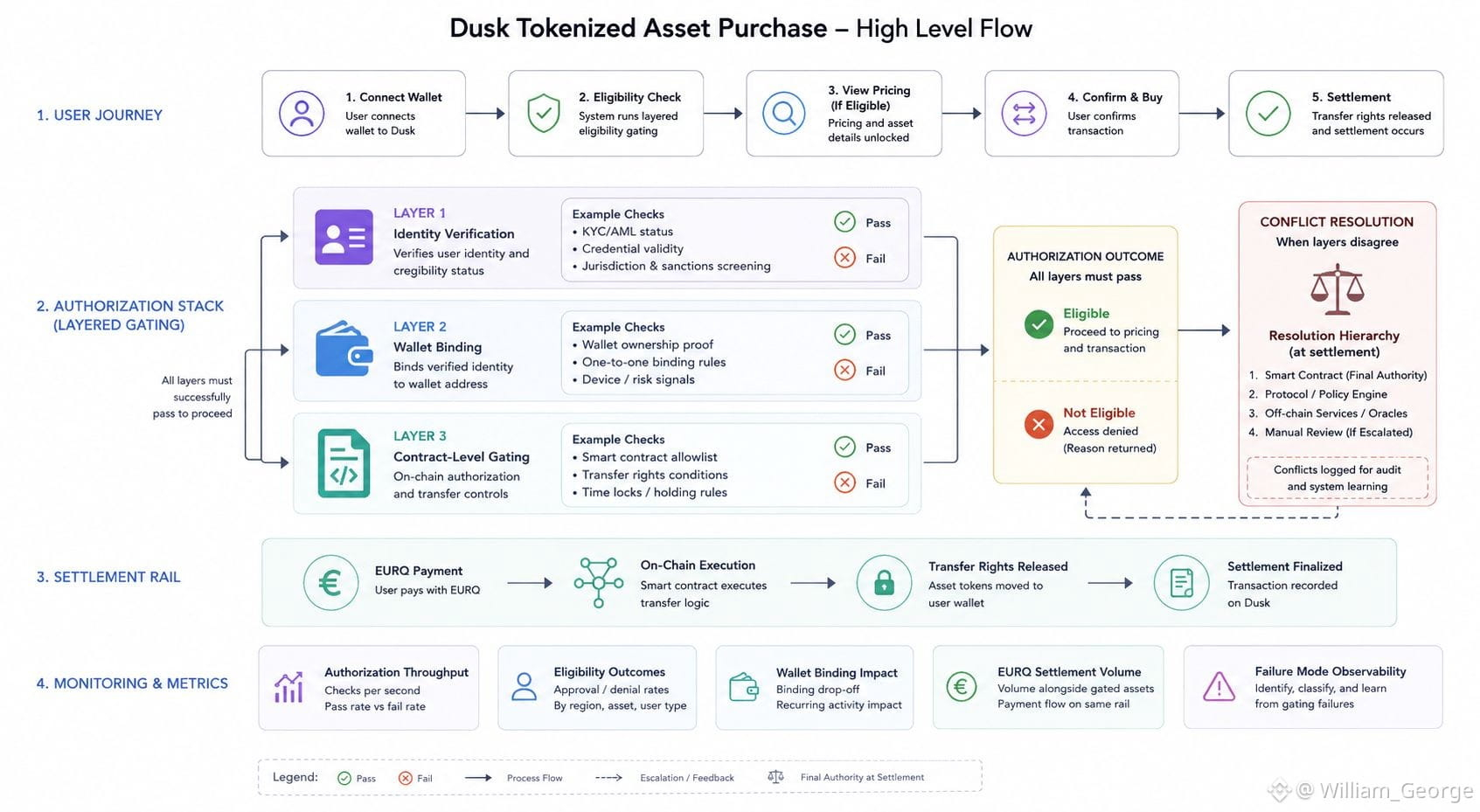
I noticed something odd while testing a wallet flow on Dusk last week. I assumed connecting and buying a tokenized asset would feel like any DeFi swap, fast, permissionless, done in one click. Instead the interface paused me at an eligibility step before I could even view pricing, and that pause is what stuck with me.
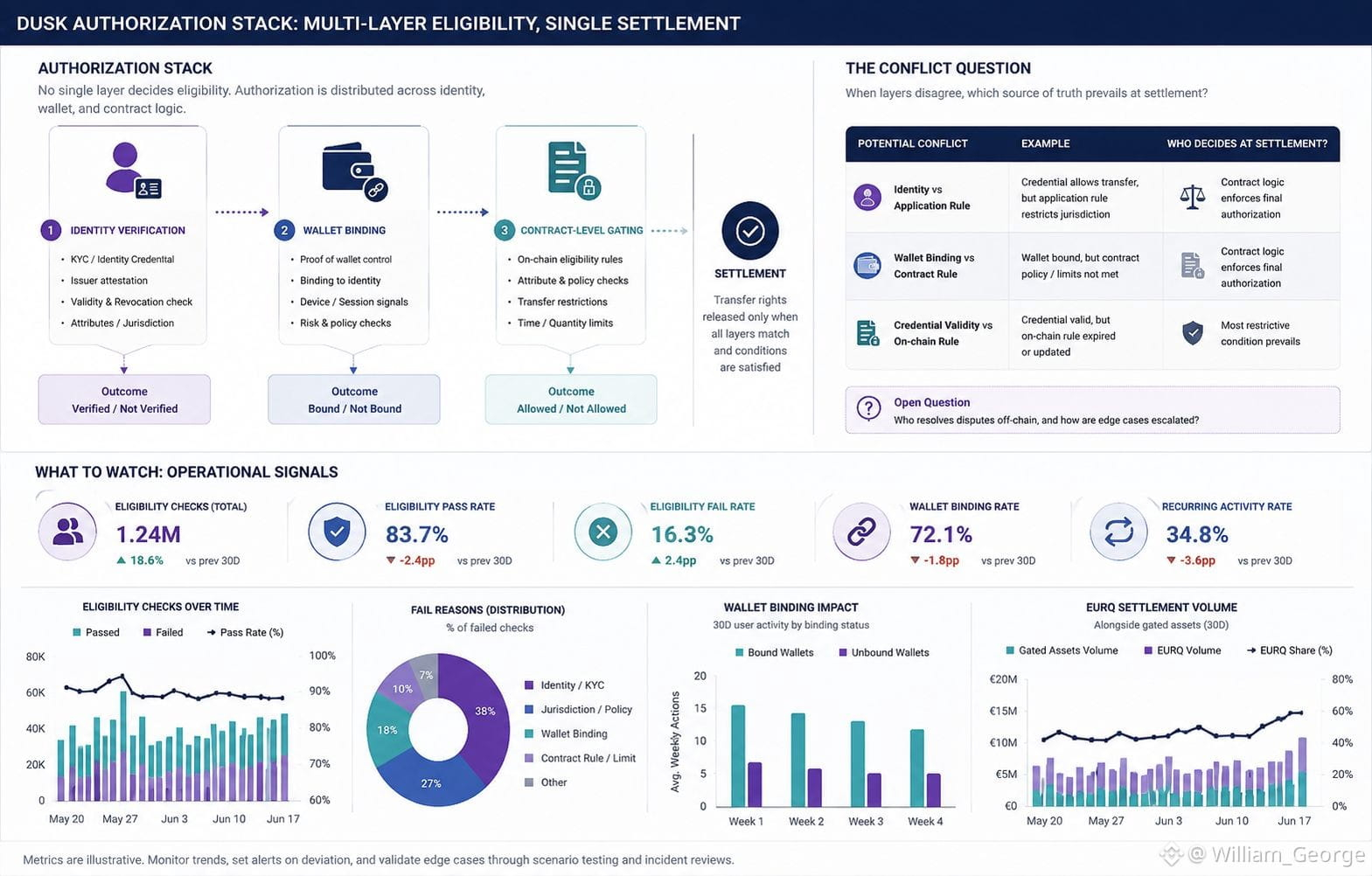
Digging further, I realized this wasn't a single permission check but several stacked together: identity verification, a wallet binding step, and contract-level gating that only released transfer rights once both conditions matched. No single layer decided eligibility alone, the authorization was distributed across the stack itself.
That distinction reframed how I think about "compliant" versus "gated." Most traders treat those as the same thing, but here compliance is the outcome while gating is the mechanism, and the mechanism itself has multiple independent checkpoints that could theoretically disagree with each other.
Which raises a real operational question for me: if a credential says one thing and an application-level rule says another, which one wins at settlement, and who resolves that conflict in practice. I don't have a clean answer, and I'm not sure the system has fully stress-tested that edge case yet.
Going forward I'm watching authorization throughput, how often eligibility checks fail versus pass, whether wallet-binding creates friction that suppresses recurring activity, and how EURQ settlement volume behaves alongside these gated assets, since payment flow and access flow now sit on the same rail.
I keep coming back to one open thought: does layering eligibility across identity, wallet, and contract logic make the system more resilient under stress, or does it just make failure modes harder to predict until one actually happens.
@Dusk #dusk $DUSK
Digging further, I realized this wasn't a single permission check but several stacked together: identity verification, a wallet binding step, and contract-level gating that only released transfer rights once both conditions matched. No single layer decided eligibility alone, the authorization was distributed across the stack itself.
That distinction reframed how I think about "compliant" versus "gated." Most traders treat those as the same thing, but here compliance is the outcome while gating is the mechanism, and the mechanism itself has multiple independent checkpoints that could theoretically disagree with each other.
Which raises a real operational question for me: if a credential says one thing and an application-level rule says another, which one wins at settlement, and who resolves that conflict in practice. I don't have a clean answer, and I'm not sure the system has fully stress-tested that edge case yet.
Going forward I'm watching authorization throughput, how often eligibility checks fail versus pass, whether wallet-binding creates friction that suppresses recurring activity, and how EURQ settlement volume behaves alongside these gated assets, since payment flow and access flow now sit on the same rail.
I keep coming back to one open thought: does layering eligibility across identity, wallet, and contract logic make the system more resilient under stress, or does it just make failure modes harder to predict until one actually happens.
@Dusk #dusk $DUSK
Verified
#dusk
banks won't touch public chains and it's not complicated
everyone acts like it's some mystery
it's not
public mempool = everyone sees your trade live
your position, your counterparty, your whole book
for us that's tuesday
for a bank that's a lawyer standing up mid-meeting like absolutely not
not that compliance teams don't get crypto
they get it fine
they just can't sign off on broadcasting the entire book to the internet
so what did everyone build instead
privacy bolted on from the side
mixers
permissioned chains
works great until someone needs proof a transfer limit held and the proof lives in a totally different system
dusk's whole bet with XSC
that separation IS the bug
compliance inside the contract, not next to it
whitelists, transfer caps, dividends baked straight into execution
mechanism's zero-knowledge execution
phoenix and moonlight doing the heavy lifting
prove the transaction followed the rules without showing the data
kind of elegant honestly
been watching this months and still flip flop weekly
wait — back up
almost talked myself into being impressed there
clean technical answer to "hide data, prove it's legal"
not the same as
"will an actual bank put a bond on this by 2028"
different problems
crypto acts like they're the same
they're not
institutions don't run on dev cycles
they run on risk committee cycles and legal sign-off
audits, VPs needing cover if it blows up
that clock runs in years, not sprints
correct architecture can still starve waiting on that clock
does XSC solve transparency
technically — maybe
more convincing than most compliant defi out there
does that mean adoption
no
still sitting on that gap
3am and it's not closing itself $DUSK @Dusk
$DUSK @Dusk
banks won't touch public chains and it's not complicated
everyone acts like it's some mystery
it's not
public mempool = everyone sees your trade live
your position, your counterparty, your whole book
for us that's tuesday
for a bank that's a lawyer standing up mid-meeting like absolutely not
not that compliance teams don't get crypto
they get it fine
they just can't sign off on broadcasting the entire book to the internet
so what did everyone build instead
privacy bolted on from the side
mixers
permissioned chains
works great until someone needs proof a transfer limit held and the proof lives in a totally different system
dusk's whole bet with XSC
that separation IS the bug
compliance inside the contract, not next to it
whitelists, transfer caps, dividends baked straight into execution
mechanism's zero-knowledge execution
phoenix and moonlight doing the heavy lifting
prove the transaction followed the rules without showing the data
kind of elegant honestly
been watching this months and still flip flop weekly
wait — back up
almost talked myself into being impressed there
clean technical answer to "hide data, prove it's legal"
not the same as
"will an actual bank put a bond on this by 2028"
different problems
crypto acts like they're the same
they're not
institutions don't run on dev cycles
they run on risk committee cycles and legal sign-off
audits, VPs needing cover if it blows up
that clock runs in years, not sprints
correct architecture can still starve waiting on that clock
does XSC solve transparency
technically — maybe
more convincing than most compliant defi out there
does that mean adoption
no
still sitting on that gap
3am and it's not closing itself $DUSK @Dusk
$DUSK @Dusk

Verified
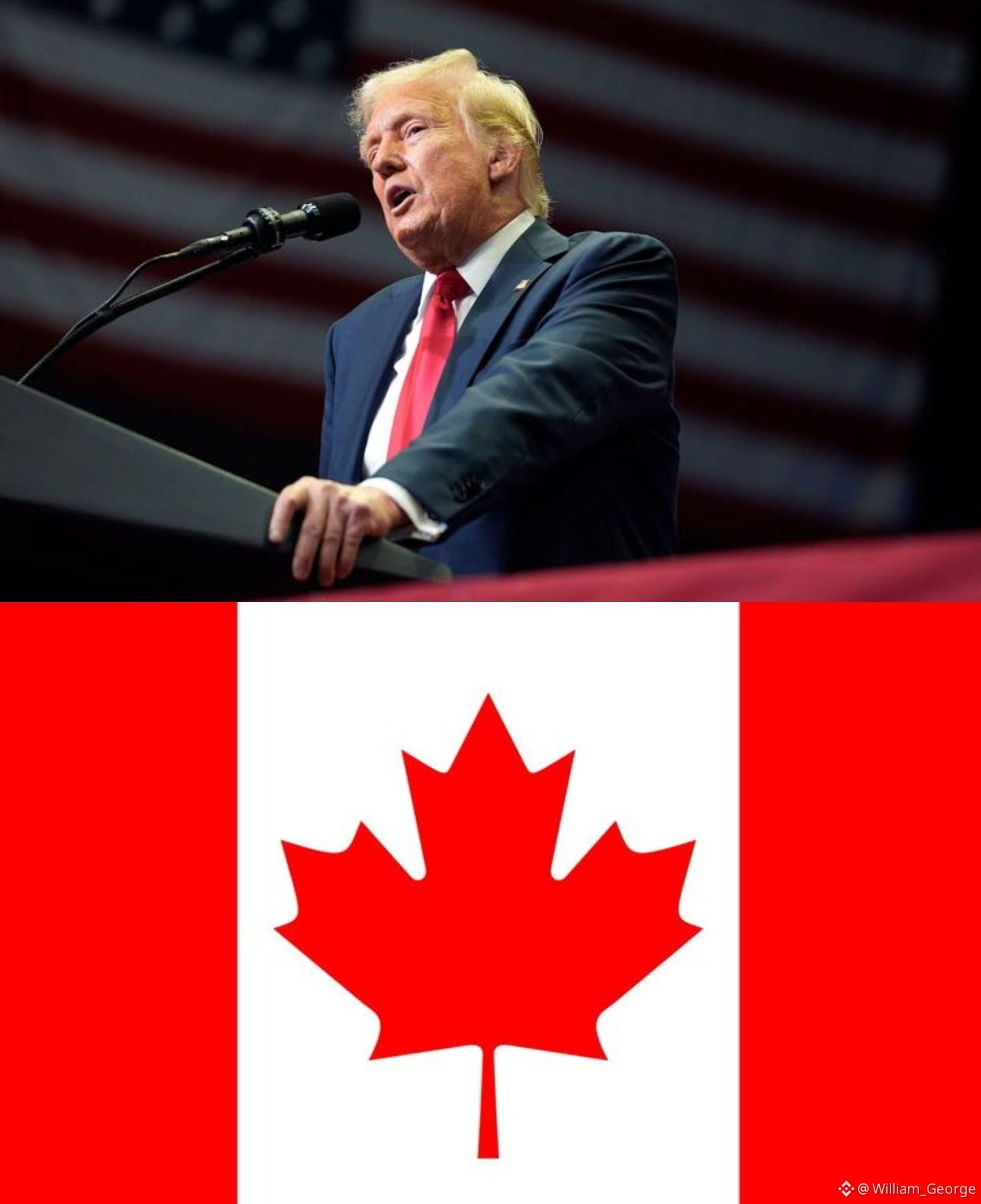
BREAKING: The U.S.-Canada trade war just escalated again.
Trade talks have collapsed.
The U.S. has imposed 50% tariffs on around $20 billion worth of Canadian goods.
Now Canada is hitting back.
Starting September 8, Canada plans to impose dollar-for-dollar retaliatory tariffs on U.S. goods, targeting sectors including steel, electronics, dairy and appliances.
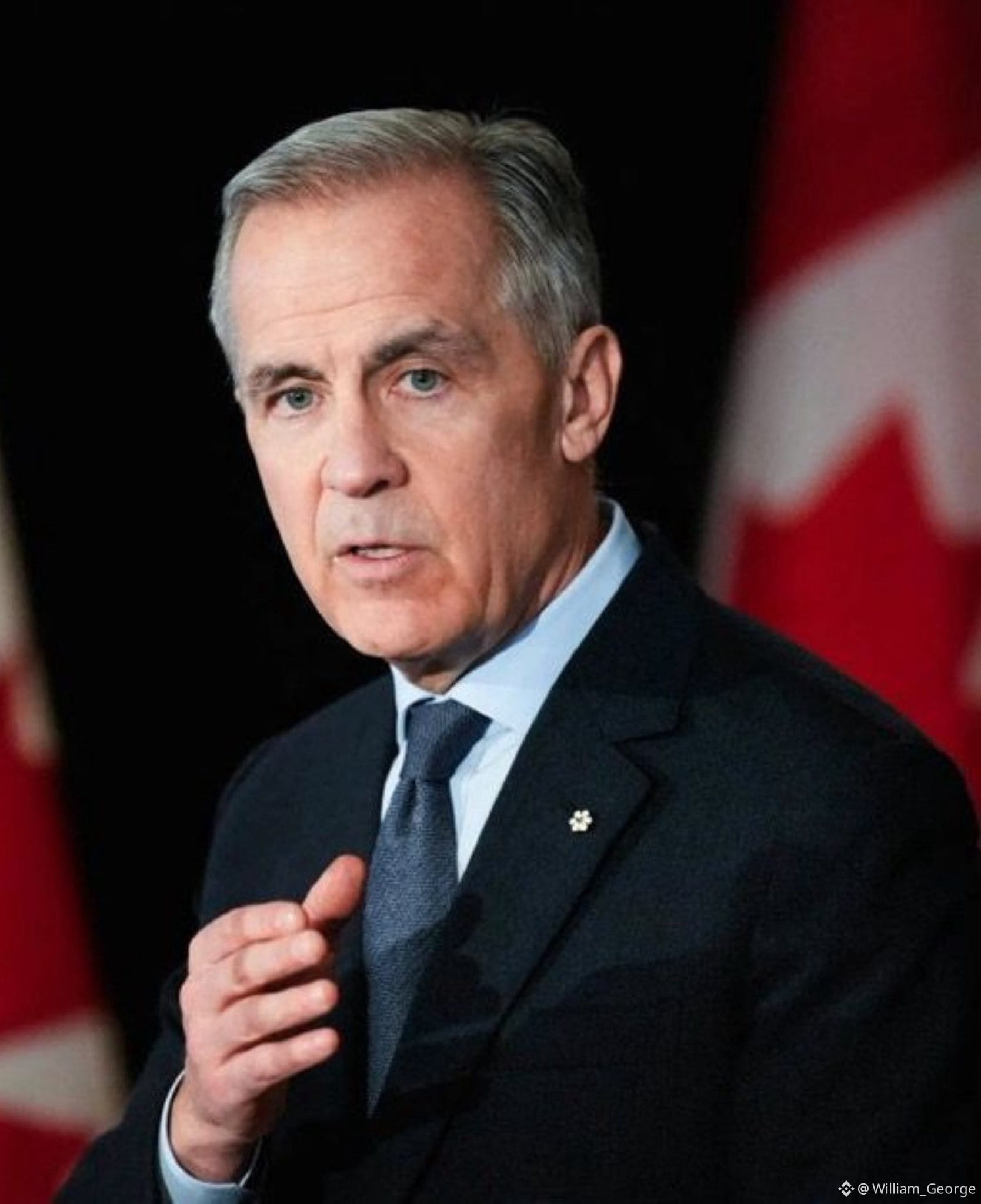
Prime Minister Mark Carney summed up the failed talks with one brutal line:
The U.S. “asked too much and offered too little.”
This is no longer just a negotiation dispute.
Two of the world's closest trading partners are now moving deeper into a tariff war.
And the real question is who ultimately pays the price.
Because tariffs may be aimed at governments and industries, but higher costs often find their way through the economy.
Businesses feel it.
Supply chains feel it.
Consumers feel it.
And markets hate uncertainty.
What started as trade negotiations has now turned into another major economic confrontation.
September 8 is the next date to watch.
Trade talks have collapsed.
The U.S. has imposed 50% tariffs on around $20 billion worth of Canadian goods.
Now Canada is hitting back.
Starting September 8, Canada plans to impose dollar-for-dollar retaliatory tariffs on U.S. goods, targeting sectors including steel, electronics, dairy and appliances.
Prime Minister Mark Carney summed up the failed talks with one brutal line:
The U.S. “asked too much and offered too little.”
This is no longer just a negotiation dispute.
Two of the world's closest trading partners are now moving deeper into a tariff war.
And the real question is who ultimately pays the price.
Because tariffs may be aimed at governments and industries, but higher costs often find their way through the economy.
Businesses feel it.
Supply chains feel it.
Consumers feel it.
And markets hate uncertainty.
What started as trade negotiations has now turned into another major economic confrontation.
September 8 is the next date to watch.
Log in to explore more content