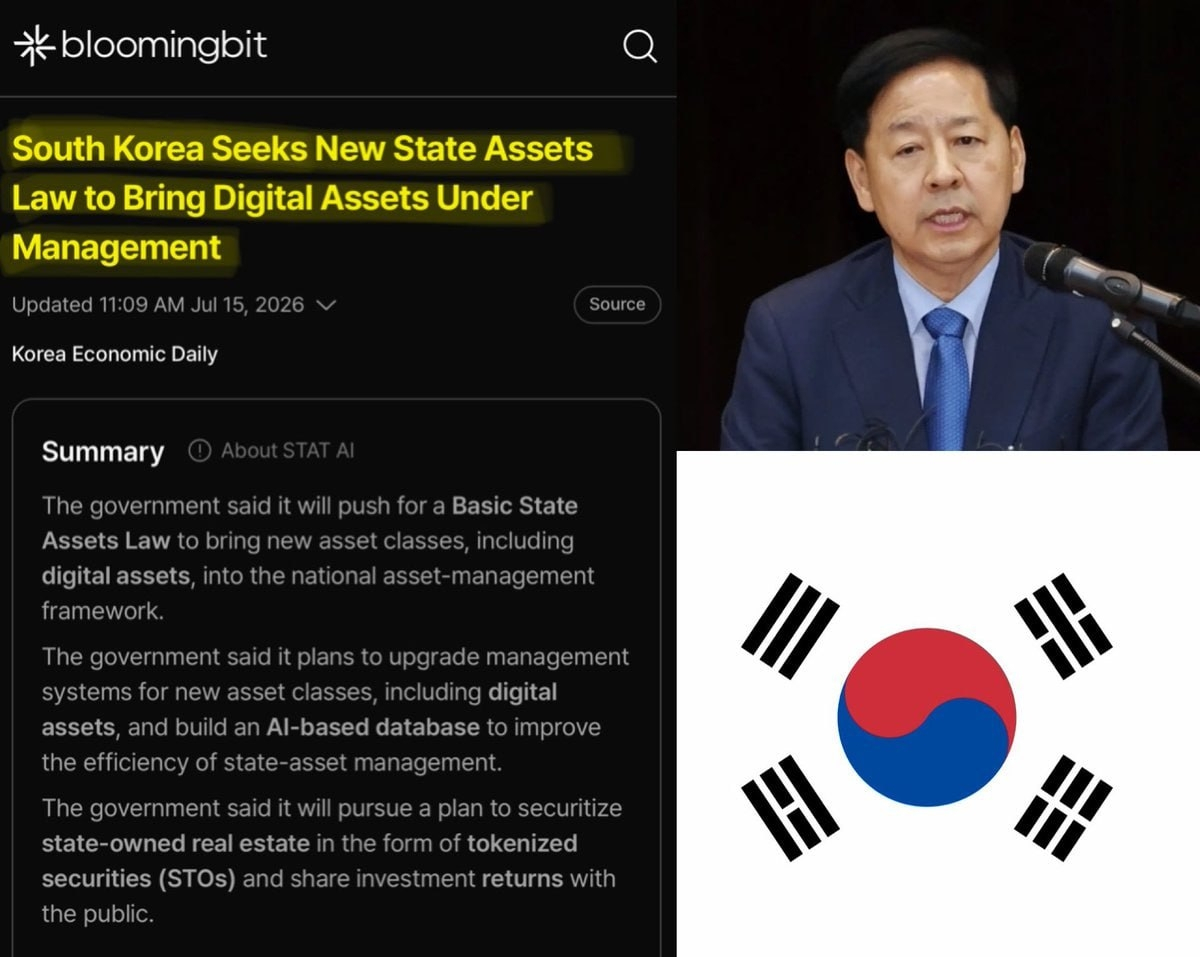
🇰🇷 South Korea will include digital assets in a new public asset management system
South Korea is preparing an update to the rules for managing state assets. The new system wants to include not only real estate and traditional assets, but also digital assets, intellectual property, and tokenized instruments.
➡️ What happened
🟡 The Ministry of Economy and Finance of South Korea is preparing the National Asset Basic Act
🟡 The new law is expected to replace the old State Property Act of 1950
🟡 Digital assets and intellectual property must be included in the definition of state assets
🟡 The goal is to move away from the old model of asset registration toward a system capable of creating value
➡️ Why does this matter
🟡 South Korea remains one of the world’s most active retail crypto markets
🟡 If digital assets enter the public asset system, this will be a strong regulatory signal
🟡 The state is starting to look at blockchain not just as a market for traders, but as infrastructure for asset management
🟡 This could accelerate the development of tokenization within the country
➡️ What do they want to tokenize
🟡 In 2027, a pilot is planned for the tokenization of government bonds
🟡 This format should reduce operating costs
🟡 The authorities are also studying the tokenization of state-owned real estate
🟡 The idea is to open up more opportunities for retail investors and share part of the returns with the population
➡️ How does this connect to the CBDC
🟡 South Korea is also preparing a pilot that connects tokenized government bonds to the CBDC infrastructure
🟡 The authorities are studying the compatibility of the central bank’s digital currency with other blockchains
🟡 This plan is part of a broader strategy to create a “blockchain economy”
🟡 The first measures in this direction should be presented this year
➡️ What else is changing
🟡 Starting at the end of 2026, the full launch of a project with tokenized deposits for public spending is expected
🟡 In February 2027, changes regarding tokenized securities are expected to take effect
🟡 Blockchain records may receive legal recognition as securities records
🟡 Tokenized assets will move out of the experimental zone and be under full regulatory supervision
Conclusion: South Korea is gradually building the foundation for a state blockchain infrastructure. If the plans reach implementation, digital assets, tokenized bonds, real estate, and CBDC will become part of a single system—not separate experiments.