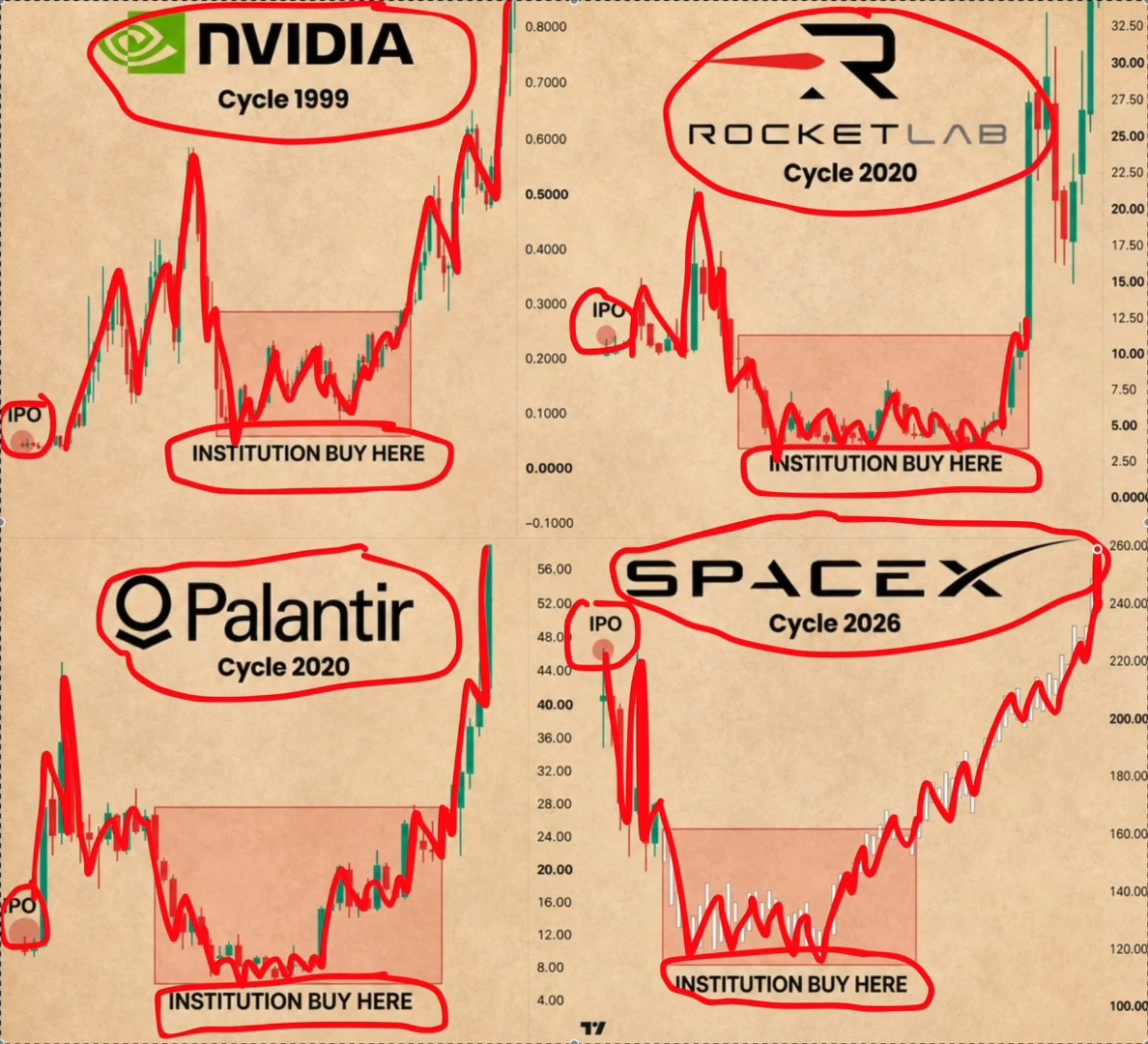
History does not repeat itself, but it rhymes with uncanny intelligence in financial markets.
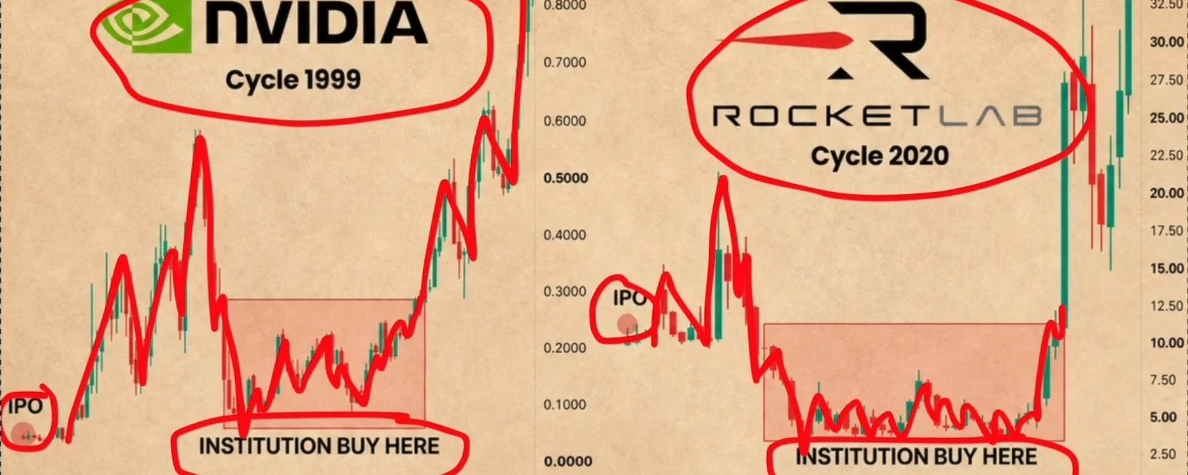
Look at NVIDIA in 1999:
$0.05 ← $0.55 ← $0.08 ← $0.90 (after a stock split adjustment)
Look at Rocket Lab in 2020:
$10 ← $17 ← $3 ← $32+
Look at Palantir in 2020:
$10 ← $36 ← $7 ← $58+
Each of these giant companies that reshaped the world followed the exact same psychological cycle:
Initial offering hype and massive media promotion ← a savage crash that spills blood in the streets ← silent, quiet accumulation by major institutions ← new historical highs.
Small investors always rush to buy at the absolute top—specifically when the media screams: This is the future!
But the smart money? Sits calmly, watches the panic, and waits for the bloodbath to end before seizing the opportunities.
Now, SpaceX is following the exact same playbook—only in the private secondary markets of unlisted companies.
While small investors wait in despair for a public offering in the stock market that won’t happen anytime soon, large institutions are actively trading SpaceX shares behind the scenes. And the volatility behind closed doors was insane:
$150 ← $215 ← $110 ← $230+
We’ve recently seen a lull in valuations, with the price dropping from the $215 peak price premium back to around $135.
But don’t misunderstand: the real accumulation zone for institutions sits at lower levels than that. The big, massive funds are waiting to snatch liquidity between levels:
$110 - $125
The general public won’t be able to enter until the final public offering (IPO) happens on the exchange—often at an outrageously inflated price premium. By then, institutions will have already multiplied their money by 3 to 5 times their original capital.
Enable alerts now.
I’m closely monitoring the secondary market data, and I’ll post here the exact price levels at which heavy institutional buying of SpaceX shares will begin. Don’t let the train leave without you.