
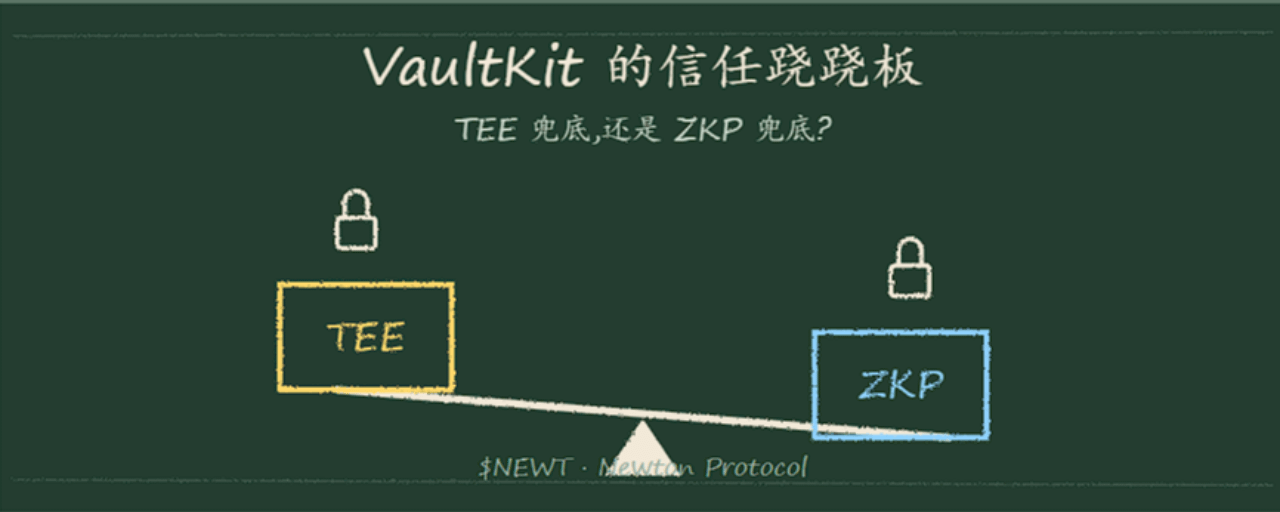
Newton Protocol’s VaultKit architecture combines TEE (trusted execution environment) and ZKP (zero-knowledge proofs). The official narrative is "dual validation, minimizing trust." But if you take it apart carefully, this combination contains a trade-off that hasn’t been discussed thoroughly.
The security of TEE is built on the credibility of hardware vendors—whether it’s Intel SGX or similar solutions, issues such as side-channel attacks and memory leaks have been exposed over the past few years. In other words, VaultKit’s first layer of protection is essentially "trusting that the chip vendor hasn’t been compromised." This conflicts with the philosophy of purely on-chain verification.
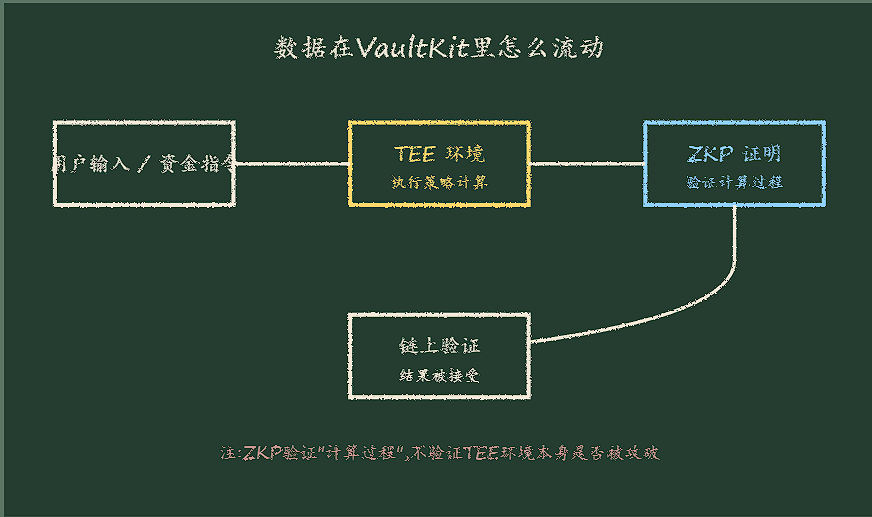
This layer of ZKP addresses the issue of "verifiable computation process," but it only verifies whether the result produced by the TEE environment was executed correctly—not whether the TEE environment itself has been compromised. In other words, if the TEE is breached and an attacker forges the inputs, the ZKP will still consider the "computation correct."
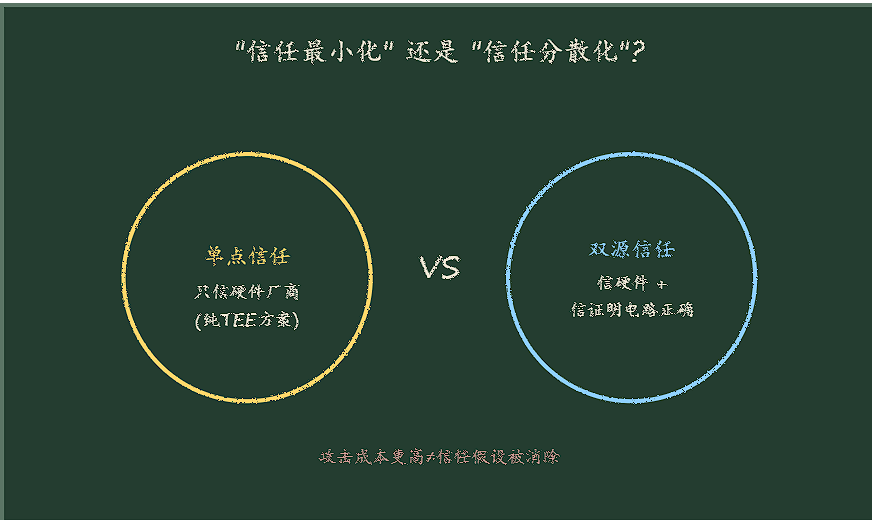
This does not mean that VaultKit’s design is flawed. From an engineering perspective, TEE+ZKP is indeed harder to compromise than a single solution, with higher attack costs. But the claim of "minimizing trust" may have a bit of marketing flavor; a more accurate description might be "trust decentralization": splitting single-point trust into two independent trust sources, rather than completely eliminating trust assumptions.
For institutional users with large amounts of capital, this distinction is very important. Do you think the combination of TEE+ZKP should also have an independent audit disclosure mechanism specifically for hardware-layer risks?
This article is solely a personal technical observation and discussion and does not constitute any investment advice.