Bank of Japan Minutes: Rate hikes have just begun, far from the end
The latest minutes from the December meeting confirm market speculation that Japan's rate hike cycle is far from over. The minutes show that committee members candidly stated, "Currently, Japan's actual policy interest rate is undoubtedly the lowest in the world." This means that, although the rate has been raised to 0.75% in December, it remains in a very low stimulus range, still quite far from neutral levels.
Adjusting policy every few months
One committee member clearly stated that the central bank should adjust its policy every few months, which is generally consistent with the market's expectation of a gradual but continuous rate hike path.
Neutral interest rate may be between 1%-2.5%
The Bank of Japan's research suggests that the neutral interest rate is roughly within this broad range. The current level of 0.75% clearly has not reached a state of "neither stimulating nor restricting."
Rate hike pace may continue until 2027
Former executive director Hideo Hayakawa predicts that rates may rise to 1.50% by early 2027. A Bloomberg survey shows that most economists predict another rate hike in six months, with the terminal rate looking towards 1.25%.
Exchange rates and inflation remain key drivers
Although the term yen was only mentioned once in this minutes, several committee members expressed concerns about excessive exchange rate fluctuations and input inflation. The trend of exchange rates was actually referenced four times, indicating it remains an important consideration in policy.
Although the government of Suga Yoshihide did not oppose this rate hike, it emphasized the need to pay attention to corporate investment and profit prospects, with a cautious tone. The market had previously worried that the new government would pressure the central bank to maintain easing, but the political pressure from inflation and a weak yen seems to have provided tacit space for rate hikes.
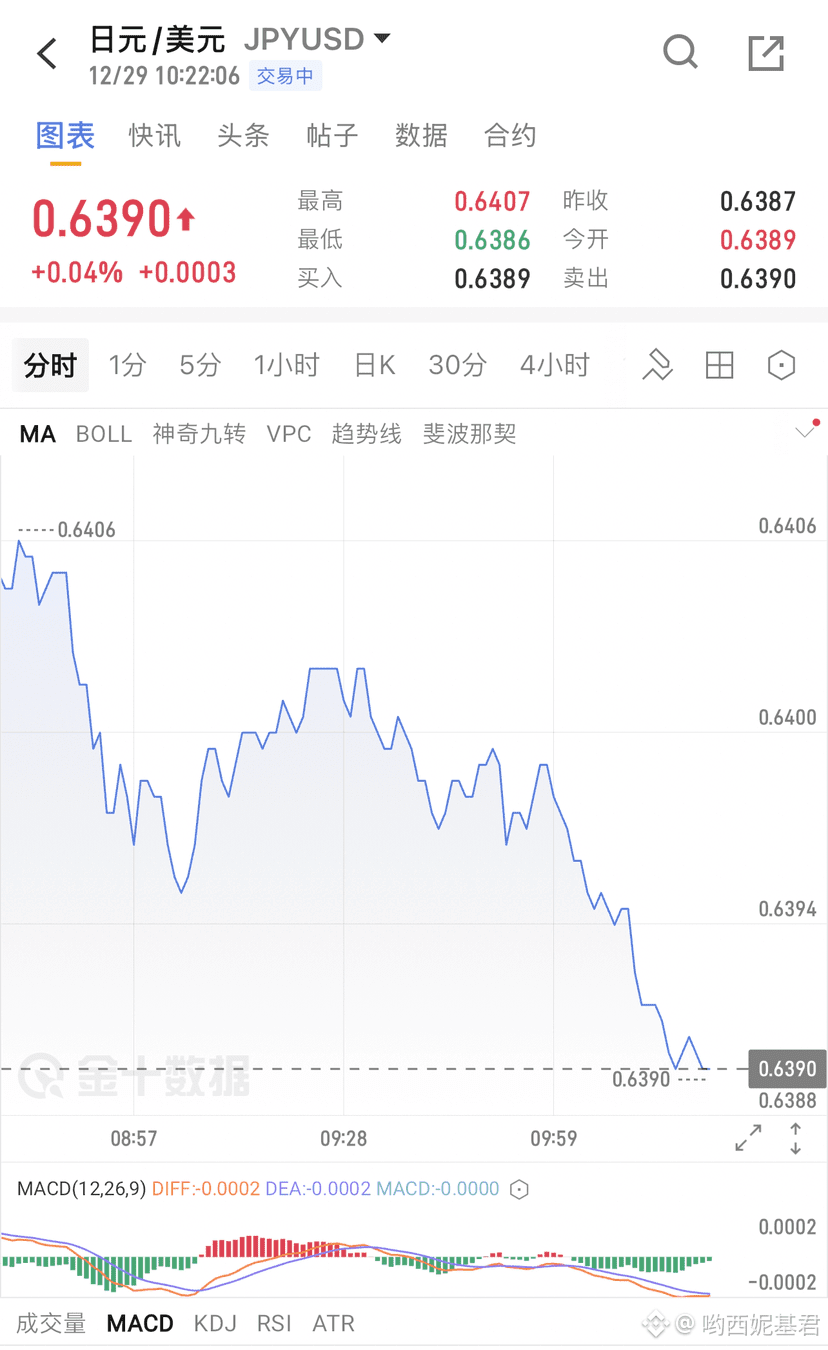
The yen may gradually receive interest rate support in the medium to long term, but short-term trends are still influenced by the Japan-U.S. interest rate differential and intervention expectations; global liquidity may face continued pressure from the repatriation of Japanese funds, particularly in overseas assets like U.S. Treasuries; the extension of the rate hike cycle means that Japan will gradually shift from being a source of cheap global funding to a participant in interest rate normalization, which poses a long-term variable for markets reliant on yen carry trade.
The Bank of Japan is on a slow and steady path towards rate hikes. 0.75% is not the end, but may just be a way station. In the narrative of global liquidity shifting, Japan is quietly playing an important role that cannot be ignored.
$BTC $ETH $SERAPH #加密市场观察