Everyone’s saying that Saylor’s selling is “forced liquidation to cut losses,” but I think these people just don’t understand the logic of how capital moves.
The strategy is basically out in the open: selling $BTC worth $1.25 billion. Over 24 hours, the price was dumped from 64,200 down to 61,520—down nearly 3%. Exchange supply really did drop to a nine-year low, but that’s because the on-chain hoarder crowd is locking up coins, not because longs are buying. One side is institutions unloading, the other side is retail getting stuck with the bags. This kind of structure is more disgusting than a simple sell-off.
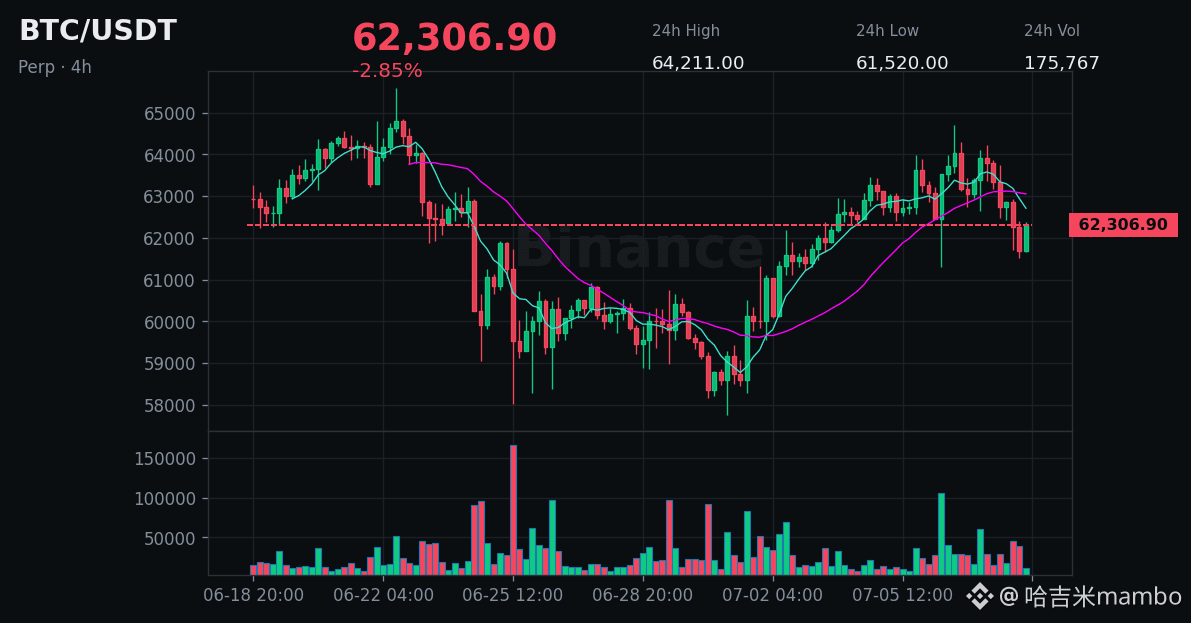
The most important part isn’t even the price itself—it’s the 62,000 level. Both bulls and bears are betting on it. The bulls point to fundamentals: Saylor just said fees dropped to $0.3, cash reserves increased by 13%, and holdings are still being added. The bears focus on the 3,588 coins that were sold at a loss of $15,500, saying the narrative that “Saylor never sells” is already dead. Both sides have their arguments, but the chart doesn’t lie. From 64,211 downward, each rebound is weaker than the last, and each low is lower than the previous one—that’s the typical bear-driven rhythm.
Look at another detail: today’s low was 61,520, which is only about 300 points away from the 61,200 technical support. Bulls stacked orders around 61,500, but the trading volume didn’t follow, and the funding rate is still negative. So what does that mean? It means this isn’t a “strong support,” it’s a “passive defense.” If 61,200 gets swept through, the next target will be the liquidity pool between 50,000 and 49,000.
The disagreement is clear: do you believe institutions are accumulating at lower levels, or do you believe the forced-seller will keep smashing? My take is simple—until the market closes back above with volume, don’t replace charts with faith.
$BTC
#机构出货 #多空博弈 #支撑位
The strategy is basically out in the open: selling $BTC worth $1.25 billion. Over 24 hours, the price was dumped from 64,200 down to 61,520—down nearly 3%. Exchange supply really did drop to a nine-year low, but that’s because the on-chain hoarder crowd is locking up coins, not because longs are buying. One side is institutions unloading, the other side is retail getting stuck with the bags. This kind of structure is more disgusting than a simple sell-off.
The most important part isn’t even the price itself—it’s the 62,000 level. Both bulls and bears are betting on it. The bulls point to fundamentals: Saylor just said fees dropped to $0.3, cash reserves increased by 13%, and holdings are still being added. The bears focus on the 3,588 coins that were sold at a loss of $15,500, saying the narrative that “Saylor never sells” is already dead. Both sides have their arguments, but the chart doesn’t lie. From 64,211 downward, each rebound is weaker than the last, and each low is lower than the previous one—that’s the typical bear-driven rhythm.
Look at another detail: today’s low was 61,520, which is only about 300 points away from the 61,200 technical support. Bulls stacked orders around 61,500, but the trading volume didn’t follow, and the funding rate is still negative. So what does that mean? It means this isn’t a “strong support,” it’s a “passive defense.” If 61,200 gets swept through, the next target will be the liquidity pool between 50,000 and 49,000.
The disagreement is clear: do you believe institutions are accumulating at lower levels, or do you believe the forced-seller will keep smashing? My take is simple—until the market closes back above with volume, don’t replace charts with faith.
$BTC
#机构出货 #多空博弈 #支撑位