


That being said, you say, you have a job that earns 10,000 a month.
But in the cryptocurrency futures market, if you take 10,000 as the principal and do a 100x contract, as long as it increases by 1%, you can earn 10,000.
A 10% increase means 100,000; with a year's salary in hand, it only takes a few minutes.
The key thing is this, open 24 hours, all year round.
Those with methods and skills are in paradise, while those without are in 'hell' overnight!
How many people do you think earn more than 10,000?
How many people have 100,000 a year?
In the cryptocurrency market, those playing futures, besides the big funds taking small positions as spot traders, are the experts.
Only small-scale gamblers relying on leverage and wealth accumulation in the cryptocurrency market face fluctuations; in extreme market conditions, a one-second fluctuation can be 1-2%, which is just luck; you can earn your month's salary in a second, or a year's salary in a few minutes.
Monthly salary: 3,000 yuan, annual income: 36,000 yuan, lifetime income: 1.44 million yuan.
Monthly salary: 4,000 yuan, annual income: 48,000 yuan, lifetime income: 1.92 million yuan
Monthly salary: 5,000 yuan, annual salary: 60,000 yuan, lifetime salary: 2.4 million yuan.
Monthly salary: 6,000 yuan, annual salary: 72,000 yuan, lifetime salary: 2.88 million yuan.
Monthly salary: 7,000 yuan, annual salary: 84,000 yuan, lifetime salary: 3.36 million yuan.
Monthly salary: 8,000 yuan, annual income: 96,000 yuan, lifetime income: 3.84 million yuan
Monthly salary: 9,000 yuan, annual income: 108,000 yuan, lifetime income: 4.32 million yuan.
Monthly salary: 10,000 yuan, annual salary: 120,000 yuan, lifetime salary: 4.8 million yuan
Monthly salary: 20,000 yuan, annual salary: 240,000 yuan, lifetime salary: 9.6 million yuan.
Monthly salary: 30,000 yuan, annual salary: 360,000 yuan, lifetime salary: 14.4 million yuan.
Monthly salary: 40,000 yuan, annual salary: 480,000 yuan, lifetime salary: 19.2 million yuan.
Monthly salary: 50,000 yuan, annual income: 600,000 yuan, lifetime income: 24 million yuan
Very few people earn more than 10,000 yuan a month, and even fewer earn more than 20,000 yuan a month. Most people earn less than 10,000 yuan a month. It feels like the money that ordinary people earn in their entire lives is only enough to buy a house!
To successfully trade cryptocurrencies, master contracts, and make money in this market, you must first do the following:
Ten years of cryptocurrency trading: from losing everything to snowballing losses – my 10 hard-earned survival rules.
I entered the crypto world in 2015. From losing all my living expenses to slowly snowballing my fortune, my biggest takeaway is: the crypto world is a master of dealing with all kinds of people, but the rewards...
For those who are willing to slow down. Today, let's skip the small talk and get straight to the point. These insights might sound harsh, but they can help you preserve your capital.
1. With little capital, you should be even more confidently timid.
If your total capital is less than 200,000, focus on 1-2 major upward trends per year, and take profits when you've reached your target. Don't try to be like those who constantly monitor the market and frequently change investments; you're not a professional trader, and transaction fees and time costs will drain you dry. I've seen too many people lose their initial capital to four figures simply because they always try to "seize every opportunity."
2. Playing on a demo account isn't shameful; losing everything is.
Money earned by luck in a bull market can vanish in an instant in a bear market. Before investing real money, practice on a demo account to develop a feel for the market and build the right mindset. I spent three months on an OKEx demo account before figuring out whether spot trading or short-term trading suited me best. Without proper understanding, money earned by luck will eventually be lost.
3. Is the good news already priced in? Run!
If a project suddenly receives a major positive development, and you didn't sell on the first day, the subsequent gap-up opening the next day often presents the last window of opportunity to exit. The market loves to distribute shares amidst cheers.
For example, once I stubbornly held on until the day after the positive news was released, and my profits dropped by 30%. Remember: when the news is released, it is often the peak.
4. Tie your hands together before the holiday.
The A-share market experiences a holiday effect, but this is even more pronounced in the cryptocurrency market. Reducing or going to cash a week before a major holiday is a strategy that, while historical patterns won't repeat themselves, creates similar traps. For example...
There's a high probability of a market crash before National Day and other holidays every year; don't gamble on low-probability events.
5. Medium- to long-term investing doesn't mean holding indefinitely; it means rolling over positions.
Crypto hoarders and those who prefer to lie low! I'll keep 30% cash, selling a little every time the price rises by 20%, and buying a little more when it drops by 10%. Like a farmer cultivating the land, I'll cycle through sowing and harvesting, not like a gambler going all-in. Cash flow is your oxygen tank; without it, a crash can suffocate you.
6. For short-term trading, only trade "active" cryptocurrencies.
Don't waste your time trading coins with stagnant charts and the lowest trading volume. I only trade the top 20 coins by daily trading volume. They have high volatility and good liquidity, so even if you make a wrong judgment, you can quickly cut your losses. Liquidity is the best protection for short-term traders.
7. Don't sell at a loss during a sharp drop, and don't try to buy the dip during a slow decline.
A 50% plunge? Often followed by a violent rebound (see the 312 incident in 2020); a six-month slow decline? Buying the dip is like catching a falling knife. My experience: a sharp drop is the market giving away money, a slow decline is the market slowly being tortured.
8. Stop-loss is the oxygen that keeps you alive.
If you place a wrong order, admit it immediately. Don't fantasize that "waiting will bring you back to your original position." My first account blowout was caused by holding onto a losing position, going from a 10% loss to total loss. Now, set hard stop-loss lines: -5% for short-term trades and -15% for medium-term trades. Once you've lost your capital, all other opportunities will go to others.
9. Short-term trading tools: 15-minute candlestick chart + KDJ indicator
For intraday trading, this combination helps me maintain a 70% win rate, but remember: tools are just aids; decision-making relies on your brain. Don't get obsessed with indicators; the only constant in the crypto world is change.
10. One trick is all you need to make a living.
Some people achieve financial freedom by accumulating Bitcoin, while others make a fortune trading futures. Don't change strategies every day; mastering one or two is enough. I've been consistently trading spot and swing trading for five years—slow, but safe. Those who chase the latest tactics are often the ones who get burned the most.
A heartfelt statement
The cruelest truth about CoinMo is that most people don't lose to the market, they lose to themselves—buying highs out of greed and selling at a loss out of fear, in a vicious cycle. If you consistently miss out on opportunities or get trapped in losses, stop and analyze your trades: is it a strategy problem, or a mental breakdown?
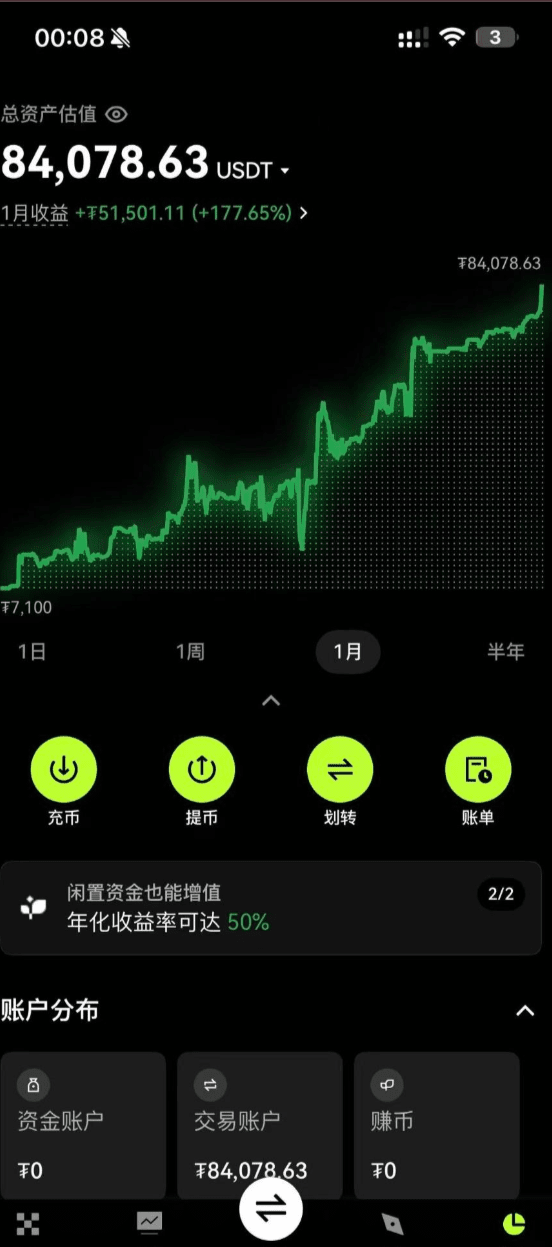
Not enough capital? I used three tricks to carve out a path in the crypto world!
A practical review of how a product started with 1200U and grew to 84,000U in 6 months.
Today I'm sharing a strategy that I and my students have personally tested and proven to help small capital break through the current market. It's suitable for those with less than 1500 USDT in capital who want to use futures contracts to roll over their positions but are afraid of being liquidated.
Players who consistently achieve zero margin calls throughout the entire process rely not on luck, but on discipline and strategy!
The first strategy: warehouse management, with "survival" etched in your mind.
The principal is divided into three parts, each with a clear purpose, and they will never be mixed up!
400U specializes in short-term trading: a maximum of 2 trades per day, avoiding frequent trading, focusing only on the most volatile periods in the morning and night sessions, and shutting down the computer at other times to avoid emotional fluctuations.
400U trend-following strategy: Avoid range-bound markets and wait for major trend signals (such as a breakout of key resistance levels or a significant drop in volume). Patience is key.
Technical skills are more important; sometimes I only make one move a week.
Keep 400 USDT as a lifeline: Even if you lose everything in the first two bets, this money will give you a chance to turn things around. Many people lose everything in one all-in bet.
Go ahead, don't repeat the same mistakes!
My view: For small capital to survive, the first step is to learn how to "divide the spoils." Gamblers go all-in; smart people use position management to combat black swan events!
The second strategy: Only take the "fat meat" and abandon the less desirable options.
The simpler the market information, the easier it is to make money!
Ignore volatile markets: 9 out of 10 volatile markets result in losses, why bother? I use Bollinger Bands contraction to identify volatile markets; I stop trading immediately once they narrow.
Hands, etc., indicate the direction.
Only enter a position after confirming the trend: for example, if Bitcoin breaks through its previous high and holds above the 2-hour moving average, or breaks down below the support level with significant volume, then open a position. Don't try to predict the top.
At the bottom, just follow the market.
Profits exceeding 30% are taken in half first: This is an ironclad rule! For example, if a trade earns 120 USD, immediately withdraw 60 USD to your wallet, and the rest continues to accumulate.
Safety is the true measure of profit; otherwise, it's just numbers!
My view: Many people lose money because they try to trade in every market condition. Remember, you only need to make money during clear trends, and spend the rest of the time relaxing and watching!
The third tactic: mechanical operation, locking emotions in a cage.
Rules are more important than mindset; execution determines life or death!
A 3% stop-loss is executed unconditionally: the stop-loss line is set immediately upon opening a position. Even if the price rebounds right after the stop-loss is triggered, there will be no regrets—preserving capital is more important than missing out.
Set a stop-loss order to protect your capital if you make a 10% profit: For example, if you earn 40 USDT, immediately move the stop-loss to the entry price to make the trade "zero risk." After that, let the price rise or fall as it may, as long as you don't lose your principal.
Refusing to stay up all night monitoring the market: I only spend 15 minutes each day reviewing the market, placing limit orders with the necessary conditions, and then I go about my other tasks. The market doesn't lack opportunities; what it lacks is a clear head!
My view: Contracts are not gambling, but a game of probability. Reducing subjective judgment through rules is the key to long-term survival!
In summary, the key to managing small amounts of capital is "survival."
The key to this method is not exorbitant profits, but compound growth under controllable risk. Students who started with 1200U saw their accounts grow to 84,000U in 6 months. This was not due to amazing skills, but to portfolio diversification, waiting for opportunities, and adherence to discipline.
The worst thing in the crypto world isn't being broke, but being broke and dreaming of getting rich overnight. Survive first, then talk about making money! If you're also trying to earn money with a small amount of capital...
Zha, why not start changing these three habits today:
Avoid frequent transactions – reduce the number of transactions and improve the quality of each individual transaction;
Don't stubbornly hold onto losses—stop-loss is a life jacket, not a disgrace;
Don't be greedy for all profits—the market always offers another opportunity!
Remember: slow is fast, steady is ruthless!
I am Yiyan, and I have experienced multiple bull and bear markets and have rich market experience in various financial fields. Here, I will help you see through the fog of information, discover the real market, seize more wealth-generating opportunities, and find truly valuable opportunities. Don't miss out and regret it!
Are you still getting liquidated by trading cryptocurrency futures on 15-minute charts? I advise you to first understand these 5 fatal misconceptions about "daily chart trading".

Frankly, most traders have absolutely no interest in larger timeframes.
They're too slow—by comparison, they prefer to stay on the 5-minute and 15-minute charts, which are known as the "retail slaughterhouse."
We've all experienced this: margin calls, feeling frustrated by failures, and then constantly wondering where things went wrong.
As you keep replaying those images in your mind, you'll eventually start to wonder: "Which time period is best for me?"
This is a question many traders are eager to answer.
In social groups, you'll notice that most traders are drawn to, and even enthusiastically promote, various scalping or day trading strategies.
You might even have used this logic: "If everyone else is doing it, then it must be right, right?"
Nine times out of ten, traders follow the crowd in this way, resulting in the use of fatal high-frequency trading strategies in fast-paced timeframes.
He briefly mentioned that he then smashed his head open and bled profusely.
When traders come to me asking why they are performing poorly, I suggest they switch to the daily chart level.
Almost every time, I was met with strong resistance—most people are very hesitant to move to a higher time frame.
The reason most traders are unwilling to change stems from several misconceptions they have about higher timeframes (such as daily charts).
I think it's necessary to clarify these misunderstandings so that everyone can view the market with a more open mind and be more honest about their own trading situation.
Myth #1: Daily charts have "too high transaction costs" and are difficult to trade?
My first piece of advice to struggling traders is to focus their trading decisions on the daily chart level.
But the response I hear most often is:
"My account is so small, how can you expect me to trade day trading?"
If you think so too, I think you can continue reading.
Believing that one "cannot afford" daily chart levels is a very harmful, even self-destructive, misconception. It is precisely this psychological barrier that hinders...
Stop you from moving towards a "winner's mindset".
Your account size does not determine which timeframe you should trade.
All these absurd speculations stem from a flawed idea: "The larger the stop-loss, the higher the risk cost."
That's right. Trading signals based on daily charts generally have wider stop-losses, but you can also capture larger price movements.
In fact, stop-loss orders are not as large as you might imagine—averaging around 50 points. That's not much, especially since you can often use that 50 points...
A small risk can be exchanged for a profit of 250 points.
Those traders who think daily charts are too "expensive" simply don't know how to properly calculate position size.
Position size is calculated using a mathematical formula, allowing you to risk any amount of money with any stop-loss width.
For example, regardless of the width of your stop-loss, you can control the amount of risk. Whether your stop-loss is 10 points or 100 points, you can choose to only risk $100.
If you want, you can even calculate the position size needed to risk only $10 with a 2000-point stop-loss. I calculated it in two seconds:
Risk on EUR/USD: $10, stop loss: 2000 pips = 0.0005 lots.
They are just numbers; the key is knowing how to use them.
If you are using a micro account, you can precisely calculate your position size. For example: with a risk of $5 and a stop loss of 70 points, the position size would be large.
The minimum is approximately 0.007 lots (EUR/USD).
Unless you're taking a ridiculously high risk (like a $20,000 loss with a 10-point stop-loss, requiring a 200-lot position), there's no such thing as a large position.
Small is impossible to calculate.
This is all just simple math, and it should be the foundation of your money management skills! Once you understand position management, you'll never say that again...
Saying things like "the cost of trading on a daily chart is too high".
Myth #2: Is it true that longer timeframes are less profitable than shorter timeframes?
Most traders, especially beginners, fixate on short-term charts because they enter the market with a completely wrong mindset.
Many people believe that the more time you invest, the more you will get in return—because this is a rule that real life teaches us.
In your job, if you are willing to work overtime, and if your boss is a decent person, they will generally reward you for your "extra effort."
But the market doesn't work that way at all; in fact, quite the opposite.
Never bring your real-life intuition and logic into the market—it's a very dangerous mix.
Lower timeframes do generate more trading signals, but the quality of these signals is extremely low.
Trading in environments with 5, 15, or 30-minute charts is essentially just making noise in the trading market.
Yes, larger timeframes don't generate as many signals as smaller timeframes, but trading signals based on the daily chart level:
√ Higher reliability
√ Higher probability of success
More representative of market structure
This is the classic "quality vs. quantity" debate. In the trading market, quality is always more important than quantity.
It's better to make a few high-quality trades than to frequently trade a large number of low-quality signals.
It is obvious that daily charts provide a clearer "global perspective":
You can more easily identify core price movements and better understand market psychology. By simply switching to a daily chart, you can often instantly grasp the market's direction.
In terms of structure, you'll be completely overwhelmed in the short term.
Daily chart signals are more valuable than 15-minute signals because:
√Although it's the same trading signal, the daily chart contains far more data than shorter timeframes.
√ The more data, the higher the signal quality.
√ The higher the signal quality, the stronger its reliability.
√ Daily chart signals show better continuity, and the risk-reward ratio (R:R) is easier to widen.
Signals based on daily charts typically have stronger follow-up momentum, making it easier to achieve a risk-reward ratio of 1:3 or even higher. However, a 15-minute chart signal can often be easily affected and rendered invalid by normal intraday fluctuations. In other words, signals on shorter timeframes are prone to failure due to sudden price swings.
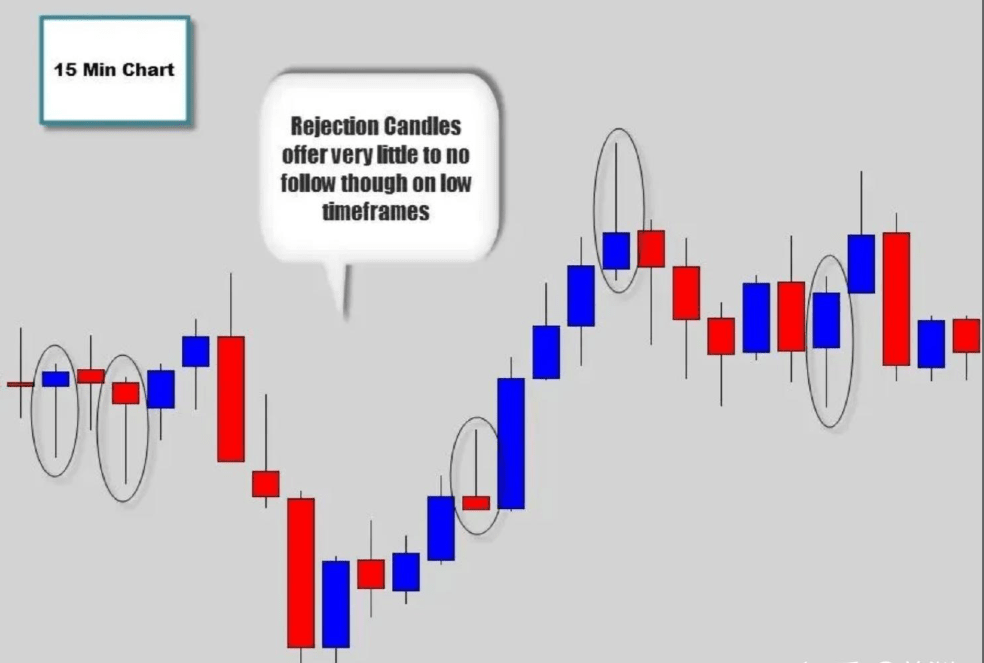
These reversal candlestick patterns formed on the 15-minute chart, in typical market conditions, almost never show continued price movement. Such signals...
It can be very frustrating to try and make a profit, and most of the time it ends up with a loss.
Now look at the daily chart, and the difference is quite obvious.
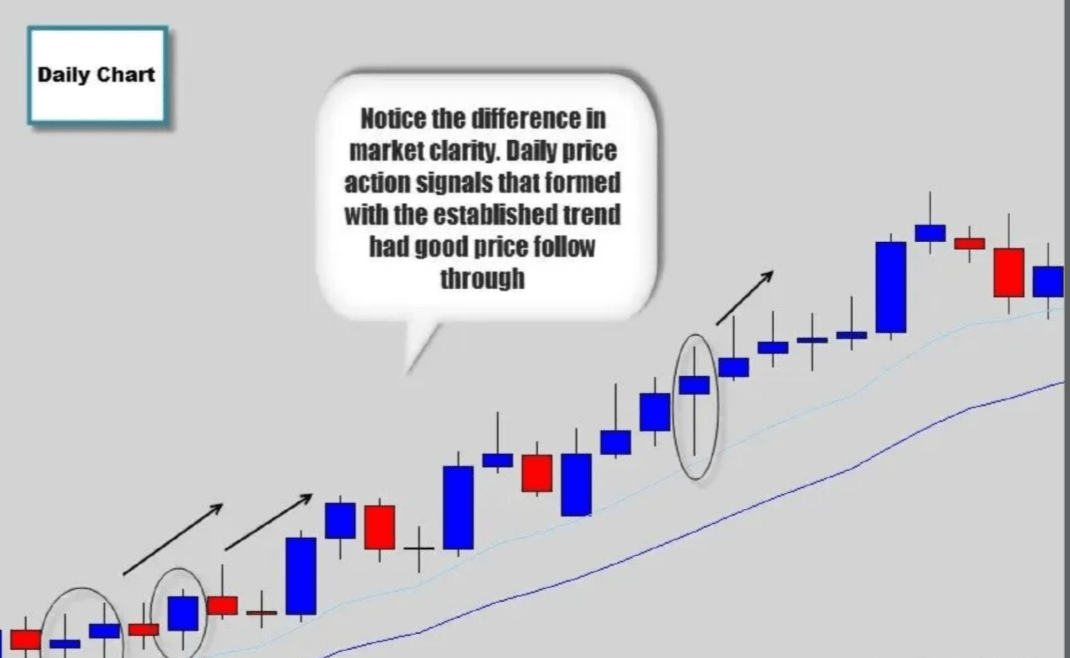
First and foremost, the core direction of the market is clearly visible on the daily chart, while it's much harder to determine the market's direction on the 15-minute chart.
Where do you want to go?
Trading signals that align with the dominant trend on the daily chart tend to have better subsequent price follow-through.
Many traders believe that frequent low-period candlesticks equal more profits. However, this is a matter of quality versus quantity. A signal from a daily chart...
This means that the 15-minute chart signal contains 96 times the price data, making the daily chart signal more accurate and reliable.
Myth #3: The longer you hold a position, the higher the risk.
Some traders advocate "quick in, quick out," claiming that this is less risky than holding positions for a long time.
This view is based on flawed logic, generally reasoned as follows: "If you enter and exit the market quickly, you won't be stopped out when the market reverses."
damage."
However, in reality, no matter what strategy you adopt, you always face the risk of being stopped out by unexpected market conditions.
What's even more interesting is that when you trade low-timeframe signals and set your stop-loss tighter than a bee's tail, you're more likely to be hit by intraday volatility.
Bureau.
Daily charts effectively filter out intraday noise, providing more reliable data for your trading decisions.
Most daily chart trading signals are rarely affected by short-term fluctuations, which often cause short-term traders to frequently stop their trades.
damage.
Enhancing your trading advantage is actually quite simple: increase your time horizon.
Low-cycle signals can lead to trading strategies that create immense psychological pressure, requiring you to monitor the market for extended periods.
Most short-term traders initially enjoy the "excitement" and "thrill," but sooner or later they will experience psychological exhaustion.
Your daily mental discipline is limited; once it's exhausted, feelings of frustration will accumulate, and previously suppressed emotions will suddenly take over.
Every action you take.
Greed, frustration, anger, and impatience can trigger bad trades, leaving you in a dangerous psychological state from which it is difficult to recover.
Daily charts can immediately help you establish a higher probability of success.
You spend significantly less time in front of charts, thus reducing the risk of trader burnout and allowing you to maintain composure, mental discipline, and emotional control.
It will be much easier.
In short, trading with low-timeframe strategies requires prolonged monitoring of the market, which can easily lead to mental exhaustion. Mental exhaustion can cause significant psychological stress.
Emotional control can trigger a series of dangerous reactions that are difficult to reverse. Daily chart strategies, on the other hand, require less time spent in front of the chart, therefore...
It helps preserve psychological energy and discipline, which is more conducive to long-term stable trading.
Myth #4: Holding positions overnight is dangerous
This statement is just nonsense from novice day traders.
"You must close all positions before the market closes that day."
The cryptocurrency market fluctuates 24 hours a day.
Indeed, if your position is newly established, holding it over the weekend may carry some risk, as there is a possibility of a sudden weekend price gap (especially...).
(Especially when affected by major global events) — but that's a completely different topic and rarely becomes an issue.
In a continuous market, there is no advantage to closing positions at the close of the day. One person's "closing time" is another person's market...
Opening hours.
In fact, closing positions prematurely may cause you to miss opportunities. Trading signals sometimes need one or two days to materialize into a true "breakout" move.
Consider the following example: a bearish reversal candlestick pattern captured on a daily chart.
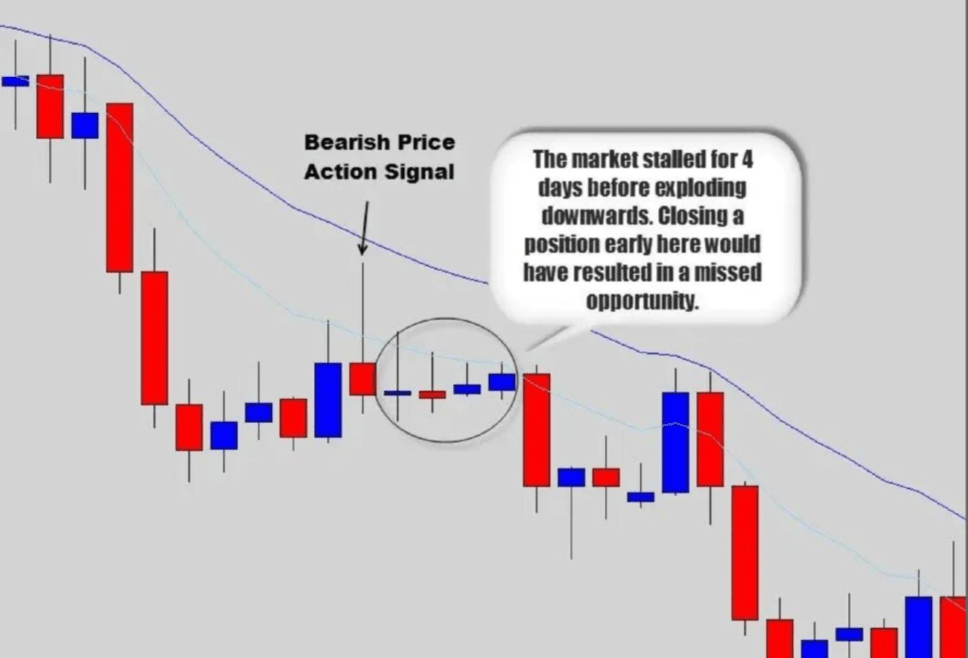
This is a good example of the need for patience, allowing the market to operate at its own pace. If you close your positions before the end of the day, you will almost certainly miss opportunities and regret missing out on profits.
I know many people hope that as soon as they enter a trade, the price will hit their target like a cannonball. This happens occasionally, but you can't expect it to happen often.
In reality, some trades may experience one or two short-term losses before turning profitable, and this fluctuation can last for several days.
You need to give trading opportunities and time for the market to take effect. Don't close your positions prematurely just because the day is over; otherwise, you'll rarely be able to capitalize on good market movements.
Myth #5: Price movements on daily charts are difficult to predict.
This statement stems from the long-standing debate between technical analysis and fundamental analysis.
Some traders believe that technical analysis is only applicable to low-timeframe charts, and that trading on daily charts requires a solid foundation in fundamentals.
Analytical skills are required, and even a PhD in economics is necessary.
In fact, you don't need to be an economist or a high-end financial analyst to track long-term price movements. Believe it or not, you need...
All the necessary data is already reflected in the price traces left on the chart, which is the candlestick chart itself.
Technical analysis works exceptionally well on daily charts, better than most lower timeframe charts. Therefore, I call the daily chart the "golden ratio."
"Timeframe", neither fast nor slow.
Another key reason why technical analysis works well on daily charts is that daily charts provide more data.
Noise and price fluctuations on low-period charts can interfere with technical analysis, prevent you from "reading the charts," and trigger a lot of false signals.
Thanks to the clear view provided by the daily chart, quality trading opportunities are very easy to identify.
The real challenge is that you need to shift your focus from high-intensity short-term trading to low-intensity trading.
On the daily chart, you can capture significant profit opportunities, which can transform a short-term trader who trades frequently during the day into a more stable swing trader.
See the example below:
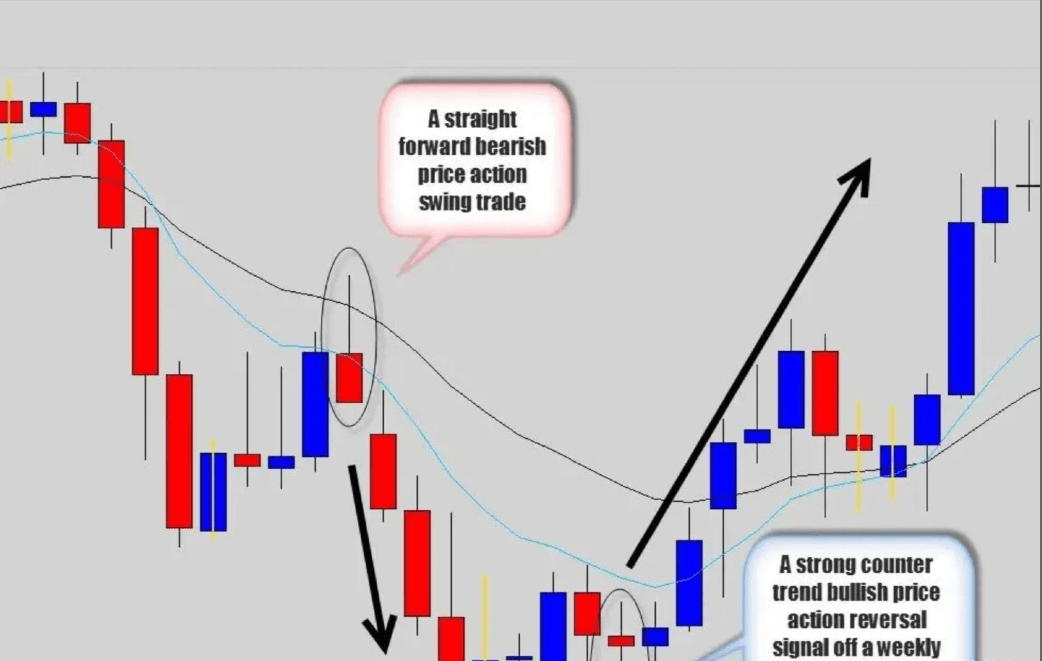
The price action signals shown in the chart above are a good example of using simple technical trading signals to predict future price movements.
Both my traders and I participate in these price action signals. The simplicity of these signals is one of the main advantages of price action trading.
Now, it's time to stop chasing "ghost" signals on 15-minute charts and start trading the right way.
in conclusion
Simply by switching to a daily chart, you begin to make the necessary adjustments, paving the way for successful trading.
Daily charts take up less of your time while providing a clearer overall view of the market, enabling you to make more objective judgments about market trends.
Reducing the time spent monitoring the market also lowers the risk of psychological or emotional imbalance, while giving you the opportunity to capture higher-return trading signals.

While everyone was shouting about a bull market, I quietly chose to short sell.
The candlestick chart is crowded with jubilant crowds; only in the shadows can the truth be seen.
Six months ago, online communities were flooded with calls for an "eternal bull market" and for Bitcoin to reach $200,000. Back then, clicking on any crypto forum...
The community is filled with blind optimism, but when I look at the weekly chart, I see a bearish divergence structure quietly forming.
I made a decision that left all my friends speechless at the time: I started to set up long-term short positions.
When I first established my position, Bitcoin was priced around $90,000. As the market continued its irrational surge, I gradually added to my short position, lowering my average cost.
It eventually diluted to around $108,000. During that time, I often heard mocking remarks: "Short selling in a bull market?" "Stop being so stubborn!"
When I'm watching the market late at night, I often ask myself when I see unrealized losses: Did I really make a mistake this time?
But I hold firm to one belief: as long as the logic remains intact, the strategy continues.
The market has finally shown cracks.
In the early hours of the 10th of this month, Bitcoin suddenly crashed 8%, plummeting from $93,000 to $85,800. This crash cleared out...
The total value of long contracts across the entire network exceeds $4 billion.
The root cause of the plunge had already been sown: although the Federal Reserve cut interest rates, there were serious internal divisions, and policymakers were really reluctant to ease monetary policy further.
Meanwhile, the Bank of Japan unexpectedly raised interest rates, and global liquidity began to tighten.
Even more devastating was the sudden regulatory warning issued against highly leveraged ETFs, which directly burst the market's leverage bubble. All of this was within my expectations.
Current market situation and my strategy
Currently, Bitcoin is fluctuating between $80,000 and $94,000. $80,000 is a strong support level; if it breaks below this level, it may fall further.
Based on this, I have developed a clear plan:
Within the trading range, remain calm and avoid frequent trading to prevent being disturbed by short-term noise.
If it breaks above $95,000, I will roll over my short position and patiently wait for the trend to weaken.
If the price falls below the $80,000 support level, I will gradually close out my short positions for profit in the $70,000 range below.
On-chain data shows that the proportion of BTC held on exchanges has fallen to a multi-year low, indicating that more people are transferring Bitcoin to cold wallets and reducing market selling pressure. However, long-term holders have not panicked and sold off their holdings, which provides some stability to the market.
Ethereum: A Secondary Player in the Crypto Market
My Ethereum short position was entered a bit late, with costs concentrated above $4,600. Ethereum has underperformed compared to Bitcoin, with an implied forward yield of only 3.51%, significantly lower than Bitcoin's 4.85%.
In correlated market conditions, Ethereum is more like a "follower-type supporting character." My principle is: don't place heavy bets on weak assets, but you can use them as part of a portfolio strategy.
Current options market sentiment confirms my assessment: the bullish sentiment for Ethereum in the long term has dissipated, and the market has shifted into a "neutral to bearish" range.
The mental discipline of contrarian trading
Holding positions against the odds for 200 days has made me even more convinced that real trading opportunities often arise from the two extremes of market sentiment.
Remaining calm when everyone is euphoric, and seeing opportunities when there is widespread panic—this is the core quality of a contrarian trader. When the market fear index...
When the price of Bitcoin is only 24 (the same as during the April crash), but the price is much higher, it indicates that the market is caught in a typical "irrational cycle".
This divergence between sentiment and prices is often a precursor to a cyclical turning point.
A heartfelt message to those who persevere
Based on the current market environment, I have a few suggestions:
Leverage is a hidden killer: In the recent market crash, 75% of long positions were held by highly leveraged traders. With 10x leverage, a 10% price reversal would trigger a strong sell signal.
Balance. It is essential to control the leverage ratio.
Focus on macro liquidity: The Fed's monetary policy shift is more important than individual technical analysis; current long-term Treasury yields are still higher than...
A 4.1% rate means that long-term financing costs will remain high, and risky assets will face continued liquidity pressure.
Adopt a defensive strategy: Consider protecting the position through a risk reversal structure* (acting on a put option and buying a call option), or hold...
They have some cash reserves (such as euros) to cope with the risk of dollar depreciation.
Be patient: The market needs time to digest excessive leverage and macroeconomic pressures. In this context, "less action is more profitable than more action."
Trading is essentially a game of battling human nature. Remain calm during market frenzies, adhere to logic when others question, and seize the first glimmer of hope.
Restraining greed now is key to long-term survival.
When the tide goes out, you'll see who's been swimming naked. The real winners are those who quietly plan when others are panicking, and those who gracefully withdraw when others are euphoric.
If you are still struggling in this cycle of margin calls, please force yourself to do these three things first:
1. Reduce transaction frequency:
2: Strictly implement stop-loss orders.
3: Don't let any small loss get out of control
If you're still feeling lost in the market and unsure of your next move, I'm here to share more specific advice.
Strategies and mindset management methods. Opportunities are right in front of you; as long as you take the initiative, we'll have a story to tell.
Investing is like a spiritual practice; besides adhering to one's investment philosophy in the face of drastic market fluctuations, it also requires developing a simple and easy-to-implement profit strategy.
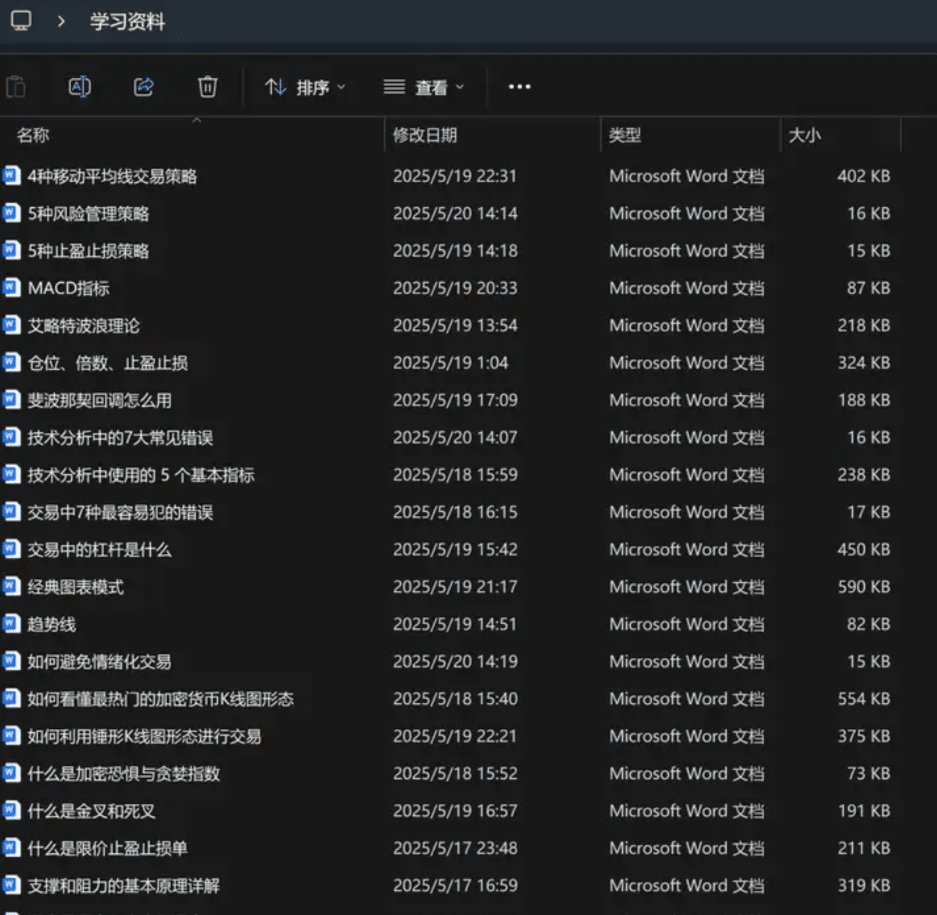
Outside of established patterns, many newcomers don't know where to begin. This guide, which includes both technical analysis (likely referring to specific methods or strategies) and trading techniques (like spot and futures trading), provides information on common cryptocurrency trading methods.
A collection of solutions to common problems encountered: (Essential learning materials for cryptocurrency traders). Hopefully, readers can find methods that suit them and that they want to learn, helping everyone build a clear and effective trading system.
If you also want to get a piece of the cryptocurrency pie, truly enjoy the benefits of this era, and genuinely enter this circle, and want to learn and trade, welcome to follow Yibo Yan. You can watch live trading, learn and exchange ideas, and get a clear understanding of market direction and strategies. No matter what the market style is, knowing it in advance gives you more time to better grasp it! $BTC $ETH