
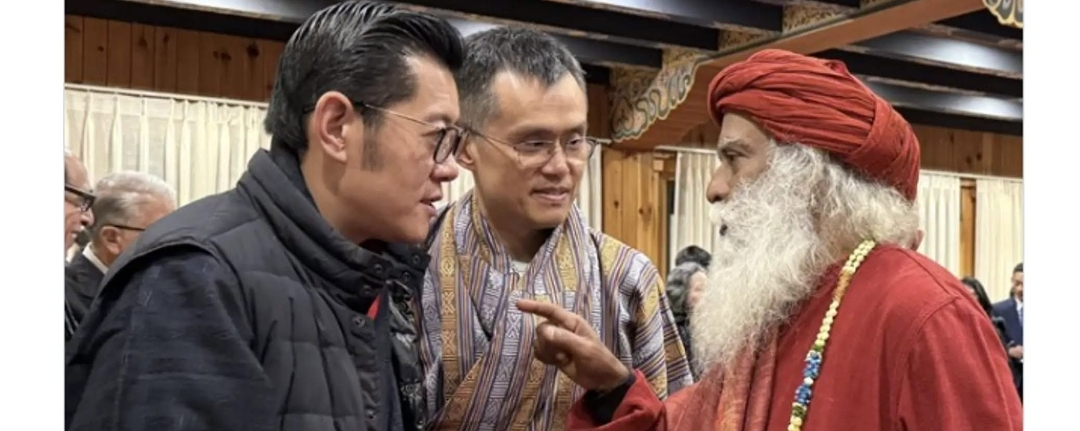

Why CZ is keeping an eye on Bhutan
There is no direct link with Sierra Leone for Zhao, as the country is not on the list of countries where he serves as an adviser. However, with Bhutan, contacts have accumulated enough. For example, in December 2024, he met with the king of Bhutan, whose country owns one of the largest bitcoin reserves. Later, CZ approved the decision of Bhutan’s Gelephu Mindfulness City project to create#Новости a national reserve from several crypto assets at once: BTC, ETH, and BNB.
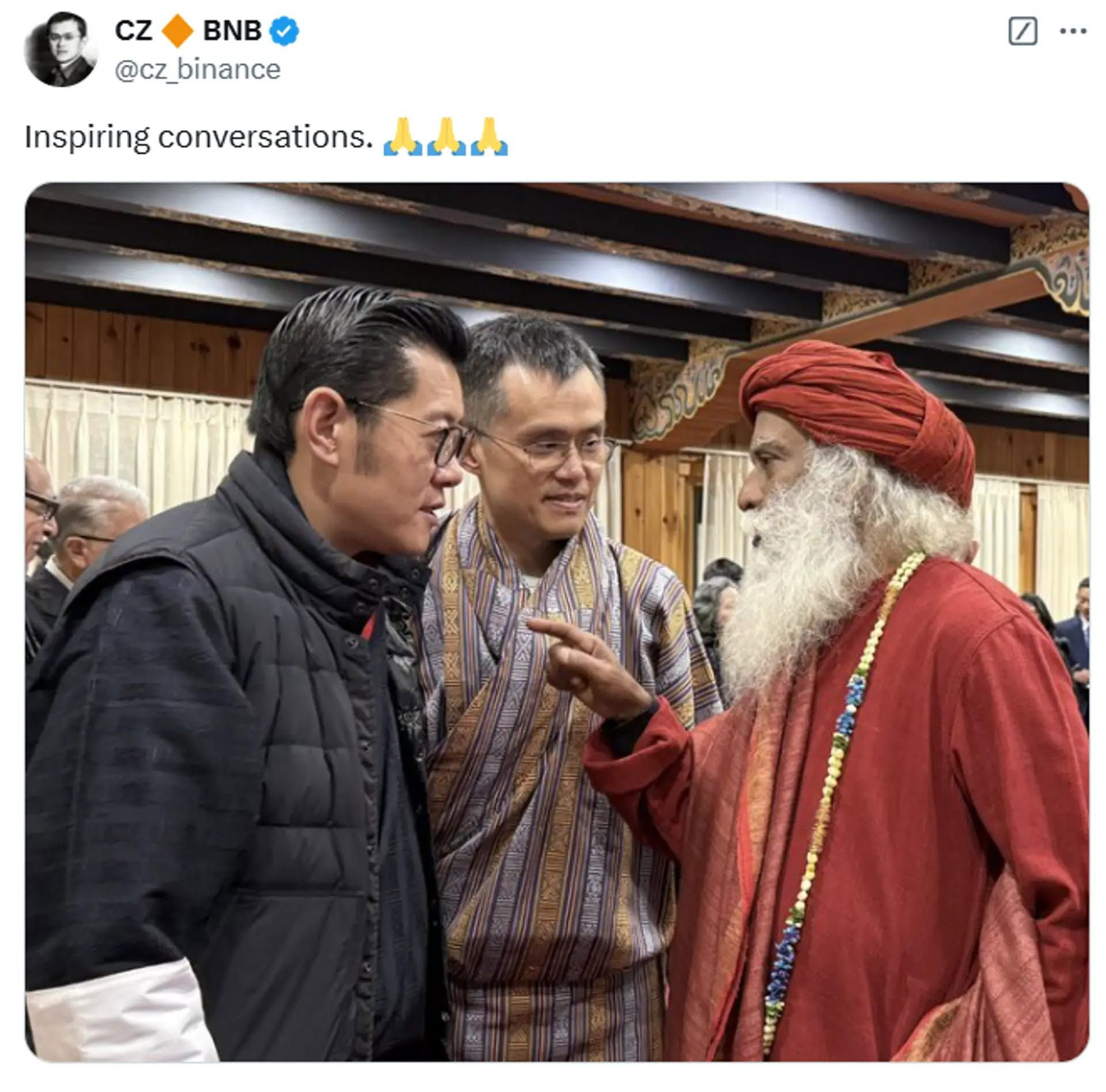
Obviously, that’s where the key interest lies. Bhutan NDI is a 100% subsidiary structure of the sovereign fund Druk Holding & Investments. It is this organization that manages the kingdom’s crypto initiatives. One could assume that the appeal for Zhao is not so much the digital identity itself, but the export of Bhutan’s model.
An additional incentive is the presence of BNB in Bhutan’s reserves, since this token is closely tied to the exchange Binance, native to the entrepreneur.
Recall that Zhao stepped down as CEO of Binance in November 2023 following an agreement with the U.S. Department of Justice. Later, in October 2025, he received a presidential pardon from Donald Trump. As he puts it himself, consultations with various governments CZ now provides for free.
What Sierra Leone is learning from
Bhutan’s NDI system is not a conventional government database, but rather a decentralized ecosystem based on the principles of self-sovereign identity. The user stores their verifiable data in a secure, biometric mobile wallet. The citizen decides for themselves what information to share. At the same time, personal data is not collected on a central server. As a result, a person can confirm only the required fact, such as being of legal age, without disclosing the full date of birth.
Another important factor is the high maturity of the platform. Initially built on Hyperledger Indy, and then moved to Polygon, by 2026 the system will switch to Ethereum to maximize security. For Sierra Leone, this is a ready-made technological solution with international recognition.
Bhutan’s NDI is already included in the Global Acceptance Network, which makes it possible to legally use local digital credentials abroad. Finally, a separate emphasis in the partnership is placed on transferring competencies so that, in the future, national institutions in Sierra Leone can independently support the platform.