
Recently, there have been many new terms related to the middle class online, such as 'FIRE lifestyle', 'cutting the line', 'zero debt', etc., all describing personal life and financial management methods.
So, today let's talk about 'zero debt', which is something I am personally quite interested in.
1. What is 'zero debt'
There is no unified definition, but the general perspective is as follows:
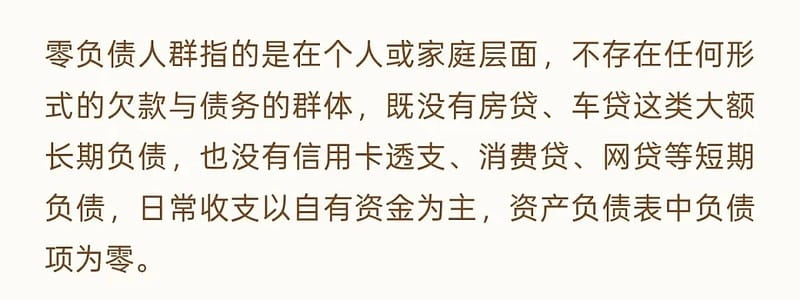
'Zero debt' has become a popular term in the past two years (2024-2025), marking a significant shift in social mentality from 'radical expansion' to 'defensive survival'.
It is not just a financial indicator, but also a lifestyle philosophy and a collective consensus on risk avoidance. More and more middle-class individuals are choosing to pay off their mortgages and car loans in advance, without using any form of consumer loans or credit card installments.
Compared to owning a house burdened by loans, debt-free individuals place more value on their cash flow and the freedom to 'pack up and leave' at any moment.
One example is that in recent years, China's credit card industry has undergone significant adjustments, reducing by 92 million cards over three years. Another piece of recent data shows that the credit demand from households is weakening further.
Hence, some experts believe that the expansion of the zero-debt population will lead to weak consumer spending and suggest targeted stimuli to boost consumption among this group to expand domestic demand.
Secondly, what do they care about more?
Personally, I believe that the trend of 'zero debt' living among the middle class is a product of changes in the social environment.
During the rapid growth period of the past 20 years, people generally believed that tomorrow would earn more than today, so they were willing to leverage 'tomorrow's money'.
Now, with changes in the global economy, increased competition in the domestic job market, and fluctuations in certain industries, people are taking a cautious approach towards future income. Additionally, long-term debt can bring immense psychological pressure.
In today's fast-paced, highly competitive environment, people realize that true wealth is not about what you own, but what you can refuse.
Being debt-free means you can quit a job that doesn't suit you anytime, without being tied down by interest payments, gaining greater autonomy in life.
For example, I can say that I've been living a 'zero debt' lifestyle for the past few years, and I've taken it to the extreme: not only do I have no loans on my house or car, but I also pay off my credit card on the same day I use it, and I don't use margin for trading because I dislike being in debt.
The reasons are as follows:
1. Although there are companies and income, my investments are not stable.
It's just a small micro-enterprise, and the company's business could fluctuate significantly due to policy and market changes; stock market income also sees frequent bull and bear cycles, with the saying that 7 lose, 2 break even, and 1 profit in A-shares—it's impossible to forecast next year's earnings based on this year's profits.
2. A house and car that are sufficient are enough; having just cleared my loans, I have no desire to buy new ones and get bogged down.
I've already completed the initial accumulation of material wealth, and the painful memories of buying a house with debt and repaying loans each month are behind me. I no longer need to maintain the 'middle-class illusion' sustained by loans to prove myself.
Compared to luxury homes and cars, individuals place more importance on 'cash flow' and 'debt freedom', focusing more on assets with good liquidity, fair pricing, and potential future income.
3. A major illness can devastate a family; even though I'm currently healthy, I still need to prepare for the worst.
4. Refuse to pay for 'premium labels'.
I need to clarify that my zero-debt lifestyle doesn't mean I don't consume at all; rather, it's about making choices. I am still willing to spend on daily life and pursue a certain quality of life.
For example, business class travel, ride-hailing, or buying some quality clothes (I've recently been into Ralph Lauren, Patagonia, and ON—this month, I spent over ten thousand on clothes); these are things I'm willing to spend money on.
However, I refuse to pay for 'premium labels.' I genuinely think McDonald's and Sushi Row are tasty, nutritious, and healthy, and their prices are reasonable; making a meal with salmon, avocado, and salad only costs about 30 yuan, so I won't fall for the so-called Michelin or chef brands that cost over a thousand per person.
Thirdly, what assets are worth watching?
For someone like me, who has a strong awareness of financial management, saving money to invest is an important aspect.
So, heading into 2026, what asset am I optimistic about?
Actually, from the previous content, you can see that I'm not someone who chases trends, so even though aerospace and AI have great prospects, I might not necessarily invest.
The fund I recently bought is the 华宝化工ETF联接A (012537), with the corresponding ETF being the 化工ETF(516020).
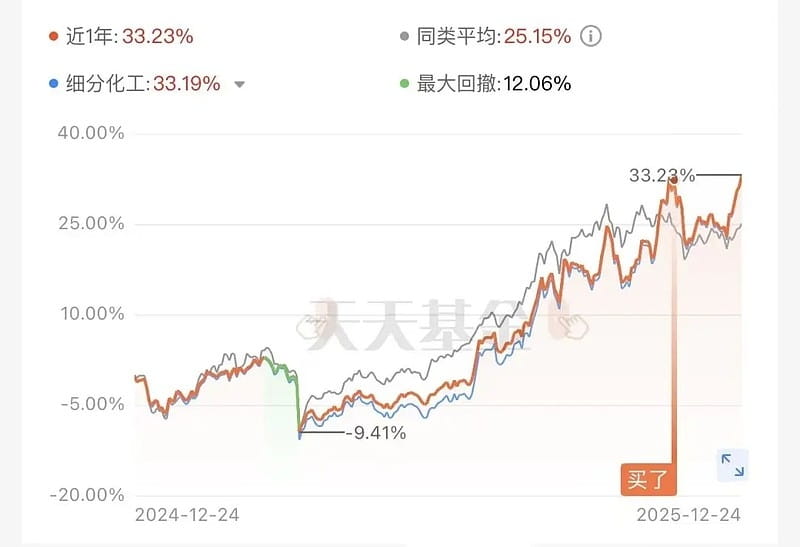
Why am I optimistic about this particular asset?
Recently, a Musk interview caught my attention; he mentioned that the technological iteration of AI and robots is reshaping production relationships, and the era of 'working for survival' will come to an end.
"When AI and robots meet human needs, the labor distribution function of money will weaken or even fail," he boldly predicts. "At that time, energy, especially power generation, will become the core 'hard currency'."
In economic terms, the chemical industry is one of the largest sectors consuming energy globally (accounting for about 28% of industrial energy consumption), as chemical products essentially serve as material carriers of energy.
Musk predicts that power generation is key, and the labor distribution function will weaken. The chemical industry happens to be one of the most automated sectors.
All this indicates that the chemical industry may undergo a revolution in underlying dynamics and technological dimensions in the future.
The frequently mentioned AI and robots rely heavily on breakthroughs in the chemical industry for their physical entities (hardware):
For example:
• High-performance materials: The lightweight needs of robots require carbon fiber, specialty engineering plastics, and composite materials.
• Energy carriers (batteries): Robots require high energy density batteries. The materials for the positive and negative electrodes, electrolytes, and separators are all core products of fine chemicals.
• Chip manufacturing: The performance chips required for AI operations involve the use of thousands of high-purity electronic specialty gases, photoresists, and chemical reagents during their manufacturing process.
All this foreshadows that the chemical industry may face earth-shattering changes in the future.
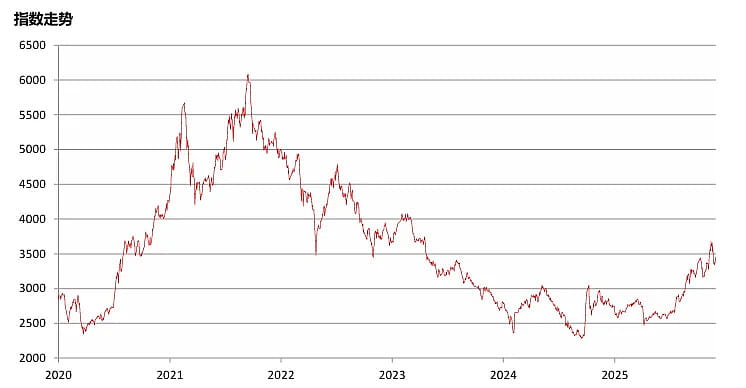
Data source: China Securities Index Company, as of 2025.11.28.
On another level, by the end of November 2025, the segmented chemical index has retraced more than 40% since its peak in September 2021, providing a relatively sufficient safety margin for the sector. $化工ETF(SH516020)$ $华宝化工ETF联接A(F012537)$ $华宝化工ETF联接C(F012538)$
Currently, the largest chemical-themed ETF in the Shanghai market is the 化工ETF (Trading code: 516020; Link fund: Class A 012537; Class C 012538), which has recently gained recognition from investors, with the latest scale rising to over 3.9 billion yuan, showing good liquidity.
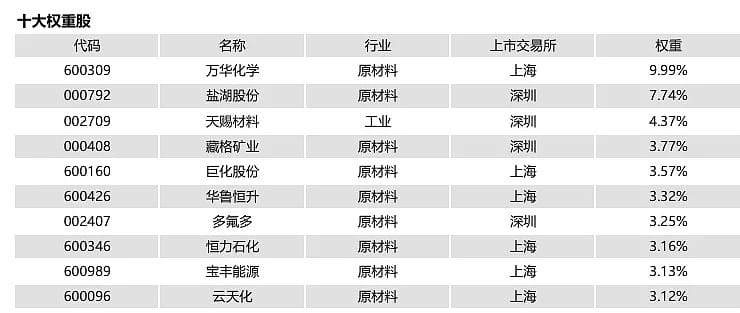
Data source: China Securities Index Company, as of 2025.11.28.
This product tracks the CSI segmented chemical industry theme index, with nearly 50% of the position concentrated in large-cap leading stocks, while the remaining 50% balances investments in segmented areas like phosphate fertilizer, fluorine chemicals, nitrogen fertilizer, and coal chemicals, fully sharing the bottom opportunities in the chemical sector.
Such products not only have future growth and imagination in the industry but also have advantages in valuation. They are not hot varieties and relatively align with my investment strategy. If you're interested, you might want to keep an eye on them.
Risk Warning: Funds carry risks and do not guarantee the preservation of principal or certain profits. The views in this article represent the author's personal opinions and do not reflect the stance of the fund company. The content is for research and educational purposes only, and the stocks, funds, etc., mentioned do not constitute any investment advice to the reader. Investment carries risks, and choices should be made cautiously. Investors bear the risks and consequences of any investment behavior.