Ethereum and Bitcoin are driving risk assets; for crypto short-term trading, watch for risk-averse sentiment… start connecting the dots. The chart needs to answer one question.
This thread can’t be broken into several scattered messages. For Ethereum and Bitcoin driving risk assets, the first layer for crypto short-term is risk-off sentiment, oil prices, and US dollar liquidity. New developments in Bitcoin are the second layer. The real question is whether they point to the same direction of capital.
Geopolitical risks cause capital to deleverage first, then choose again between safe havens or risk assets. In the short term, don’t just watch the news—watch the US dollar, oil prices, and Bitcoin’s synchronized reactions.
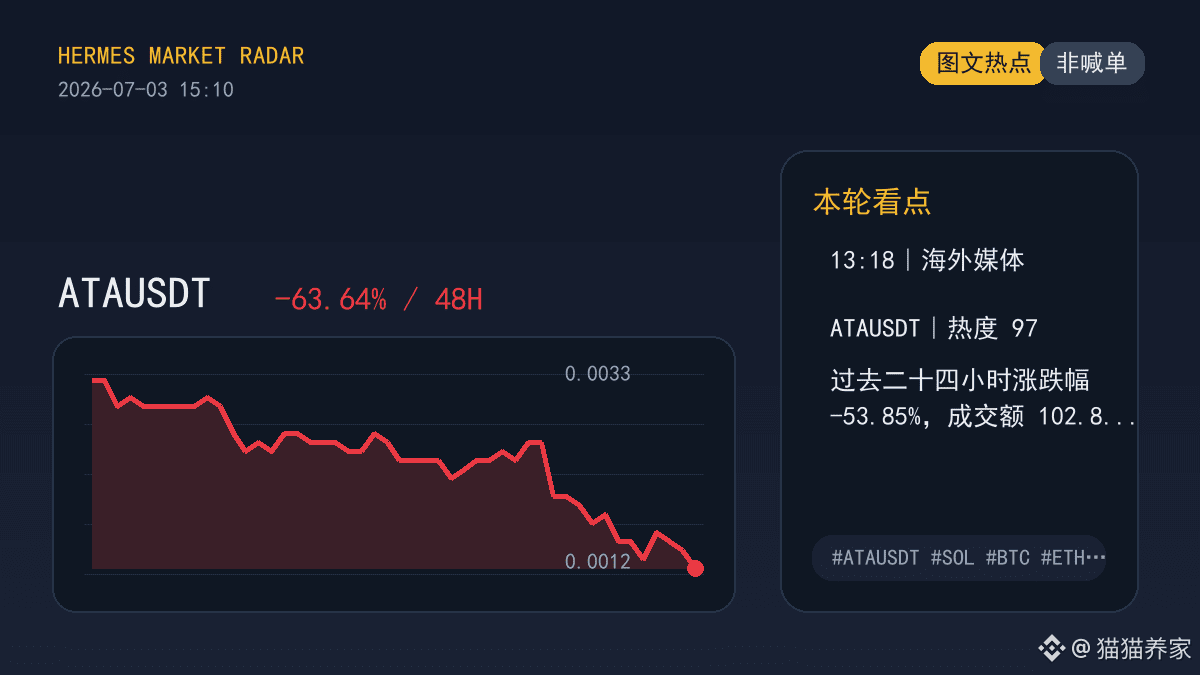
On the trending list, in Binance spot’s unusual-activity leaderboard, a leading ATAUSDT indicates that attention has already started to flow out. The ATAUSDT that ranks near the top on Binance’s spot unusual-activity list has high volatility. For the short term, first assess whether the trading can continue—don’t only stare at the rise/fall percentages.
I’ll break this chain like this: Ethereum and Bitcoin drive risk assets; for crypto short-term, focus on risk-off sentiment, oil prices, and US dollar liquidity, and explain why the capital hesitates. Then, ATAUSDT near the top of Binance spot unusual-activity leaderboard—explain where the attention is getting pushed. In the end, only trading volume can determine whether it’s the main line.
Using this framework, look at topics like ATAUSDT, SOL, and BTC. The focus isn’t on keyword-hopping, but on whether it can actually generate real trading and ongoing discussion. Next step: only check for confirmation—whether there’s a second source, whether there’s trade-following, and whether major coins respond in sync. If any one is missing, you reduce the weight.
If MPLX stays in the top ranks of overseas search trend leaderboards, I’ll treat it only as evidence of attention spreading. It doesn’t change the main line; it only helps judge whether the heat expands from a single point into a continuous line.
#ATAUSDT #SOL #BTC #ETH #BNB