Let’s talk about why Bitcoin forms a “flat” bottom:
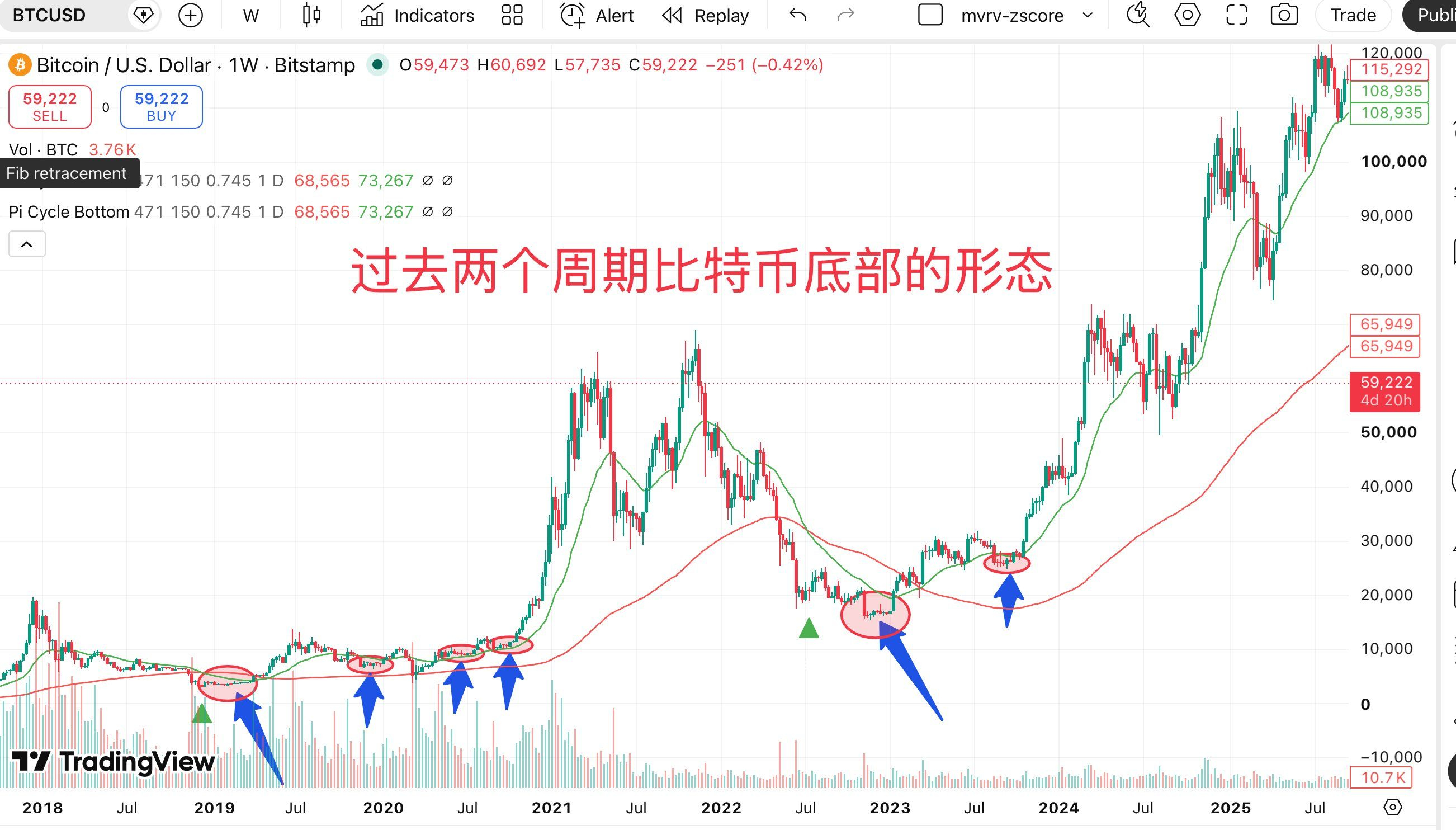
Judging from the historical price action across the past two cycles, Bitcoin’s bottoming process often requires a continuous 2–3 months of a “flat base” or even a “grinding down” pattern. A sharp, decisive V-shaped reversal like what you often see in the U.S. stock market is quite rare. Behind this, it’s essentially the inevitable interplay between technical indicator mean-reversion and human weakness.
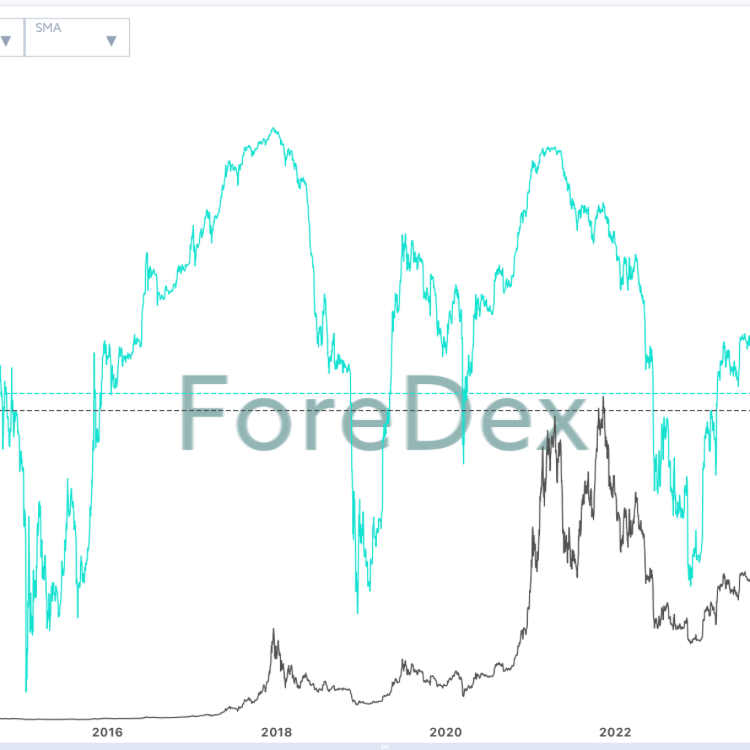
From the indicator perspective, what’s shown in the chart is the Pi Cycle Bottom (the Pi-cycle bottom indicator) along with long-term moving averages. After the market goes through a major sell-off and price breaks below—or endlessly approaches—the green and red long-term moving average lines, it indicates that the market has entered an absolute value zone of extreme oversold conditions. At this point, on-chain indicators such as the MVRV Z-Score also typically fall to near ice-cold levels. This “flatness” is, in reality, an “energy accumulation period” where long and short forces repeatedly tug-of-war around historical absolute support levels, exchanging hands over and over, until supply and demand for positions are finally cleared.
And what truly makes the bottom so flat and so prolonged are human weaknesses:
1. Fear and despair (refusing to trade from the left side): Before the bottom arrives, the massive drawdown (for example, late 2018 and late 2022) shatters all market confidence. At this time, “extreme fear” in human nature takes the upper hand. Retail traders and even institutions are in a state of “once bitten, twice shy.” Even if prices are at extreme lows, people still don’t dare to buy because they fear there could be even newer lows—so the bottom lacks the explosive buying power from retail.
2. Eroding patience (position washing): Big players and main funds understand human nature well. They won’t choose a V-shaped reversal to “carry retail traders on their shoulders.” Instead, they use months of sideways consolidation (a flat base), exploiting the human tendency toward “lack of patience” and “eagerness for quick results,” to flush out the last shred of retail conviction that survived the initial crash but gets worn down during the prolonged sideways period. This is what people call “time trading for space.”
In short, only when trading volume becomes extremely thin, speculators have fully exited, and positions have been transferred and settled from retail traders into long-term believers (Long Time HODLers), can this “flat base” be considered truly constructed. The pullbacks at the beginning of a bull market work the same way—rebuilding consensus through sideways action. Once you understand the “flat bottom,” you understand the market’s deepest sense of reverence and the struggle between players.
Judging from the historical price action across the past two cycles, Bitcoin’s bottoming process often requires a continuous 2–3 months of a “flat base” or even a “grinding down” pattern. A sharp, decisive V-shaped reversal like what you often see in the U.S. stock market is quite rare. Behind this, it’s essentially the inevitable interplay between technical indicator mean-reversion and human weakness.
From the indicator perspective, what’s shown in the chart is the Pi Cycle Bottom (the Pi-cycle bottom indicator) along with long-term moving averages. After the market goes through a major sell-off and price breaks below—or endlessly approaches—the green and red long-term moving average lines, it indicates that the market has entered an absolute value zone of extreme oversold conditions. At this point, on-chain indicators such as the MVRV Z-Score also typically fall to near ice-cold levels. This “flatness” is, in reality, an “energy accumulation period” where long and short forces repeatedly tug-of-war around historical absolute support levels, exchanging hands over and over, until supply and demand for positions are finally cleared.
And what truly makes the bottom so flat and so prolonged are human weaknesses:
1. Fear and despair (refusing to trade from the left side): Before the bottom arrives, the massive drawdown (for example, late 2018 and late 2022) shatters all market confidence. At this time, “extreme fear” in human nature takes the upper hand. Retail traders and even institutions are in a state of “once bitten, twice shy.” Even if prices are at extreme lows, people still don’t dare to buy because they fear there could be even newer lows—so the bottom lacks the explosive buying power from retail.
2. Eroding patience (position washing): Big players and main funds understand human nature well. They won’t choose a V-shaped reversal to “carry retail traders on their shoulders.” Instead, they use months of sideways consolidation (a flat base), exploiting the human tendency toward “lack of patience” and “eagerness for quick results,” to flush out the last shred of retail conviction that survived the initial crash but gets worn down during the prolonged sideways period. This is what people call “time trading for space.”
In short, only when trading volume becomes extremely thin, speculators have fully exited, and positions have been transferred and settled from retail traders into long-term believers (Long Time HODLers), can this “flat base” be considered truly constructed. The pullbacks at the beginning of a bull market work the same way—rebuilding consensus through sideways action. Once you understand the “flat bottom,” you understand the market’s deepest sense of reverence and the struggle between players.