

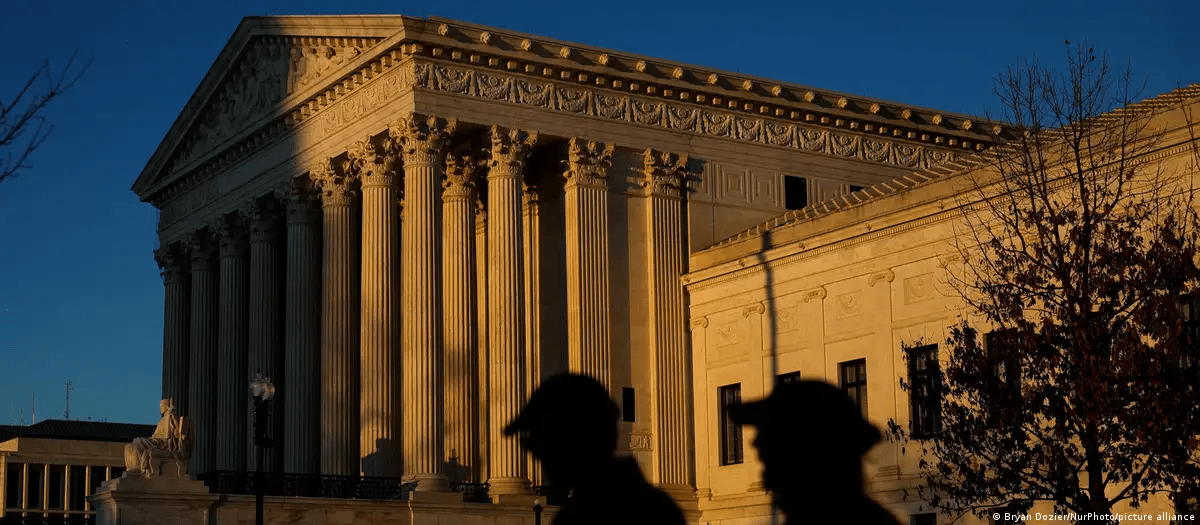
On Tuesday, June 30, the U.S. Supreme Court ruled that a decree by President Donald Trump limiting the right, provided by the 14th Amendment to the Constitution, to automatic citizenship for all children born on the territory of the country was unlawful. The corresponding decision has been published on the website of the highest judicial authority in the United States.
According to the Trump executive order signed on the first day of his second presidential term on January 20, 2025, the right to U.S. citizenship by birth does not apply to children whose mother is in the United States illegally or does not have the right to permanent residence in the country. Six judges supported the revocation of the document, while three opposed it.
Initially, the Trump executive order's entry into force was attempted to be blocked by three federal judges; however, in June 2025 the Supreme Court overturned their rulings. The U.S. president then called that decision a "monumental victory"
The justices' positions diverged due to different interpretations of the 14th Amendment
The 14th Amendment to the U.S. Constitution was adopted on July 9, 1868—three years after the end of the Civil War. It was intended to guarantee the rights of formerly enslaved Black people who were born in the United States. However, the text of the amendment is much broader: "All persons born or naturalized in the United States, and subject to the jurisdiction thereof, are citizens of the United States and of the state wherein they reside."
"Citizenship—then and now—means the right to hold rights, that is, the ability to participate freely in the life of our political community. The authors of the 14th Amendment extended this promise to \"every freeborn person on this earth\". Today, we are fulfilling this promise," said John Roberts, who has served as Chief Justice of the Supreme Court since 2005.
At the same time, one of the judges who ruled, Clarence Thomas, called the final decision "extraordinary." "The Court writes a new chapter in the sad history of the 14th Amendment, which was meant to be and understood as a tool for ensuring equal rights for freed Black people, but instead has been redirected toward political projects that were not supported by the Congress of the Reconstruction era (the period of reintegration of the Southern states that had lost the Civil War back into the United States and the abolition of the slave system in the country—Ed.)," he said.
In hearing the case, Trump became the first U.S. president to attend a Supreme Court session
Donald Trump became the first sitting president to personally attend oral arguments at the Supreme Court. This happened on April 1.
Overall, the president and his administration's position is that granting citizenship to everyone born on American soil creates incentives for illegal immigration and gives rise to "birth tourism"—a practice in which foreign nationals specifically come to the United States to secure their children American citizenship.