


null
The race for space computing power has already turned into a real arms race.
Musk’s assessment: by 2032, solar-powered space AI satellites will become the globally most cost-effective computing solution.
The judgment by Nvidia CEO Jensen Huang in March this year, in a way, also helped define this competition—wherever data is generated, there must be intelligent entities.
After the two giants made their moves, the battlefield for space computing power was pushed to an unprecedented level, but the engineering challenges faced by space computing remain far more brutal than those on the ground.
Without air convection, the chip can’t dissipate heat; in the universe there are high-energy particles that can cause the chip to malfunction at any time……
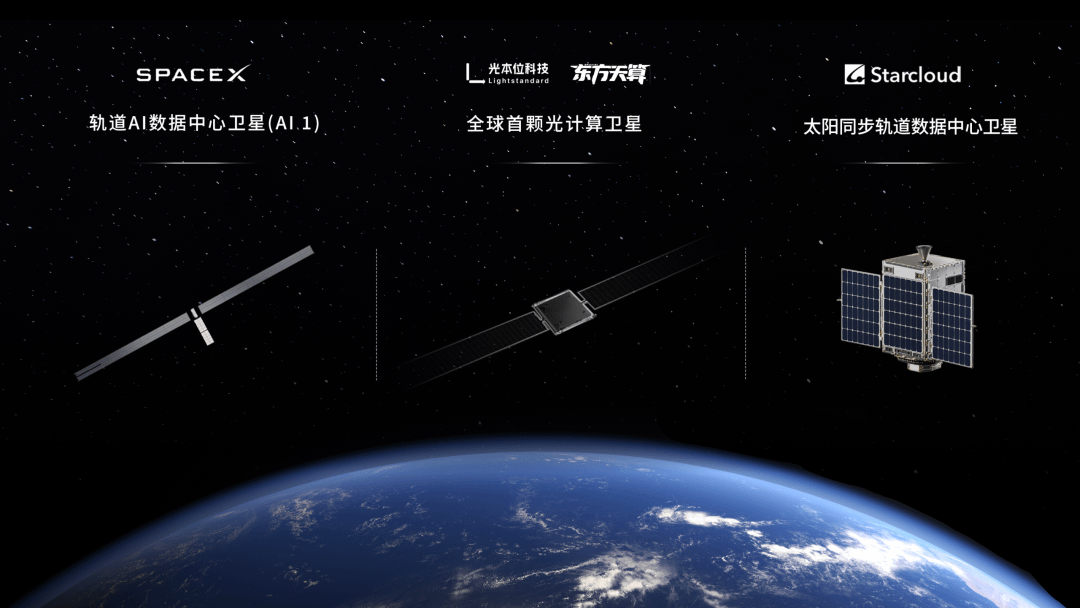
△ Domestic and international computing satellites (generated with AI assistance)
On the other hand, Musk has also reportedly made a new move: his company, SpaceX, is considering acquiring the optical module company Mesh.
Mesh selected by Musk, whose main business is the mass production of optical transceivers to improve communication efficiency in AI data centers, thereby enhancing both quality and output.
Why optical computing naturally suits space
In the space computing power race, the challenges faced by chips are far more severe than on the ground. The computing payload has to overcome three hurdles—radiation, heat dissipation, and power consumption.
Conventional electronic chips rely on charge storage and silicon-based transistors, while space is filled with vast numbers of high-energy particles from the universe.
Once high-energy particles strike a chip, they can trigger effects such as single-event upsets and single-event latchup, causing computation errors and even device failure.
Optical computing chips fundamentally bypass this hurdle.
Optical computing uses photons as the carrier of computing information. Photons themselves carry no charge, so they are naturally free from direct interference from high-energy particle impacts and do not require special radiation protection design.
Heat dissipation is the second hurdle, and also the most troublesome one.
When conventional electronic chips operate, electrons transmitting through conductors and the switching of transistors inevitably generate heat. Meanwhile, AI tasks have a huge demand for data movement and computation, which keeps the power consumption and heat generation of electronic chips high.
Space is a vacuum environment—there is no air convection. Only two heat-dissipation paths exist: heat conduction and heat radiation.
Harsh heat-dissipation conditions easily lead to frequency downscaling of traditional chips or even outright failure.
The way optical computing chips operate is entirely different: light propagates through a waveguide to complete the computation, a process that generates almost no heat.
The third hurdle is power consumption.
When satellites operate in orbit, they rely heavily on solar panels for power. After entering orbital shadow periods, they can only rely on onboard batteries, leaving extremely limited energy supply.
The higher the energy consumption of a high-compute-power chip, the larger the area of solar panels required, which in turn increases the satellite’s weight, volume, and launch cost.
The static power consumption of optical computing chips is theoretically close to zero, which naturally fits the stringent constraints of limited satellite energy, so it clears half of this hurdle.
Optical computing’s three features—radiation resistance, low heat generation, and low power consumption—are “killer advantages” in the space environment that help space computing directly overcome early-stage technical obstacles.
After crossing these three hurdles, optical computing still has a system-level advantage in space scenarios that electronic computing is hard to match—
Under the same payload weight, optical computing can deliver a higher total compute capacity.
Moving terrestrial data centers into space, the core constraints are payload weight and volume.
The entire architecture of traditional servers is designed for terrestrial form factors. To take compute power into space, every component—compute chips, storage, CPUs, the accompanying heat-dissipation system, radiation shielding layers for anti-radiation effects, and more—must occupy precious payload space, leaving very little room for actual computation.
NVIDIA’s response is to integrate the CPU and GPU on a single chip, achieving relatively impressive compute power in a very small size and weight. The Space-1 Vera Rubin module is a continuation of this idea.
But optical computing can go farther.
Because optical computing chips themselves generate low heat and consume low power, the required supporting heat-dissipation structures and energy systems can be made lighter and smaller. With the same payload weight, optical computing can accommodate more computing capacity.
Therefore, under the same energy supply and heat-dissipation conditions, optical computing achieves a higher total compute capacity than electronic computing.
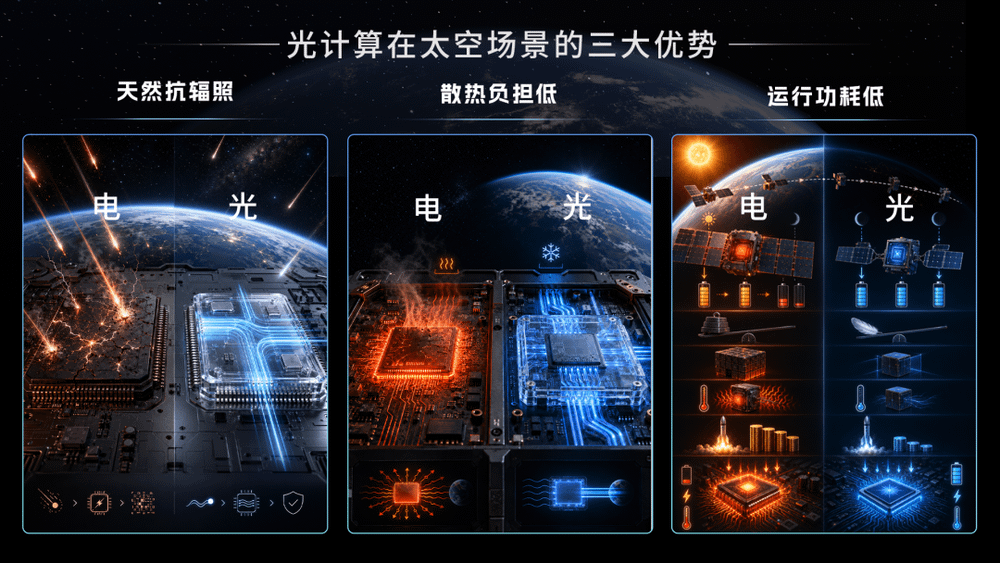
△ Three major advantages of optical computing in space scenarios (generated with AI assistance)
In the view of Pu Huanan, deputy director of the Optics Standard Technology Research Institute, these advantages have deep intrinsic driving forces behind them.
Improvements in electronic computing chip performance have long depended on scaling down the manufacturing process: integrating more transistors on the same area, and increasing computational density by using finer interconnects.
However, there is a physical limit to this path. When the distance between transistor gate electrodes is reduced to a certain extent, quantum tunneling effects become unavoidable.
Electrons can penetrate an otherwise theoretically uncrossable potential barrier, leading to leakage and computation errors—this is the ceiling that electronic computing cannot avoid at the physical layer.
Optical computing follows a completely different path.
The fabrication of optical computing chips does not rely on the advanced process system dominated by extreme ultraviolet lithography machines. Existing 45-nanometer and above—up to sub-micrometer—process nodes are sufficient for optical computing chip manufacturing needs.
The increase in optical computing capacity depends on expanding the scale of optical computing and fully leveraging the multiple reuse dimensions of photons themselves, such as wavelength, polarization, and optical modes.
Along this path, the heat generation and power consumption of optical computing remain stable. Costs can be effectively controlled, and the compute-capacity ceiling has not yet been reached.
Photon breakout: from ground-based to in-orbit inference in space
Photons are the core carrier of optical computing.
The basic idea of optical computing is to replace electrons with photons to perform the most core part of AI inference computations: large-scale matrix operations.
The advantage of optical computing chips is that a single optical propagation can simultaneously carry out a large batch of such multiplication operations—extremely fast, and with almost no heat generation.
However, when looking at the industry as a whole, compared with electronic computing, most optical computing solutions still fall short of truly large-scale, universally applicable, and reliably deployable systems.
Among them, there are two most prominent problems:
First, storage and computing remain separate. During AI inference, model parameters must be frequently moved from external storage to the compute unit, making storage bandwidth the bottleneck of the entire system;
Second, large-scale integration is difficult. Constrained by the physical limits of the silicon photonics platform in chip size, warp/deformation, and interconnect density, it is not easy for traditional optical computing solutions to scale up compute capacity;
These two thresholds keep optical computing at some distance from the mature, complete computing ecosystem typical of electronic chips.
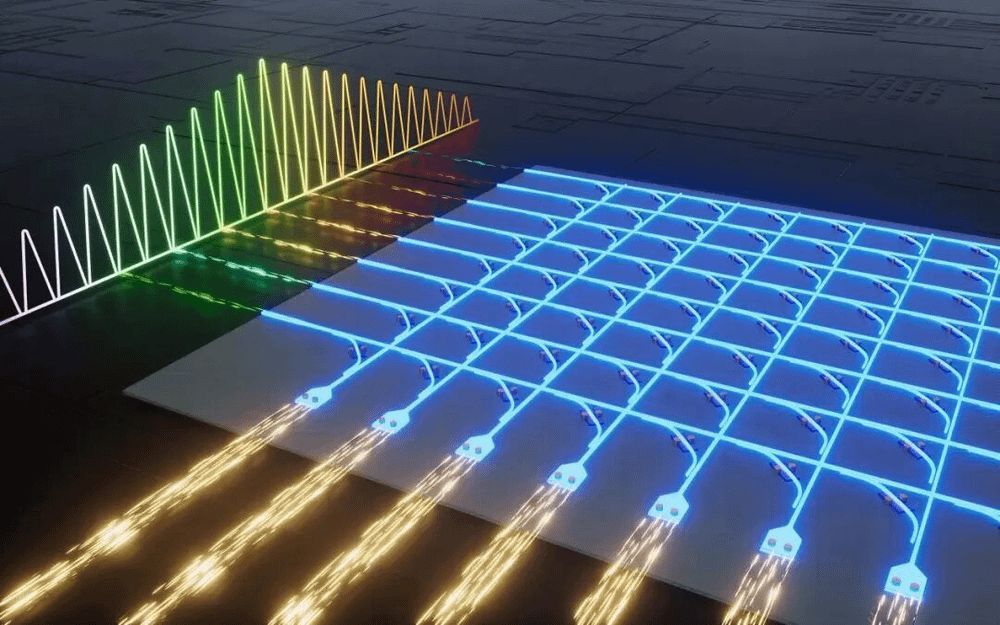
△ Optics Standard Technology: photon-in-memory computing architecture
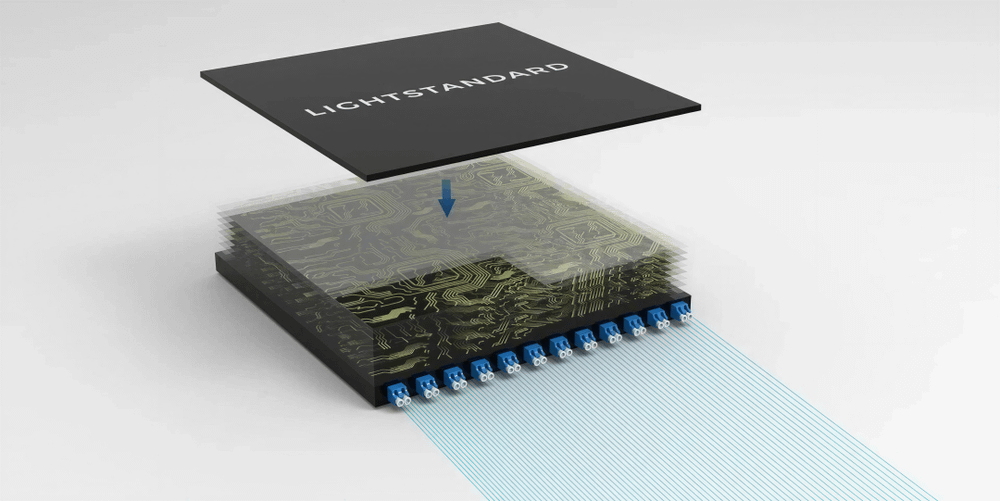
△ Glass-based optical computing system with multi-layer packaging by Light Standard Technology
But from the ground to space, Pu Huanan believes that “optical computing still needs to cross another engineering hurdle.”
During the rocket launch phase, vibrations are extremely intense. Compared with purely electronic chips, optical structures introduce more packaging, and the structural stability of the chip under high-intensity vibration faces additional challenges.
After entering orbit, the optical computing system also needs system-level validation in real space conditions for energy supply, thermal control, and communications.
Optical computation with light-to-light integration: the next ace up the sleeve for space computing power
This path is similar to NVIDIA’s logic of evolving from a single GPU to a cluster-level solution, but the underlying technology routes are entirely different.
Looking across the entire space-based computing industry, development is still at a very early stage today. There is still a fairly long road ahead before large-scale commercial deployment.
Technology validation, system integration, and large-scale deployment—each step still has many engineering challenges to be broken through.
These hurdles include limited onboard power-supply resources, the iteration cycle of space chips, and low-cost scaling into orbit. All of these must be overcome for space-based computing to move from trials to commercialization.
Only when the overall cost of space-based computing is lower than that of ground-based computing, or when the space-based scenario can provide high-value services that the ground cannot replace, will there be real momentum for widespread commercialization.
The space computing track has only just opened. The technology path chosen for computing chips and systems will determine the upper limit of capability for future compute constellations.
As electronic computing gradually hits the limits of the process, optical-electronic integration—or rather, light-based computing combined with light-to-electronic schemes—may be a key card in this race to bypass physical constraints and achieve differentiation.
This article is from the WeChat official account: Quantum Leap (量子位). Author: focusing on cutting-edge technology. Original title: (China’s answer to space computing power: using photons for higher efficiency! Musk and “Old Huang” are both too circuitous)