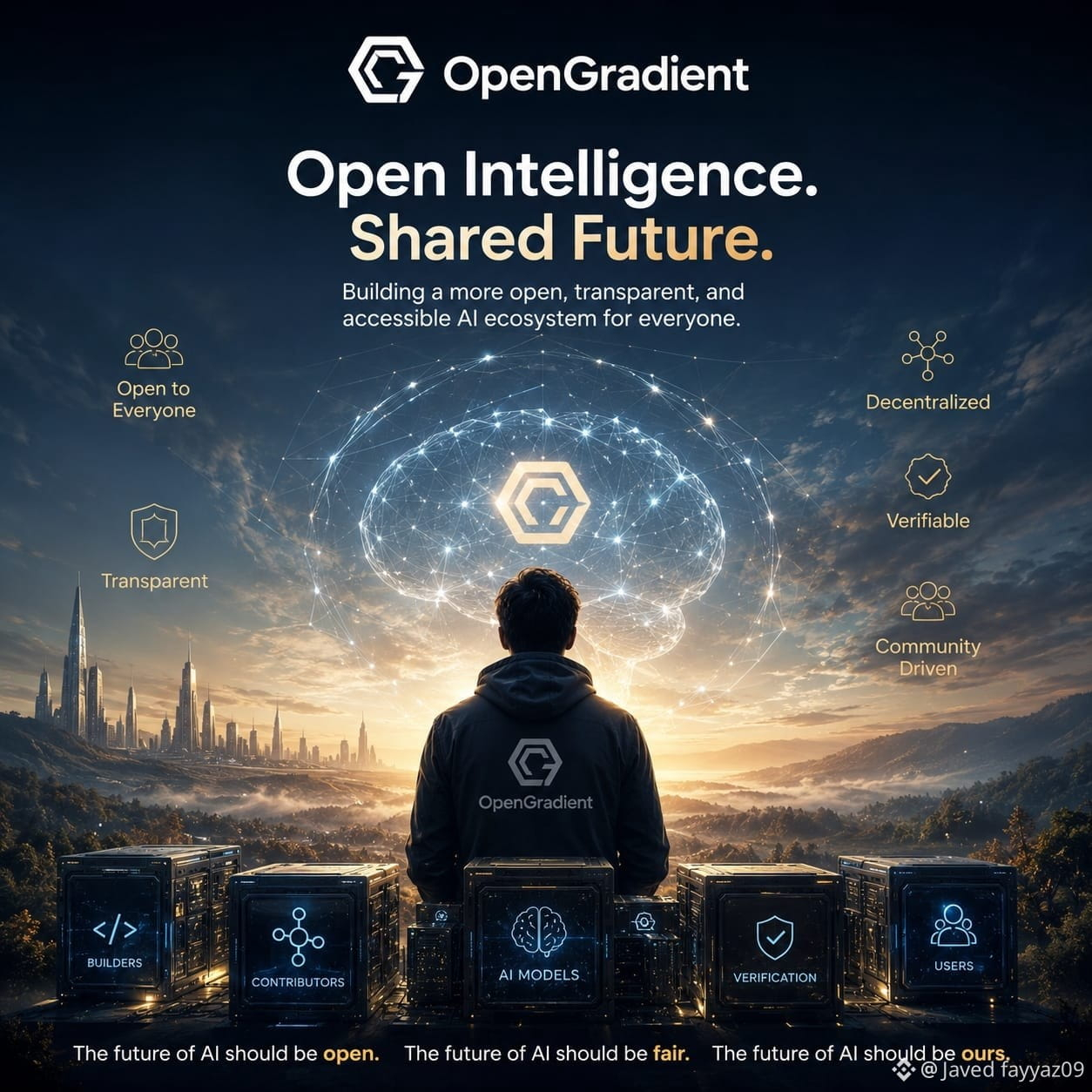
#opg $OPG @OpenGradient The more I learn about OpenGradient, the more I feel its vision is about something much larger than technology itself.
We're entering a future where AI is shaping how people create, learn, and make decisions every day. Yet much of the infrastructure behind that future remains controlled by a small number of powerful players. That makes OpenGradient's idea of Open Intelligence feel both timely and important.
What caught my attention wasn't just the ambition—it was the question it raises: can AI become more open, transparent, and accessible without sacrificing trust and accountability?
Of course, every ambitious vision deserves thoughtful scrutiny. A decentralized system sounds promising, but who carries responsibility when something goes wrong? Do incentives encourage genuine participation, or simply reward those who arrive first? And as networks grow more complex, will ordinary users still understand what they're contributing to, or will trust quietly give way to blind faith?
I don't have all the answers, and perhaps that's the point.
For me, OpenGradient isn't interesting because it claims to have solved every challenge. It's interesting because it's asking some of the right questions about the future of AI. In the end, the true measure of any system isn't how impressive it looks when everything works—it's how fairly it serves people when the difficult moments arrive.
We're entering a future where AI is shaping how people create, learn, and make decisions every day. Yet much of the infrastructure behind that future remains controlled by a small number of powerful players. That makes OpenGradient's idea of Open Intelligence feel both timely and important.
What caught my attention wasn't just the ambition—it was the question it raises: can AI become more open, transparent, and accessible without sacrificing trust and accountability?
Of course, every ambitious vision deserves thoughtful scrutiny. A decentralized system sounds promising, but who carries responsibility when something goes wrong? Do incentives encourage genuine participation, or simply reward those who arrive first? And as networks grow more complex, will ordinary users still understand what they're contributing to, or will trust quietly give way to blind faith?
I don't have all the answers, and perhaps that's the point.
For me, OpenGradient isn't interesting because it claims to have solved every challenge. It's interesting because it's asking some of the right questions about the future of AI. In the end, the true measure of any system isn't how impressive it looks when everything works—it's how fairly it serves people when the difficult moments arrive.