#opg $OPG
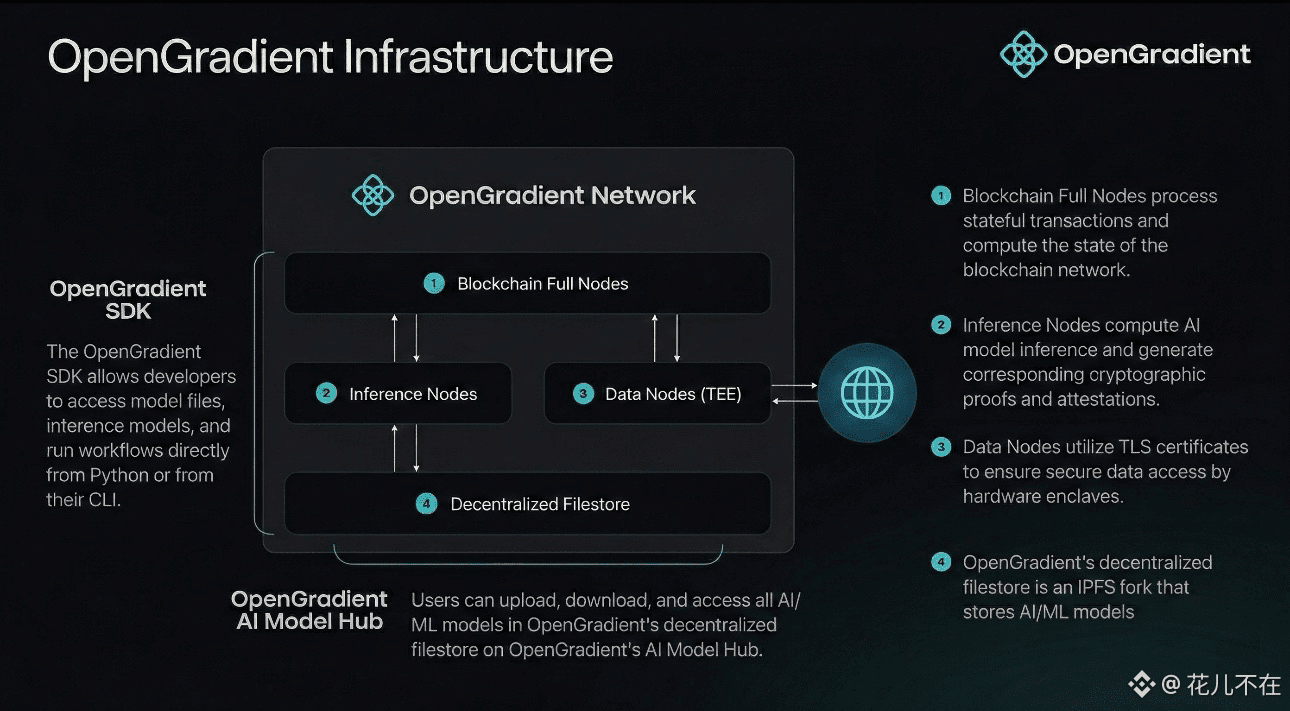
Let's cut to the chase today. I've only recently wrapped my head around OpenGradient. In the past, whenever I heard terms like full nodes and zero-knowledge proofs, my brain would start spinning, feeling too far out of reach. But with a bit of patience to dig into how it actually works, I realized it's basically a bunch of meticulous accountants acting as gatekeepers. Any machine in the network running an AI model, whether it’s inference or training, has to submit its results to those full nodes. These folks hold cryptographic formulas and TEE hardware reports, and if anything doesn't match up? They broadcast it throughout the network, exposing any cheating straight up. Plus, they double-check each other to ensure no detail slips through the cracks. Unlike traditional big firms, where if data goes sideways, they just send out an apology letter and expect you to trust their integrity. Here? Integrity doesn’t cut it; if the math says you’re non-compliant, good luck crying to anyone—those full nodes won’t stamp anything, and that’s that.
You might be wondering, what if the full nodes play dirty? They’re not fools; they have to stake a hefty amount of OPG tokens to get involved. The system monitors everything daily, and if anyone dares to steal or slack off, they’ll lose their chips—ouch, right? Conversely, if they’re thorough and catch the cheaters, the system rewards OPG, clearly priced; who would mess with money? This game is brilliant because it completely sidesteps personal connections, relying purely on incentives and math locking in together. Regular users don’t even need to spend tens of thousands on high-end machines to become nodes; you just call the front end, and those stubborn mules handle the backend, super reliable. I’ve tried it a few times, and honestly, no need to plead with anyone—just call directly, and the results are spot on.
In the future, when AI handles sensitive data, relying on this meticulous crew of nodes is way more solid than any CEO's promises. Using math to validate instead of verbal commitments? That’s the way we roll. Plus, these nodes are eager to earn OPG, so they’re more meticulous than anyone else; think you can pull a fast one? Not a chance. I love this straightforwardness; no need to watch anyone’s face, it’s all about algorithms and hardware being serious. You have to admit, this is way better than those projects that shout “transparency” but show you nothing, right? Anyway, moving forward with AI, I’m sticking with this solid foundation—it gives me peace of mind. @OpenGradient
Let's cut to the chase today. I've only recently wrapped my head around OpenGradient. In the past, whenever I heard terms like full nodes and zero-knowledge proofs, my brain would start spinning, feeling too far out of reach. But with a bit of patience to dig into how it actually works, I realized it's basically a bunch of meticulous accountants acting as gatekeepers. Any machine in the network running an AI model, whether it’s inference or training, has to submit its results to those full nodes. These folks hold cryptographic formulas and TEE hardware reports, and if anything doesn't match up? They broadcast it throughout the network, exposing any cheating straight up. Plus, they double-check each other to ensure no detail slips through the cracks. Unlike traditional big firms, where if data goes sideways, they just send out an apology letter and expect you to trust their integrity. Here? Integrity doesn’t cut it; if the math says you’re non-compliant, good luck crying to anyone—those full nodes won’t stamp anything, and that’s that.
You might be wondering, what if the full nodes play dirty? They’re not fools; they have to stake a hefty amount of OPG tokens to get involved. The system monitors everything daily, and if anyone dares to steal or slack off, they’ll lose their chips—ouch, right? Conversely, if they’re thorough and catch the cheaters, the system rewards OPG, clearly priced; who would mess with money? This game is brilliant because it completely sidesteps personal connections, relying purely on incentives and math locking in together. Regular users don’t even need to spend tens of thousands on high-end machines to become nodes; you just call the front end, and those stubborn mules handle the backend, super reliable. I’ve tried it a few times, and honestly, no need to plead with anyone—just call directly, and the results are spot on.
In the future, when AI handles sensitive data, relying on this meticulous crew of nodes is way more solid than any CEO's promises. Using math to validate instead of verbal commitments? That’s the way we roll. Plus, these nodes are eager to earn OPG, so they’re more meticulous than anyone else; think you can pull a fast one? Not a chance. I love this straightforwardness; no need to watch anyone’s face, it’s all about algorithms and hardware being serious. You have to admit, this is way better than those projects that shout “transparency” but show you nothing, right? Anyway, moving forward with AI, I’m sticking with this solid foundation—it gives me peace of mind. @OpenGradient