$PIPPIN
Many people believe that the market maker of PP does not have enough power to pull the market, which is because they misunderstand the relationship of the spot contract.
First, let's lay out the known conditions.
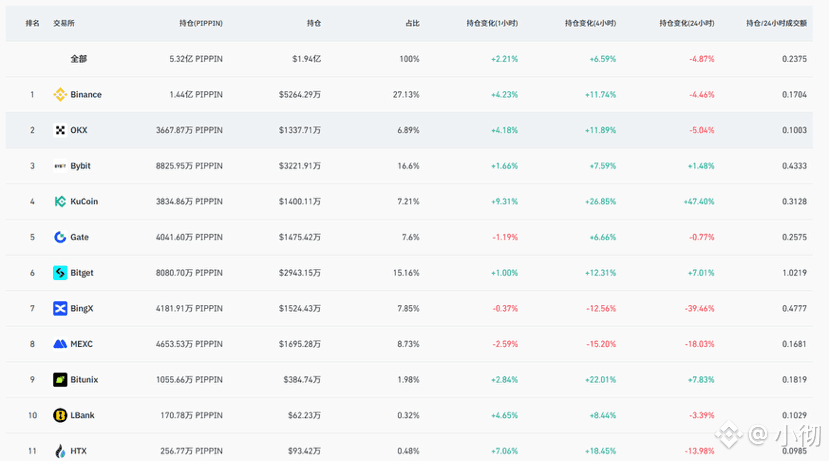
The market maker currently has almost complete control over the supply, and the small traders and ancient wallets that needed to sell have long sold out.
What remains are either closely tied to the market maker,
or the wallets are lost,
or they bought small amounts and have not paid attention since.
Basically, 95% of the addresses holding coins in the chain are dead wallets.
Some believe that pulling the contract must involve pulling the spot as well.
Let's assume that pulling the contract requires pulling the spot.
According to the current market situation, pulling the contract from the current price of around 0.35 to 1 dollar might require tens of billions in turnover, but for the spot, the spot chips are all in the hands of the market maker, with perhaps a small amount in the hands of retail investors.
How much is needed to pull the spot from 0.35 to 100 million dollars?
It may only require a few dozen dollars at minimum.
Because the market maker controls all the chips,
the sell walls on the exchanges are controlled by the market maker.
Thus, such sell walls might appear:
0.4 10
0.5 10
0.6 10
0.7 10
0.8 10
0.9 10
1 10
Then the market maker can use large buy orders to block the sell wall at 1, and since retail investors have no chips, they naturally cannot push down.
Some say that retail investors might also buy chips during this process, what does that count as? The market maker only lets out a little, then uses a huge buy order to block it, allowing retail investors to turn a small amount of money several times, which the market maker can handle.
In the chain, it’s all robots; as long as they monitor that prices elsewhere are higher than the prices on-chain, these robots will collectively buy in, and eventually, prices will align.
So, for the market maker, the hardest market to control is the contract market.
If the market maker can pull the contract without needing to operate the spot,
then similarly, other exchanges and on-chain will also see arbitrage opportunities, ultimately bringing prices closer together everywhere.
This may seem simple, but it is not.
As the open interest in contracts grows and the transaction volume increases, a sharp drop is inevitable, because many whales join in, which is a double-edged sword; they will push the price forward towards the market maker’s current position while also diluting the market maker's profits. Therefore, when significant volume occurs, a sharp drop is certain.
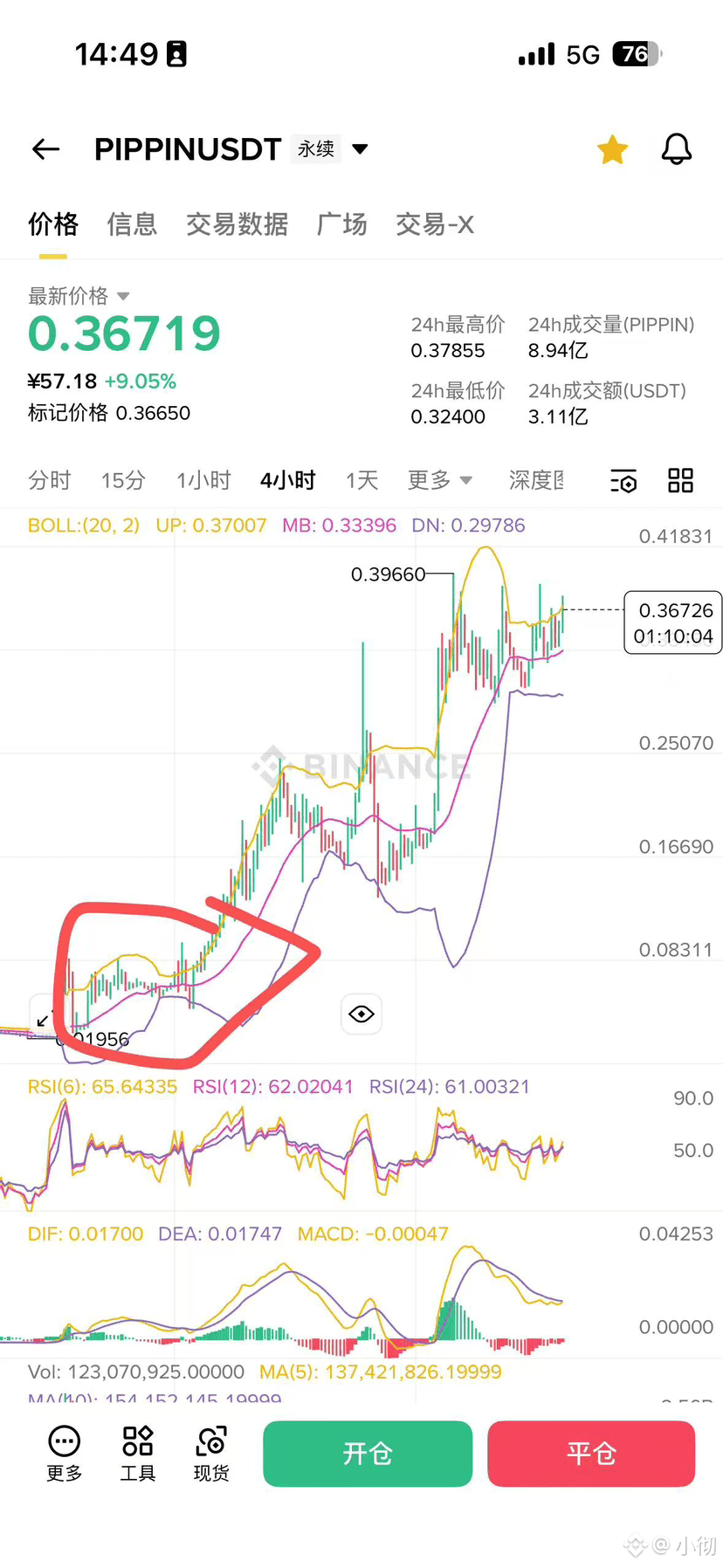
Regarding the current price, I first look at the pattern circled in Graph 2, first a false breakout, then a false breakdown, and then the price continues to rise towards 1.
Many people believe that the market maker of PP does not have enough power to pull the market, which is because they misunderstand the relationship of the spot contract.
First, let's lay out the known conditions.
The market maker currently has almost complete control over the supply, and the small traders and ancient wallets that needed to sell have long sold out.
What remains are either closely tied to the market maker,
or the wallets are lost,
or they bought small amounts and have not paid attention since.
Basically, 95% of the addresses holding coins in the chain are dead wallets.
Some believe that pulling the contract must involve pulling the spot as well.
Let's assume that pulling the contract requires pulling the spot.
According to the current market situation, pulling the contract from the current price of around 0.35 to 1 dollar might require tens of billions in turnover, but for the spot, the spot chips are all in the hands of the market maker, with perhaps a small amount in the hands of retail investors.
How much is needed to pull the spot from 0.35 to 100 million dollars?
It may only require a few dozen dollars at minimum.
Because the market maker controls all the chips,
the sell walls on the exchanges are controlled by the market maker.
Thus, such sell walls might appear:
0.4 10
0.5 10
0.6 10
0.7 10
0.8 10
0.9 10
1 10
Then the market maker can use large buy orders to block the sell wall at 1, and since retail investors have no chips, they naturally cannot push down.
Some say that retail investors might also buy chips during this process, what does that count as? The market maker only lets out a little, then uses a huge buy order to block it, allowing retail investors to turn a small amount of money several times, which the market maker can handle.
In the chain, it’s all robots; as long as they monitor that prices elsewhere are higher than the prices on-chain, these robots will collectively buy in, and eventually, prices will align.
So, for the market maker, the hardest market to control is the contract market.
If the market maker can pull the contract without needing to operate the spot,
then similarly, other exchanges and on-chain will also see arbitrage opportunities, ultimately bringing prices closer together everywhere.
This may seem simple, but it is not.
As the open interest in contracts grows and the transaction volume increases, a sharp drop is inevitable, because many whales join in, which is a double-edged sword; they will push the price forward towards the market maker’s current position while also diluting the market maker's profits. Therefore, when significant volume occurs, a sharp drop is certain.
Regarding the current price, I first look at the pattern circled in Graph 2, first a false breakout, then a false breakdown, and then the price continues to rise towards 1.