

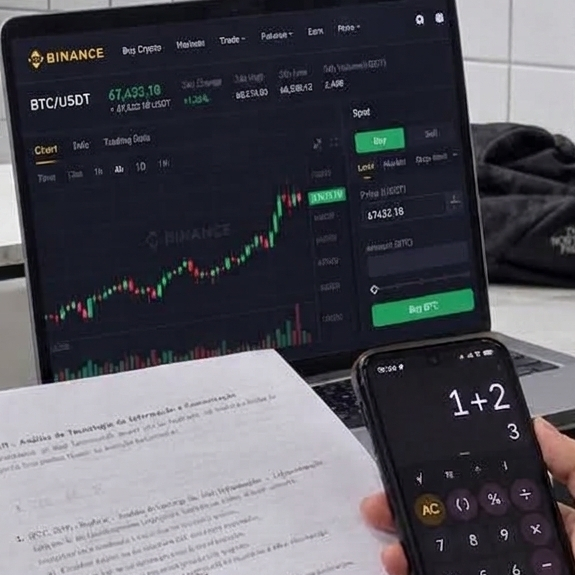
Have you ever entered digital trades and found yourself losing even though your analysis was spot on? 🛑 The problem often isn't with your technical analysis, but rather a concept that many newbies overlook: "Capital Management and Position Sizing." The secret that separates the pro trader from the newbie is that the pro doesn't think, "How much will I earn?" but instead, "How much will I lose if the market goes against me?" Here's the golden formula that protects you from getting liquidated:
1️⃣ The 1% to 2% rule:
Never risk losing more than 1% to 2% of your total portfolio in a single trade. (If your portfolio is $1000, the maximum loss you should take on a trade when hitting your stop loss is just $10 to $20).
2️⃣ Set your Stop Loss first:
Before you hit the buy button, determine where you'll exit if the analysis fails. The stop loss isn't your enemy; it's your safety belt.
3️⃣ Adjust your position size, not your leverage:
High leverage without considering risk is the fastest route to loss. Learn how to calculate the size of your position based on the distance from your entry point to your stop loss.
💡 Always remember: the market is filled with fresh opportunities every day, but if your capital runs out, you won't be able to seize the next chance. Staying in the market is the first step to profit!
👇 Share with me in the comments:
What percentage do you usually risk in your trades? And do you always stick to setting a Stop Loss (SL)?
#BiananceSquare #cryptouniverseofficial $MUB $BTC
1️⃣ The 1% to 2% rule:
Never risk losing more than 1% to 2% of your total portfolio in a single trade. (If your portfolio is $1000, the maximum loss you should take on a trade when hitting your stop loss is just $10 to $20).
2️⃣ Set your Stop Loss first:
Before you hit the buy button, determine where you'll exit if the analysis fails. The stop loss isn't your enemy; it's your safety belt.
3️⃣ Adjust your position size, not your leverage:
High leverage without considering risk is the fastest route to loss. Learn how to calculate the size of your position based on the distance from your entry point to your stop loss.
💡 Always remember: the market is filled with fresh opportunities every day, but if your capital runs out, you won't be able to seize the next chance. Staying in the market is the first step to profit!
👇 Share with me in the comments:
What percentage do you usually risk in your trades? And do you always stick to setting a Stop Loss (SL)?
#BiananceSquare #cryptouniverseofficial $MUB $BTC