
KAZ_0
22k Posts

KAZ_0
 Square Verified+
Crypto expert | market analysis | Five years of experience $BTC $ETH $SOL
Open Trade
High-Frequency Trader
1.7 Years
397 Following
45.2K+ Followers
45.1K+ Liked
Posts
Portfolio
All
Quotes
Live
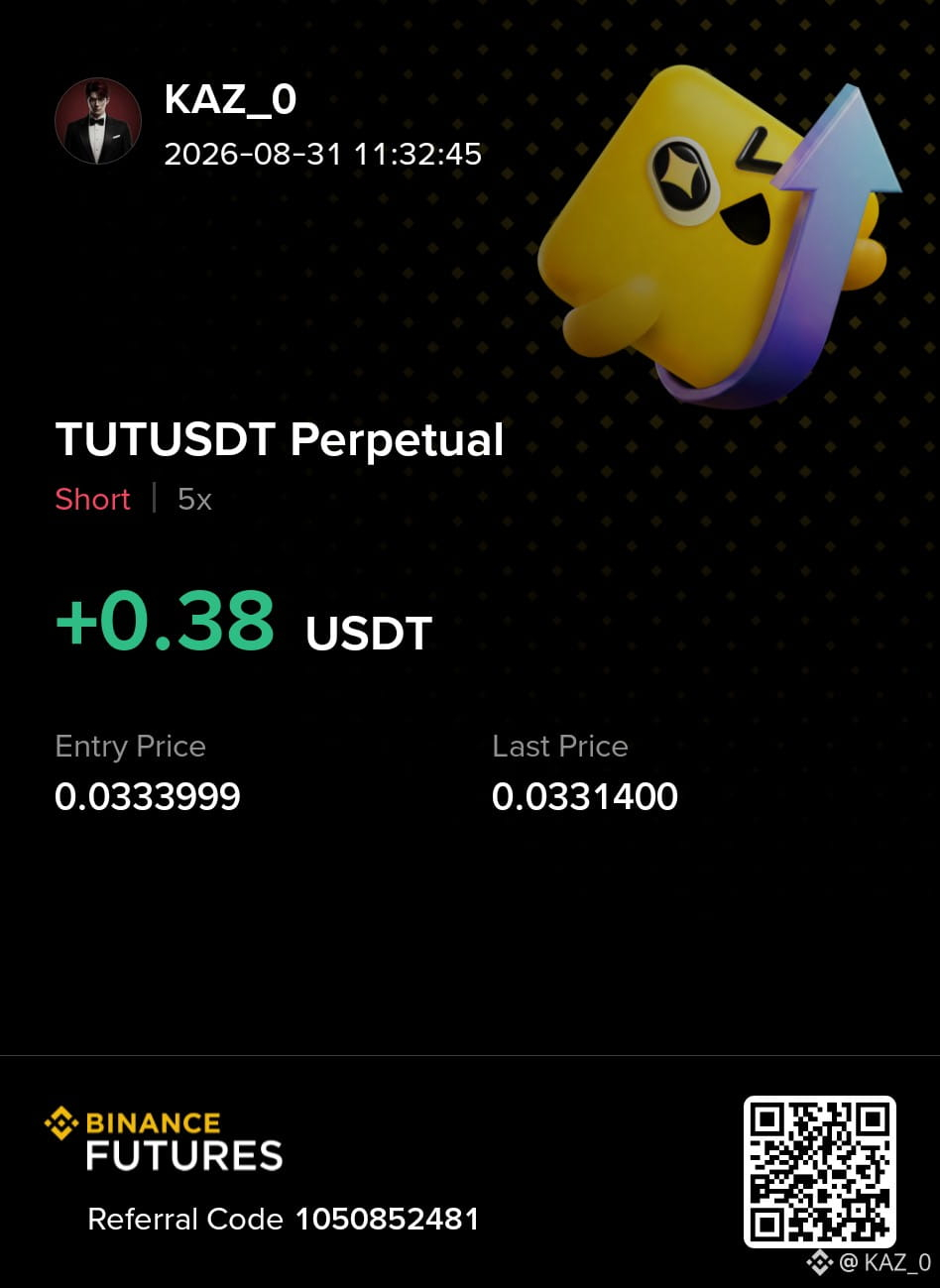
Short $TUT 49.4 USDT
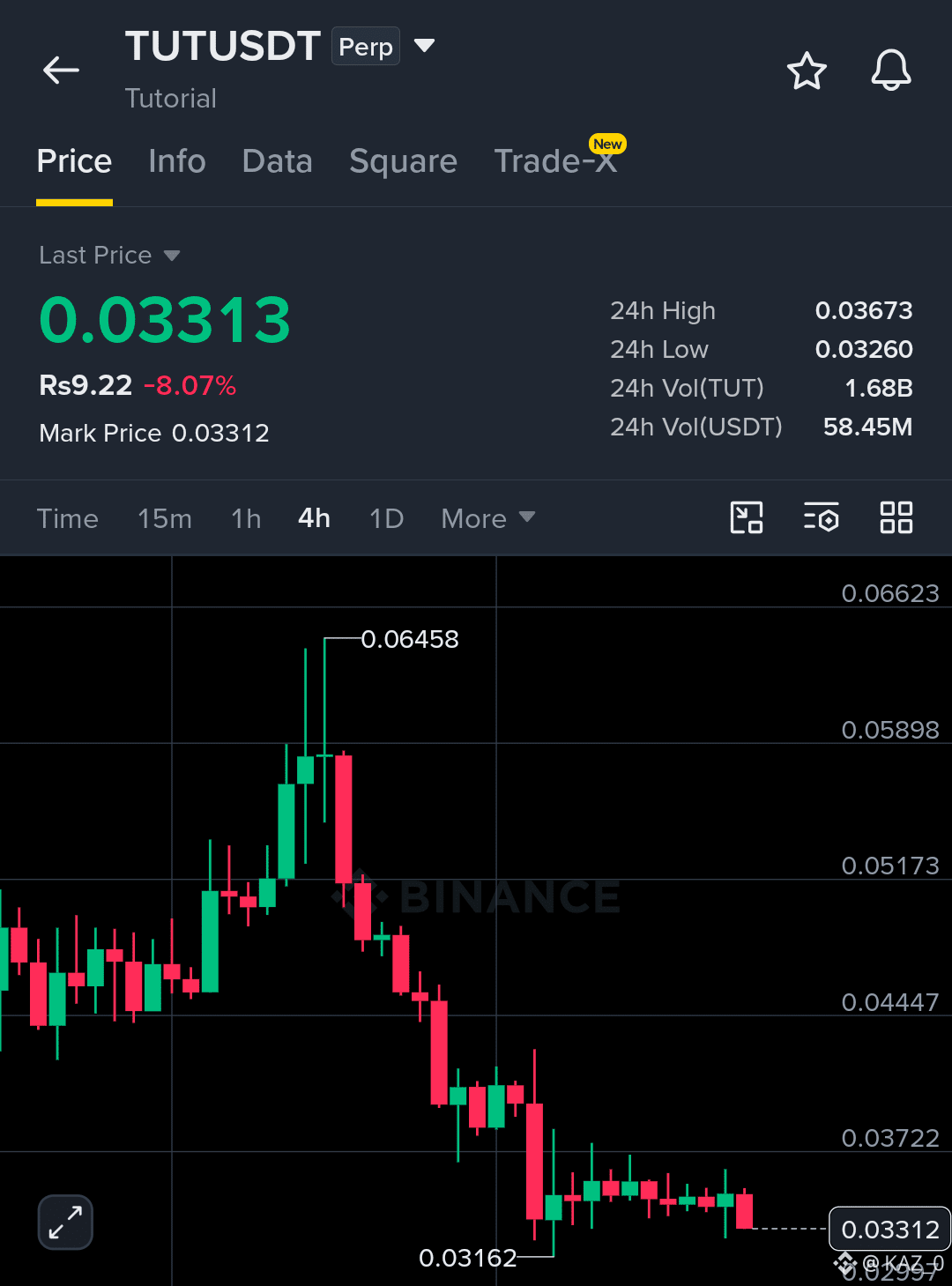
$TUT USDT — Support Breakdown Setup
Signal Action: Short TUT
Entry Range: 0.03290 – 0.03330
Stop Loss (SL): 0.03730
Take Profit (TP) Levels: TP1 0.03160 TP2 0.02997 TP3 0.02850
TUT is still showing a strong downtrend with weak buying pressure. If 0.03162 breaks the price could move lower toward the next targets.
$TUT
Signal Action: Short TUT
Entry Range: 0.03290 – 0.03330
Stop Loss (SL): 0.03730
Take Profit (TP) Levels: TP1 0.03160 TP2 0.02997 TP3 0.02850
TUT is still showing a strong downtrend with weak buying pressure. If 0.03162 breaks the price could move lower toward the next targets.
$TUT
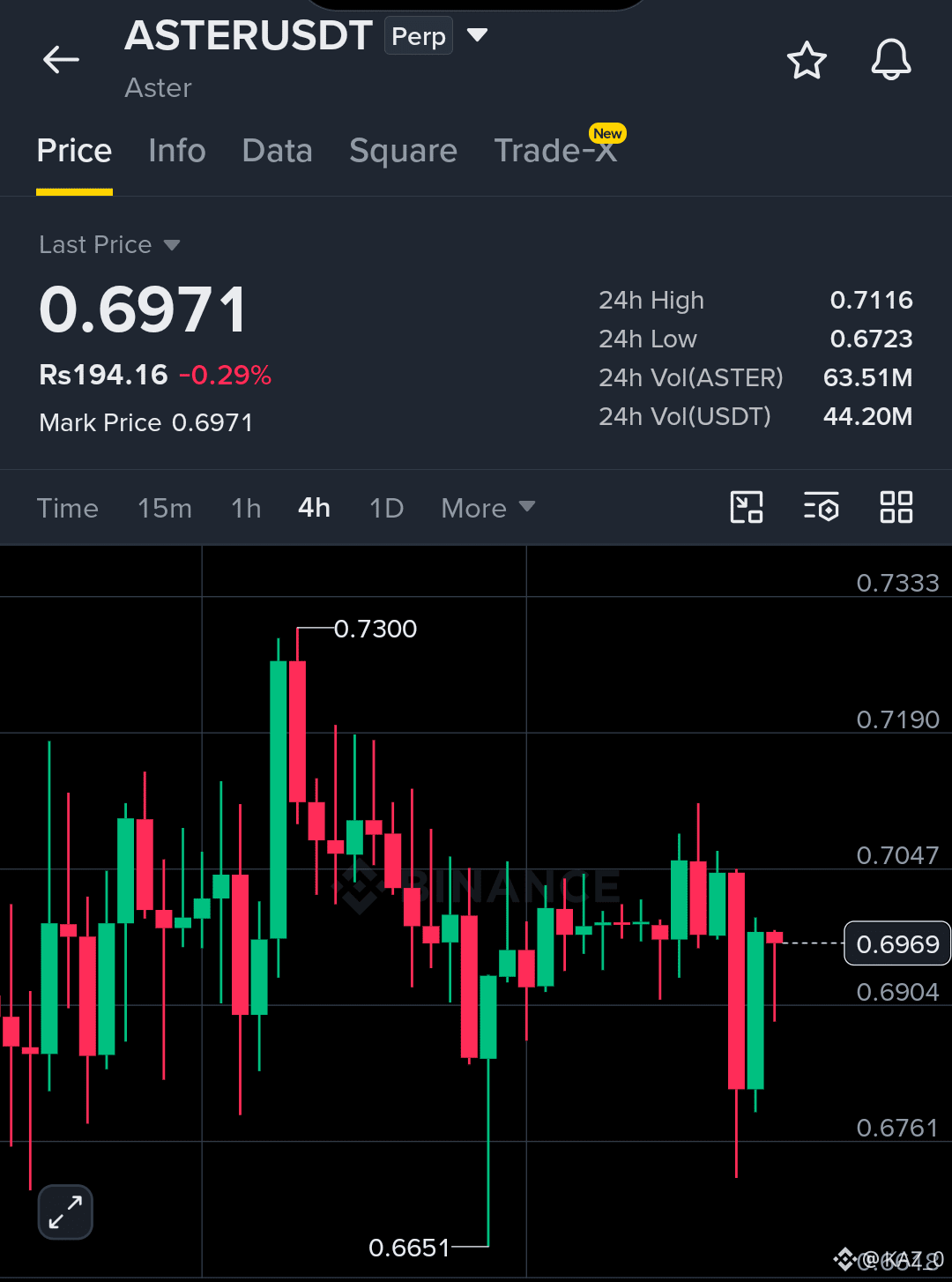
$ASTER — Resistance Rejection Possible Move Down
Signal Action: Short ASTER
Entry Range: 0.7040 – 0.7100
Stop Loss (SL): 0.7180
Take Profit (TP) Levels:
TP1: 0.6980
TP2: 0.6900
TP3: 0.6800
ASTER is facing selling pressure near the resistance area after the recent bounce. If price fails to break higher and drops below 0.6980 ASTER could move toward 0.6900 and 0.6800.
$ASTER
Signal Action: Short ASTER
Entry Range: 0.7040 – 0.7100
Stop Loss (SL): 0.7180
Take Profit (TP) Levels:
TP1: 0.6980
TP2: 0.6900
TP3: 0.6800
ASTER is facing selling pressure near the resistance area after the recent bounce. If price fails to break higher and drops below 0.6980 ASTER could move toward 0.6900 and 0.6800.
$ASTER
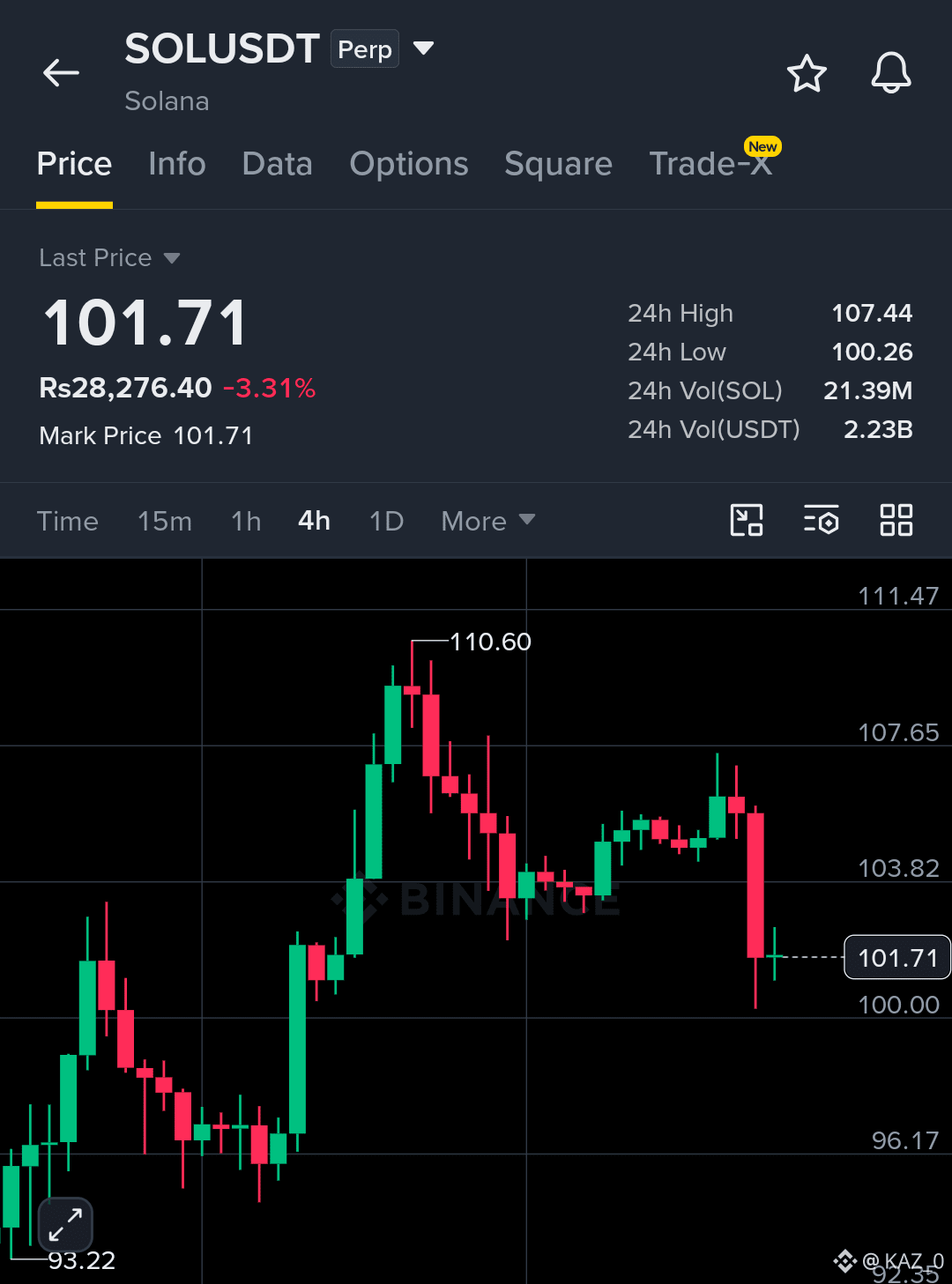
$SOL Rejected Resistance — Short Setup
Action: Short $SOL
Entry: 101.50 – 102.20
Stop Loss: 104.30
TP1: 100.00
TP2: 98.00
TP3: 96.20
SOL could not break the 104–105 resistance area, and sellers pushed the price back near $100. If SOL stays below 102, the price may continue down toward 100, 98, and 96.20.
$SOL
Action: Short $SOL
Entry: 101.50 – 102.20
Stop Loss: 104.30
TP1: 100.00
TP2: 98.00
TP3: 96.20
SOL could not break the 104–105 resistance area, and sellers pushed the price back near $100. If SOL stays below 102, the price may continue down toward 100, 98, and 96.20.
$SOL
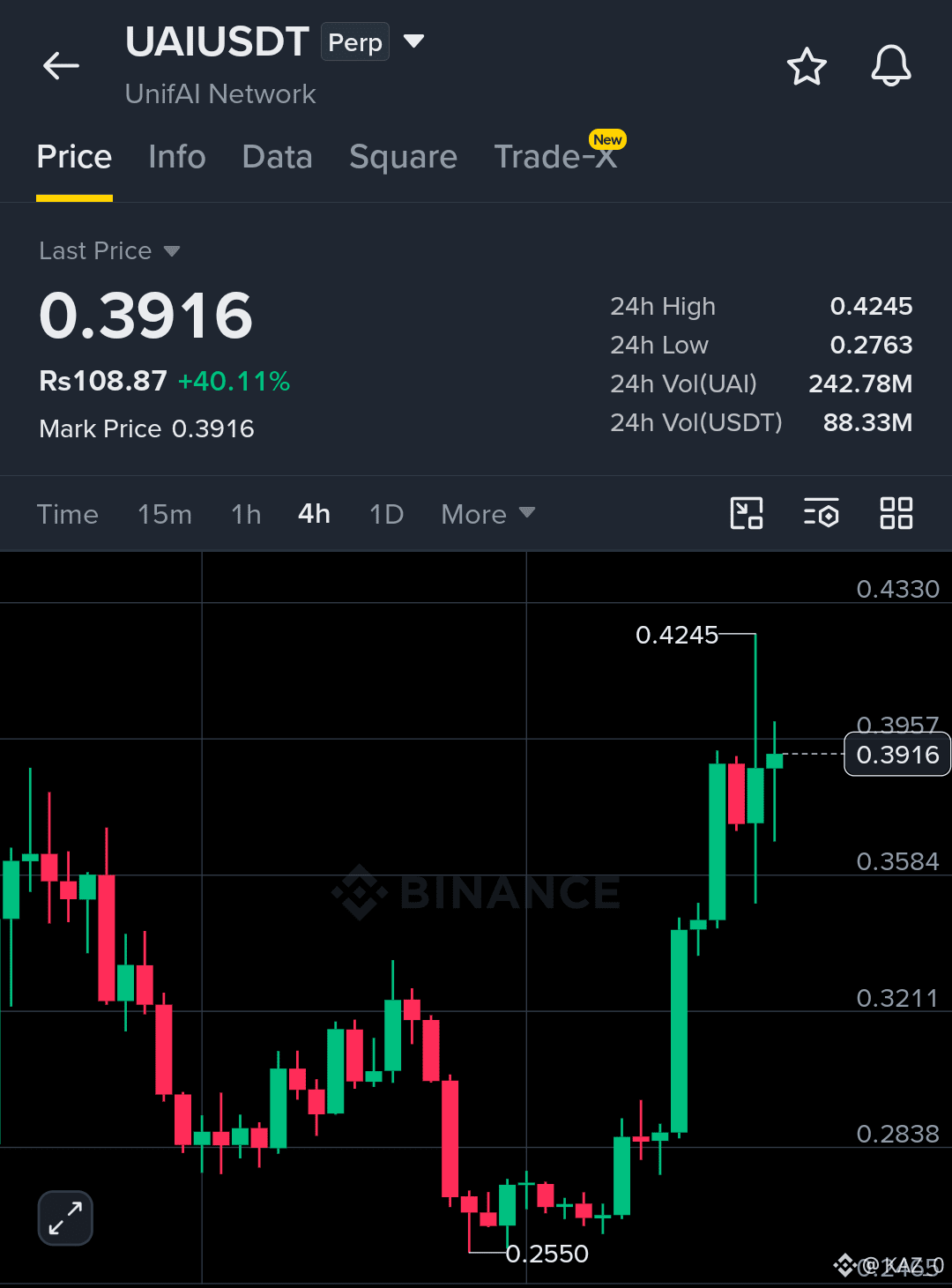
$UAI — Strong Breakout
Signal Action: Long
Entry Range: 0.3850–0.3950
Stop Loss: 0.3580
Take Profit: TP1 0.4245 | TP2 0.4500 | TP3 0.4800
$UAI has moved up strongly and is holding near 0.39. If the price stays above 0.3957, it could move toward 0.4245 and higher. If it falls below 0.3580, this setup may no longer be valid.
$UAI
Signal Action: Long
Entry Range: 0.3850–0.3950
Stop Loss: 0.3580
Take Profit: TP1 0.4245 | TP2 0.4500 | TP3 0.4800
$UAI has moved up strongly and is holding near 0.39. If the price stays above 0.3957, it could move toward 0.4245 and higher. If it falls below 0.3580, this setup may no longer be valid.
$UAI
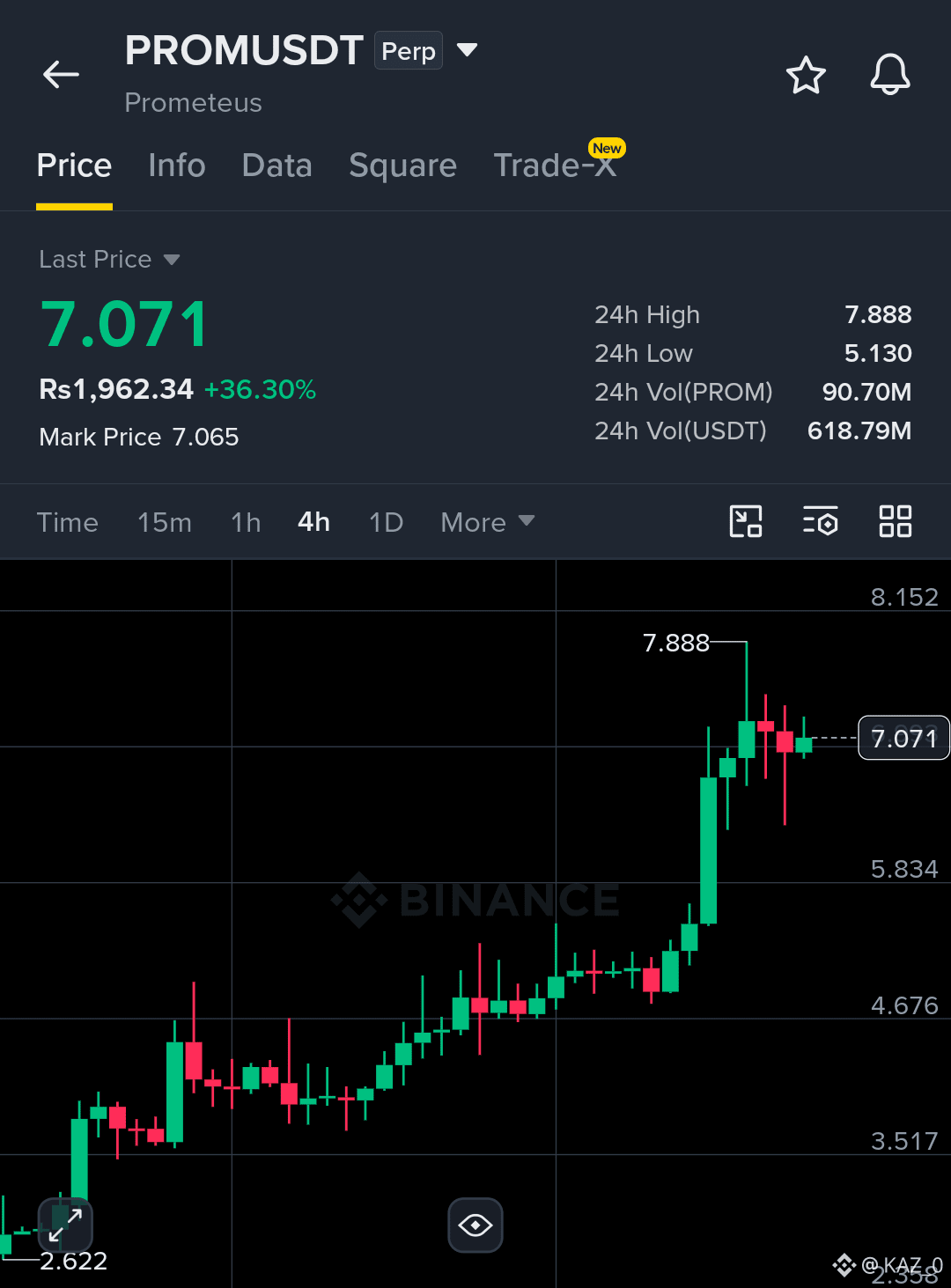
$PROM — Strong Breakout
Signal: Long PROM
Entry: 6.70 – 7.05
Stop Loss: 6.20
TP1: 7.85
TP2: 8.50
TP3: 9.20
$PROM has moved above resistance with strong buying. If the price stays above 6.70–7.00, it could continue moving higher toward the targets.
$PROM
Signal: Long PROM
Entry: 6.70 – 7.05
Stop Loss: 6.20
TP1: 7.85
TP2: 8.50
TP3: 9.20
$PROM has moved above resistance with strong buying. If the price stays above 6.70–7.00, it could continue moving higher toward the targets.
$PROM
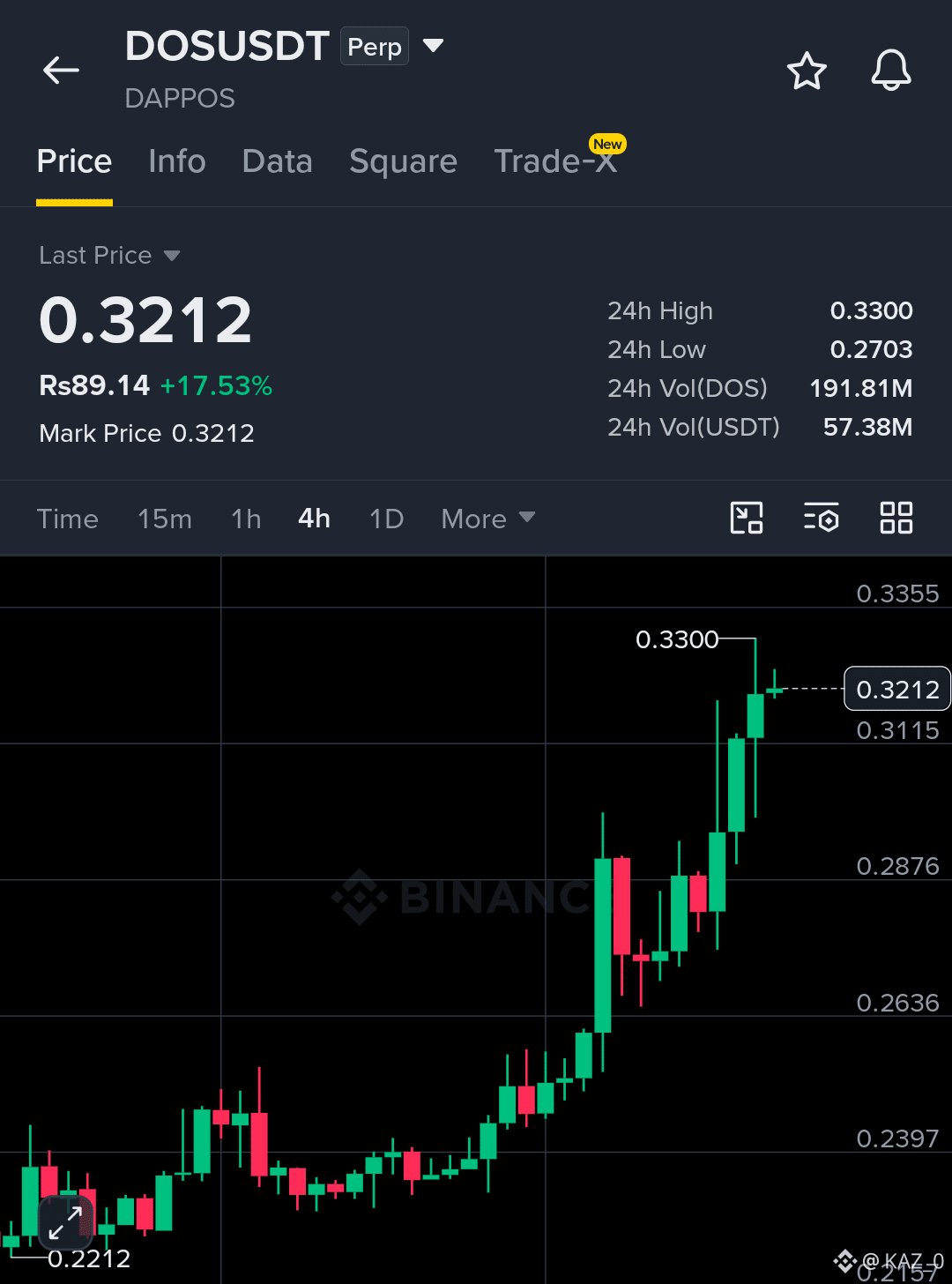
$DOS — Strong Move Up
Signal: Long $DOS
Entry: 0.3150 – 0.3210
Stop Loss: 0.3050
Targets: TP1 0.3300 | TP2 0.3450 | TP3 0.3600
DOS is moving up strongly on the 4H chart and buyers are still active. If the price stays above 0.3115, it could move toward 0.3300, then possibly 0.3450 and 0.3600.
$DOS
Signal: Long $DOS
Entry: 0.3150 – 0.3210
Stop Loss: 0.3050
Targets: TP1 0.3300 | TP2 0.3450 | TP3 0.3600
DOS is moving up strongly on the 4H chart and buyers are still active. If the price stays above 0.3115, it could move toward 0.3300, then possibly 0.3450 and 0.3600.
$DOS
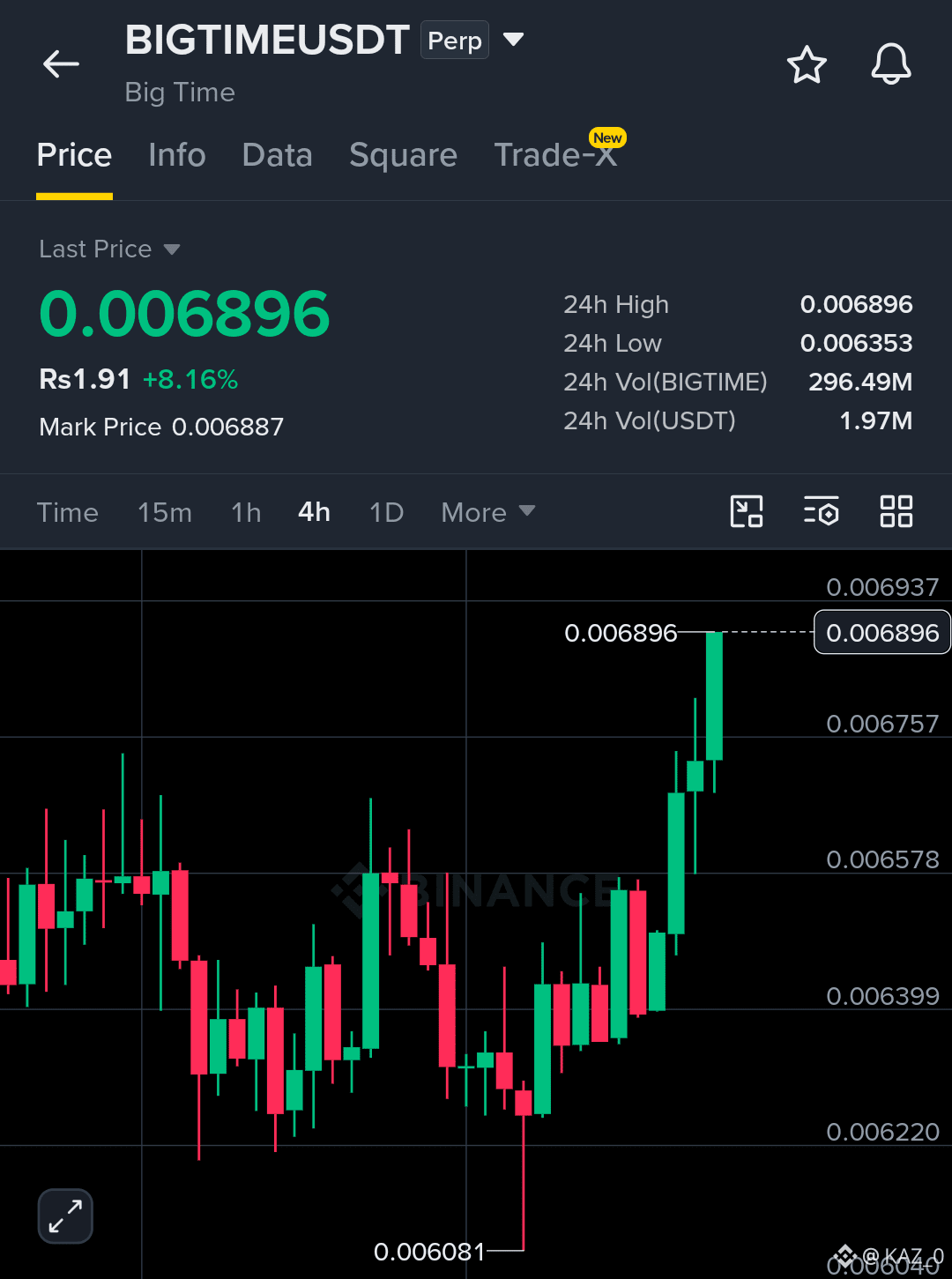
$BIGTIME BREAKOUT — Buyers Are Strong
Signal Action: Long BIGTIME
Entry Range: 0.00675 – 0.00682
Stop Loss (SL): 0.00655
Take Profit (TP): TP1 0.00705 | TP2 0.00725 | TP3 0.00750
$BIGTIME has moved above the 0.00675 resistance with strong buying pressure. If the price stays above this level, it can move toward 0.00705, 0.00725, and 0.00750.
$BIGTIME
Signal Action: Long BIGTIME
Entry Range: 0.00675 – 0.00682
Stop Loss (SL): 0.00655
Take Profit (TP): TP1 0.00705 | TP2 0.00725 | TP3 0.00750
$BIGTIME has moved above the 0.00675 resistance with strong buying pressure. If the price stays above this level, it can move toward 0.00705, 0.00725, and 0.00750.
$BIGTIME
$DUSK caught my attention for a different reason.
I’ll be honest, I first saw it as another privacy-focused L1. Then I dug deeper and started looking at what it’s actually trying to do.
Financial markets want onchain settlement, sure. But banks, funds and investors can’t exactly put every balance, position and transaction on a public ledger for everyone to watch.
That’s where Dusk gets interesting.
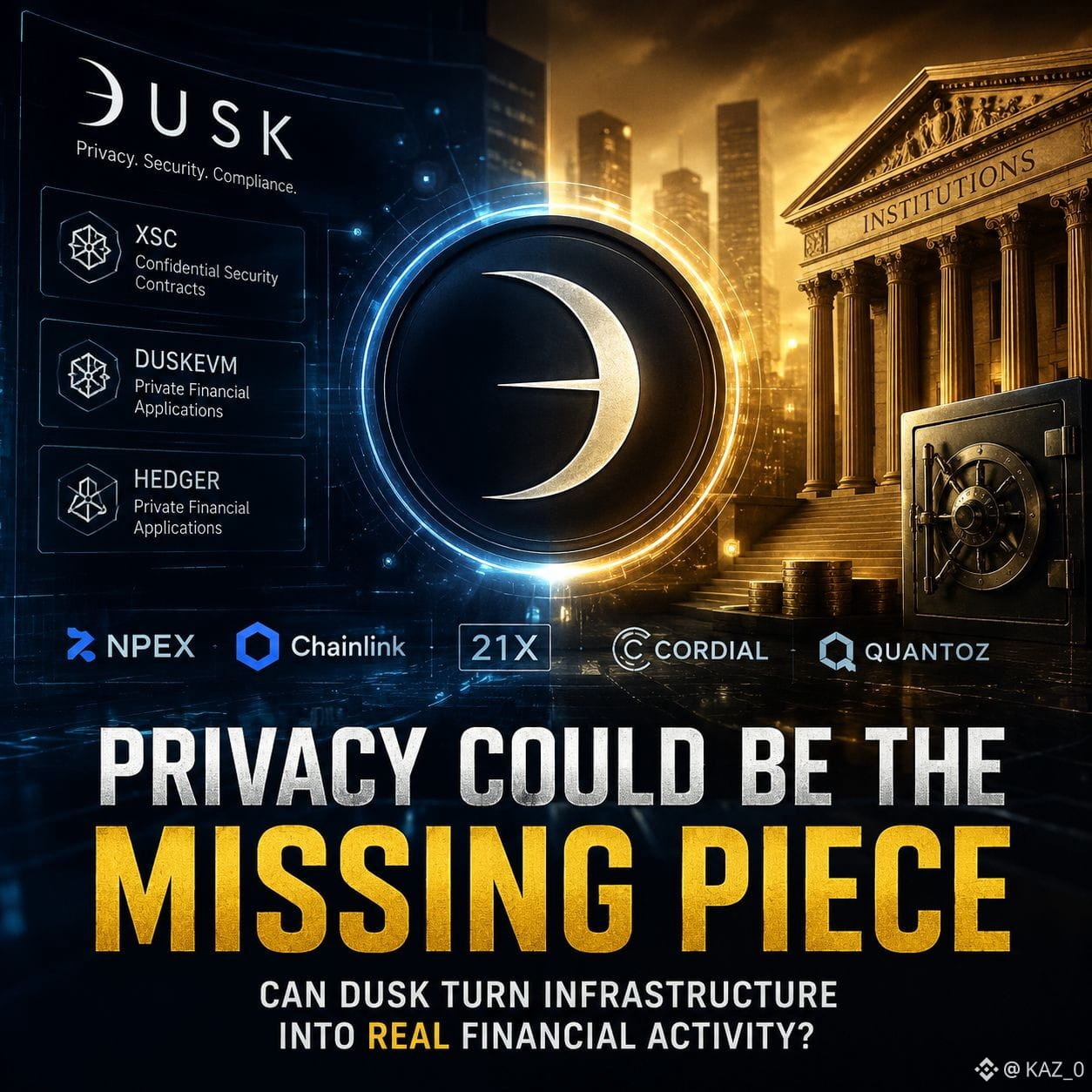
XSC is built for confidential security contracts, while Dusk is also working on DuskEVM and Hedger for private financial apps. The NPEX, Chainlink, 21X, Cordial and Quantoz connections make the direction pretty clear too.
But I’m not calling partnerships adoption.
Now that Dusk mainnet is live, the clock is ticking on the boring stuff I actually care about: real assets, users, trading volume, settlement and fees.
And there’s another thing. Institutions move slowly. Banks don’t jump onchain just because the tech looks good. Risk, compliance and approvals can take a long time.
So I’m watching what happens next.
If Dusk can turn all this infrastructure into actual financial activity, the story gets much more interesting.
I think privacy could become a real requirement for onchain finance, not just a nice feature.
But can Dusk get institutions from “this looks interesting” to actually using it?
@Dusk #dusk $DUSK
I’ll be honest, I first saw it as another privacy-focused L1. Then I dug deeper and started looking at what it’s actually trying to do.
Financial markets want onchain settlement, sure. But banks, funds and investors can’t exactly put every balance, position and transaction on a public ledger for everyone to watch.
That’s where Dusk gets interesting.
XSC is built for confidential security contracts, while Dusk is also working on DuskEVM and Hedger for private financial apps. The NPEX, Chainlink, 21X, Cordial and Quantoz connections make the direction pretty clear too.
But I’m not calling partnerships adoption.
Now that Dusk mainnet is live, the clock is ticking on the boring stuff I actually care about: real assets, users, trading volume, settlement and fees.
And there’s another thing. Institutions move slowly. Banks don’t jump onchain just because the tech looks good. Risk, compliance and approvals can take a long time.
So I’m watching what happens next.
If Dusk can turn all this infrastructure into actual financial activity, the story gets much more interesting.
I think privacy could become a real requirement for onchain finance, not just a nice feature.
But can Dusk get institutions from “this looks interesting” to actually using it?
@Dusk #dusk $DUSK
·
--
🎙️ $DUSK Zedger and the Future of Security Tokens
End
01 h 13 m 21 s
171
DUSK/USDT
Market/Sell
Filled
0
$DUSK is one of those projects where the architecture matters much more than short-term price action.
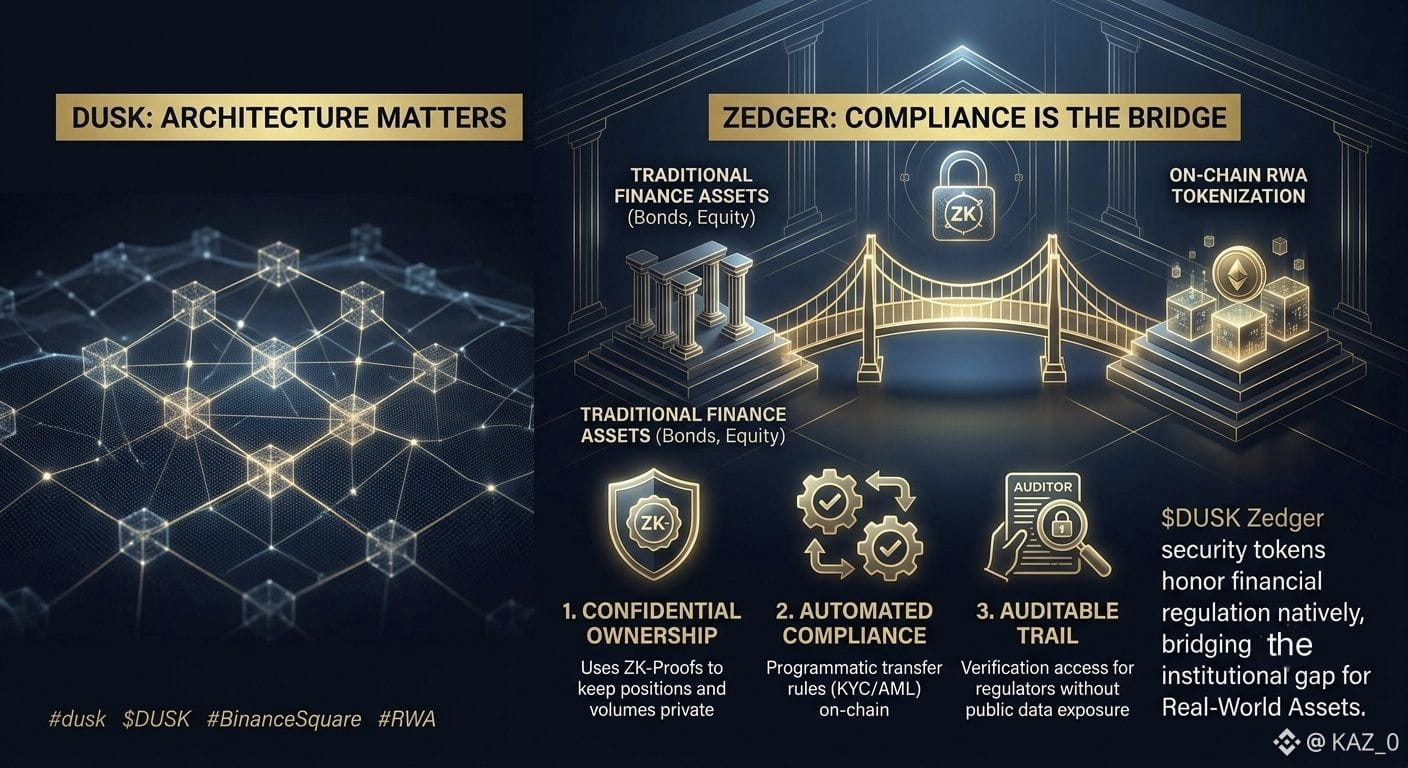
Beyond general transaction privacy, what really stands out in Dusk’s infrastructure is Zedger — their specialized protocol designed specifically for regulated security tokens.
Traditional financial assets like private equity, corporate bonds, and regulated funds can’t just move freely on a standard public ledger. They require strict ownership rules, transfer restrictions, and regulatory compliance.
Zedger handles this by embedding compliance logic directly into the token structure itself:
Confidential Ownership: Keeps investor positions and trade volumes private using zero-knowledge proofs.
Automated Compliance: Enforces transfer restrictions like KYC/AML and investor caps programmatically on-chain without relying on centralized intermediaries.
Auditable Trail: Allows authorized regulators and auditors to verify compliance without exposing public transaction histories.
Tokenizing real-world assets isn’t just about putting a balance on a blockchain — it’s about honoring financial regulation natively. Zedger seems built for exactly that bridge.
Will protocol-level compliance frameworks like Zedger become mandatory for institutional RWA adoption, or will traditional markets stick to centralized settlement layers?
@Dusk #dusk $DUSK
Beyond general transaction privacy, what really stands out in Dusk’s infrastructure is Zedger — their specialized protocol designed specifically for regulated security tokens.
Traditional financial assets like private equity, corporate bonds, and regulated funds can’t just move freely on a standard public ledger. They require strict ownership rules, transfer restrictions, and regulatory compliance.
Zedger handles this by embedding compliance logic directly into the token structure itself:
Confidential Ownership: Keeps investor positions and trade volumes private using zero-knowledge proofs.
Automated Compliance: Enforces transfer restrictions like KYC/AML and investor caps programmatically on-chain without relying on centralized intermediaries.
Auditable Trail: Allows authorized regulators and auditors to verify compliance without exposing public transaction histories.
Tokenizing real-world assets isn’t just about putting a balance on a blockchain — it’s about honoring financial regulation natively. Zedger seems built for exactly that bridge.
Will protocol-level compliance frameworks like Zedger become mandatory for institutional RWA adoption, or will traditional markets stick to centralized settlement layers?
@Dusk #dusk $DUSK
Verified
Okay so $DUSK did something that actually made me stop mid-scroll — two completely different transaction models, same chain.
Most chains kind of box you in. Either full transparency, or full privacy, pick one. Dusk's answer seems to be... why not just have both?
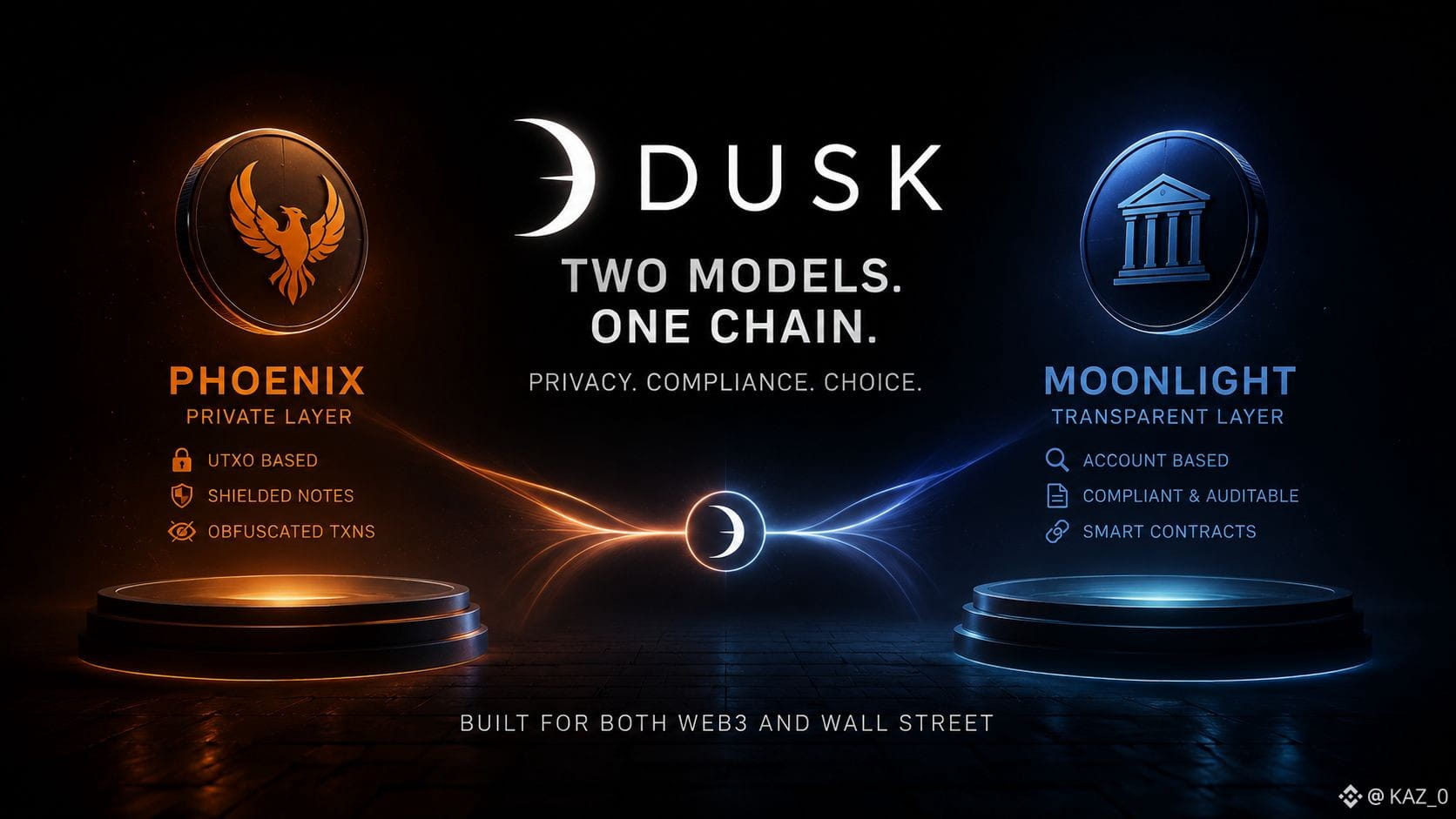
Phoenix handles the private side — UTXO based, shielded notes, obfuscated transactions. This is more for general privacy needs, treasury moves, stuff where you just don't want every transfer sitting out in the open.
Moonlight's the other one — transparent, account-based, and this is actually where the regulated stuff lives. Securities, RWA, compliance-heavy use cases, smart contracts — anywhere auditors need a clean, visible trail. Feels pretty close to Ethereum's model, honestly.
What gets me is Dusk isn't making developers commit to one lane. Same ecosystem, both options, switch depending on what you're actually building.
And if traditional finance is ever going to move on-chain for real — I think this kind of flexibility ends up mattering more than people expect.
Curious though — does this dual-model thing become the standard for institutional projects, or does it stay a Dusk-specific bet?
@Dusk #dusk $DUSK
Most chains kind of box you in. Either full transparency, or full privacy, pick one. Dusk's answer seems to be... why not just have both?
Phoenix handles the private side — UTXO based, shielded notes, obfuscated transactions. This is more for general privacy needs, treasury moves, stuff where you just don't want every transfer sitting out in the open.
Moonlight's the other one — transparent, account-based, and this is actually where the regulated stuff lives. Securities, RWA, compliance-heavy use cases, smart contracts — anywhere auditors need a clean, visible trail. Feels pretty close to Ethereum's model, honestly.
What gets me is Dusk isn't making developers commit to one lane. Same ecosystem, both options, switch depending on what you're actually building.
And if traditional finance is ever going to move on-chain for real — I think this kind of flexibility ends up mattering more than people expect.
Curious though — does this dual-model thing become the standard for institutional projects, or does it stay a Dusk-specific bet?
@Dusk #dusk $DUSK
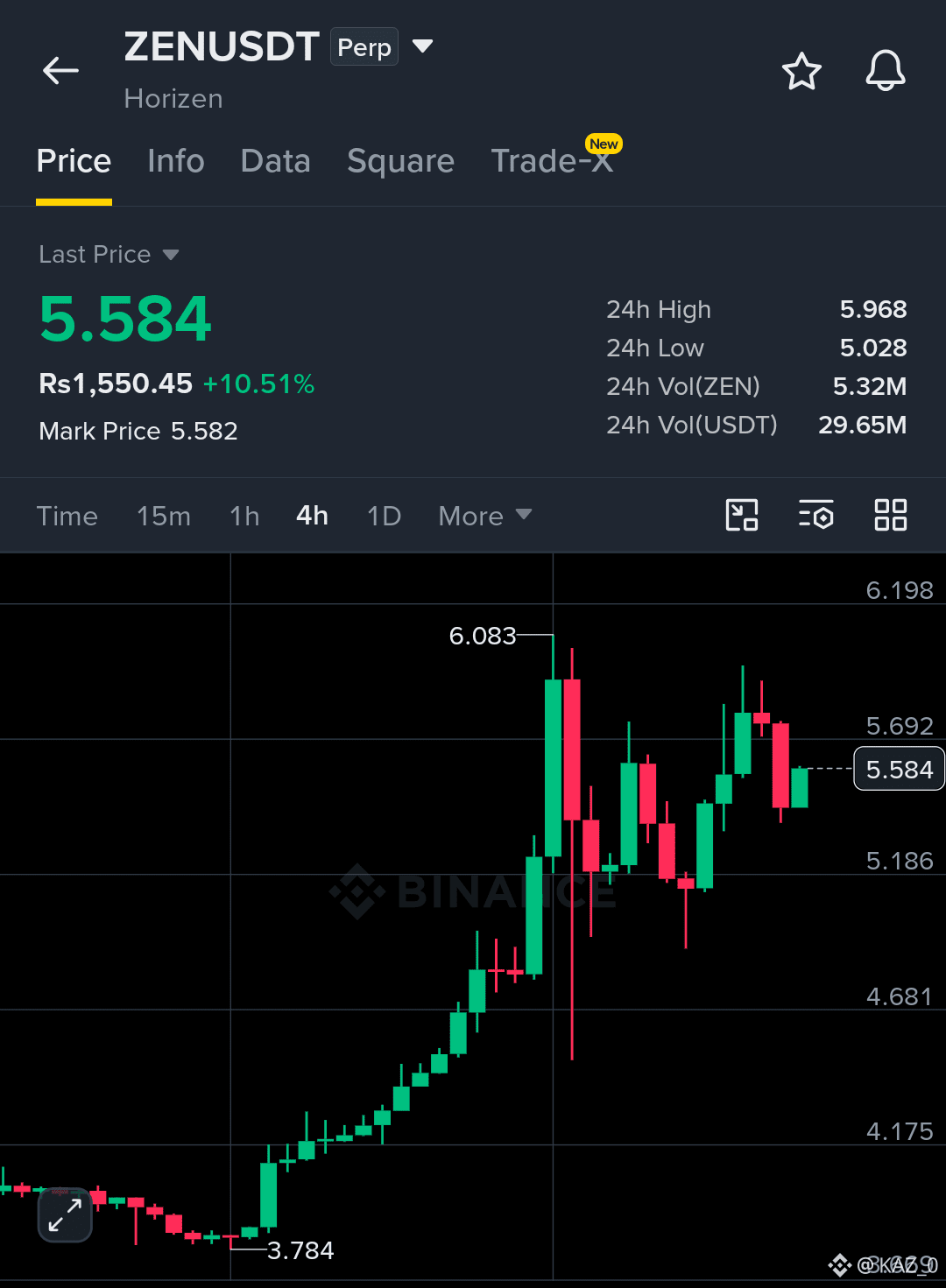
$ZEN USDT — Buyers Are Still Strong
Signal Action: Long ZEN
Entry Range: 5.45 – 5.58
Stop Loss: 5.15
Take Profit: TP1 5.69 | TP2 5.95 | TP3 6.08
ZEN bounced from the 5.18 area and buyers are still pushing the price up. If ZEN breaks above 5.69, the next targets are 5.95 and 6.08.
$ZEN
Signal Action: Long ZEN
Entry Range: 5.45 – 5.58
Stop Loss: 5.15
Take Profit: TP1 5.69 | TP2 5.95 | TP3 6.08
ZEN bounced from the 5.18 area and buyers are still pushing the price up. If ZEN breaks above 5.69, the next targets are 5.95 and 6.08.
$ZEN
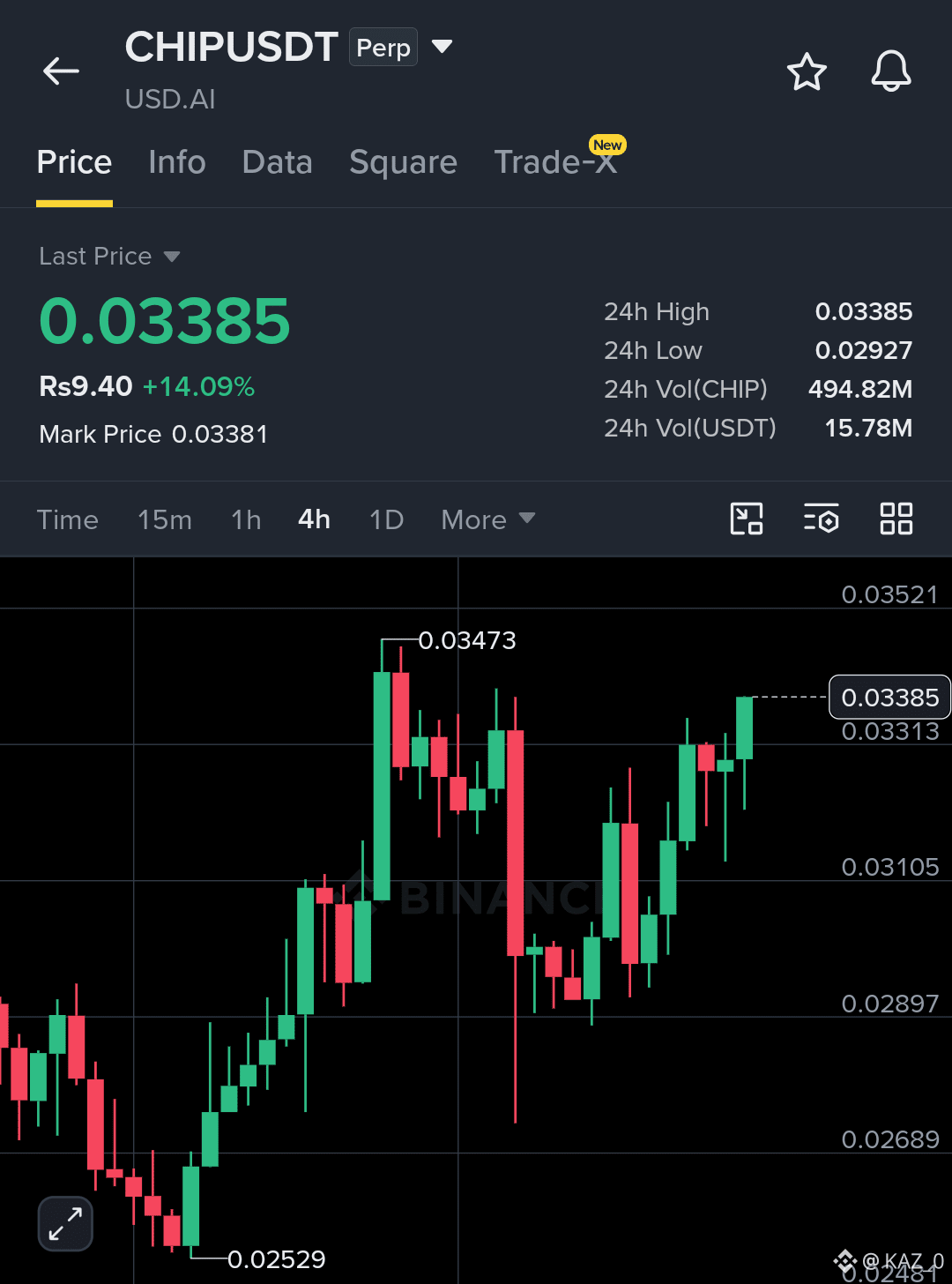
$CHIP USDT 4H — Buyers Are Getting Stronger
Signal Action: Long CHIP
Entry Range: 0.03300 – 0.03350
Stop Loss (SL): 0.03100
Take Profit (TP) Levels: TP1 0.03520 | TP2 0.03650 | TP3 0.03800
CHIP is moving up on the 4H chart and is close to the 0.03473 high. If price breaks this level and buyers stay strong, we could see another move higher toward the targets.
$CHIP
Signal Action: Long CHIP
Entry Range: 0.03300 – 0.03350
Stop Loss (SL): 0.03100
Take Profit (TP) Levels: TP1 0.03520 | TP2 0.03650 | TP3 0.03800
CHIP is moving up on the 4H chart and is close to the 0.03473 high. If price breaks this level and buyers stay strong, we could see another move higher toward the targets.
$CHIP
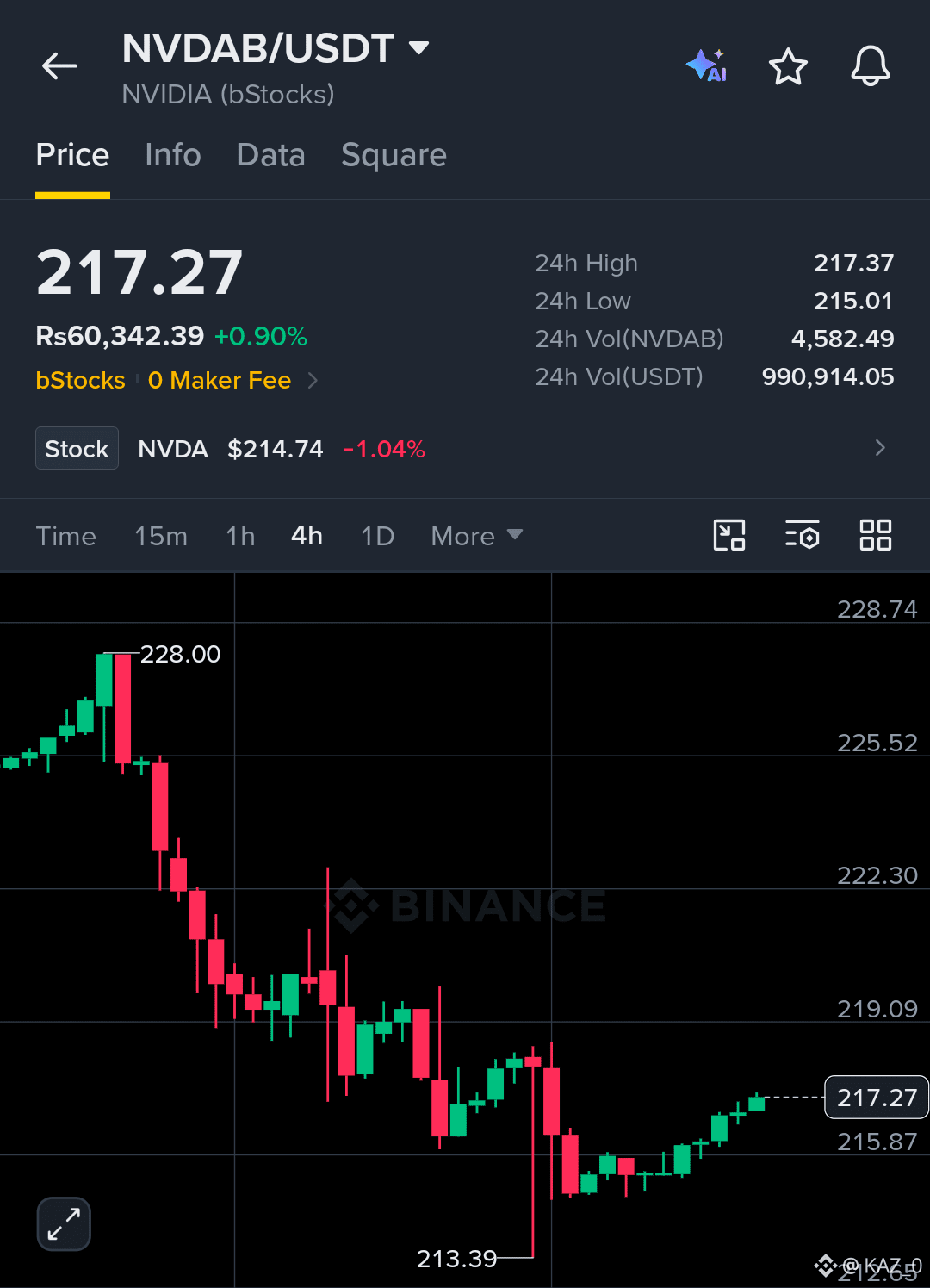
$NVDAB Could Move Higher
Signal Action: Long NVDAB
Entry Range: $216.50 – $217.30
Stop Loss (SL): $214.80
Take Profit (TP): TP1 $219.10 | TP2 $222.30 | TP3 $225.50
NVDAB bounced from $213.39 and is slowly moving up. If it breaks above $219.10, the next levels to watch are $222.30 and $225.50.
$NVDAB
Signal Action: Long NVDAB
Entry Range: $216.50 – $217.30
Stop Loss (SL): $214.80
Take Profit (TP): TP1 $219.10 | TP2 $222.30 | TP3 $225.50
NVDAB bounced from $213.39 and is slowly moving up. If it breaks above $219.10, the next levels to watch are $222.30 and $225.50.
$NVDAB
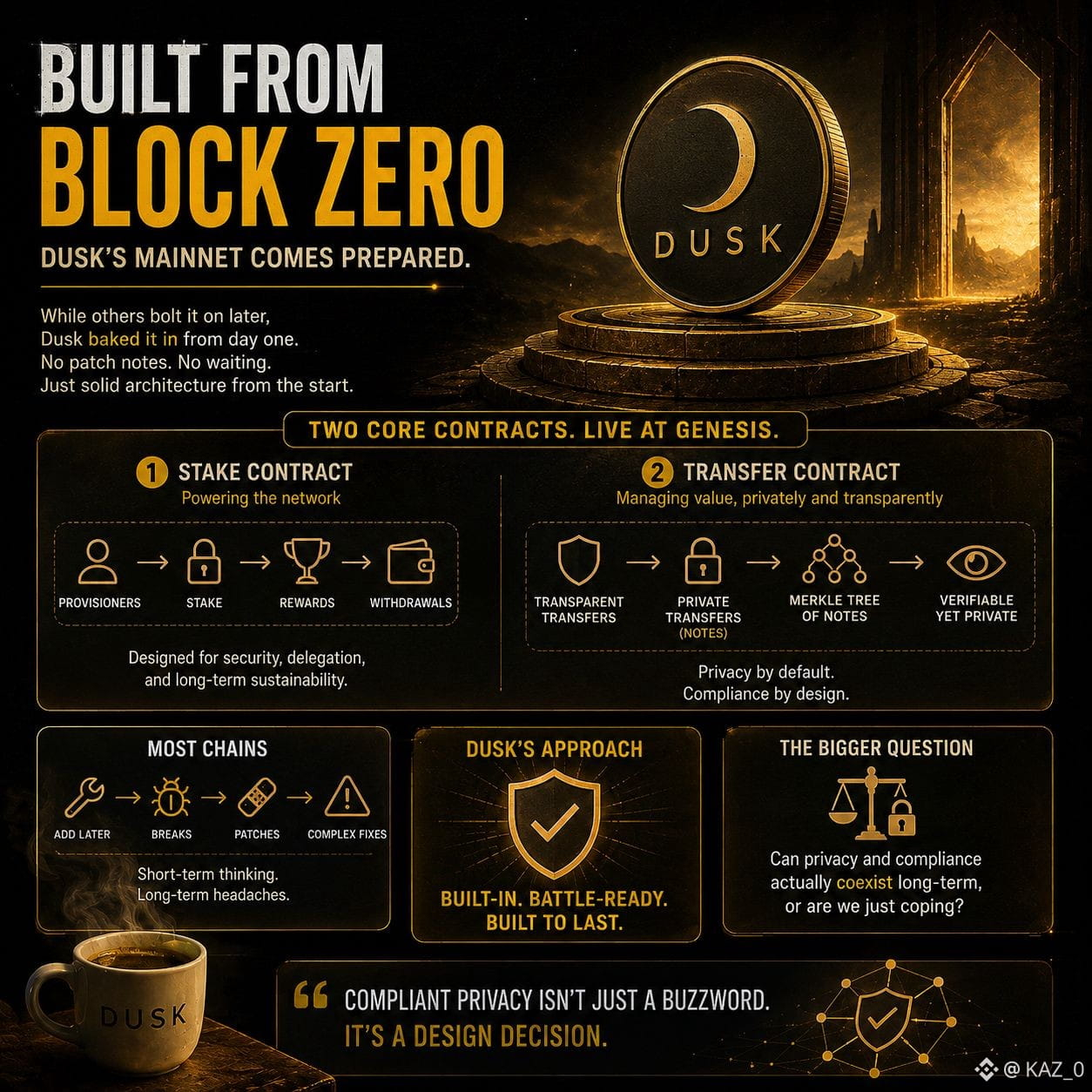
Everyone's obsessing over TVL and token prices at launch. Honestly? I'm looking at something quieter on $DUSK mainnet.
Stake and transfer contracts, live from block zero. No patch notes. No waiting around.
They're just baked straight into the base layer from day one. Stake contract handles provisioners, rewards, withdrawals. Transfer contract does the transparent and private transaction stuff, tracked through a Merkle tree of notes.
Most chains bolt this kind of logic on later. And when things break down the line, fixing it becomes a nightmare. Dusk skipped that entirely — built it in from the start, especially the privacy side that still has to play nice with compliance.
Compliant privacy isn't just a buzzword anymore. It's a design decision. Base layer's this deliberate, everything on top just sits sturdier.
Still can't stop thinking about it though.
Can privacy and compliance actually coexist long-term, or are we just coping?
@Dusk #dusk $DUSK
Stake and transfer contracts, live from block zero. No patch notes. No waiting around.
They're just baked straight into the base layer from day one. Stake contract handles provisioners, rewards, withdrawals. Transfer contract does the transparent and private transaction stuff, tracked through a Merkle tree of notes.
Most chains bolt this kind of logic on later. And when things break down the line, fixing it becomes a nightmare. Dusk skipped that entirely — built it in from the start, especially the privacy side that still has to play nice with compliance.
Compliant privacy isn't just a buzzword anymore. It's a design decision. Base layer's this deliberate, everything on top just sits sturdier.
Still can't stop thinking about it though.
Can privacy and compliance actually coexist long-term, or are we just coping?
@Dusk #dusk $DUSK

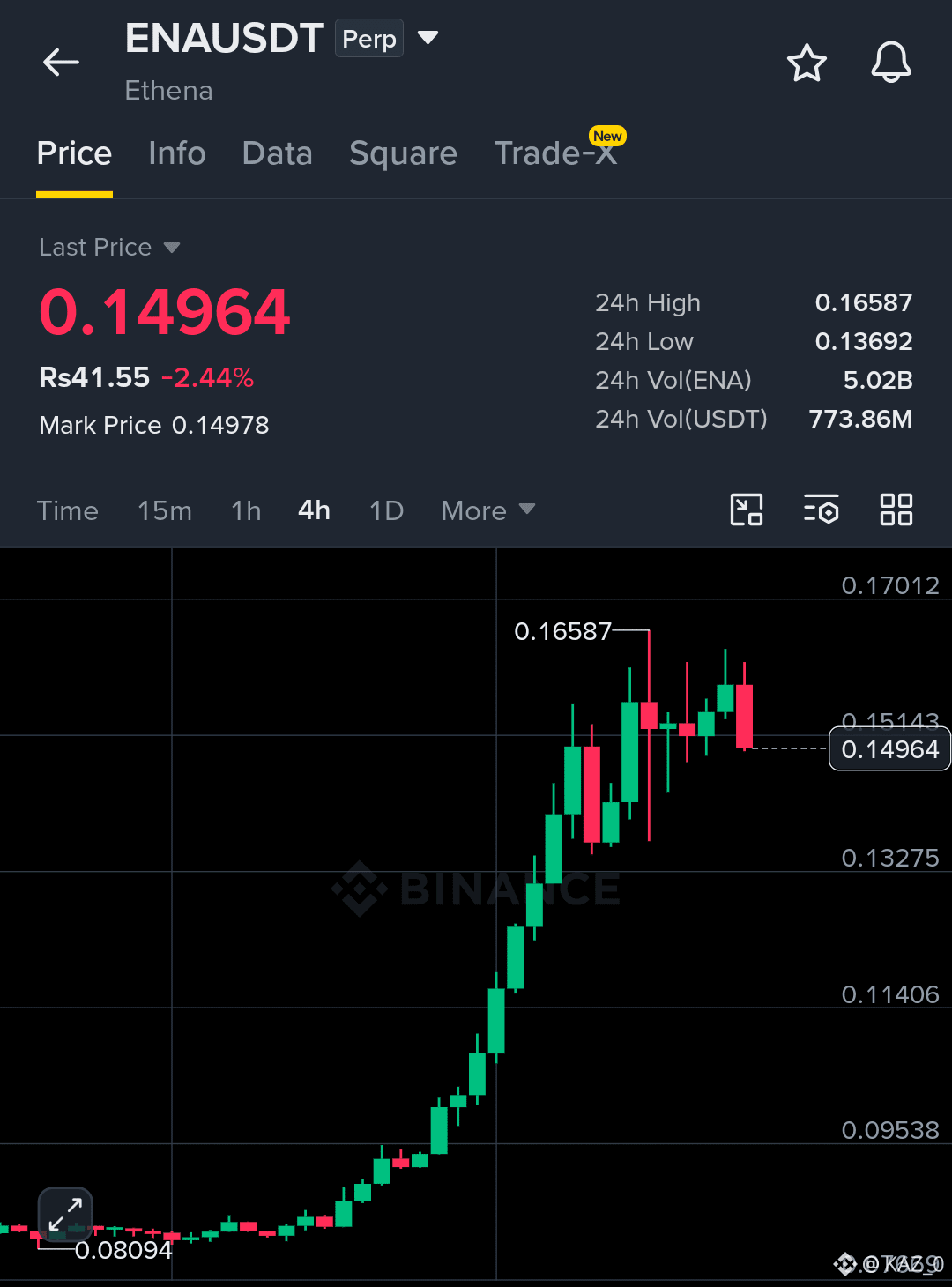
$ENA moved up fast but is now facing strong resistance.
Signal Action: Short ENA
Entry Range: $0.1510 – $0.1560
Stop Loss: $0.1665
Take Profit: TP1 $0.1450 | TP2 $0.1380 | TP3 $0.1330
ENA is having trouble staying above the $0.155 area after the strong 4H move. If $0.1510 breaks, sellers could take control and push the price toward the lower support levels.
$ENA
Signal Action: Short ENA
Entry Range: $0.1510 – $0.1560
Stop Loss: $0.1665
Take Profit: TP1 $0.1450 | TP2 $0.1380 | TP3 $0.1330
ENA is having trouble staying above the $0.155 area after the strong 4H move. If $0.1510 breaks, sellers could take control and push the price toward the lower support levels.
$ENA
Log in to explore more content