#opg $OPG I decided to dive into what 'privacy' really means in AI, and I got into the approach @OpenGradient .
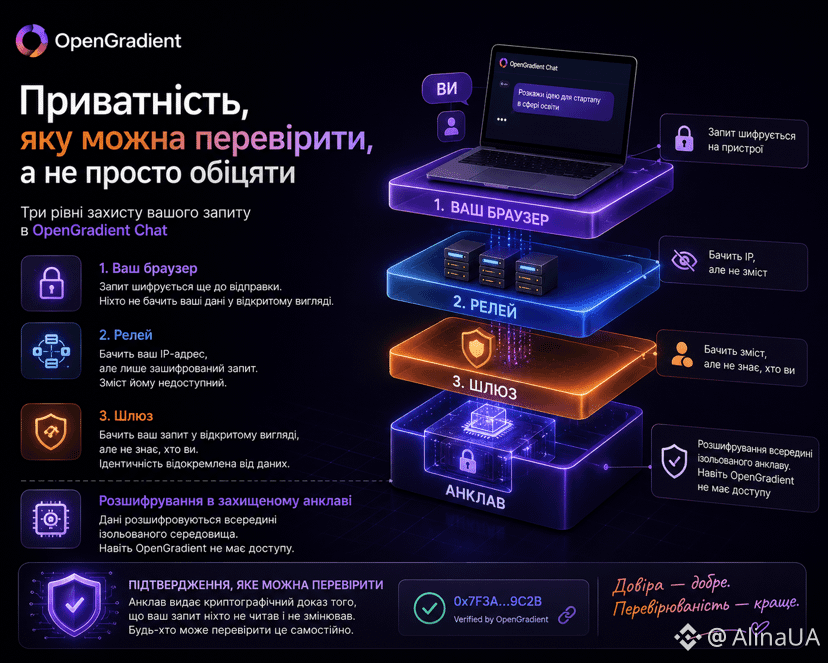
It turns out, it’s not just a pretty promise of 'we protect your data.' The idea is structured differently: a request goes through several layers of protection. Information is encrypted, different parts of the system only see what they need to function, and access to personal data is kept to a minimum.
What hit me the most was the concept itself: privacy isn't just something you can promise — it can be verified.
We’re used to clicking 'accept' on privacy policies and just hoping for the best. Here, the focus shifts from faith to technological verification.
The irony is that even with the ability to verify, most of us might never use it. But the mere fact that it exists already changes the game.
Perhaps the future lies in such solutions $OPG — where trust isn’t demanded because it can be confirmed.
Would you click the privacy verification button at least once?
@OpenGradient #opg $OPG