
Deep dive into Binance bStocks tokenized US stocks (distinguishing IEO/STO + product essence + pros and cons risks)
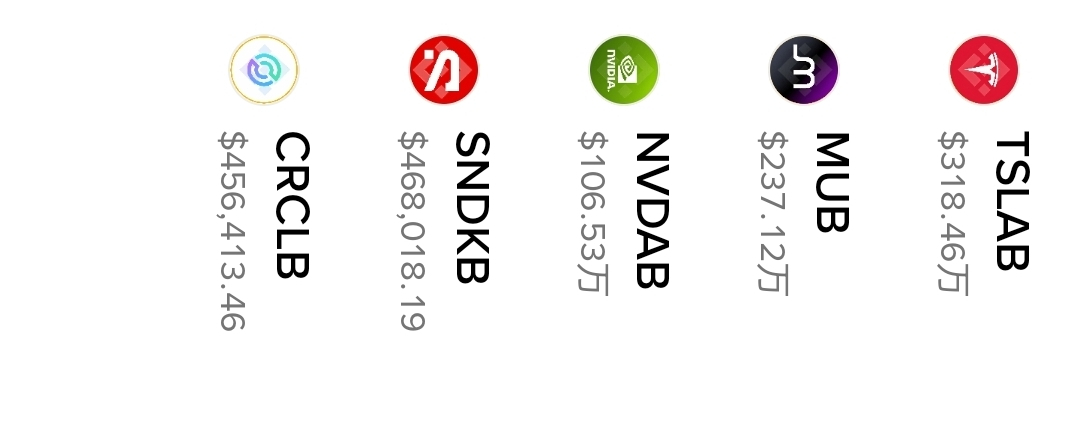
First, let's clarify the core concepts: the bStocks tokens like TSLAB and NVDAB in your screenshot are not IEOs, nor are they traditional STOs. They are compliant tokenized US stock products launched by Binance under the Abu Dhabi ADGM regulation. First, we need to clarify the essential differences between the three types of financing/securities issuance before breaking down this product.
1. First, distinguish the fundamental differences: IEO, traditional STO, and Binance bStocks
1. IEO (Initial Exchange Offering)
IEO is the fundraising behavior for crypto-native new projects: Blockchain startups sell their native tokens on exchanges like Binance to raise funds. The exchange is responsible for review, KYC, and sales. The tokens themselves represent usage rights/governance coins for the project, with no underlying real-world assets backing them. Most do not fall under regulated securities; it's a pure crypto issuance model.
- Example: In the early days, Binance Launchpad sold various new public chains and Meme project tokens—all of which are IEOs
- Not related to the screenshot targets: bStocks is not a new project fundraising. It doesn’t issue a new project’s native token. It only maps existing U.S. stocks into tokens—completely not an IEO
2. Traditional STO (security token issuance)
STO tokenizes real-world financial assets such as equity, debt, and real estate. Its issuance is regulated securities and strictly complies with securities laws in each country. A token is a security under the law. Token holders have the corresponding statutory shareholder rights to the underlying asset (dividends, voting, liquidation). Only accredited investors may buy it. It requires lockups, whitelisting, and strong auditing
- Core: the token itself is legally recognized as a security, directly inheriting all statutory shareholder rights of the underlying shares
3. Binance bStocks (TSLAB/MUB etc. in the screenshot)
This is a 1:1 asset-backed tokenized product approved by the ADGM Abu Dhabi regulator. It is a structured linked product ≠ a standard STO
1. Underlying layer: Nest Trading, a licensed brokerage, buys corresponding real U.S. stocks such as Tesla, Nvidia, and Micron. A compliant custodian provides 1:1 backing. 1 TSLAB corresponds to 1 share of Tesla’s common stock
2. Legal characterization: under Abu Dhabi regulation, it is classified as a derivative/structured product linked to securities—not a direct issuance of tokenized securities representing U.S. stocks. Holding the token ≠ becoming a direct listed shareholder of Tesla
3. Issuance method: it’s not a fundraising and sales offering. Instead, it’s buy/sell in real time using USDT/BNB spot—no token sale or initial fundraising. Completely separated from an IEO
II. Full operating logic of the bStocks product (5 underlying targets in the screenshot: Tesla TSLAB, Nvidia NVDAB, Micron MUB, SanDisk SNDKB, Circle CRCLB)
1. Underlying assets and backing mechanism
- Isolate the SPV entity: Binance issues tokens via BTech Holdings registered in Abu Dhabi, isolating risks from the Binance exchange entity. The underlying U.S. stocks are purchased by a licensed broker and held via third-party compliant custody, with reserve proofs issued on a regular basis. This ensures that the total circulating token supply equals the amount of real shares held
- 1:1 two-way exchange: users can swap bStocks tokens back into the corresponding underlying U.S. shares within Binance, or they can convert 1:1 real U.S. shares they hold into on-chain bStocks tokens. No trading fees for the exchange
- On-chain attributes: token issuance is on the BNB public chain. It supports withdrawing from Binance to self-custody wallets such as Trust Wallet. These are on-chain assets that can be transferred without relying on the exchange. This differs from traditional broker-held U.S. stocks, which can only be held inside a brokerage account
2. Trading’s core advantages (compared with traditional U.S. stocks and ordinary crypto)
1. Trading 7×24 without interruption: traditional U.S. stocks trade only on weekdays from 9:30 to 16:00, with very poor liquidity pre-market and after-hours. bStocks can be traded year-round without rest. Crypto users don’t need to stay up to watch the U.S. stock market—trade anytime, anywhere
2. Buy U.S. stocks with crypto assets: directly use USDT or BNB to buy Tesla and Nvidia. No need to exchange currencies, open overseas brokerage accounts, or route fiat in/out via offshore bank cards—this solves the biggest entry barrier for domestic users investing in U.S. stocks
3. Small-ticket fragmentation + on-chain circulation: you can buy fractional tokens worth less than 1 share, and you can also transfer Tesla tokens to any wallet address just like sending crypto. Traditional stocks can’t be freely transferred or split
4. Regulatory compliance safety net: the first tokenized U.S. stock product to obtain official approval from Abu Dhabi’s FSRA. This differs from the unregulated stock tokens that Binance delisted in earlier years. It has a clear regulatory framework under a specific legal jurisdiction
III. Deep breakdown: Binance’s strategic ambition with bStocks (TradFi + Crypto integration)
1. Leverage existing crypto users to expand into traditional financial markets
Most of Binance’s crypto users only trade crypto. bStocks brings globally recognized high-quality blue-chips like Tesla and Nvidia into the crypto market, turning Binance from an “exchange for trading scam/shit coins” into a comprehensive financial platform where you can invest in global tech giants—attracting traditional investors who used to only do U.S. stocks to enter the crypto ecosystem
2. Revitalize the BNB Chain ecosystem and enhance the value of the public chain
bStocks runs on the BNB Chain. When users withdraw or transfer tokens, BNB is consumed as gas fees, increasing real on-chain transaction demand for the BNB chain. This upgrades the public chain from one that only issues Memes and shitcoins into a compliant public chain that can carry real-world financial assets
3. Bypass local securities licenses in each country—curveball approach to global business expansion
Applying for a broker license directly in the U.S. is extremely difficult, and regulation is strict. Binance chooses Abu Dhabi—a regulator-friendly jurisdiction—to obtain a structured product license. It provides access to U.S. stock trading via a tokenization model, opening it to users across 100+ countries without applying for financial licenses one by one
4. Build a two-way bridge between crypto and traditional finance
Enable “free conversion between stocks and crypto tokens.” In the future, it can expand into ETFs, bonds, and commodities—tokenizing all traditional financial assets and completing Binance’s transition from a crypto exchange to an all-in-one global financial platform
IV. Core risks and weaknesses (must be taken seriously for investment)
1. Missing shareholder rights (biggest difference from the underlying shares)
Holding bStocks tokens does not make you a registered shareholder of the listed company. You can’t directly receive Tesla dividends or vote at shareholder meetings. Dividends are collected by the broker, then converted into USDT and distributed. There are risks of interception by intermediaries and delayed payouts—meaning you fully lose complete shareholder rights to the underlying shares
2. FX rate and premium/discount risk
The token price is anchored to the U.S. stock price in USD, but trading is done using USDT, so it is affected by fluctuations in the USDT-to-USD exchange rate. During non-U.S. stock trading hours, volatility in the crypto market may cause bStocks tokens and the underlying U.S. shares to show large premiums/discounts. Arbitrage exists but there’s a timing gap in conversions
3. Risk of multiple layers of intermediary institutions
User funds → Binance exchange → Abu Dhabi SPV → licensed broker → U.S. stock custody institution. There are four layers of intermediaries. As long as any one link faces regulatory freezes or operational problems, it may affect redemption of assets. It’s not the same as directly holding the shares
4. Risk of regulatory bans across countries
Including China, most countries do not allow domestic institutions or individuals to invest in overseas securities through unlicensed channels. bStocks is an overseas stock investment channel that bypasses conventional broker routes, so there are policy and regulatory risks for domestic regulators. The U.S. SEC also continues to monitor tokenized securities, and in the future may introduce new rules that restrict such products
5. Withdrawal and circulation restrictions
Although it supports withdrawals to a wallet, large redemptions and batch exchanges back to the underlying shares are subject to review limits—not completely unlimited on-chain assets
V. Summary: bStocks in one sentence
It is not an IEO new-project fundraising. It is not a standard STO securities issuance. Instead, based on Binance’s compliant framework in Abu Dhabi, it builds a 1:1 linked, crypto trading vehicle for U.S. stocks. In essence, it opens a convenient door for crypto users to buy U.S. stocks with stablecoins around the clock. It’s a real-world product representing the crypto industry’s entry into traditional Wall Street
- Target audience: crypto investors who already hold crypto assets, don’t want to exchange currency to open an overseas brokerage, and want to trade U.S. tech stocks 24/7
- Not suitable for: users who want to hold long-term to receive dividends, exercise shareholder rights, and pursue fully compliant, locally regulated U.S. stock investments!