

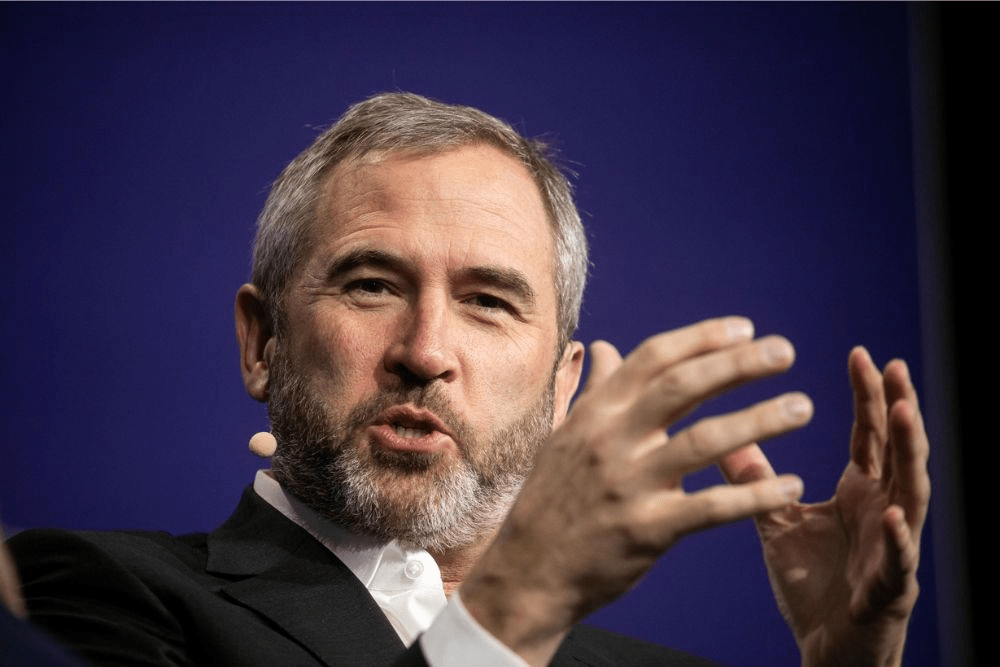
When the CEO of a company speaks clearly and boldly, experienced investors stop to reflect. The public statements of Ripple's CEO, Brad Garlinghouse, have reignited the debate in cryptocurrency forums. But this time, the tone and timing suggest something more than just an optimistic speech. This could mark a structural change for XRP and its broader ecosystem.
In a recent post on X, Pumpius argued that Ripple's CEO, Garlinghouse, is not speculating. Instead, he is stating what the data already shows. This interpretation is widely circulated, fueling renewed hope among XRP holders. It's worth analyzing what is known — and why many are now taking this more seriously.
Institutional guardians are entering.
Large traditional asset managers are entering the cryptocurrency investment market. Recently, Vanguard lifted its ban on cryptocurrency ETFs and now allows its clients to invest in funds backed by major digital assets, including XRP.
This indicates that institutions with large capital and conservative mandates now view cryptocurrencies as part of the traditional financial system. Such decisions cannot be dismissed as speculative — they reflect the evolution of regulatory milestones and increasing demand.

Even more revealing, several spot XRP ETFs based in the US were launched at the end of 2025. They attracted substantial capital in just a few days. Collectively, the top four active funds captured around $587 million in net inflows by November 25, according to recent data. These flows go beyond retail euphoria or media commentary; they reflect real reallocations of capital from traditional markets to the cryptocurrency market.
Liquidity Storm: What ETF inflows mean
Even though ETFs represent only a small fraction of the global ETF market, estimated at around $10 trillion, the liquidity effect will be disproportionate. The inflows of ETFs into XRP provide consistent demand. This steady flow can support more stable minimum prices and reduce the typical volatility of spikes driven by retail investors.
Combined with institutional support, this liquidity becomes the foundation for long-term growth, rather than a market manipulation cycle.
The fact that several ETFs have recorded capital inflows in a short period challenges the narrative that demand for cryptocurrencies remains limited to individual investors. Instead, it highlights a growing trend: large funds allocating real assets into digital tokens, considering them as part of diversified portfolios.
Maturing infrastructure: RLUSD and Ripple's already consolidated technology stack.
In addition to ETFs, Ripple has developed essential infrastructure to support institutional-level adoption. In December 2024, Ripple globally launched its dollar-backed stablecoin, RLUSD. Since then, RLUSD has reached a market capitalization of over $1 billion — a milestone achieved in less than a year.
Ripple is now implementing RLUSD in key markets, including Africa, through partnerships with major fintech companies. Institutions can use RLUSD for payments, liquidity management, and international settlement.
This stable infrastructure reduces friction and uncertainty. It also offers newcomers a regulated entry point denominated in dollars, rather than direct allocation in volatile tokens like XRP.
With RLUSD and other established institutional infrastructures, Ripple has solved one of the biggest challenges of cryptocurrencies: usability. It now offers regulated liquidity in stablecoins, transparent reserves, compliance with regulations, and integration with global payment systems.
What comes next and what does this mean for XRP?
The optimism of Ripple's CEO regarding 2026 is not mere speculation. It reflects the growing institutional adoption, stable infrastructure, and regulatory clarity. For XRP holders, this change could mark a turning point.
If the current inflows continue and if RLUSD and other services scale as planned, demand for XRP may increase. This could trigger a new price discovery — not as a result of speculative mania, but as part of a broader capital rotation.
In summary, this moment can be considered the turning point where cryptocurrencies became a pillar of global finance. If this happens, XRP may firmly establish itself on those foundations.
Remember folks, that nothing said here constitutes a recommendation to buy, sell, or hold assets.
Thank you all!
