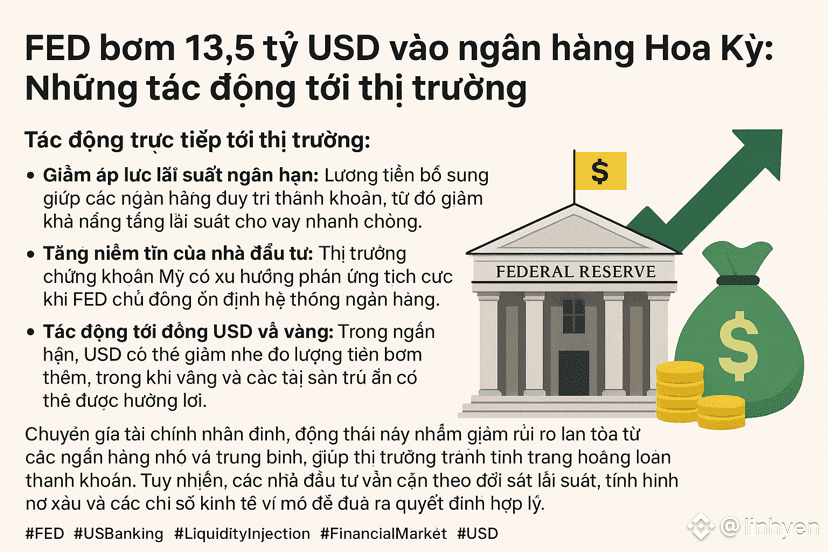
FED injects 13.5 billion USD into US banks: Impacts on the market
Today, the Federal Reserve (FED) has injected 13.5 billion USD into the banking system to ensure liquidity and stabilize the financial market. This is a move aimed at supporting banks amid a significant increase in short-term borrowing demand.
Direct impacts on the market:
1. Reduce short-term interest rate pressure: The additional money helps banks maintain liquidity, thereby reducing the likelihood of rapid increases in lending rates.
2. Increase investor confidence: The US stock market tends to respond positively when the FED actively stabilizes the banking system.
3. Impact on the USD and gold: In the short term, the USD may slightly decrease due to the additional money supply, while gold and safe-haven assets may benefit.
Financial experts believe this move aims to mitigate spillover risks from small and medium-sized banks, helping the market avoid liquidity panic. However, investors still need to closely monitor interest rates, the situation of bad debts, and macroeconomic indicators to make reasonable decisions.
Today, the Federal Reserve (FED) has injected 13.5 billion USD into the banking system to ensure liquidity and stabilize the financial market. This is a move aimed at supporting banks amid a significant increase in short-term borrowing demand.
Direct impacts on the market:
1. Reduce short-term interest rate pressure: The additional money helps banks maintain liquidity, thereby reducing the likelihood of rapid increases in lending rates.
2. Increase investor confidence: The US stock market tends to respond positively when the FED actively stabilizes the banking system.
3. Impact on the USD and gold: In the short term, the USD may slightly decrease due to the additional money supply, while gold and safe-haven assets may benefit.
Financial experts believe this move aims to mitigate spillover risks from small and medium-sized banks, helping the market avoid liquidity panic. However, investors still need to closely monitor interest rates, the situation of bad debts, and macroeconomic indicators to make reasonable decisions.