


1.
What is money?
Money, as a concept, has been a cornerstone of human civilization and economic development. Since the latter, money has been a method of storing value and worth, and it also serves as a medium of exchange, allowing individuals to exchange goods, services, and their agents.
Fundamentally, money is a unit of account that can take many forms such as coins, paper money, virtual currencies, or digital assets. In fact, money has evolved from simple barter items to cryptocurrencies. Today, currencies in the form of fiat currency are issued by central banks, which are then used by individuals, businesses, and other entities for various purposes.
The fact that money today is primarily digital highlights the idea that money is ultimately a social construct. This means that it is ultimately a shared fiction created by humans to facilitate trade and value creation.
It goes without saying that exchanging goods, services, and agents can arguably only be facilitated if both parties trust each other (as opposed to suspicion). It can be enabled by direct trust (if items are exchanged directly) or indirect trust. In the latter case, transactions are now enabled through a neutrally perceived but valuable entity type: money.
If money depends on trust, it has no intrinsic value. People's approval alone determines its value. This belief gives money its power, making it a nearly ideal medium of exchange. A very early example is the unique monetary system of the island of Yap, called " rai stones ", an example of commodity money.
The value of the stone is determined by its history and characteristics. What is unique about this monetary system is that no rocks are actually exchanged during the transaction. Instead, ownership is transferred through oral tradition and memory systems, as long as the community recognizes the transfer.
It can be said that money is a product of political systems, with states and central banks having the power to regulate and create money, respectively. Central banks control the amount of money in circulation and may mint new money. While a state’s ability to control money is essential to its power and authority, humanity’s belief in money ultimately helps facilitate this process.
Besides the value of a currency, which is created by trust in the nation and the economy, its value also comes from its demand and demand. Ultimately, the concept is that money is scarce and in limited supply. However, phenomena such as inflation, deflation, stagflation, and hyperinflation directly counteract the idea that the value of money is immutable.
2.
How did money evolve?
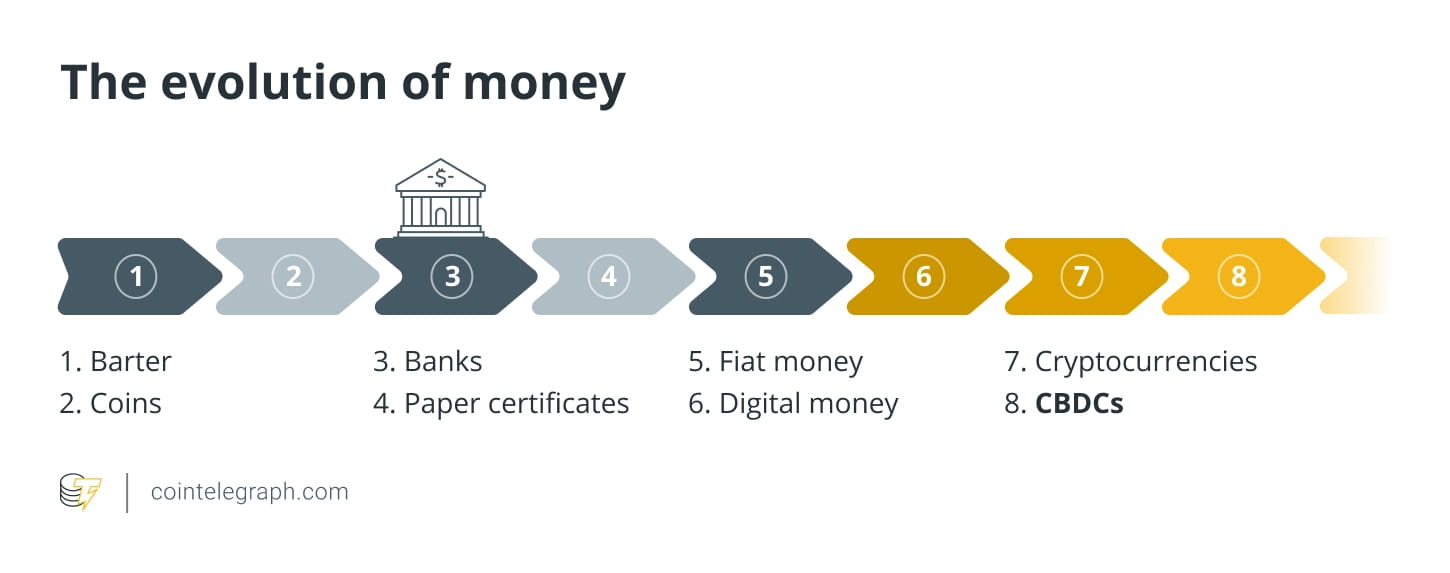
Money has evolved from a simple barter item to a cryptocurrency. Money became a means to facilitate trade and cooperation between strangers. As human society becomes more extensive and complex, the need for a universal medium of exchange becomes more important.
From a realist political perspective, concepts such as value and possession have played a role in human interactions since early times. The first forms of money were barter items, such as stones and livestock. These items were used to facilitate trade and were valued based on usefulness, scarcity, demand, and supply.
With the expansion of human settlements and the privatization of the human environment following the agricultural revolution, concepts such as economy, trade, and eventually currency emerged. The use of commodity money dates back to ancient civilizations, when commodities were used as money. However, it was the emergence of metal money as a new medium of exchange that had a significant impact on the evolution of money.
Metal money was an important tool in the development of centralized political structures and the rise of modern states. Metal money allowed rulers to build bureaucracies and armies to maintain control over large territories. The use of money also facilitated trade and commerce, leading to greater wealth and growth. It allowed for the development of unified exchange rates, facilitating further economic growth and trade.
In the early days of banking, goldsmiths would store gold and other metal currencies in their vaults, issuing receipts that could be used as a form of payment. These receipts soon evolved to represent currency. Individuals used paper vouchers to depict the value of goods, eventually leading to the development of paper money, which is still used today.
Until about 50 years ago, money was only physical. In modern times, fiat currencies in the form of digital currencies have become the dominant form of value exchange, using electronic record keeping of bank transactions. Fiat currencies are backed by governments and central banks, and their value is based on people's trust in said institutions. In fact, governments have the power to control the money supply. It can increase or decrease the value of fiat currencies through monetary policy, such as by printing more money or raising interest rates.
Today’s fiat currencies are typically not backed by commodities such as gold, nor are they pegged to reserves of other physical reserves. Fundamentally, fiat currency is non-convertible and cannot be exchanged for commodities because it has no intrinsic value.
Money has taken on new forms in the digital age, such as credit cards, digital assets, central bank digital currencies (CBDCs), and cryptocurrencies. Mobile payments and online banking are also growing in popularity. Additionally, cryptocurrencies have been challenging the fiat currency system since the advent of Bitcoin ( BTC ) in 2008. The widespread adoption of mobile payment technology and the upcoming nature of cryptocurrencies are already changing the way we interact with money and indicate an evolution in the nature of money and its role in society.
3.
What is the gold standard?
Until 1971, many countries used the gold standard. This was a monetary system in which the value of a country's currency was tied to gold, meaning that paper money could be redeemed for gold at a fixed exchange rate. Some people believed that abandoning the gold standard would lead to economic instability and weakened national power. In contrast, others believed that the shift was necessary for a more dynamic global economy.
The gold standard was abandoned due to its limited monetary policy flexibility; central banks were unable to adjust the money supply in response to economic conditions. The dollar went off the gold standard in 1971, effectively making the currency a form of debt. Compared to gold, the value of the dollar has fallen by more than 95% since 1971. Crucially, gold was worth $35 per ounce in 1971, while 50 years later its value had soared to nearly $2,100 per ounce. This difference represents a significant loss in the purchasing power of the dollar.
This contrast is reflected in the many effects that countries, individuals, and societies have experienced since then. The abolition led to greater currency volatility and a lack of fiscal discipline among governments, resulting in economic instability and inflationary pressures across the board. In fact, the loss of the gold standard led to a shift in economic power from the state to the market, further weakening national sovereignty and influence over their monetary policies.
Moreover, the abolition of the gold standard hurt the lower and middle classes. Inflationary pressures caused by a lack of financial discipline disproportionately affected those with less financial resources, leading to greater economic inequality.
Others see the abolition of the gold standard as a necessary step toward a more flexible and adaptable global economy, one in which state power was not diminished but merely shifted due to new tools in the monetary policy toolkit. In this context, the abolition of the gold standard allowed for a flexible financial system that enabled governments to respond more effectively to economic crises and pursue policies that promoted economic growth.
Others argue that this shift has opened up new opportunities for economic mobility and wealth creation through the expansion of credit and the growth of financial markets.
4.
What is the difference between a barter system and a monetary system?
A barter system is a system of exchanging goods and services for other goods and services. The barter system has limitations, such as the lack of a standard measure of value and difficulty in making exchanges. A monetary system is a system in which money is used as a medium of exchange. Money provides a standard measure of value and makes trade easier.
The barter system is the earliest form of (decentralized) trade, while the monetary system is a centralized system with money as a medium of exchange. Fundamentally, barter and monetary systems are common fictions created by humans to facilitate trade. Both methods require trust and approval from all parties involved in the transaction.
In a barter system, goods and services are exchanged directly without the use of money or a central intermediary. People would trade their excess items for items they needed or wanted. This system was common in early civilizations before the invention of money.
Today’s monetary system provides a standard measure of value, making it easier to facilitate trade. In contrast, the barter system lacks a standard estimate of value, making it difficult to conduct tailored exchanges and transactions. While the barter system is primarily a human product, today’s monetary system is also the result of a centralized political system. For example, states and governments decided to abolish the gold standard and replace it with a modern monetary policy framework.
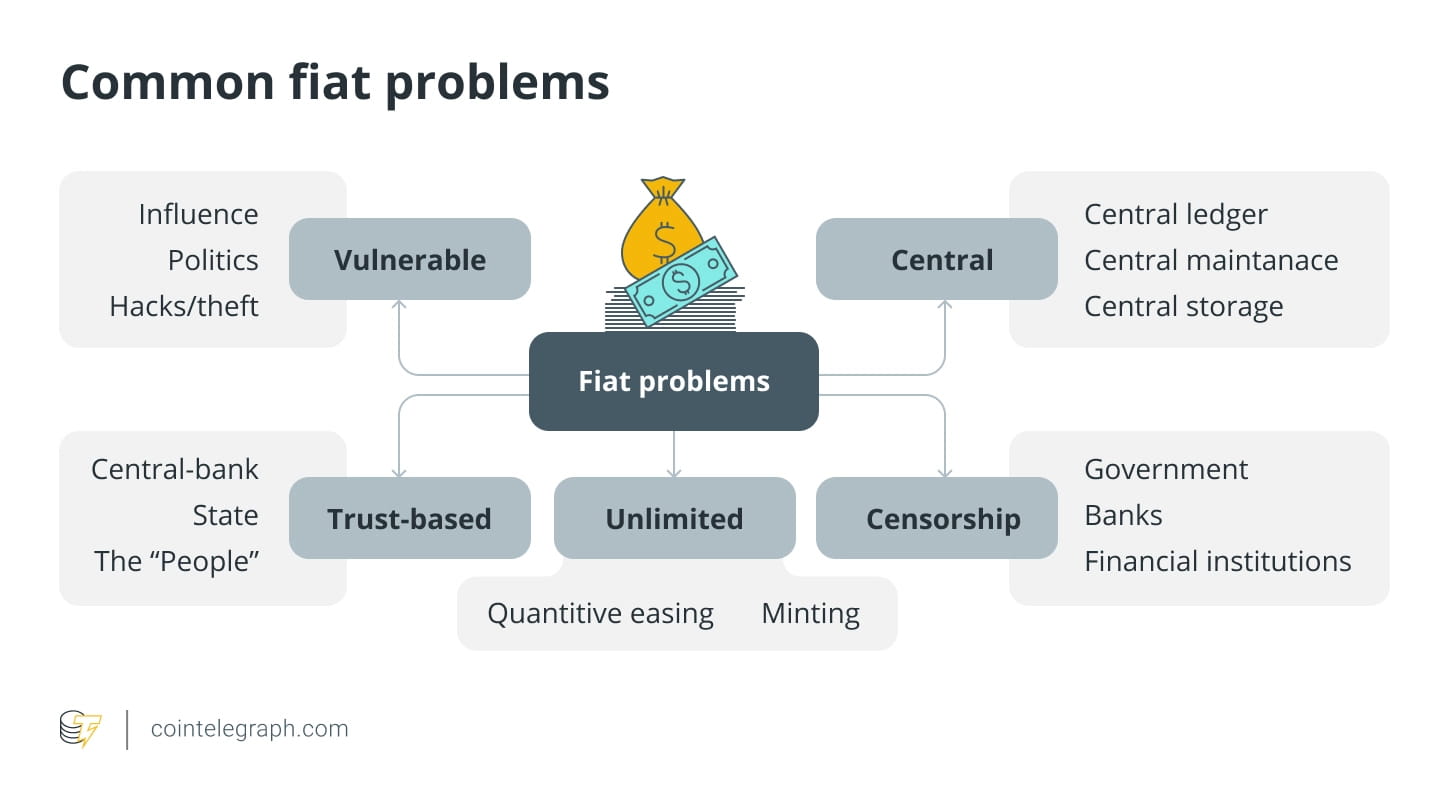
Its centralized character makes the monetary system vulnerable in several ways. In fact, it requires a central ledger, which is sensitive to censorship and does not allow anonymous transactions (unless cash is used).
As the next step in the evolution of money, cryptocurrencies offer several advantages over barter and monetary systems. Cryptocurrencies allow for efficient and convenient transactions. With barter, both parties need something suitable for the other party to execute the transaction. Similarly, in today’s monetary system, trust in the value of money remains an essential element despite high inflation and declining confidence in governments and central banks. Ultimately, they control access to and use of the system.
Compared to both systems, cryptocurrencies are open to anyone, provide fast peer-to-peer transactions without trust, and offer better security and privacy systems.
5.
How does monetary policy affect inflation?
Monetary policy is the process by which central banks manage the money supply and interest rates to achieve specific economic goals. If central banks set low interest rates, they provide too much money for lending, which creates inflationary pressure on consumer wages and prices, and vice versa. Today, central banks have found new monetary policy tools in the form of wholesale CBDC and retail CBDC.
One of the main goals of a central bank is to maintain price stability, which means controlling inflation. Central banks do this through their monetary policy, which involves manipulating interest rates in an attempt to stimulate the economy.
Central banks use low interest rate policies to reduce the cost of borrowing money. Ultimately, more money is floating around in circulation, which means more money chasing the same amount of goods and services. This makes prices rise. The other side of the coin is that yesterday's capital becomes less valuable today. This is called inflation.
When central banks print money through quantitative easing, it can lead to more inflation or even hyperinflation. This means that prices rise rapidly and people have to carry large amounts of money to buy essential goods and services.
As another form of monetary policy, interest rates can also reduce the money supply by reducing the amount of money in circulation. Over time, this can potentially boost economic growth. However, it can also lead to deflation and slower economic growth because less money is available.
Today, wholesale and retail CBDCs can also be used to formulate monetary policy by adjusting the interest rate on bank digital currency deposits held by the central bank. In fact, by controlling the supply of wholesale CBDC, the central bank can use it as a direct tool of monetary policy. In addition, the central bank can set the interest rate on retail CBDC deposits or impose restrictions on the amount of retail CBDC held by individuals or businesses, which actually affects the supply and demand of the currency and, therefore, its inflation rate.
6.
How to determine whether a cryptocurrency is inflationary or deflationary
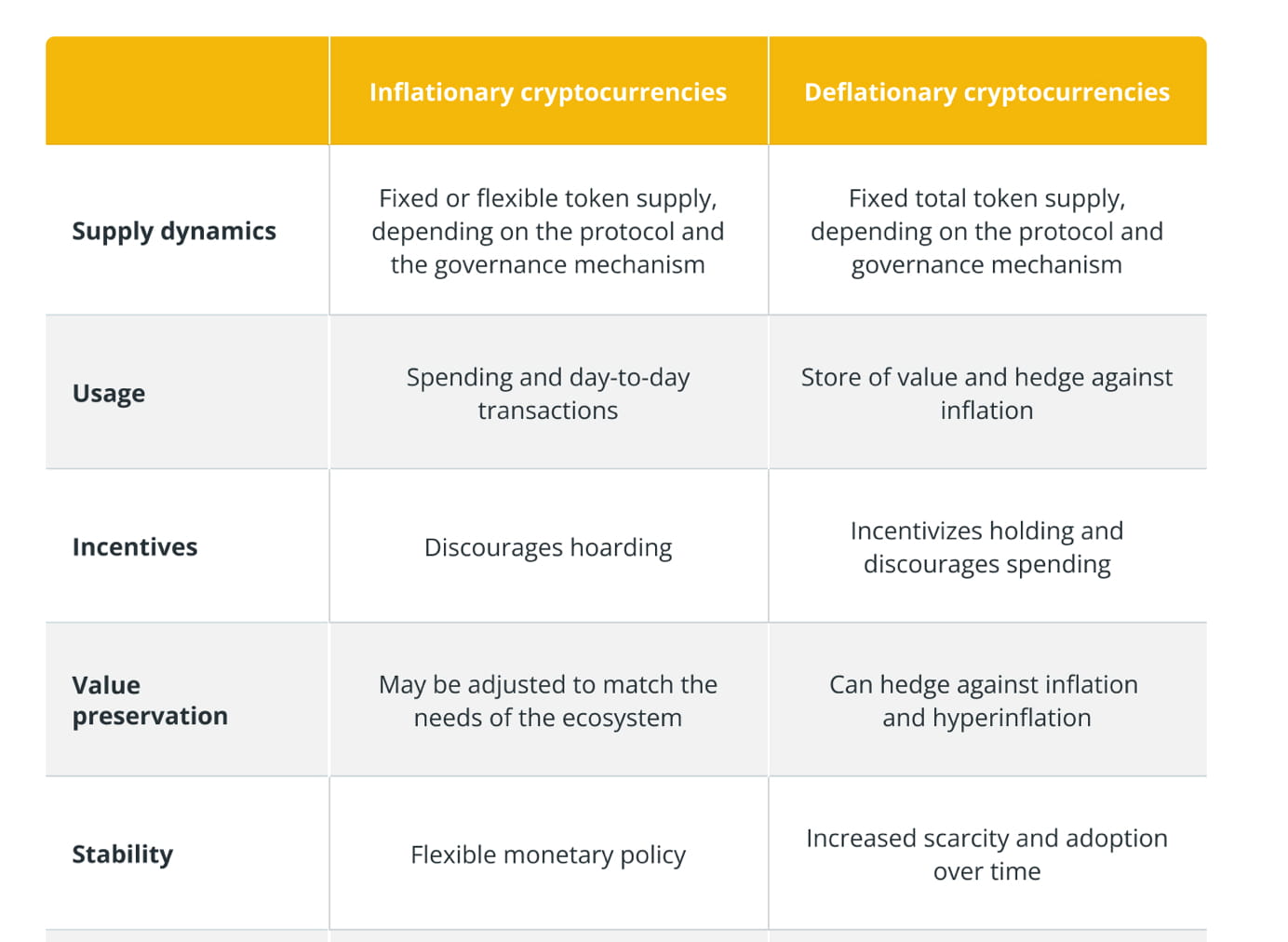
Cryptocurrencies are a relatively new form of money, and they can be inflationary or deflationary, depending on their native monetary policy and design. For a cryptocurrency to qualify, one must carefully examine their supply dynamics, demand incentives, their usage, and whether they maintain value and stability.
Inflation and Deflation A token’s monetary mechanics and supply dynamics have important implications for its use and value. If a cryptocurrency has a fixed supply, it will tend to be deflationary because the value of the currency is likely to increase over time if demand increases.
Deflationary tokens excel at incentivizing holding and reduced spending, ultimately leading to increased scarcity and faster adoption of the token as a store of value. This results in a gradual rise in purchasing power over time. Finally, a decreasing token supply serves as a bulwark against inflationary pressures caused by external factors, such as government policies or economic events that lead to inflation, hyperinflation, or stagnation.
If a cryptocurrency has a variable supply, it can be inflationary or deflationary, depending on the rate at which new coins are created and other relevant factors. Inflationary tokens may stimulate spending and discourage hoarding. These properties promote the adoption of such tokens as a medium of exchange while enhancing their liquidity.
Interestingly, the flexibility of inflation tokens means that the token’s inflation rate can be adjusted based on the company’s needs, such as airdropping new tokens or for any other reason specified by the company’s token economics as mentioned above.
It’s also important to mention that the classification of a given cryptocurrency as inflationary or deflationary can be subject to different perspectives. For example, classifying BTC as inflationary or deflationary can depend on a variety of factors. BTC is considered inflationary due to the constant mining of new coins and their subsequent integration into the supply. However, deflationary measures such as halvings mitigate the effects of inflation over time. The same is true for altcoins such as Ethereum ( ETH ).
7.
What is the future of money?
Humanity lives in a technological age that will bend the curve of currency development to a new inflection point. With the rise of cryptocurrencies and crypto wallets, currency continues to evolve and become more decentralized, digital, and open. On the other hand, the fate of the country is closely intertwined with the future of its currency, which means that the future will also bring more attempts to establish centralized political governance and binding rules on the use of currency.
From barter to digital currencies, money has a long history. Many currencies around the world are no longer pegged to physical goods or commodity reserves. Instead, they are backed by the ability of governments to manage their economies and control inflation through fiat currencies. The value of fiat currencies today no longer comes from their scarcity, but rather from the trust that individuals have in a central government to mint the currency.
Since the abolition of the gold standard, it has been clear that the value and stability of fiat currencies can be undermined by inflation and other factors, including loose monetary and fiscal policies, poor management practices, and severe institutional decay. It can be argued that the future of money is closely tied to the future of political systems. States and central banks will continually seek to play a key role in the creation and regulation of money.
With the rise of new payment methods, including cryptocurrencies and digital wallets, money will inevitably continue to evolve and become increasingly digital. It is arguable that the use of cash will continue to decline, with many countries already moving towards cashless societies, with or without CBDCs. Importantly, this continued evolution towards digital fiat currencies has significant implications for privacy, security, and economic inequality.
New forms of regulation and governance may emerge to ensure personal security, or a new monetary system may emerge to replace the existing one. Time will tell whether cryptocurrencies, along with Web3 and new decentralized finance (DeFi) systems, will bring about a complete decoupling of money and institutional power for humans. Ultimately, this decoupling could lead to a truly trustless and transparent economy.