

Men's health maintenance is a holistic approach that covers not only the upkeep of the reproductive system but also the protection of blood vessels, heart health, and metabolic balance. Given that the male body has its own hormonal and anatomical characteristics, preventive measures can be categorized into several key areas.
1. Screenings and check-ups (Age-related monitoring)
Most serious pathologies are asymptomatic in their early stages. Timely diagnosis is the foundation of prevention.
Up to 40 years:
Annual monitoring of blood pressure and basic blood indicators (lipid profile, glucose, HOMA index for insulin sensitivity evaluation).
Regular check-ups with a urologist and ultrasound of the pelvic organs to rule out hidden inflammatory processes.
After 45-50 years:
PSA (Prostate-specific antigen): Annual blood test for PSA helps to notice changes in prostate tissues in time.
Colorectal cancer screening: Colonoscopy or fecal immunochemical test (FIT) every 5-10 years.
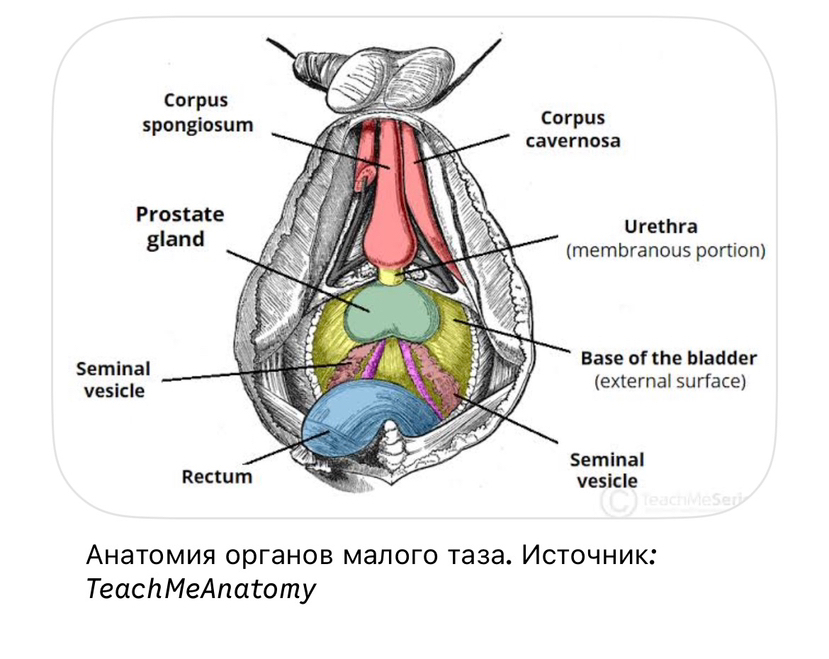
Pay attention to the diagram above: the prostate gland tightly encircles the urethra just below the bladder. This is why any stagnation, inflammation, or hyperplasia of gland tissue immediately affects urination quality and requires monitoring.
2. Hormonal balance and nutraceutical support
With age (usually after 30), total testosterone levels decline by about 1% per year. To maintain a healthy hormonal background and protect cells, the following elements are important:
Zinc and Selenium: Key micronutrients for spermatogenesis and testosterone synthesis. Zinc also concentrates in prostate tissues, providing a local immune response.
Vitamin D3: Acts as a steroid prohormone, modulates the expression of genes responsible for androgen production, and supports bone density.
Omega-3 (EPA/DHA): Reduces systemic inflammation index, supports vascular wall elasticity. Vascular health is directly linked to erectile function, as the endothelial system is unified across the body.
3. Lifestyle modification and cell regeneration
Physiological processes of aging and inflammation can be slowed down by optimizing metabolism.
Minimization of visceral fat: Excess fat tissue in the abdominal area activates the aromatase enzyme, which converts active testosterone into estradiol. Maintaining a waist circumference of less than 94 cm is a basic marker of androgen health.
Autophagy activation: Periodic short-term fasting protocols or caloric restriction stimulate autophagy—a process where cells recycle damaged protein structures and defective mitochondria. This aids in refreshing the cell pool, including in glandular tissues.
Physical activity: Strength training and high-intensity interval training (HIIT) provide a short-term physiological boost for the release of somatotropin and testosterone, as well as improve microcirculation in the pelvic organs, preventing stagnation.