
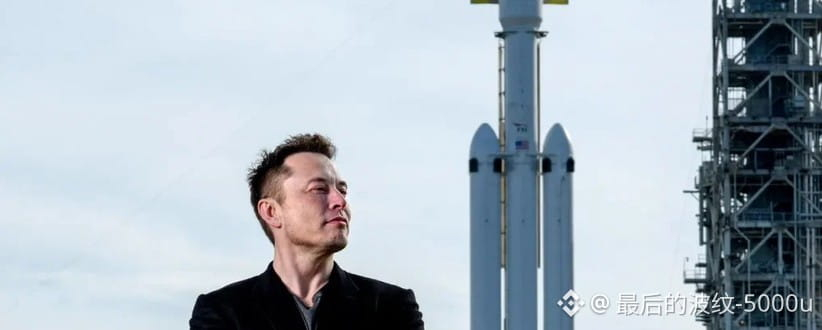
Recently, major US stock indices have been continuously hitting historical highs, and global market liquidity is showing an extreme trend of herd behavior. At a time when various assets are at high revaluation cycle points, SpaceX's IPO undoubtedly draws the most fervent attention from around the globe.
However, as rational players who've been through a few full market cycles, we need to strip away Elon Musk's personal beliefs and tech narratives, diving straight into the core institutional designs of the US stock market and the lock-up expiration chain of the prospectus. After a thorough breakdown, it becomes clear that this IPO is likely not just a simple tech feast, but more akin to a 'reflexive squeeze' driven by institutional arbitrage.
We can objectively deduce the distorted trajectory of SpaceX's listing from the following two core logics:
1. Rules green light and ultra-low float: Creating irrational 'forced buying'.
Modifications to Nasdaq's rules have set the stage for this initial surge. The new regulations allow mega-cap IPOs to be rapidly included in the Nasdaq-100 index within 15 trading days (three weeks) post-listing, eliminating the minimum float requirement.
In line with this rule, SpaceX expects an initial float of only 8% to 18%, placing it in a highly controlled state. More devastatingly, the index calculation will use three times the actual floating shares to determine its weight.
Consequences: A massive wave of passive index funds tracking the tech index (QQQ) and public funds will be forcefully tied to compliance terms without experiencing sufficient price discovery — they must buy SpaceX to the designated index weight within three weeks, regardless of cost or valuation.
Market performance: The available circulating chips are extremely scarce, while there is a continuous, necessary forced buying from the back end. This extreme imbalance of supply and demand, known as 'reflexive pressure', will inevitably push the stock price to a distorted high, detached from actual fundamentals in the first three weeks post-listing.
2. The unlocking chain in the S-1 prospectus: A perfect closed-loop for raising and distributing.
Any bubble inflated by institutional anomalies ultimately must face the distribution of chips. SpaceX has designed an extremely sophisticated and interlocking phased unlocking mechanism in its S-1 prospectus.
After the first quarterly report: Insiders can unlock and sell up to 20% of their locked shares.
Skyrocket reward threshold: If the stock price has surged \ge 30\% from the IPO price, insiders will gain the privilege to sell an additional 10% of their shares.
Rolling distribution: After that, a 7% rolling unlock window will open every 15 days.
This is a flawless closed-loop of interests: In the three weeks before listing, using Nasdaq's coercive inclusion terms to force passive funds to buy without regard for cost, easily pushing the stock price over the 30% premium threshold, triggering insiders' additional unlocking privileges. When the first quarterly report and subsequent rolling unlocking period arrive, major insiders can orderly dump massive amounts of chips to those forced to buy by passive funds and retail investors experiencing high FOMO at peak sentiment.
Summary and strategy: Wait for the fatal blow after the irrational release.
Overall valuation is inevitably flawed due to institutional design flaws; irrational surges and bubble formation will occur in the early stages of listing.
True trading discipline has never been about blindly fighting against the tides of trends, but maintaining absolute clarity at the moments when the narrative is weakest and the market is most euphoric. Based on the clear timeline of 'first being forced up, then insiders dumping', my personal strategy is already very clear:
In the first three weeks post-listing, facing the relentless forced buying from large institutions, blindly shorting is foolish; one must maintain absolute patience and wait for the irrational boom to reach its limit. When market sentiment peaks, passive index funds are forced to build their positions, and as the unlocking window for insiders approaches after the quarterly report, I believe the market will know how to place their bets.
Opportunities never come from the frenzy of chasing highs, but from corrections after value has been widely distorted. Maintain discipline and patience.