🔐 This news points to an important topic in the security of cryptocurrency wallets:
If an audit finds a hardware vulnerability, the first thing to evaluate is:
* Does it require physical access to the device?
* Does it need specialized tools?
* Can it be exploited remotely?
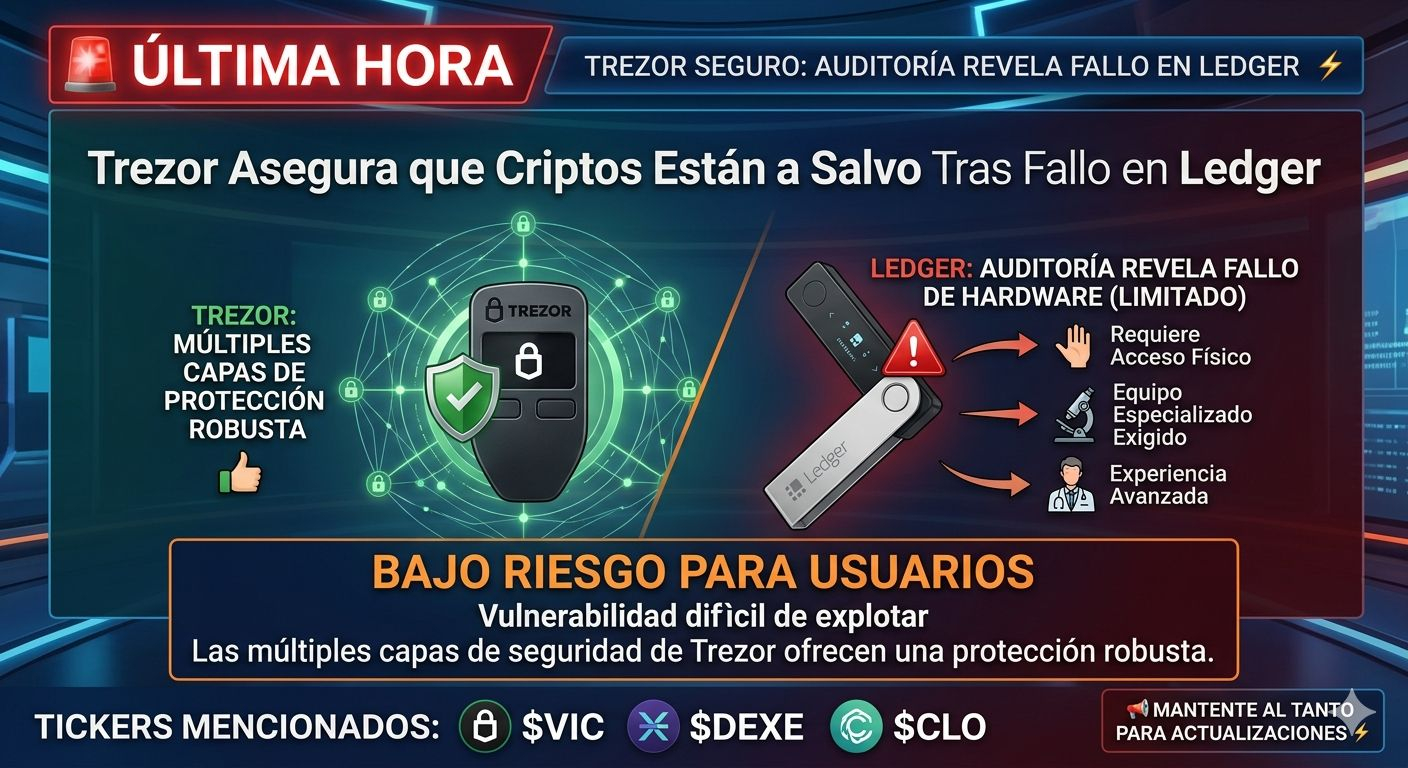
According to the summary you shared, the flaw:
* ⚠️ would require physical access to the device.
* ⚠️ would need advanced technical knowledge and specialized equipment.
* ✅ would not be an easy attack for an average criminal.
That's why the risk for most users is typically considered low.
🛡️ Best practices for any hardware wallet
Be it Trezor or Ledger:
* Never share your recovery phrase (seed phrase).
* Store the seed offline in a secure location.
* Purchase devices only through official channels.
* Keep the firmware updated.
* Use a PIN, and if available, an additional passphrase.
🧠 The important thing
Hardware vulnerabilities do not automatically mean that funds are in immediate danger. Often, researchers discover flaws that are difficult to exploit under real conditions.
If an audit finds a hardware vulnerability, the first thing to evaluate is:
* Does it require physical access to the device?
* Does it need specialized tools?
* Can it be exploited remotely?
According to the summary you shared, the flaw:
* ⚠️ would require physical access to the device.
* ⚠️ would need advanced technical knowledge and specialized equipment.
* ✅ would not be an easy attack for an average criminal.
That's why the risk for most users is typically considered low.
🛡️ Best practices for any hardware wallet
Be it Trezor or Ledger:
* Never share your recovery phrase (seed phrase).
* Store the seed offline in a secure location.
* Purchase devices only through official channels.
* Keep the firmware updated.
* Use a PIN, and if available, an additional passphrase.
🧠 The important thing
Hardware vulnerabilities do not automatically mean that funds are in immediate danger. Often, researchers discover flaws that are difficult to exploit under real conditions.