BR (Brazil)


Post

--Bullish

BUSHRA BNB
·
--
Bullish@Bedrock #bedrock $BR
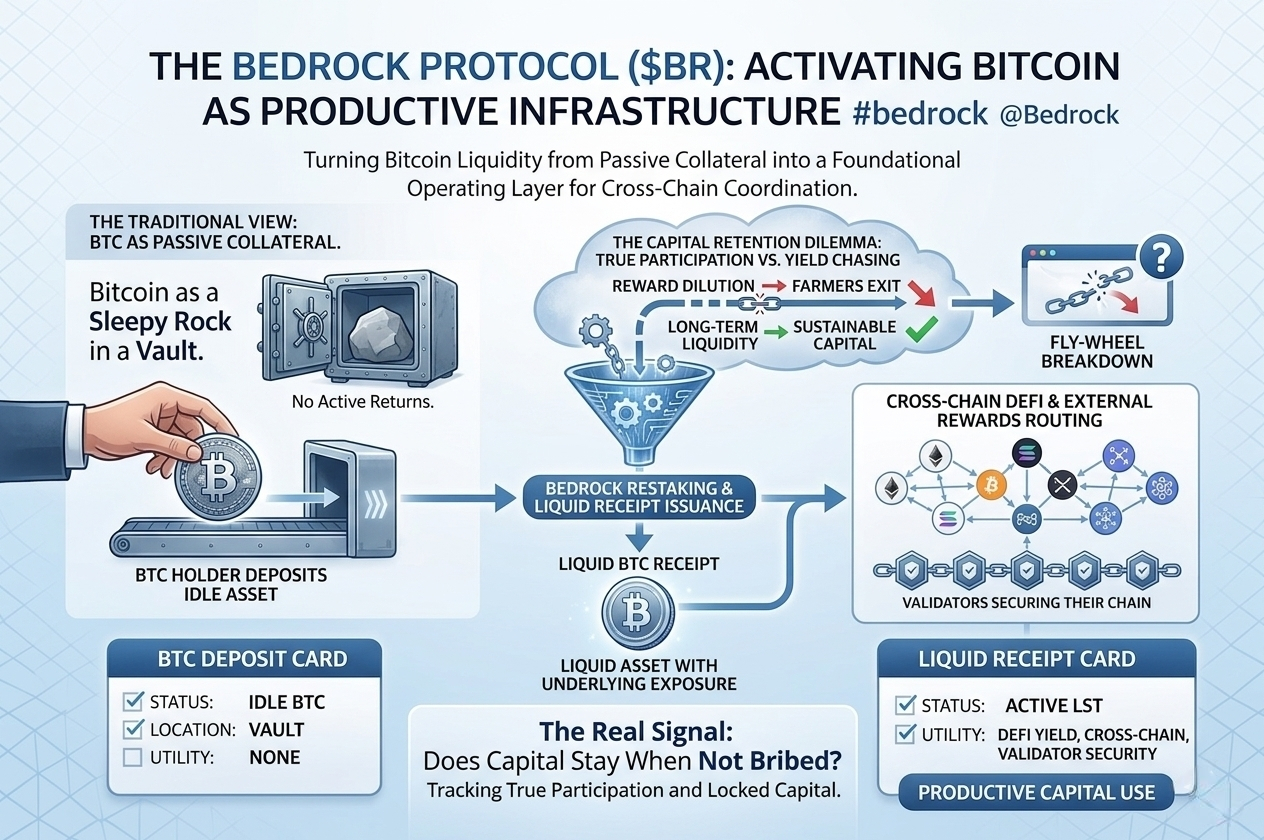
Myself Mizo, I still remember watching Bitcoin-related tokens trade a few cycles back, noticing how nobody really cared about yield. The general consensus was simple: BTC was collateral, a store of value, or maybe a liquidity source—but definitely not something generating active returns across networks. I honestly thought it would stay that way. But lately, things are looking very different.
What really caught my eye about Bedrock is that they aren’t just building another generic yield product. They are focused on turning Bitcoin liquidity into a foundational operating layer, and that’s a massive distinction. If BTC holders can stake, restake, or route their capital across different systems while keeping their underlying exposure, the whole economic game changes. Bitcoin goes from being a sleepy rock in a vault to productive infrastructure.
The mechanics are pretty straightforward when you look under the hood. You deposit your assets, get a liquid receipt, and put that to work in external reward systems. The rewards flow back, validators do their thing to secure the network, and your liquidity stays completely fluid. Honestly, the yield isn't even the most interesting part to me here—it’s the coordination.
But there's always the retention question lurking underneath. High yield will always grab attention, but sustainable participation needs a real reason for capital to stick around. If rewards drop, if token incentives get too diluted, or if people just start chasing the next shiny farm, the whole flywheel breaks down fast.
This is exactly where I think most of the market is missing the point. The real signal isn't the APY. It’s whether or not Bitcoin liquidity actually stays in the system even when it's not being bribed with crazy payouts. As a trader, I’m paying way more attention to participation, locked capital, and supply absorption than any shiny narrative.
Stories move fast. Capital behavior usually tells you the truth eventually.
$BR