
🜂 Seeking the Architect: Why Web3 Governance Needs a New Kind of Builder Most crypto projects fail for a remarkably simple reason.
It is rarely a failure of technology, a lack of funding, or poor market timing. Those are just symptoms. They fail because they consistently leave one fundamental question unanswered:
Who decides what should exist?
The Invisible Problem in Web3 We have reached a point where AI can generate production-ready code in seconds. Whether you use GPT, Claude, or Copilot no longer matters — code itself has become a commodity. The lines are free, and execution is no longer the bottleneck.
Yet, as the cost of writing code drops to zero, a far more critical problem remains completely unsolved: Who decides what gets built in the first place?
This single decision defines the entire lifecycle and moral compass of a system. It determines whether a protocol protects its users or exploits them; whether it creates an architecture of sovereign freedom or a mechanism for total surveillance; whether it truly serves a community or simply extracts its data, money, and time.
Most systems today completely bypass this question. Instead of optimizing for purpose, they optimize purely for growth.
You’ve Seen This Before If you have spent any significant time working in tech, you already know exactly how this loop operates. Modern algorithms are not engineered for human well-being; they are engineered for metrics.
We prioritize retention over actual value.
We choose short-term engagement over cognitive clarity.
We pursue rapid scale while abandoning systemic responsibility.
Somewhere along the way, builders simply stop asking: “Who does this asset actually serve?” The answer is usually too uncomfortable to face, so the systems get shipped anyway.
This creates a dangerous imbalance. AI is dramatically lowering the cost of execution, but ethical decision-making remains as expensive as ever. As a result, we are producing complex digital systems much faster than we can responsibly design them. And that exact gap is where everything breaks.
The Two Kinds of Builders To navigate this landscape, we have to distinguish between two completely different mindsets in the development space:
Coders: Those who expertly implement what is requested. They receive a spec, optimize the lines, and ship the feature.
Architects: Those who look at the blank canvas and decide what should exist.
AI is already replacing the traditional coder, and it will do so completely. But this shift will simultaneously trigger an unprecedented demand for true architects — individuals who understand systems, not just isolated features; who weigh long-term consequences, not just lines of code; and who study governance rather than just standalone products.
The Experiment: Cirqus Heresy This is why I am building Cirqus Heresy.
It is not designed as a standard product, nor is it another attention-hungry platform. It is an intentional experiment in digital governance and creator sovereignty. At its core, the project explores a vital structural shift: moving away from centralized platform control and entering a space of distributed decision-making between autonomous creators.
Architecturally, it integrates a sovereign technical stack:
NFT-based membership for true ownership instead of renting space.
Decentralized storage (IPFS) to ensure content can never be erased by a single entity.
Smart contract escrow logic to secure interactions without trusted third parties.
DAO governance and native dispute resolution protocols.
But the most critical layer of Cirqus Heresy isn't technical. It is structural. It returns to the core question: Who holds the right to decide?
Hexastorm: The Governance Model To answer this, Cirqus Heresy is organized around six core roles. This is not a corporate hierarchy, but a strict distribution of functional archetypes:
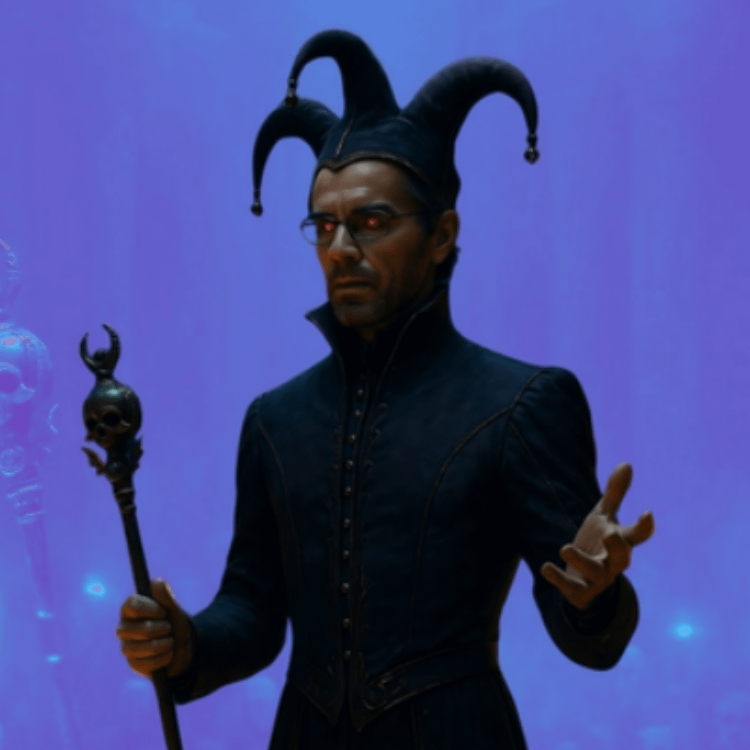
Trickster: Destabilizes inertia and questions the assumptions others are afraid to touch.
Inquisitor: Analyzes the landscape and uncovers hidden systemic structures.
Architect: Translates structural philosophy into functional reality.
Alchemist: Navigates chaos to build and stabilize the internal economy.
Oracle: Maintains system equilibrium and binds the disparate parts into a whole.
Mage: Anticipates future shifts and directs critical resources.
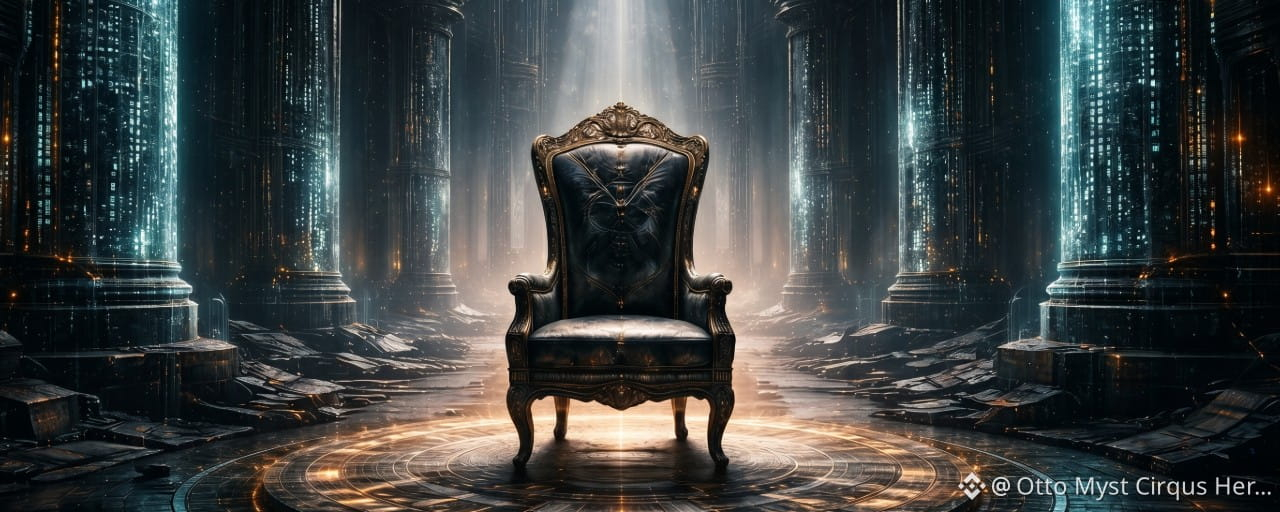
Right now, these roles are actively forming. One crucial seat remains entirely empty: The Architect.
The Invitation Most Web3 governance experiments fail because they blindly copy the flaws of legacy systems: they offer voting without systemic understanding, decentralization without strategic clarity, and tokens without personal responsibility.
We are doing something different. We are building a reality where governance is an act of deliberate architectural design.
We are looking for a Technical Co-Founder to step into the role of the Architect. We are not looking for someone to just casually deploy smart contracts. We need a builder who can translate philosophy into protocol, design complex governance logic, and structure decentralized coordination from the ground up.
This role requires a rare combination: a deep foundation in systems thinking, a high comfort level with ambiguity, and an acute awareness of consequences in complex environments.
This is not a traditional job posting. There is no corporate hiring process, no HR screening, and no artificial structure. There is only alignment.
If this resonates with you, explore what has already been built:
cirqusheresy.com/structure
cirqusheresy.com/manifesto
If your inner Architect recognizes this space, leave a single signal in the comments:
“I am the Architect. Ready to build.”
We are not trying to launch another crypto project. We are attempting to answer the one question the rest of the industry avoids: What should we build — and who gets to decide?