

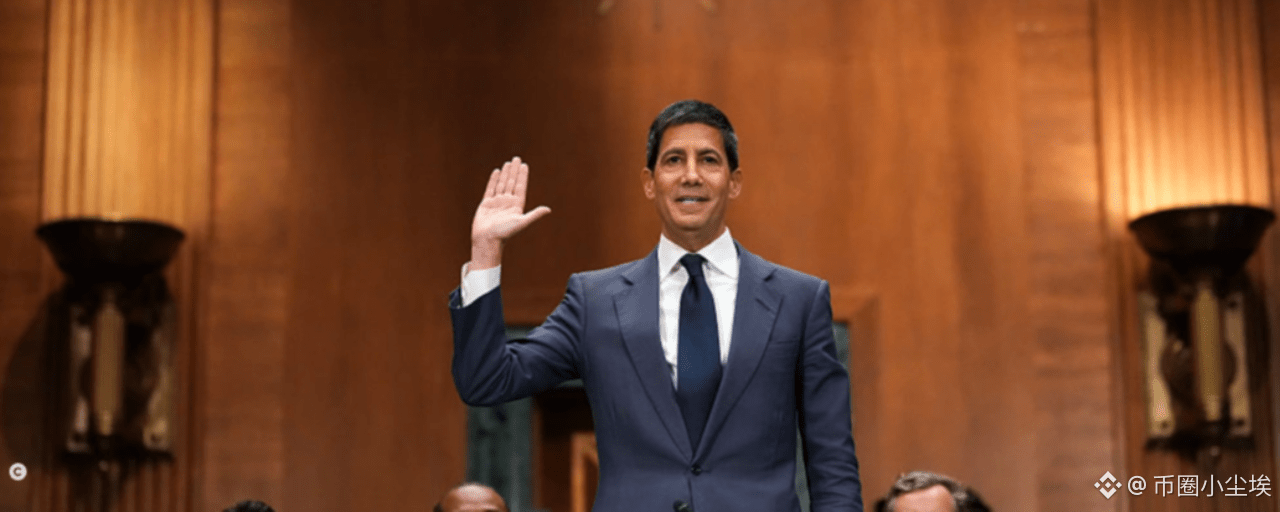

"The new Fed chair, Kevin Warsh, just slid in with a nail-biting 54:45 vote—one of the tightest wins in history. This crypto advocate is gearing up to tackle the inflation crisis and Trump's pressure for rate cuts. He's pushing to reshape the inflation target framework, shrink the Fed's balance sheet, and is firmly against central bank digital currencies—saying that 'private sector digital assets are now an integral part of the U.S. financial system.' This could pave a clearer regulatory path for stablecoins."
Kevin Warsh clinched his spot as the next Fed chair on May 13, winning with a razor-thin margin of 54 votes to 45 in the Senate—making it one of the closest victories for a modern Fed chair.
The main-party split result shows that only Pennsylvania Democratic Senator John Fetterman crosses party lines, formally taking the helm of the world’s most influential financial institution the day after he is approved by the Federal Reserve Board to serve as a governor. Only sitting governors can serve as chair.
Warsh previously served as a Federal Reserve governor from 2006 to 2011 and is a scholar at the Hoover Institution. He will begin his four-year term after Jerome Powell’s term ends on May 15. As governor, he replaced Stephen Miran, an economist allied with Trump who stepped down after Adriana Kugler resigned due to an internal investigation into stock trading; Miran then took over the remainder of her term.
The camp that supports cryptocurrencies
At a Senate Banking Committee hearing, Warsh supported the White House’s pro-digital-asset stance. He said the Federal Reserve lacks legal authority to issue a central bank digital currency (CBDC) and called the move a bad policy.
“I agree they don’t have the right to do that, and I think it would be a bad policy choice,” Warsh said when asked about the dollar. He also acknowledged that crypto is becoming increasingly intertwined, noting that digital assets “have already become part of our U.S. financial services industry.”
This position may provide a clearer path for private stablecoins and tokenization efforts, since Warsh has previously leaned toward solutions from the private sector rather than government-issued digital currency.
Reform agenda
Warsh calls for monetary policy to undergo “regime change.” He argues for a new inflation target framework, relies more on real-time data, and reduces dependence on the Federal Reserve’s dot-plot forecasts. He also plans to shrink the Fed’s balance sheet, which has continued to balloon since the 2008 global financial crisis through multiple quantitative easing programs.
During the crisis, Warsh served as a key intermediary between the Federal Reserve and Wall Street, even as critics—including Sen. Elizabeth Warren—questioned aspects of his risk assessments before the crisis.
Policy challenges
Warsh was sworn in during a tense moment. President Donald Trump publicly called for further rate cuts, with inflation having climbed to the highest level in three years. Data from the U.S. Bureau of Labor Statistics show that the Consumer Price Index (CPI) rose 3.8% year over year in April, up from 3.3% in March.
The market currently assigns a probability of about 37% to a 25-basis-point rate hike by the end of the year.
The impact of markets and cryptocurrencies
A narrow-margin confirmation vote and high inflation would make Warsh’s reform agenda even harder. If balance-sheet shrinkage coincides with demand falling off-cycle, it could further increase volatility in the bond market.
Bitcoin (BTC) traded to around $80,000 immediately after the vote, but the response has been muted as rate expectations keep shifting. Institutional crypto investors may view Warsh’s holdings as providing regulatory clarity for stablecoins and tokenization, although near-term interest-rate uncertainty remains.
The first Federal Open Market Committee (FOMC) meeting during Warsh’s tenure is scheduled for June 16–17. Observers are likely to closely watch balance-sheet normalization, inflation policy, and the operational independence of the Federal Reserve.