
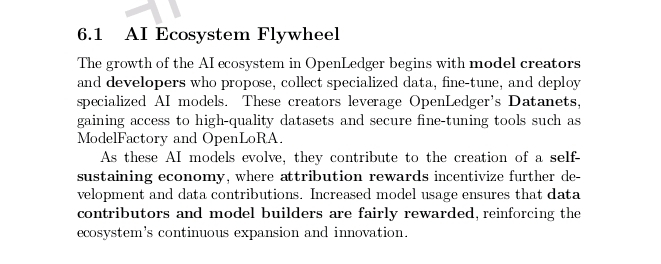

Listen up, folks. Last week, I pulled a rookie move. Here's the deal: I applied for a validator node on OpenLedger, not one of those big nodes, just the kind that small traders like us can join. My job was to randomly check the output quality of the model. Every time the model runs a round of inference, the system randomly selects a few results for validators to score. If your judgment aligns with the majority, you earn rewards. If you're way off, you get penalized on your stake@OpenLedger .
I thought, how hard could this be? You can tell if the model's good just by looking at it. So, I staked a little cash and happily started taking on tasks.
The first task involved generating comments for a piece of code. The model's output was decent, so I gave it a passing score. After submitting, I noticed that the average scores of others were a bit higher than mine. I felt a jolt, but didn't think too much of it. Then the second task came up, asking "how to determine if an address is a smart contract." The model's output claimed you just look at the balance, which is clearly wrong. I didn't hesitate to give it a zero score and even wrote a comment saying this answer could mislead people.
The next day I opened the dashboard and saw I got docked the value of a barbecue meal for my efforts. I was totally stunned.
I read the deduction explanation carefully and found out that the model’s training dataset includes a special on-chain interaction mode. In that mode, checking the balance can indeed assist in judgment. Although the model didn’t clarify the prerequisites, the system determined that its answer was 'partially valid in a specific context.' So, it shouldn’t have received a zero score.
It finally hit me that being an OpenLedger validator isn’t just about common sense; you need to understand the boundaries of the model's training data. On what dataset was it fine-tuned? What areas does it excel in? What limitations does it have? I had to get all that clear. Now, not only did I not make money, but I also ended up paying for a barbecue. It stings more than the losses I took when I first bought Bitcoin without knowing what I was doing. At least with Bitcoin losses, I could comfort myself with the volatility; this was purely due to my lack of expertise.
I got smarter after that. Before taking on tasks, I first check the basic info of the model, see what its training data range is, what types of problems it excels at, and then cross-reference that with the validation standards in the documentation, scoring each item one by one. After two days, I slowly earned back the penalties I had incurred.
Here are some lessons from my pitfalls, bros. First, don’t think you know everything. Sometimes the model’s output is right, but you don’t know why it is. Second, if you’re unsure, the system lets you skip the task without a penalty. Third, check out the comments and scoring habits of top validators. Learn their judgment logic.
OpenLedger’s mechanism is basically about handing over quality control of the models to the community. Who’s serious, who’s slacking off, it’s all clear on-chain. This is different from Bitcoin and Ethereum’s pure hash power consensus. Bitcoin relies on miners for hashing, Ethereum uses staking and locking. But OpenLedger’s consensus adds a new dimension: human judgment. My current strategy is to only take on validation tasks in areas I’m familiar with, like blockchain security-related Q&A or data format validation. I skip anything else. Better to not earn than to give a bad review.
Honestly, I was pretty frustrated when I got penalized. But looking back, it made me seriously study OpenLedger’s validation framework, and I learned a lot more than just reading the white paper.
Next, I plan to organize a set of notes on validation scoring and post them in the community discussion area. I hope it can help the newbies avoid the pitfalls I faced.