



The cryptocurrency market has seen a sharp decline in recent weeks, with a total outflow of 5.58 billion US dollars from Bitcoin and Ethereum spot ETFs in a single month, raising concerns in the market about whether it has entered a bear market prematurely. JPMorgan noted that this adjustment seems more like retail investors fleeing rather than a systemic collapse. CryptoQuant CEO Ki Young Ju further stated that Bitcoin is currently in a reasonable long-term spot accumulation range.
JPMorgan pointed out that nearly 4 billion US dollars have flowed out from Bitcoin and Ethereum spot ETFs in November, contrasting sharply with the strong capital inflow of stock ETFs during the same period.
Bitcoin and Ethereum spot ETFs saw an outflow of 5.5 billion US dollars in a single month, marking the highest in history.
SoSoValue data shows that in November, Bitcoin and Ethereum spot ETFs have seen about 5.58 billion USD in net outflows, surpassing the February record, making it the highest in history. The former had net outflows of 3.79 billion USD, while the latter had 1.79 billion USD.
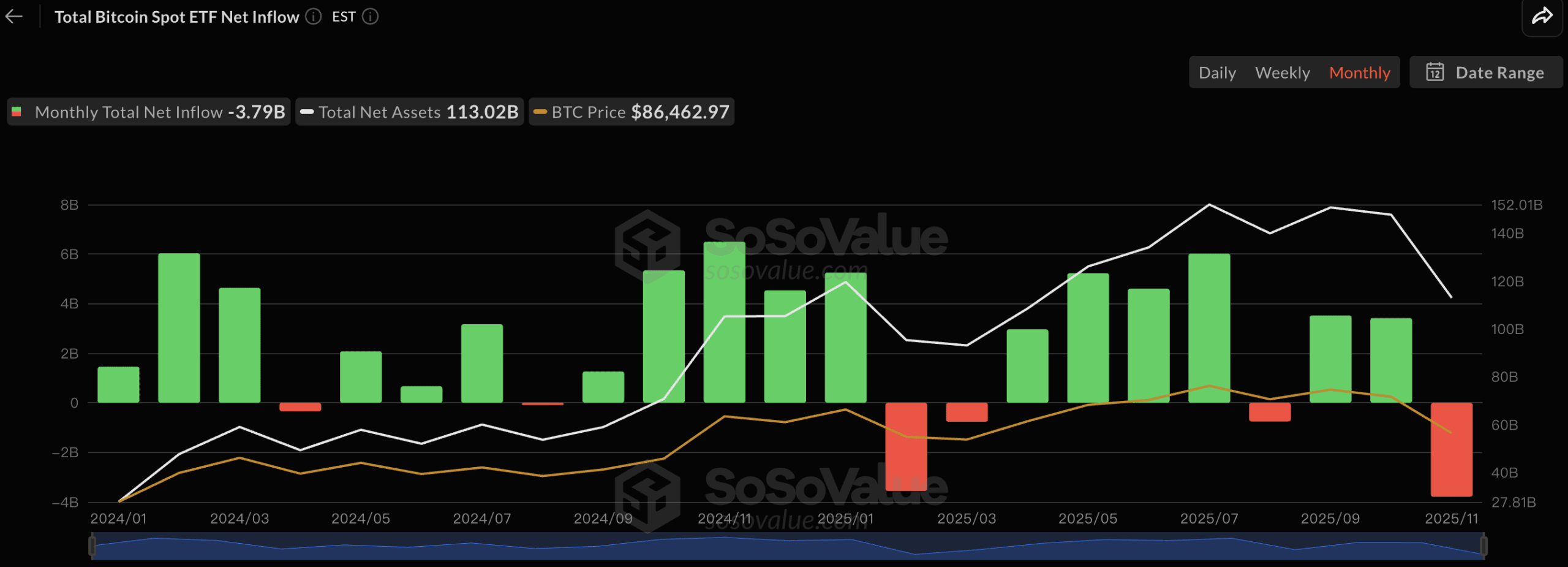 The Bitcoin spot ETF recorded the largest monthly net outflow in history, reaching 3.79 billion USD.
Among them, BlackRock's IBIT leads with outflows exceeding 2.08 billion USD, accounting for approximately 54.8% of the total BTC ETF outflows. In contrast, the SOL spot ETF appears to have seen buying on dips, with net inflows every day since its launch at the end of October, accumulating nearly 500 million USD.
JPMorgan stated that retail investors in ETFs are the culprits behind the decline, and ETF investors are now trapped.
JPMorgan pointed out that the behind-the-scenes force of this month's market pullback is not institutions or crypto-native traders, but rather large-scale withdrawals by retail ETF investors. Analysts stated that this drop intensified as it fell below the estimated production cost of approximately 94,000 USD.
(Bitcoin spot ETF saw a single-day outflow reaching 870 million USD, the second largest in history, with 94K becoming a common defensive line for bulls)
According to data from macro researcher Jim Bianco, the average holder of Bitcoin spot ETFs is now in a losing position, essentially trapped collectively.
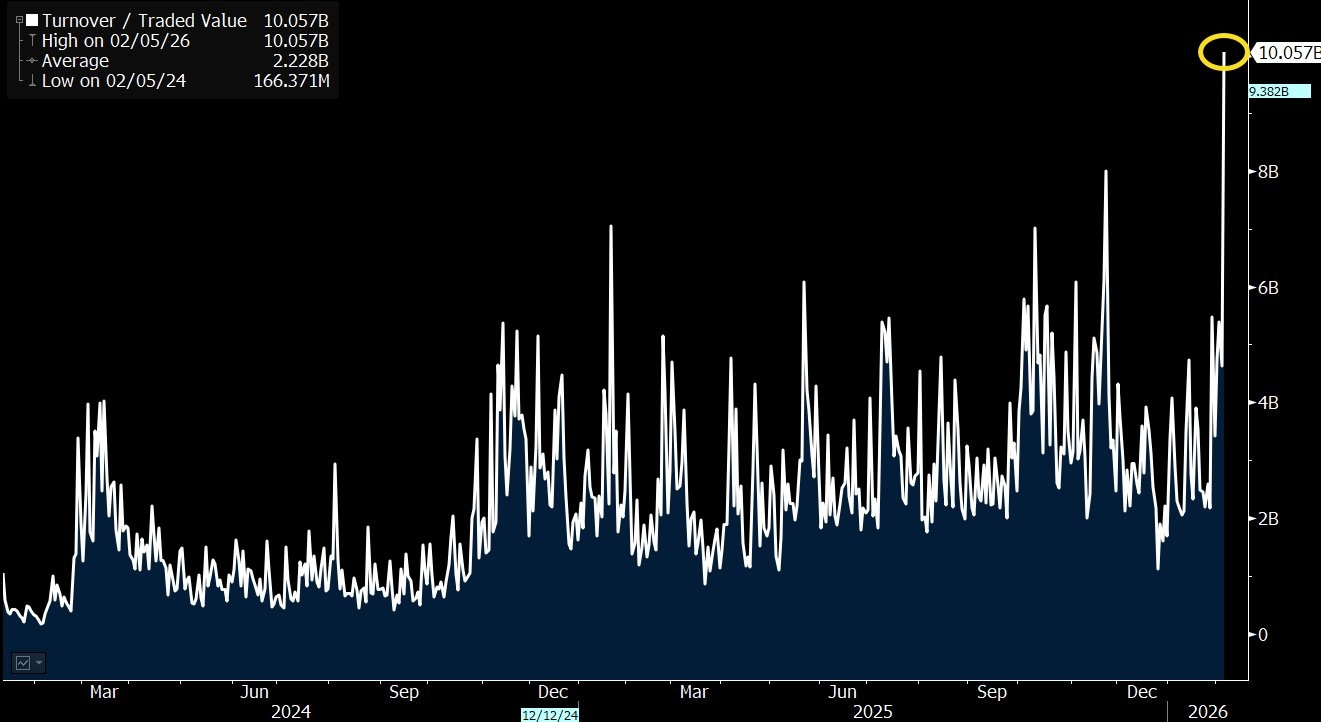
However, due to retail investors injecting up to 96 billion USD into stock ETFs in November, JPMorgan analysts still believe that this round of adjustment does not signify a larger risk retreat.
CryptoQuant CEO says: This feels more like a long-term spot buying point.
CryptoQuant CEO Ki Young Ju pointed out in a community post that if investors primarily focus on spot trading and avoid leverage, the current price level is rather a "reasonable long-term accumulation zone":
From the on-chain model perspective, the bull market cycle ended earlier this year when Bitcoin touched around 100,000 USD, and theoretically, the bottom would form around 56,000 USD.
He clarified that the bull market referred to here, which is the 'bull market interpreted from on-chain data,' has already ended, but the 'long-term bull market based on macro conditions' is far from over.
(Bitcoin enters an era dominated by institutions: CryptoQuant analyzes strong capital inflows but stagnation in prices)
Political year bringing liquidity? CryptoQuant: a rebound is possible at any time.
Ki Young Ju emphasized that because large holders (MicroStrategy and institutions) will not sell, the probability of actually falling back to that price level is low. Given that the U.S. government needs to inject liquidity before mid-next year, market sentiment could rebound at any time:
Selling or shorting here is not a good idea.
As on-chain researcher Aylo previously mentioned: "What differentiates this Bitcoin cycle from previous ones is that Bitcoin has received long-term passive capital flow through ETFs, which provides downside protection and will therefore form a higher bottom."
Is this article indicating that the ETF has seen four consecutive weeks of outflows totaling 5.5 billion USD, making it the culprit behind the decline? CryptoQuant: BTC has reached the spot buying zone, first appearing in Chain News ABMedia.