

The Japanese textile industry once flourished in the past, but faced the impact of the large-scale entry of Chinese companies into the market in the 1990s, causing production to plummet to just a quarter. While most companies chose to withdraw or downsize, Toray (東麗) stood firm against the trend, relying on deep technological cultivation and cross-domain applications. Today, Toray's sales amount to about 2.5 trillion yen, achieving the milestone of surpassing one trillion yen. Toray is no longer just a traditional textile company; it is also a key player behind the surge of functional clothing at Uniqlo, with its quality highly recognized by Tadashi Yanai, becoming a fixed partner as Uniqlo expands globally.
Walking into Uniqlo, various products that emphasize lightness, warmth, wind resistance, or UV protection are updated almost every year, attracting a large number of consumers. From warm outerwear to foldable sun-protective hoodies, consumers can always feel the evolution of products becoming lighter and more comfortable. The core of these evolutions comes from the material technology support of Toray.
The most representative example is Heattech. Today, three different warmth levels have been launched, with the high-end version touted to provide more than twice the warmth of the basic version, making it essential for many people in winter. These fabrics are incredibly lightweight yet highly effective at retaining heat, entirely relying on Toray's long-accumulated fiber technology.
Toray's technical heritage: high-performance nano fibers
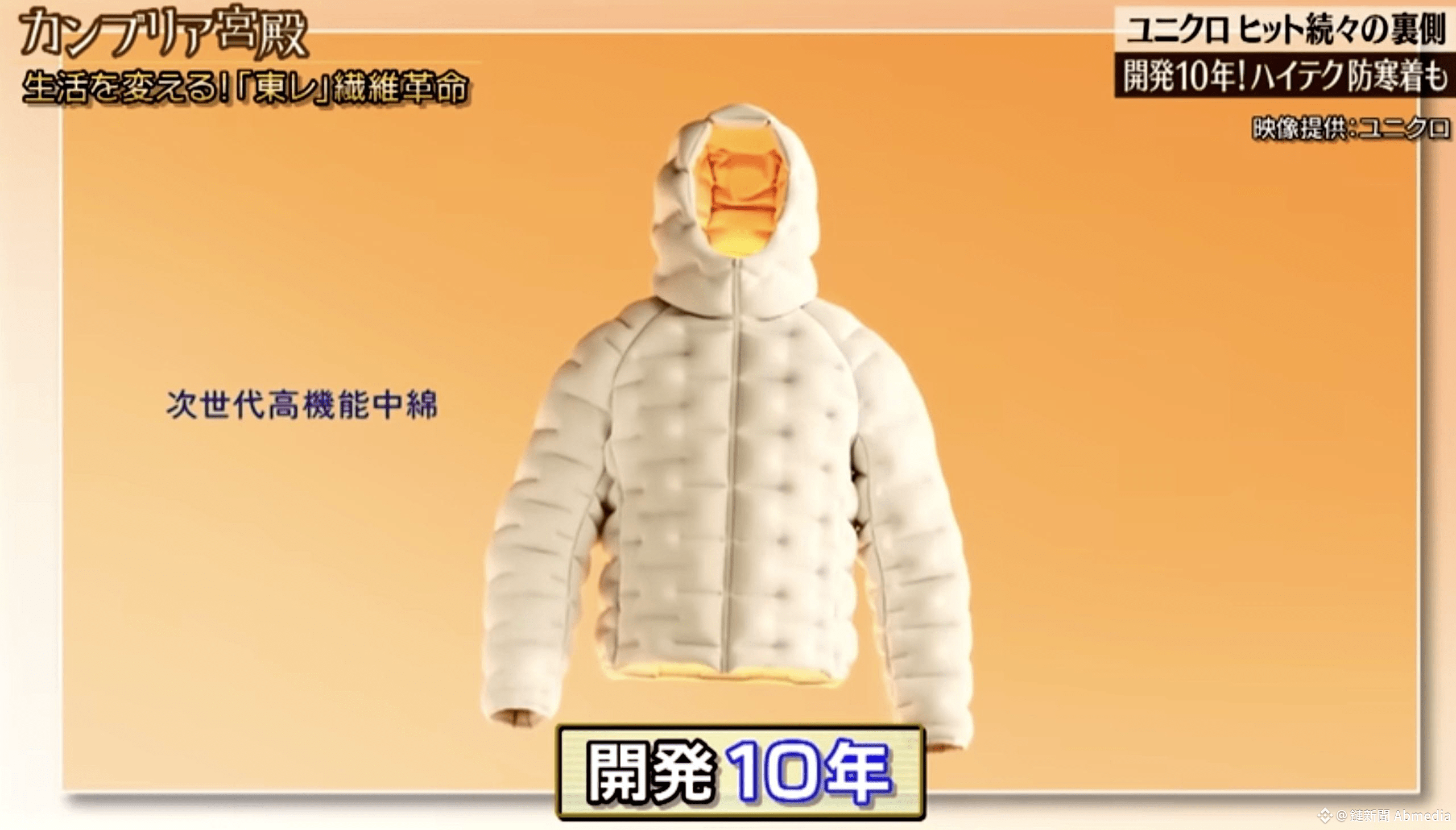
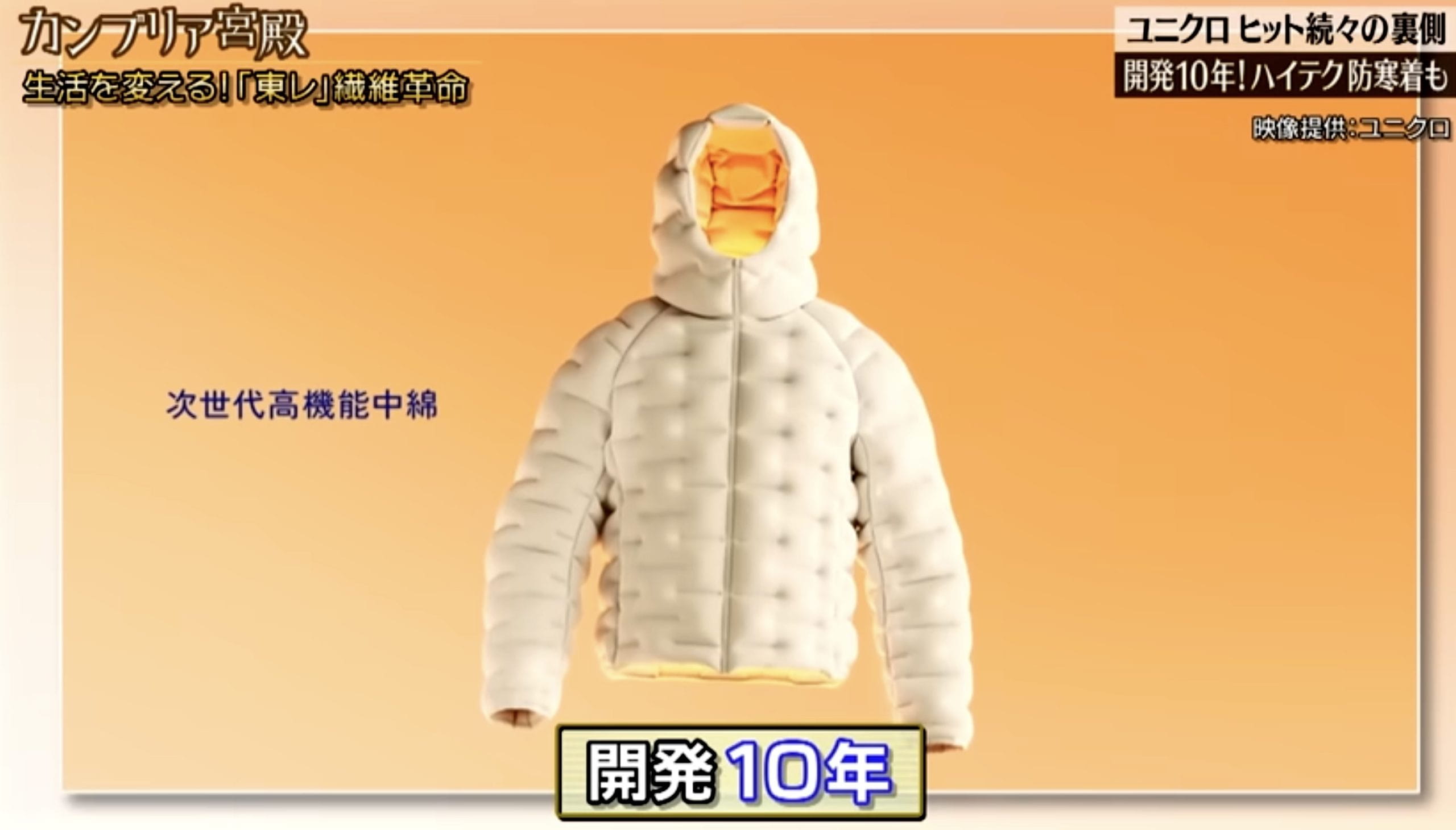
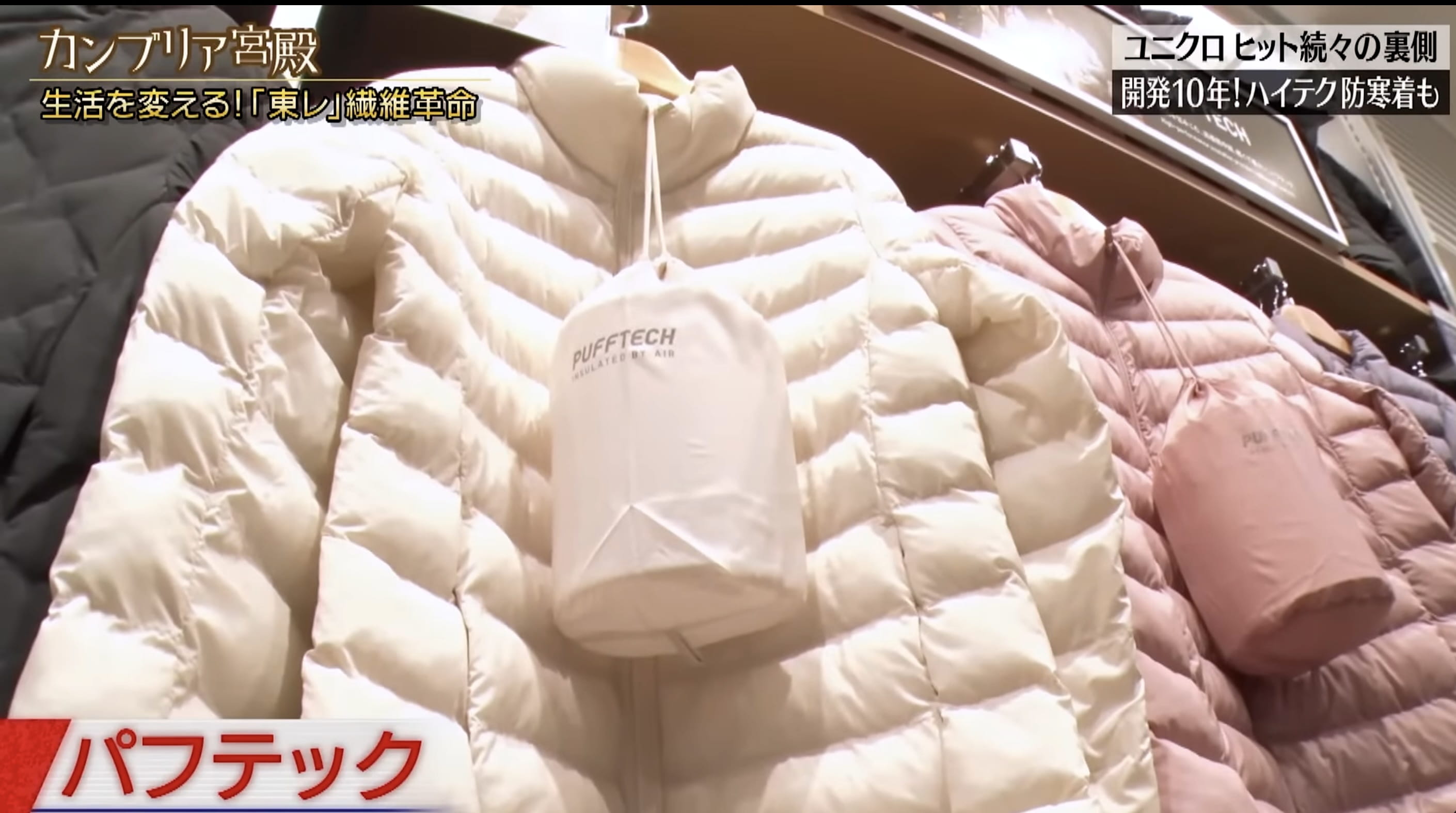
After more than ten years of research and development, Uniqlo launched a brand new down jacket without goose down. This synthetic material combines lightness and durability, becoming a new type of fabric to replace down. The technology behind the bestselling synthetic fiber down jacket comes from Toray. Toray's innovation can be traced back to its early years when it produced 'Lio fiber' from plant cellulose, later expanding into nylon and various synthetic fibers. Entering the factory, containers filled with raw material scraps are first heated to nearly three hundred degrees Celsius, melted under high pressure, and then extruded into filaments from extremely fine nozzles. The shape and arrangement of these nozzles determine the final shape and characteristics of the fibers. Toray's most representative technology is the ability to design the fiber cross-section with nano-level precision. In the microscopic images displayed by researchers, a fiber the size of a needle tip is composed of black and white blocks made from different resins, allowing the fiber to simultaneously meet demands for moisture absorption, reflection, heat retention, or weather resistance. These technologies have led to the birth of new fabrics and have become the core source of high performance in Uniqlo products.
Uniqlo and Toray: Deep cooperation spanning over ten years
In 2006, after establishing a strategic partnership with Toray, Uniqlo and Toray have been promoting product development almost as if they were working together. Toray even set up a dedicated base near Uniqlo's headquarters, allowing researchers to communicate directly and quickly with brand designers, shortening the development cycle. In weekly routine meetings, both sides discuss everything from cutting, materials, textures to wearing experience one by one, as if they were in the same company. This in-depth collaboration on details allows many ideas to be quickly transformed from concept to mass-producible products. To respond to consumer demands for 'thinner', 'lighter', and 'warmer', Toray and Uniqlo jointly developed a denser, lighter Heattech material, making the new products more comfortable to wear.
From clothing to the carbon fiber revolution in racing cars
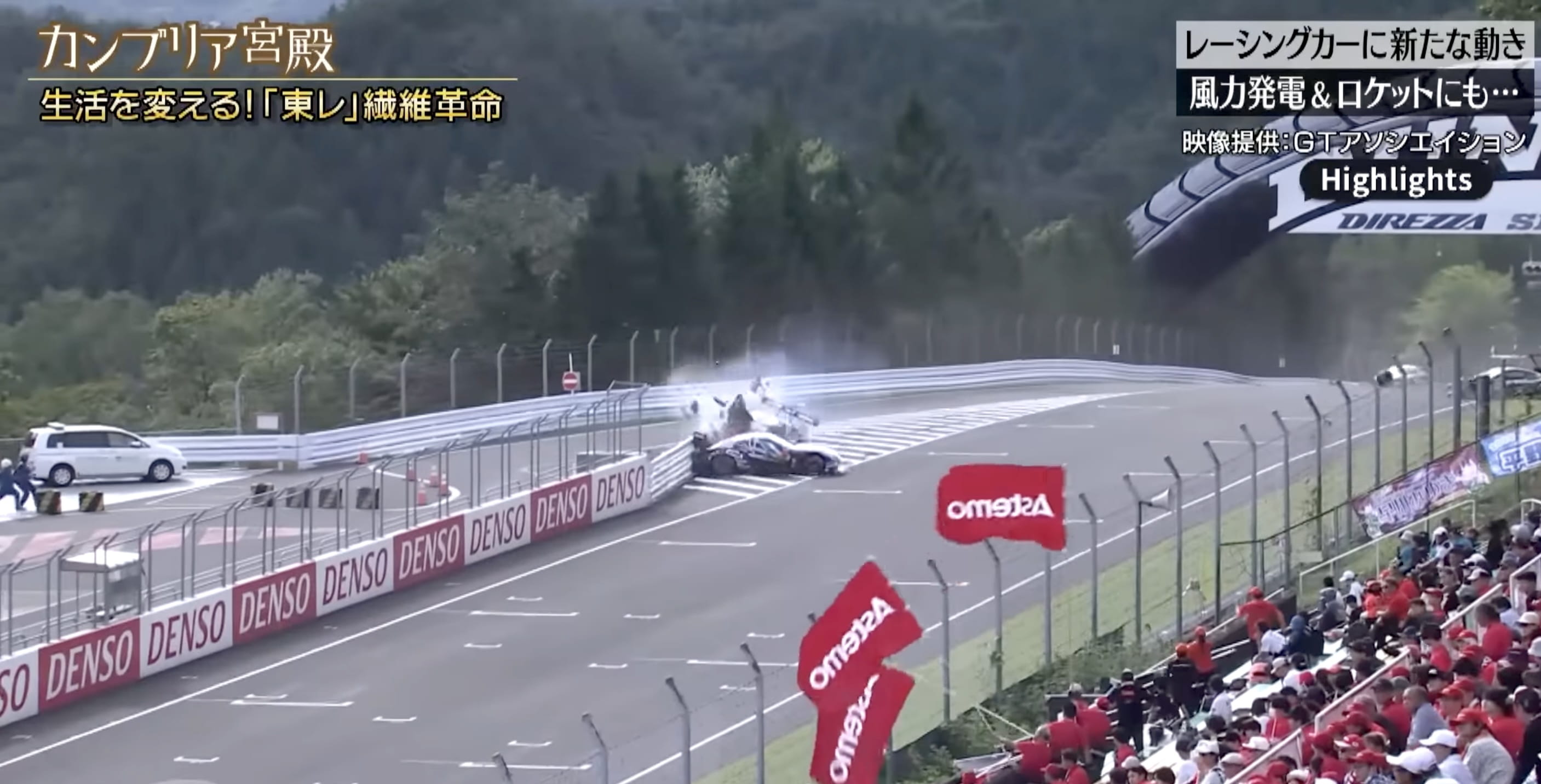
Toray's technology is not only applied in clothing; the developed carbon fiber has become an indispensable material in industries such as racing, automotive, and sports equipment. Professional racing cars are made entirely of carbon fiber, from the body to the driver's seat. The toughness of carbon fiber is ten times that of steel, yet its weight is only one-fourth of steel, providing several times the strength and protecting drivers in the event of a severe crash. Toray's carbon fiber technology allows many drivers to safely exit their cars after accidents.
This article about the nano-technology behind Uniqlo's Heattech heated down jacket first appeared in Chain News ABMedia.