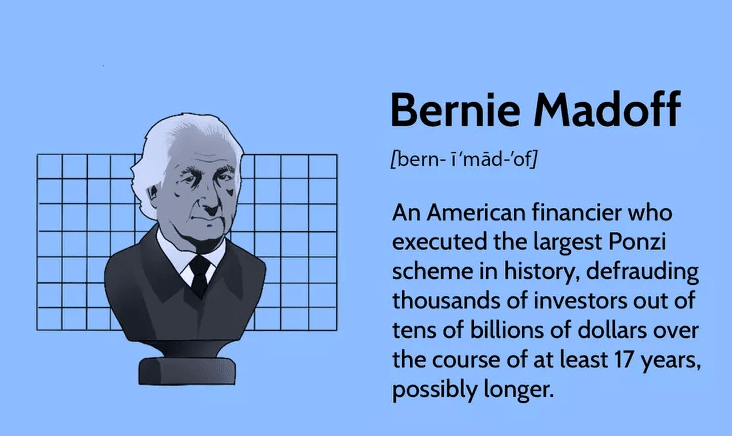
THE LARGEST TRADING FRAUD IN HISTORY
Bernie Madoff, born in 1938, rose to prominence on Wall Street, founding Bernard L. Madoff Investment Securities in 1960. His success, however, was a façade for a fraudulent scheme that would become one of the largest financial scandals in history.
The Rise to Prominence:
Madoff's reputation soared as he chaired NASDAQ and consistently delivered high investment returns. Behind the scenes, though, a Ponzi scheme was fueling his success.
The Ponzi Scheme Revealed:
In a classic Ponzi scheme, investors are promised high returns, but the profits come from the investments of new participants rather than actual gains. Madoff's scheme involved a web of deceit that eventually led to its unraveling.
Building the Illusion:
Madoff's firm attracted investors with promises of consistent profits. The allure of steady returns masked the absence of a legitimate investment strategy. Instead, Madoff used new investments to pay returns to existing clients.
The Unraveling Begins:
The financial crisis of 2008 exposed vulnerabilities in the system, and investors, seeking to withdraw funds, found Madoff unable to meet their demands. The house of cards started to collapse.
Fallout and Consequences:
In December 2008, Madoff confessed to his sons that the firm was nothing more than a giant Ponzi scheme, defrauding investors of billions. The consequences were catastrophic, leading to personal and financial ruin for thousands who had trusted Madoff.
Legal Proceedings:
In 2009, Bernie Madoff pleaded guilty to 11 federal felonies, admitting to operating the largest Ponzi scheme in history. He was sentenced to 150 years in prison, ensuring he would spend the rest of his life behind bars.
Impact on Investors:
The fallout reached far and wide, affecting charities, celebrities, and everyday investors. Many lost their life savings, pensions, and trust in the financial system. The Madoff scandal highlighted the need for increased regulatory scrutiny and accountability.